Faro 20th Century Society Tour
I attended an excellent C20 Society tour of Faro earlier this year, which provided me with some much needed material for this neglected blog.
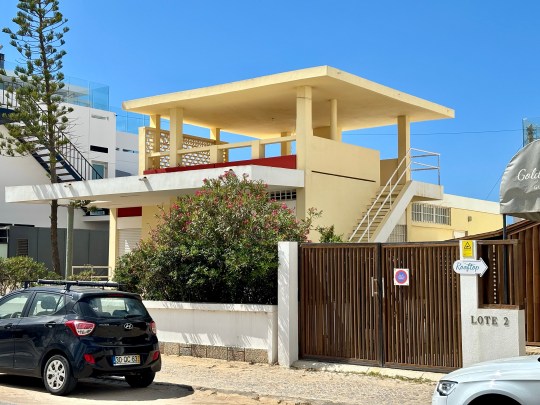
The tour, led by Richard Walker (whose similarly excellent tour of the less sunny Elephant and Castle I attended in 2018), focused on the often overlooked modernist architecture that characterises the capital of Portugal’s Algarve region.


During the mid-20th century, particularly in the 1950s and 1960s, many European countries experienced a wave of modernisation and urban development. Portugal was no exception and Modernist architecture, characterised by its functional design, use of new materials and minimalist aesthetic, became popular in Faro during this time.

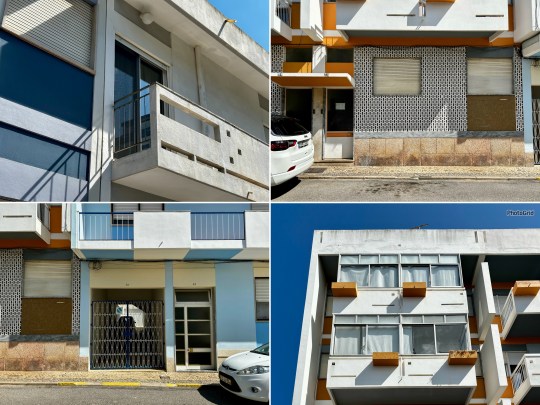
Largely shaped by the prolific architect Manuel Gomes da Costa, Faro’s architectural landscape came to consist of a blend of European Le Corbusier-inspired design, Brazilian tropical modernism and a bit of Palm Springs glamour, adapted for the Algarve’s sunny, coastal climate.
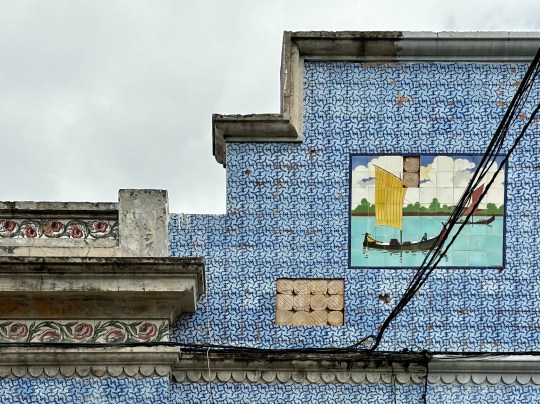


Although a little careworn in places, it made for a very photogenic and interesting city.
Hotel Aeromar
The tour began at the Hotel Aeromar, built by Da Costa in the 1970s. While Da Costa primarily focused on private residences, he took on this hotel project only to disown the design when it was deemed necessary to replace his intended flat roof with a pitched roof due to the coastal location (the wind and water would not have been kind to the original design).

The hotel bore signs of a number of his design trademarks, especially the brise soleil-style windows which cut out sunlight but allowed it to filter through.

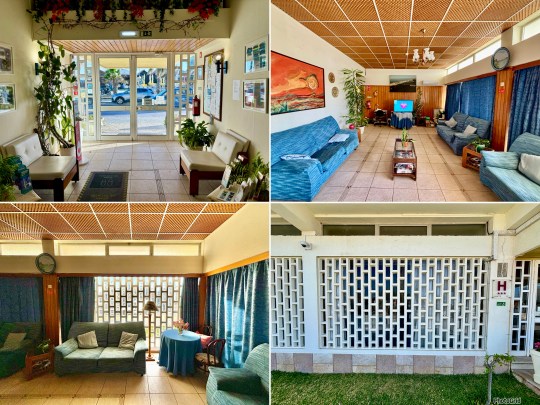
The facilities were basic and the decor on the dated side but it still managed to be quite charming. Apparently it once provided the backdrop for a Hermes fashion shoot – I can only imagine they were going for a kitschy vibe – but I haven’t been able to track down the photos.
Beginning the Tour
The first leg of the tour involved walking around the art deco district (consisting of 1930s low rise, box shaped buildings with a nod to classicism), and modernist districts (dominated by buildings designed by Da Costa and architects that he influenced) of Faro.


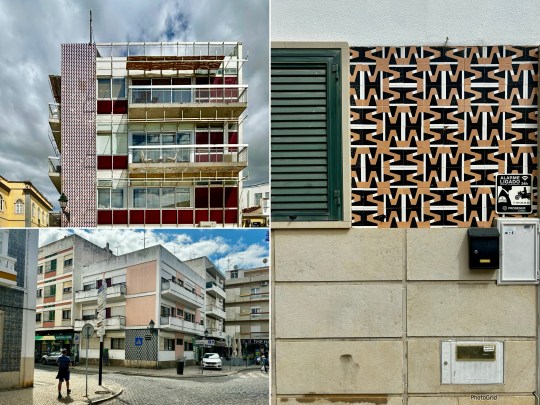
Despite Faro’s rather erratic listing system, most of the modernist buildings built in the city between the 1930s-1970s were still standing. Faro, we were told, is not a city obsessed with redevelopment and is slowly waking up to its modernist past and the potential to use it for tourism.


Faro’s buildings featured a lot of pattern and texture with an emphasis on graphic statement tiles and paving. The closely packed buildings, squeezed onto small plots, each had visual interest of some kind.
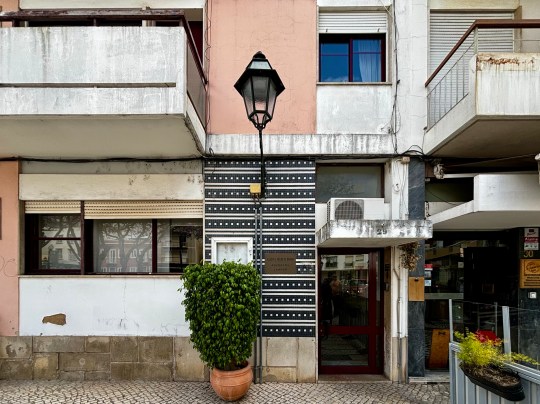


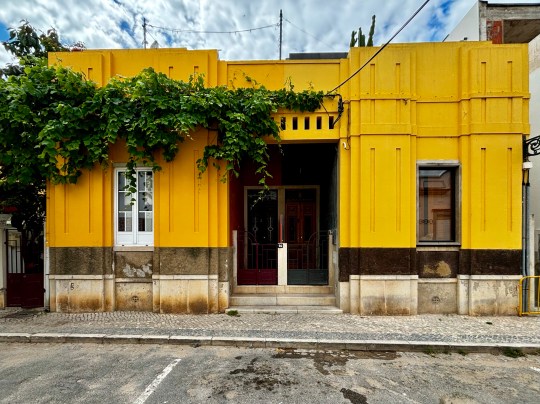
We were told that Portuguese architects like to build statement architecture but with a degree of restraint, pulling back from overt showiness. A few eye catching exceptions aside (including a rather gaudy pop art inspired yellow house), I found this to be true – this was modernism through a Portuguese lens.
The Modernist Aparthotel
The first of the interior stops on the tour was The Modernist, a once rundown brutalist building turned aparthotel following renovation works by the Portuguese architecture studio PAr.
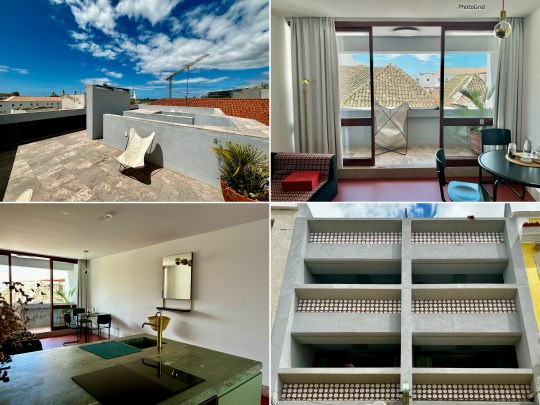
The building was originally built in 1977 by a family who lived on the top floors and rented the rest to commercial tenants until 1986. The building, which was for a long time regarded as the ugliest in Faro, then lay abandoned until 2016.
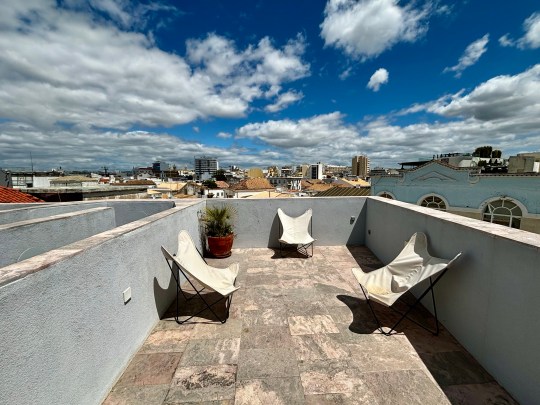
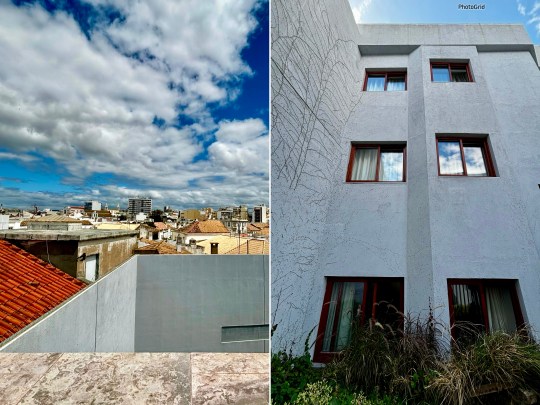
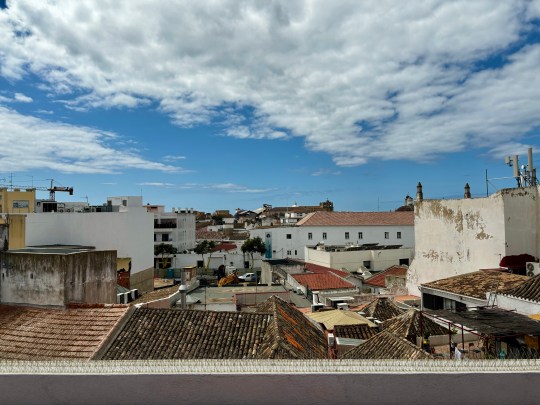
We were told that PAr adopted a very purist approach to the three year renovation project, breathing new life into the building whilst respecting its DNA. The most significant structural change involved adding a flat rooftop (previously a traditional pitched roof), which served as a terrace offering 360-degree views of the city, including multiple Da Costa designs and Faro’s oldest department store. The original plan was to install a pool on the newly flattened roof but this was scuppered by a construction issue.
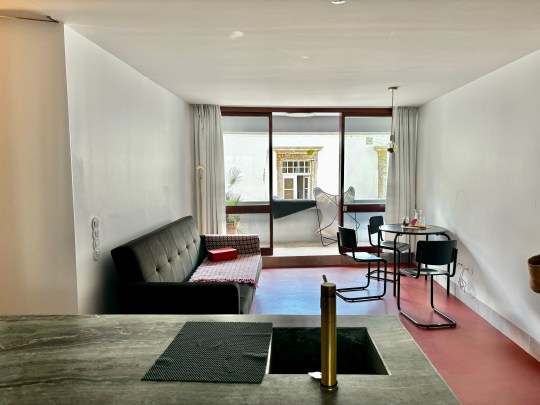


Inside, the hotel apartments were of varying size but were all largely identical – open plan studio spaces incorporating a living area (overlooking the street), kitchen island, sleeping area (overlooking the internal courtyard), small bathroom and balcony. The style was very much minimalist with simple, functional furniture built into the walls (including an Alvar Aalto-inspired curved window ledge) and a largely monochromatic colour scheme consisting of green, red and gold.
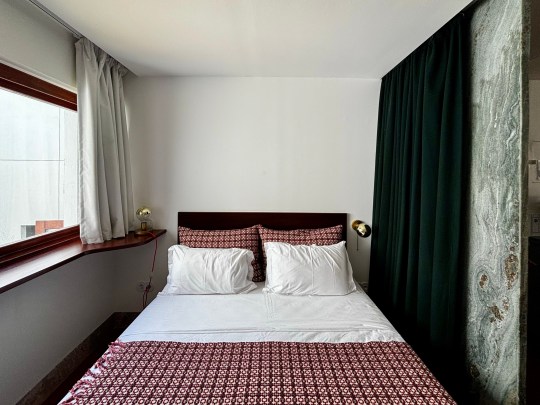
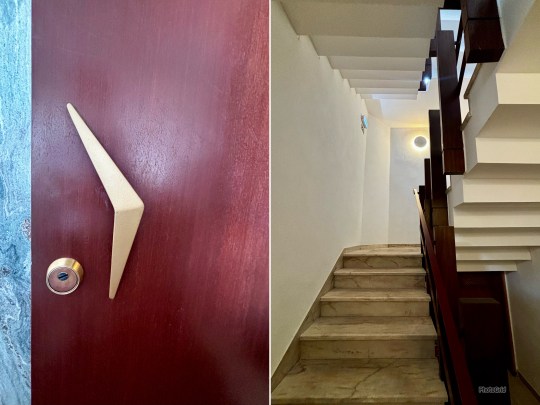

The materials used throughout (mostly locally sourced wood and stone) were natural and tactile. It was all very pleasant and tranquil but the lack of various modcons (including a tv – a conscious decision by the owners) meant that I’d probably struggle staying there…!
Casa Gago
The next building that we saw the inside of was the rather spectacular Casa Gogo.
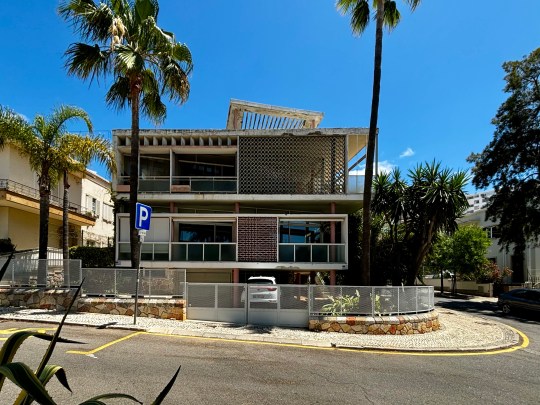
Casa Gago was commissioned by Alfredo Gago Rosa, a wealthy emigrant from Venezuela, who wanted a special house in the heart of Faro for his family. Despite being relatively inexperienced, a 34 year old Da Costa was chosen to lead this rather ambitious project, which resulted in one of the most iconic modernist buildings in Faro.


Da Costa’s goal was to create something new with the house, akin to something seen more commonly in the US. Using Frank Lloyd Wright and Mies Van der Rohe as inspiration, the resulting building was a mix of American and tropical featuring pop art tiles, organic shapes and Aztec and Mayan motifs.
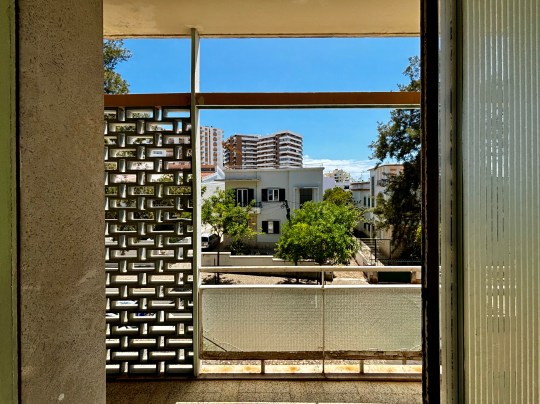

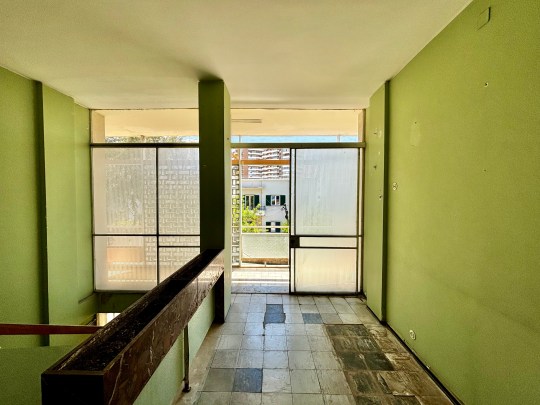
At some stage, the house was split into three levels and sold off. The second floor was used for many years as a hairdressers (there was still evidence of some of the fittings that had been left behind) before it was bought as a residential apartment by the current owner.
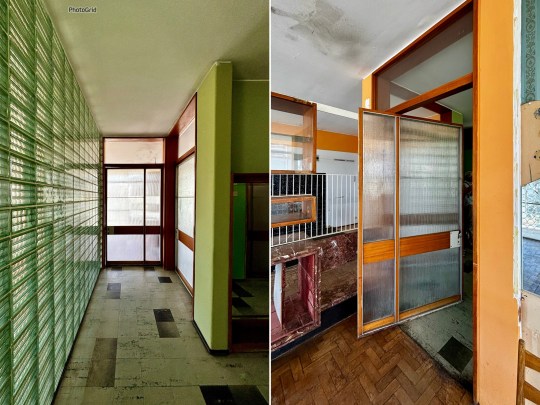
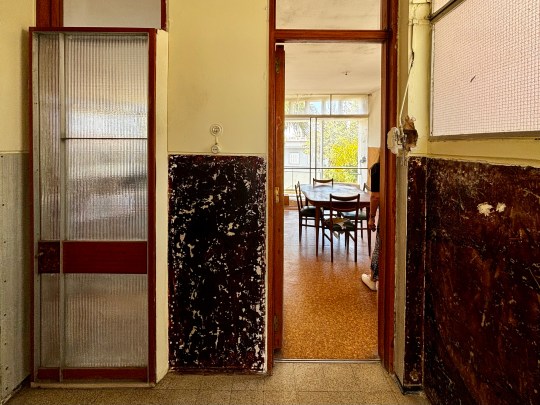

Thankfully, this appeared to be someone who wants to undertake a full scale renovation project to restore the apartment to its former glory – there would be nothing stopping someone from ripping out the entirety of the interior as only the exterior of Casa Gago is listed.
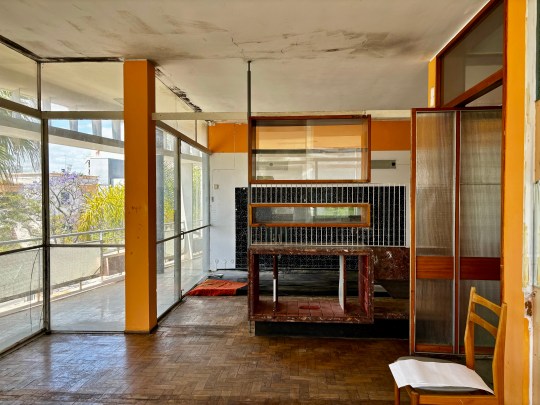


The owner certainly has a lot to work with, given that the apartment had pretty much all of its original 1950s features intact even if some of these features were in need of repair.


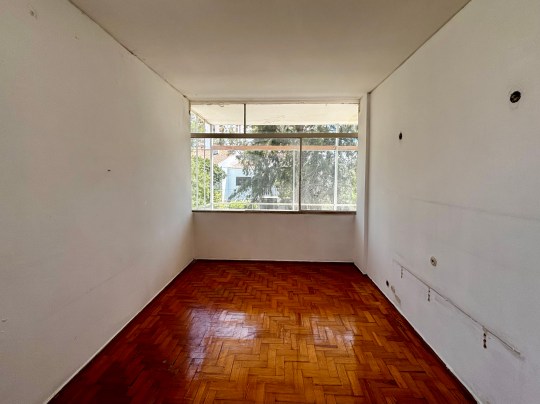
The apartment featured a number of Da Costa hallmarks – full-height doors, Z-shaped stairs a large porch, room dividing built-in furniture, glass walls and enormous interior pivot doors.


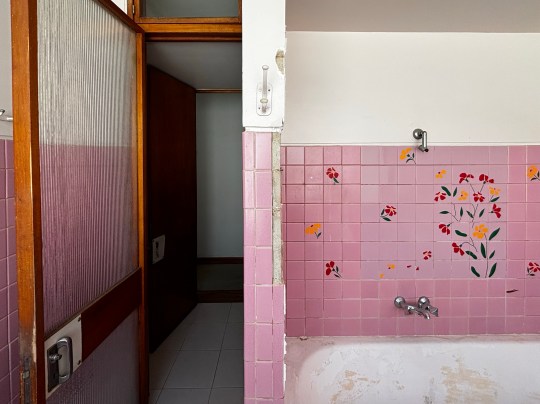
The layout was split into public (living, dining and reception rooms) and private (four bedrooms) sections with sunbreaking breeze block cobogó all down the west side.
Other buildings in Faro
The tour moved on to other buildings in the city including:
⁃ A 1966 design on a triangular plot built for a South American bank – this was considered to be a radical design at the time.


⁃ Da Costa’s own house from the mid 1960s – this was not what I expected. Inspired by Mies Van Der Rohe and a Japanese garden, it was low level and quite modest in comparison to the rest of his designs that dominated the city. The house was connected to a studio space in which Da Costa worked largely alone.

⁃ A lovely row of Da Costa villas, one of which was owned by the new owner of Casa Gago.
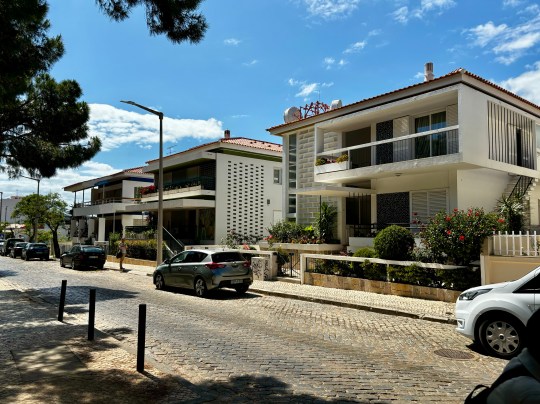
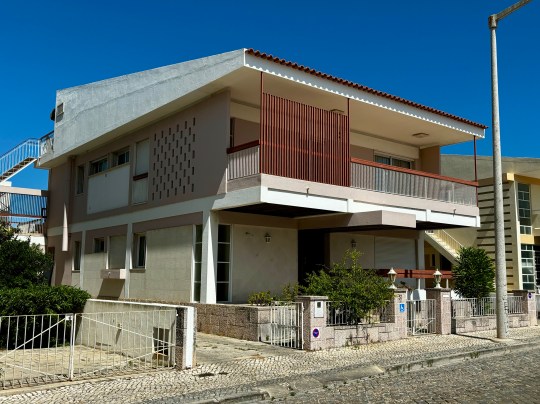
Another, currently used as a hotel, had been significantly remodelled to slightly underwhelming effect – the house had lost its carefully calibrated proportions and looked a bit “heavy” as a result.
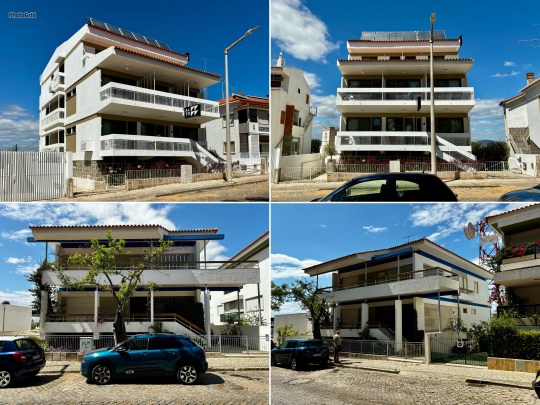

⁃ Various social housing schemes, which looked well designed and quite attractive.

⁃ An intersection of buildings from the late 1970s, including one of Da Costa’s last works from the late 1980s (he stopped working shortly after but lived until 2016).


As Da Costa was never one to follow trends, this building didn’t look very 1980s at all apart from some slightly fussy looking classical columns.
Olhão
The second day of the tour took us to nearby Olhão, a cubist-looking town a short train ride away from Faro.

The courthouse and cubist buildings in Olhão reflected a different architectural language to Faro with flat roofs and grid-patterned streets influenced by Moorish design.


The old part of town contained buildings from the 1920s to 1930s covered in now-familiar patterned tiles across six streets.
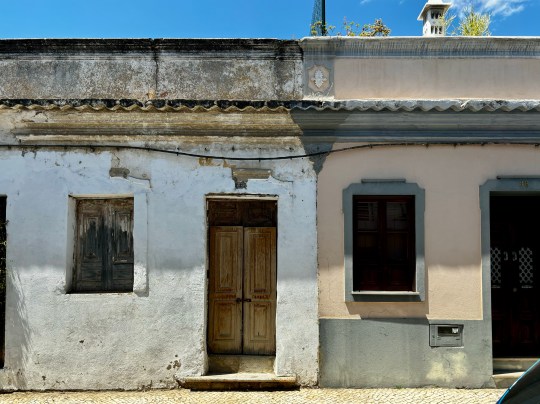
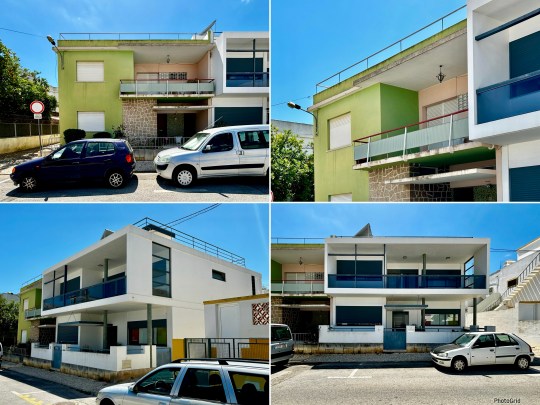

The modernist part of town looked a lot like Faro except without an abundance of Da Costa designs – there was only one Da Costa house in the whole of the town.
Praia de Faro
The tour concluded with a walk along the Faro’s coastal line to take in the seafront architecture, mostly post-1959 as this was when the bridge providing vehicular access to this stretch of land was built.
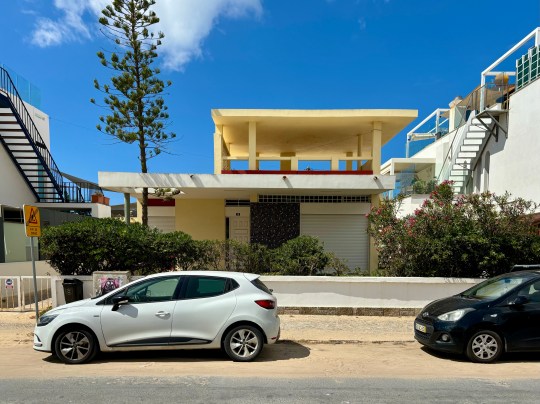
The buildings ranged from basic beach huts to a sophisticated Da Costa design, heavily influenced by Le Corbusier (note the hole in the roof to accommodate the tree).
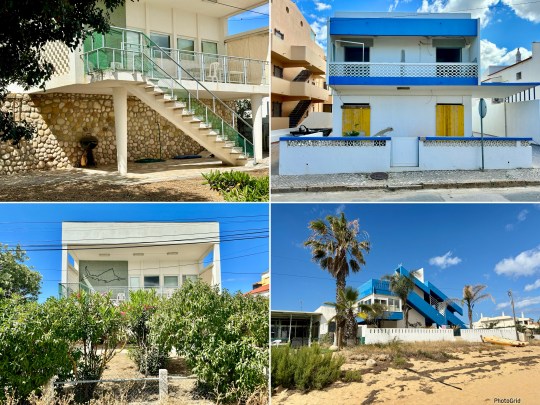
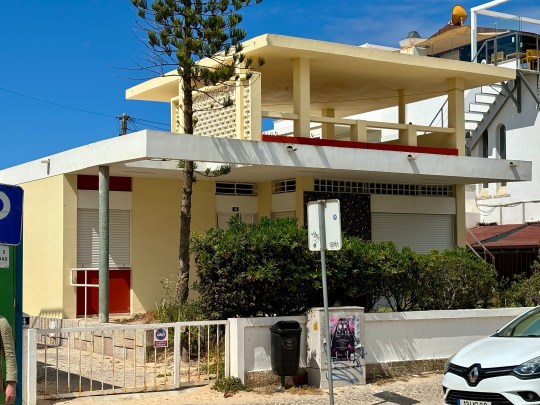
Other notable designs included:
⁃ A very charming single storey orange coloured house (architect unknown).
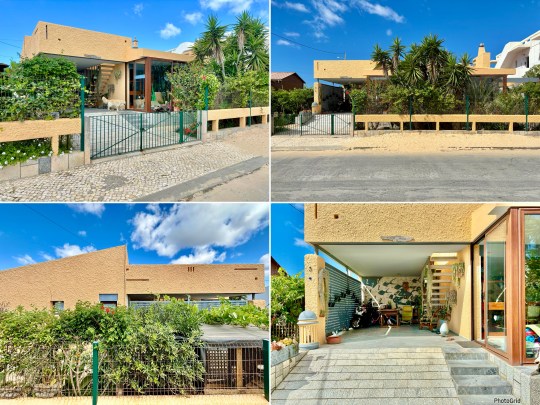
⁃ A heavily cantilevered blue beach house from the late 1970s built by a partner of Da Costa.

⁃ A very photogenic Air Bnb house which has featured in every news story about modernist architecture in Faro.


 Modernist Pilgrimage
Thanks so much for this!Wh
LikeLiked by 1 person