Rietveld Schröder House, Utrecht
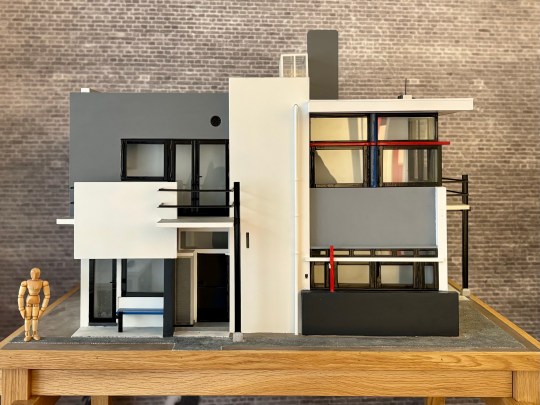
Visiting the Rietveld Schröder House in Utrecht was like stepping into a physical representation of a Mondrian painting.

Built in 1924 by the innovative architect Gerrit Rietveld (also famous for his Mondrian coded Red and Blue chair), the house was designed to be as much an artistic statement as a house in response to a brief from Truus Schröder-Schräder, a wealthy widowed mother of three with a penchant for avantgarde design.
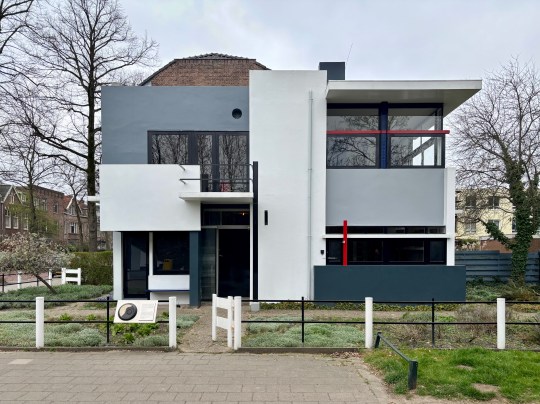
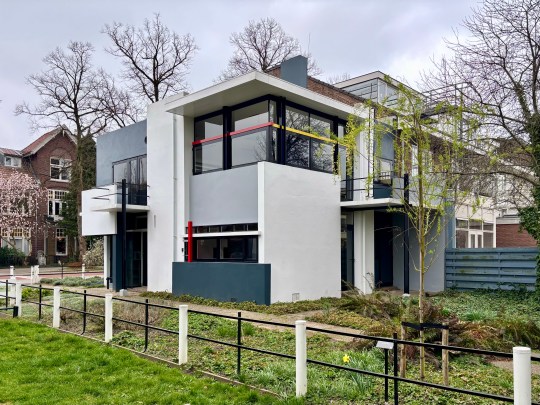
Rietveld, influenced by the De Stijl movement, aimed to create a space defined by flexibility, openness, and clarity. Though it was constructed during the same period as the traditional brick townhouses that surrounded it, it broke entirely from convention and is perhaps best known for its distinctive layout consisting of an adjustable open plan space that could be divided into separate rooms via a system of sliding panels.
Exterior
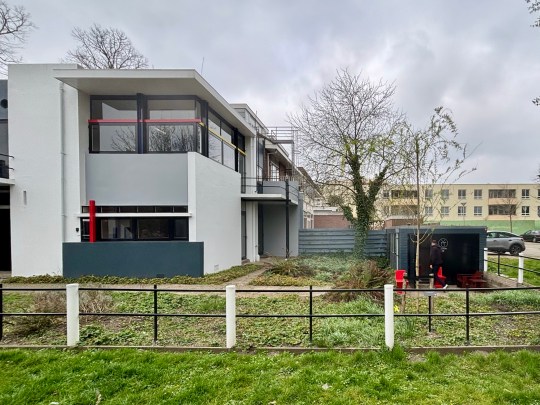
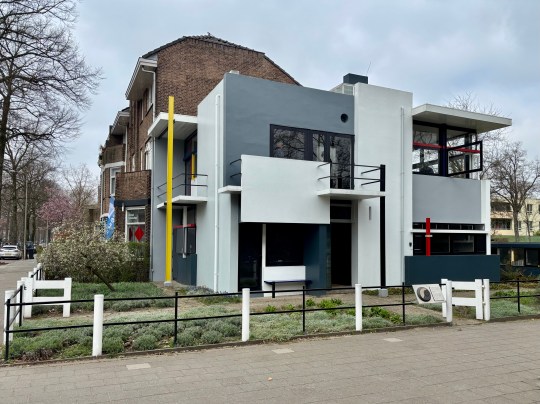
Despite being brick-built, the house looked as if it was made from concrete with its clean, white plaster surfaces and intersecting planes giving it a strikingly modern appearance even today. The building stood in sharp contrast to the neighbouring houses (and the terrace that it bookended) due to its abstract, cubic form and bold accents in red, black, and yellow.
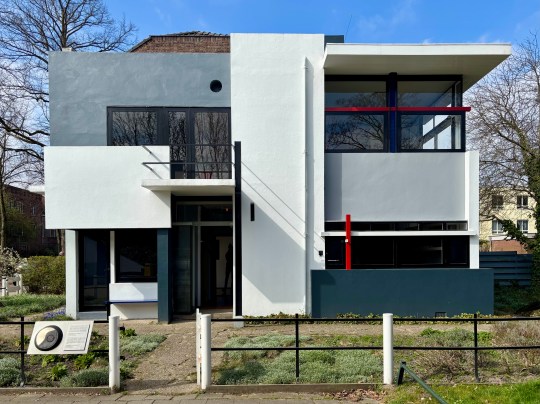
A thin red line across the façade of the house highlighted where to deliver parcels, blending functional design with visual clarity, a typical Rietveld detail. Also noticeable were structural beams and posts that ran from outside the house to inside, seamlessly connecting the interior to the exterior and a speaking tube that allowed Truus Schröder-Schräder to communicate with visitors at the front door from the first floor without having to go downstairs.


Ground Floor
The ground floor followed a traditional layout, divided into rooms for practical functions like cooking, working, and storage. The hallway was compact with a short flight of white steps leading upward beside a built-in bench. A wall unit accommodated storage for four occupants, and the coat rack was designed with both high and low sections, catering to both adults and children.


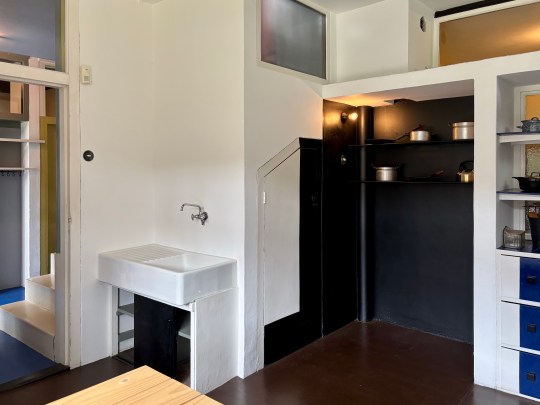
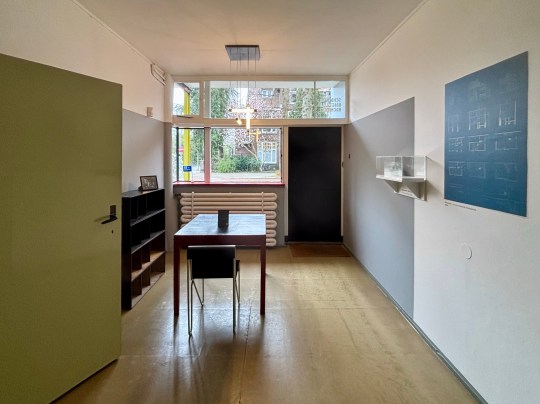
The kitchen was equipped with features far ahead of its time: one of the first dishwashers, wall cabinets with sliding glass doors, a drop-down shelf by the window for deliveries and detachable shutters on the windows. The thick exposed pipes on the wall gave the room a modern, slightly industrial feel.


The kitchen flowed through into the maid’s room, painted a cheerful sunny yellow to counteract the distinct lack of light. Unusually for the time, this room was wired for electricity and had its own sink and direct access to the garden, reflecting the importance placed by Rietveld and Truus Schröder-Schräder on maintaining independence and dignity for domestic workers. Later, this small space was rented to students.
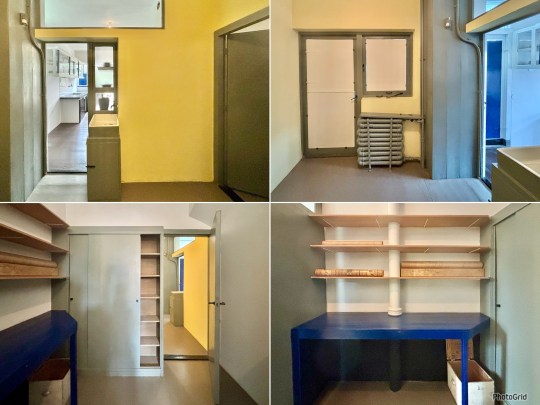
Also on the ground floor was a workspace and a front room featuring a distinctive ceiling lamp, the design of which drew the eye upward, helping visitors perceive the three-dimensional volume of the room.

First Floor
The first floor contained the most distinctive features of the house. Designed as a space for living during the day and sleeping at night, it was officially listed as an attic to sidestep local building regulations.
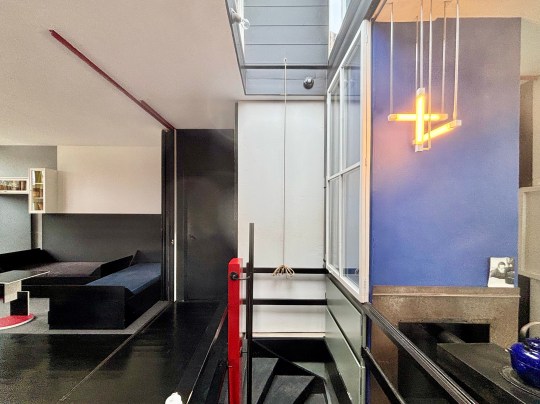

This was necessary because the whole of the upper floor was an open plan space with no fixed walls that could be divided into separate rooms using sliding and revolving panels, or left open as a single large area. A central living room, originally boasting panoramic views (now somewhat obscured), featured built-in storage (including a striking yellow cupboard in the corner resembling a modernist sculpture), a skylight and the same three dimensional ceiling lamp as the one on the ground floor.


The daughter’s bedroom was designed to be multi-functional: a sitting room by day, and a bedroom for two by night. The son’s room was more experimental with a floor made from a patchwork of different colours and materials and detachable wall panels in lieu of curtains for privacy. An early version of a spotlight illuminated the room, showing Rietveld’s interest in modern lighting techniques.

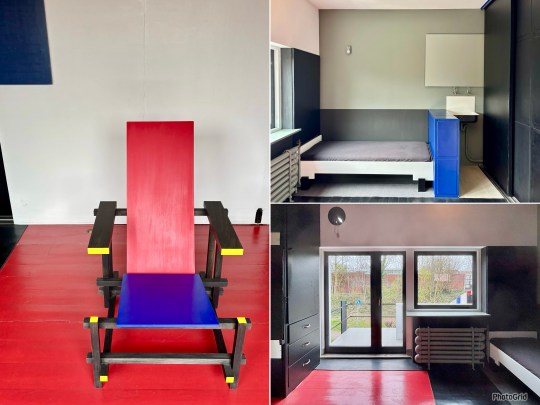
The main bedroom, used by Schröder herself, was surprisingly the smallest in the house. Rietveld, however, used the space very efficiently, incorporating a built-in washbasin, a fold-out cupboard and a narrow red shelf just wide enough to hold a watch or small personal items.


The bathroom was tucked between the mother’s and daughters’ rooms and featured a granite hip bath and a sliding vent hatch for fresh air—compact, yet luxurious for the time. The separate toilet was tucked away behind a black painted door.


Though the family was wealthy, the house was decidedly modest in size, built on a tight urban plot. The constraints caused by the small plot were part of the creative challenge for Rietveld, who embraced the opportunity to build something innovative without the luxury of unlimited space and scale.
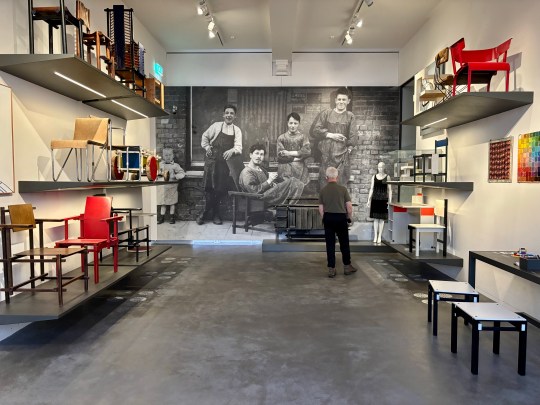
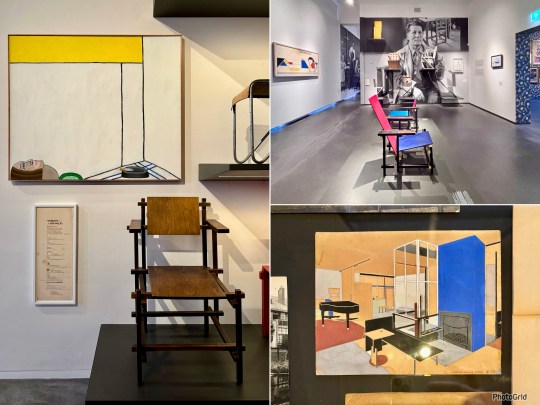
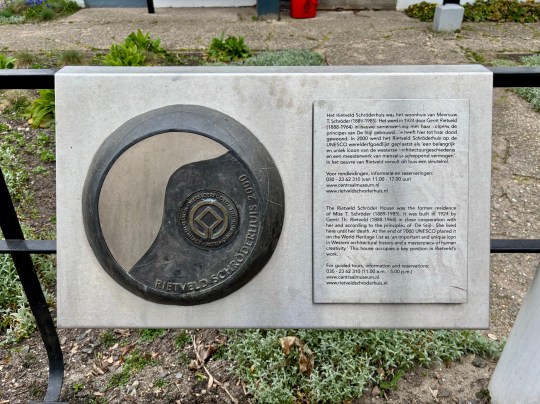
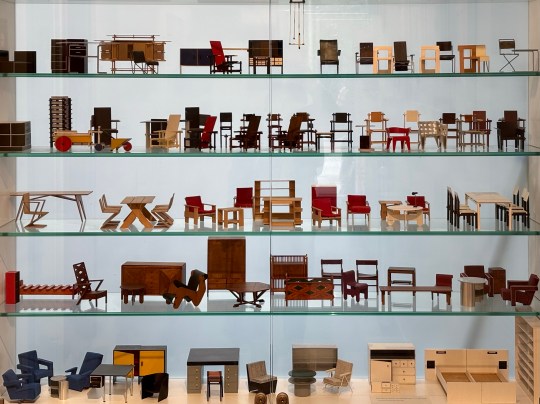
Truus Schröder-Schräder lived in the house until her death in 1985. The house was then restored by Bertus Mulder and now is a museum open for visits, run by the Centraal Museum. It has been a listed monument since 1976 and UNESCO World Heritage Site since 2000. An exhibition on the house and Rietveld’s other designs form part of the permanent collection at the Centraal Musuem in central Utrecht.
 Modernist Pilgrimage