Sybold van Ravesteyn House, Utrecht
Tucked into a small triangular plot a few minutes down the down from the Rietveld Schröder House was the intriguing Sybold van Ravesteyn house. Built out of sand-coloured railway bricks between 1932 and 1934 by Sybold van Ravestyn (an eccentric architect best known for designing train stations for the Dutch Railways), the house challenged architectural conventions of the time.
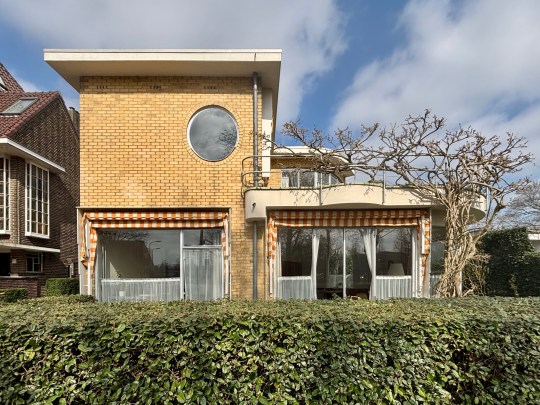
The plot – little more than a wedge-shaped leftover at the bend of a street – was just about big enough to fit the house, which consisted of a rectangular two-storey building with a semicircular volume and roof terrace on the first floor. A narrow garage – almost comically tight – was appended to the left side of the property, designed to form part of the overall silhouette of the house.

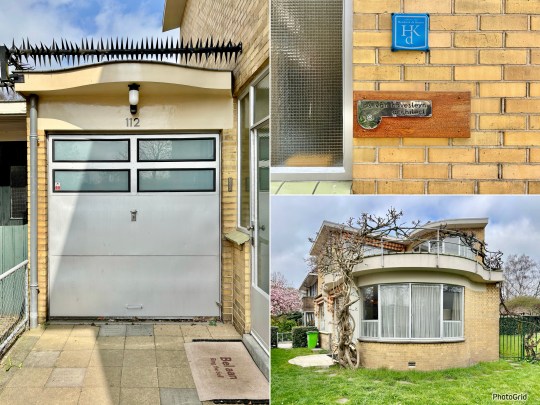
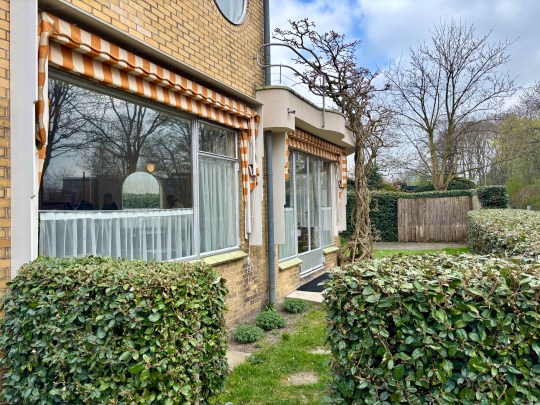
Inside, Van Ravesteyn maximised use of the small footprint by using narrow, steep stairs and installing curved walls to soften corners and guide movement around the house.


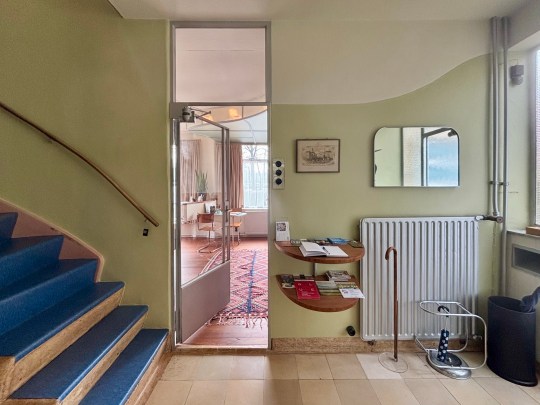
The central part of the house was a large open plan living space with no dividing walls between the study, sitting room and dining room – an unusual concept at the time and one of the first examples of modern open plan living in the Netherlands.
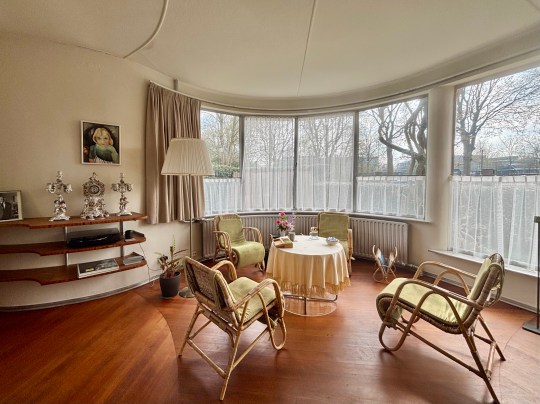


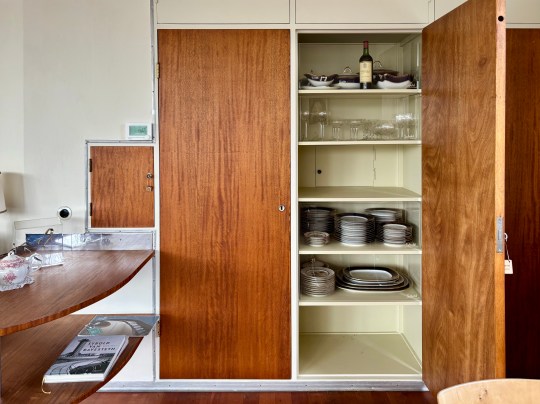
This large open-plan space featured curved lines in the floor, a suspended ceiling of frosted glass in a steel frame and built-in furniture, which served to subtly zone the space into sitting, dining and working areas.
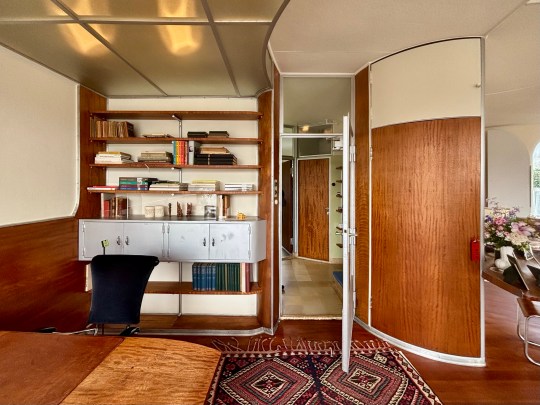
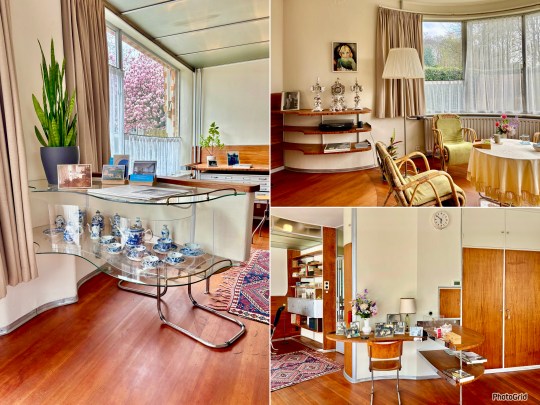

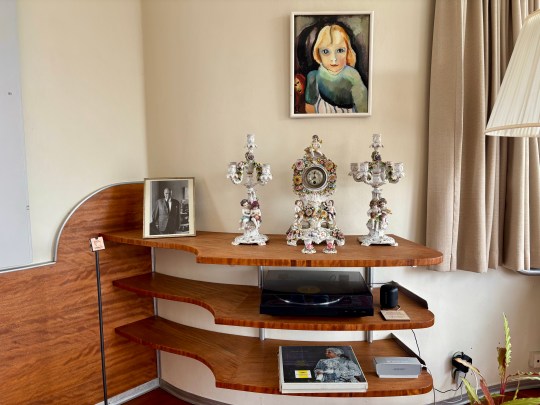
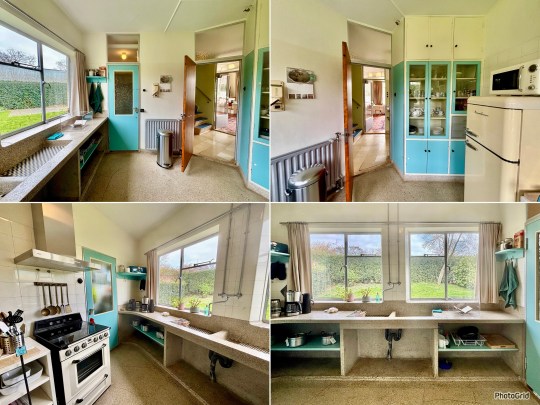
Though the house was practical in many ways (unusually for domestic buildings at the time, it had both central heating and plumbing throughout the house and a kitchen equipped with modern domestic appliances), Van Ravestyn resisted the cold minimalism often associated with early modernism, filling it with porcelain figurines, neo-Baroque decorative lines carved into the ceilings and built-in shelves that drew the eye across the room, their lines continuing into baseboards and shutter grooves.
Upstairs were three bedrooms and a bathroom. Van Ravestyn decided against installing traditional box beds in the bedrooms (still common in Dutch homes of the era) in favour of more modern free-standing beds flanked by built-in closets. The master bedroom featured a circular window with a bespoke shutter and an enormous terrace – larger than the bedroom itself.


Each of the son’s bedroom and the guest room (where the family’s nanny stayed during her pregnancy, having been impregnated by Van Ravestyn himself – though this could have been a mistranslation!) each had their own basins and nightlights.


Van Ravesteyn lived in the house until his nineties after which it was acquired and renovated by the Hendrick de Keyser Association. It has since served as a house museum and can be booked for overnight stays – something which gave the house a distinctly “lived in” feel.

 Modernist Pilgrimage