Nai Lert Park Heritage Home, Bangkok
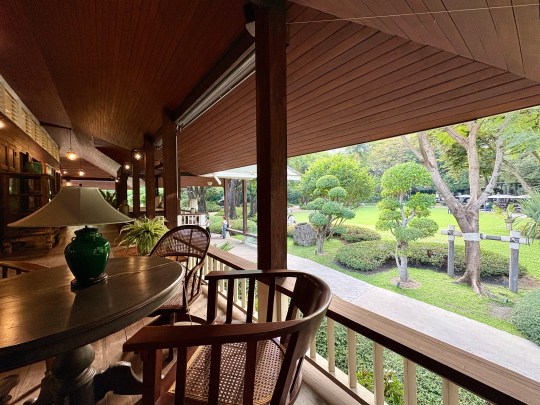
On a recent trip to Bangkok, I visited the Nai Lert Park Heritage Home which was neither a mid century nor modernist building but somehow had the look and feel of one through its use of natural materials, its connection with its surroundings and pared-back, very contemporary aesthetic.
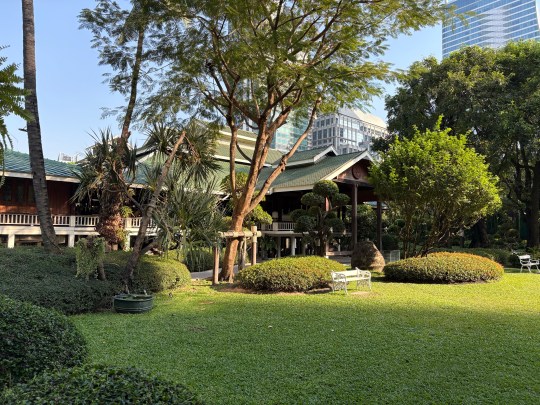
Set within what was once a vast 200-acre private estate in central Bangkok, the house was built in 1915 by Nai Lert, a prominent businessman and philanthropist whose ventures ranged from public buses and boat transport to department stores and what became the first Thai-managed hotel. After his death in 1945, the house remained in the family for generations, occupied until 2010.
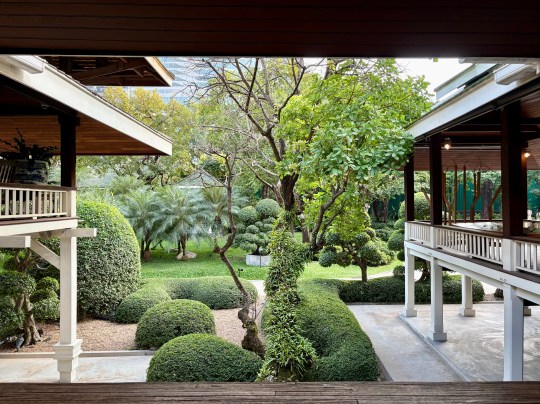
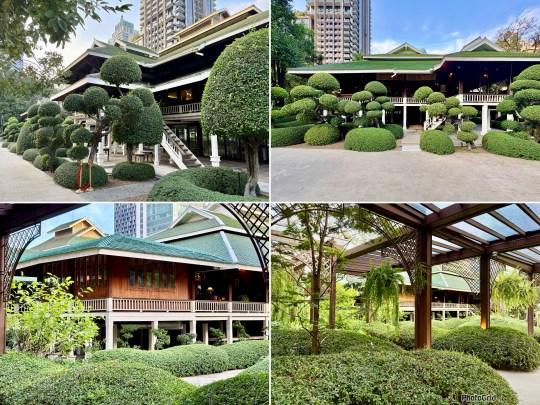
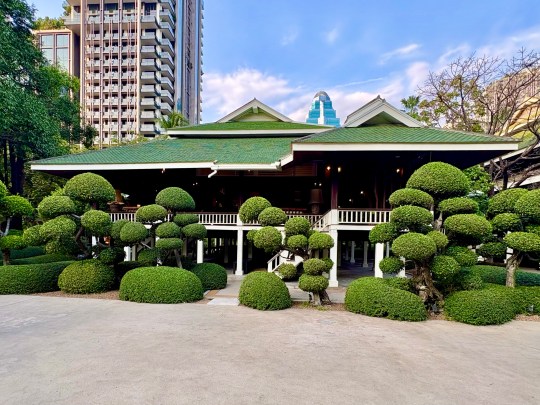
The house was constructed entirely from teak, much of it repurposed from a shipyard and its design drew heavily from Malaysian colonial bungalows rather than traditional Thai houses, resulting in a hybrid “East meets West” style that prioritised ventilation, openness, and adaptability to the tropical climate.
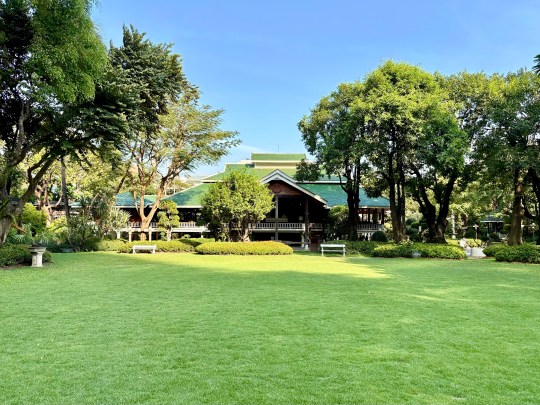
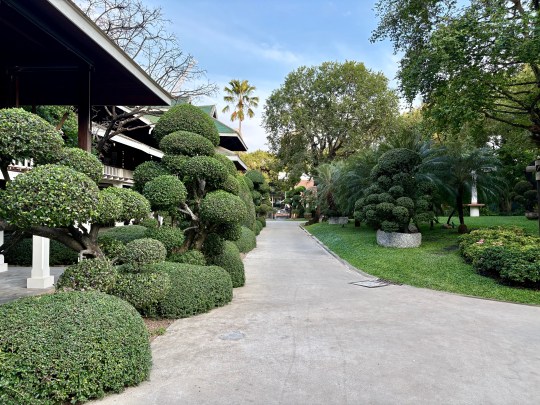
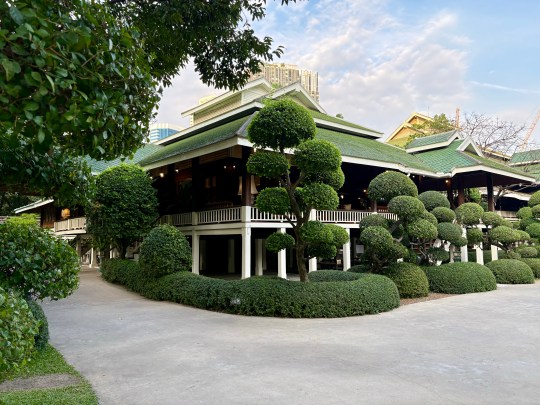
I arrived at the house through its manicured gardens, which included a large open green which had once been dense with trees before the house was opened to the public. We were told that the decorative lotus pond near the entrance had once been a three-metre-deep bomb crater, which Nai Lert decided to repurpose into a calming garden feature.
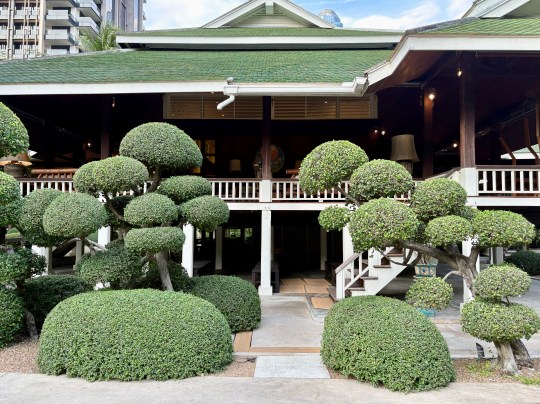
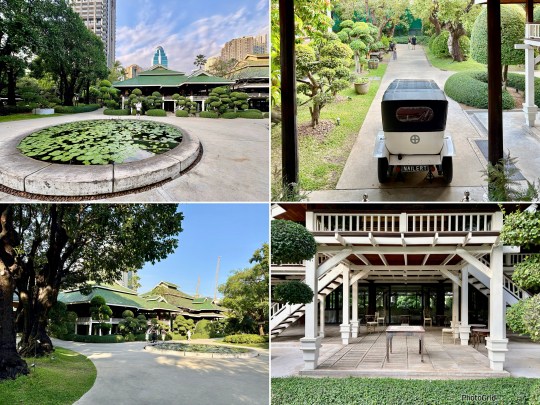
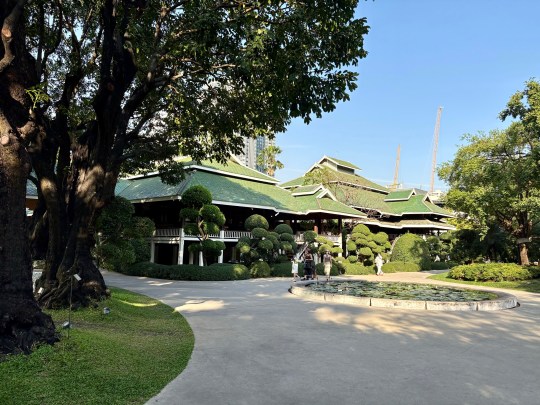
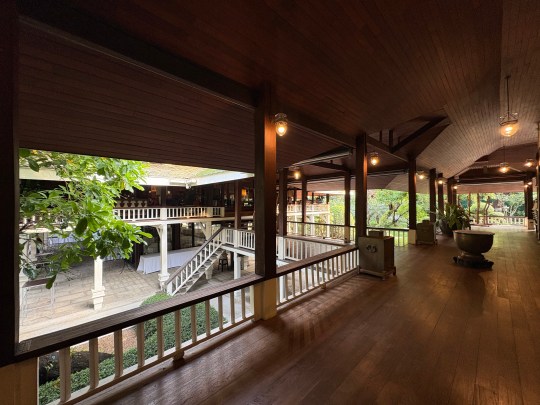
The house was composed of two main connected by a small bridge (one wing for Nai Lert and his wife, the other for their daughter) and was raised above the ground by about 1.5 metres on wooden stilts during a restoration carried out in 2012 to protect it against flooding and improve its usability, a painstaking process that reportedly took four years to complete.
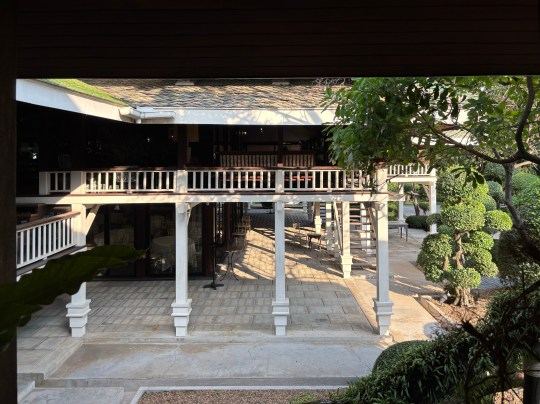
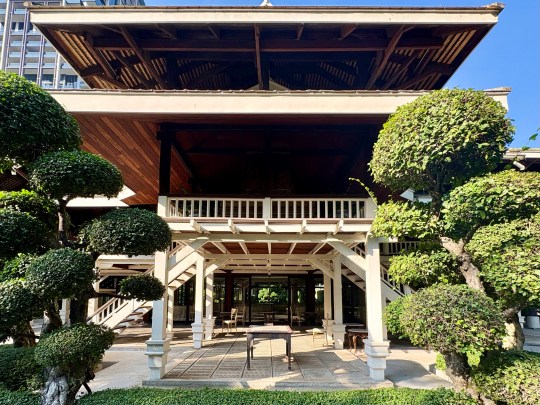
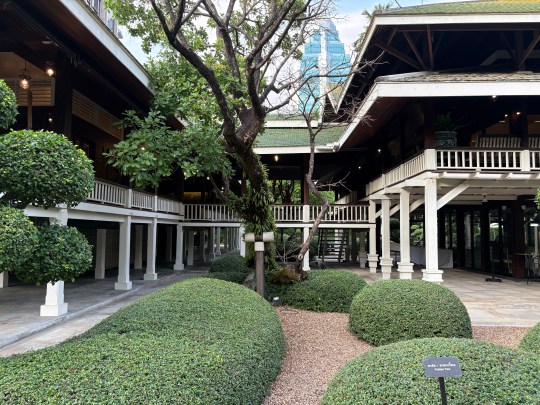
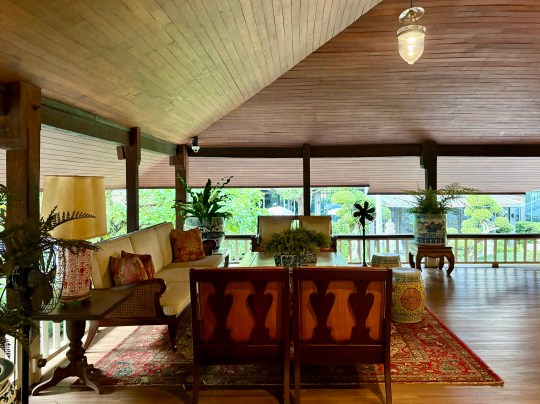
Stepping up into the house via one of the small staircases, the openness of the house was immediately apparent. Much of it was effectively open-air, with walls replaced by curtains or left entirely open to allow air to circulate freely.
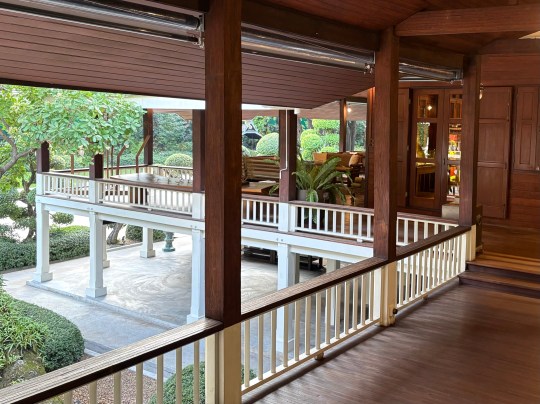
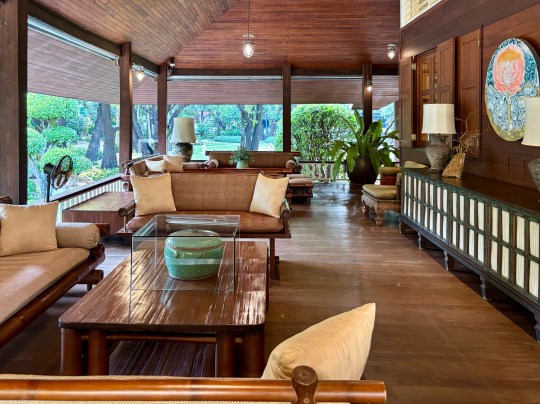
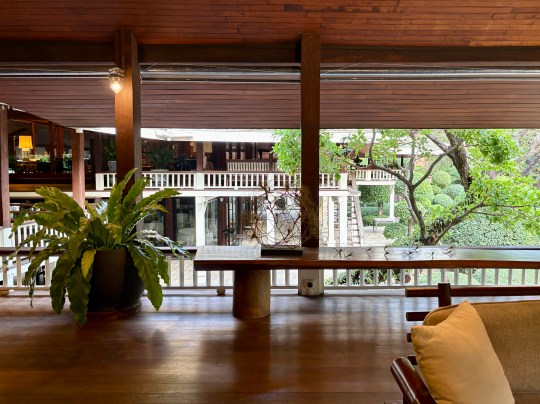
The house – built in central Bangkok well before the days of air conditioning – had been designed with climate in mind: every element from the absence of walls to the raised floor to the three-tiered roof, worked to keep it cool.
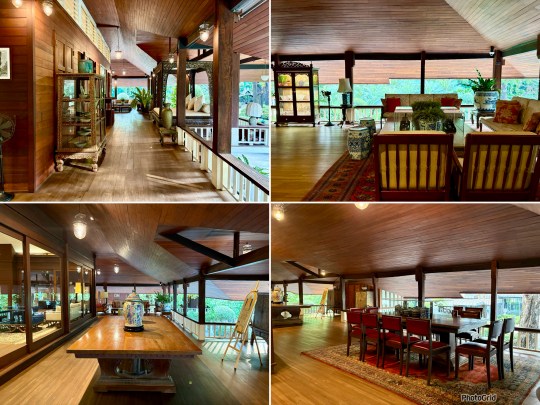
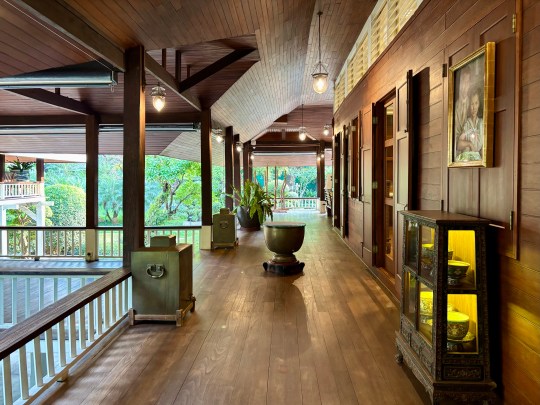
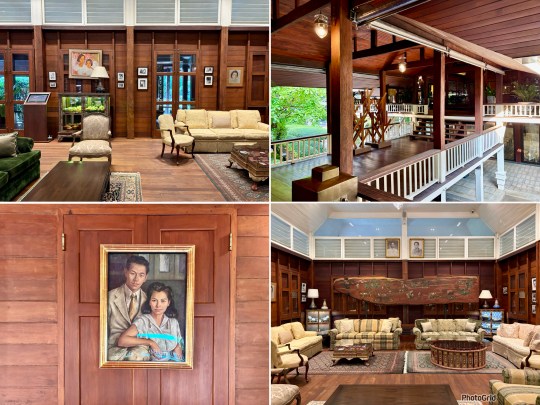
The main living space was one of the few enclosed living spaces in the house and functioned as the central gathering area, furnished with overstuffed Western-style sofas. This was combined with distinctly eastern decor: a decorative wooden panel, over 200 years old, ran across the back wall and an enormous gong had been repurposed into a coffee table.
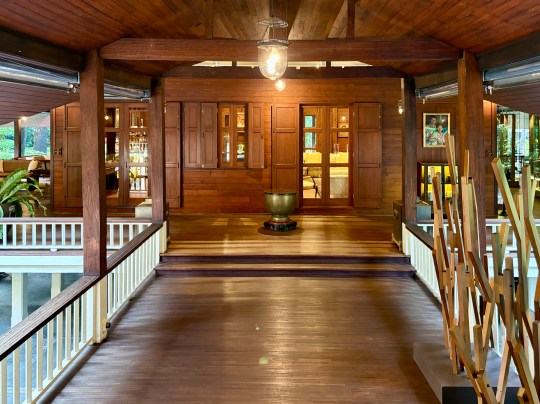
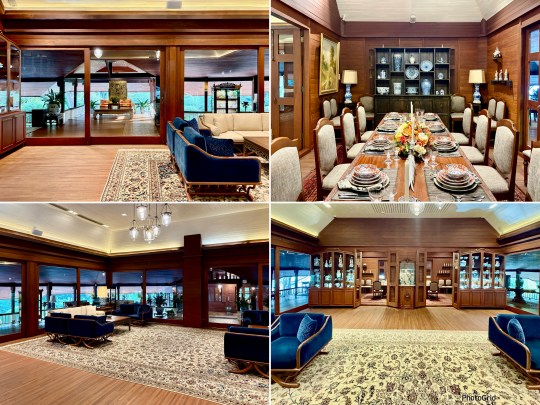
Moving deeper into the house, a further cluster of enclosed rooms formed its core. The main bedroom in the parents’ wing had originally been entirely open, furnished simply with futons laid on the floor but glass walls were added during a 2013 renovation and the room had since been repurposed as a combined living and dining area. The bathroom (thankfully also enclosed) was added later in 1935.
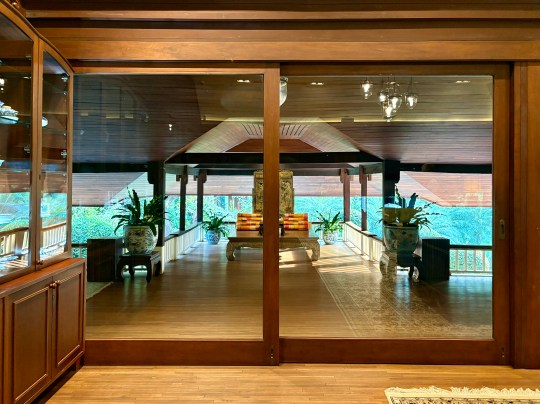
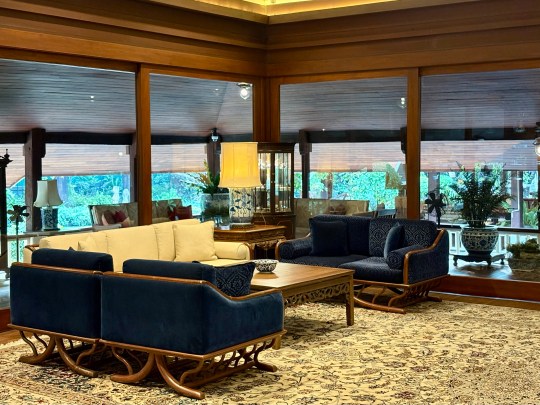
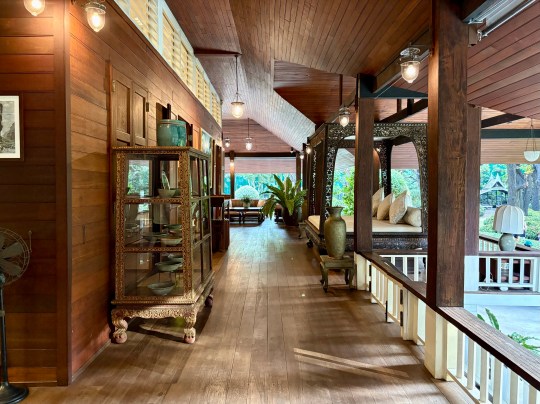
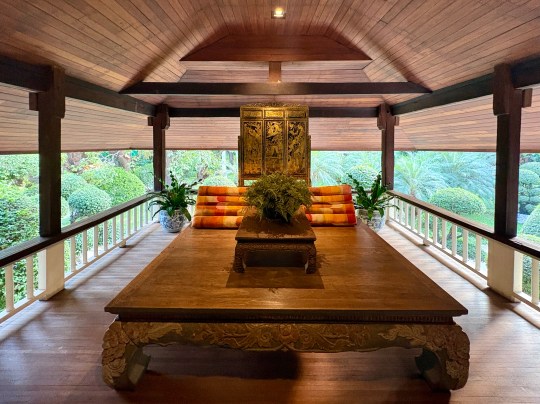
The wide, open plan walkways made up the rest of the living space furnished with dining sets, occasional furniture, clusters of seating and a large bed-like structure that also served as a table and raised seating.
The house has been open to visitors as a museum since 2015, though it felt far less touristy than the much more popular (and crowded) Jim Thompson House nearby. This did, however, mean that arranging a guided tour of the house (the only way to see inside) was a bit more ad hoc. If you’re planning to visit, don’t rely on the opening hours listed online and make sure you speak to someone in advance before turning up.

