Tagged: Golden Lane estate
Barbican Estate and Golden Lane Estate Tour
I thought that I was fairly familiar with both the Barbican Estate and Golden Lane Estate (having, at various points, fantasised about living in both places) but a two-part architectural tour that I attended earlier in the year provided new (at least for me) insights into both.
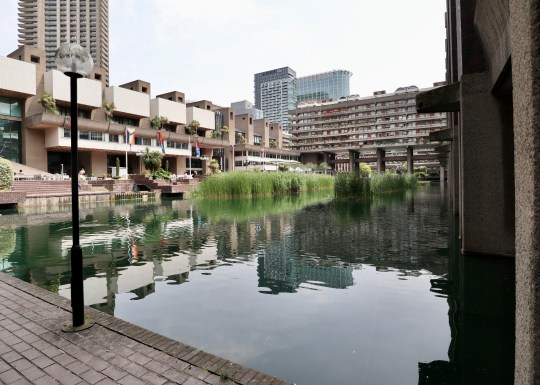
Designed by famed architects Chamberlain Powell and Bon, the Golden Lane Estate came first with construction starting in 1952 and completing in 1962. The Barbican followed immediately after with construction starting in 1963 and completing in phases between 1969 and 1976.
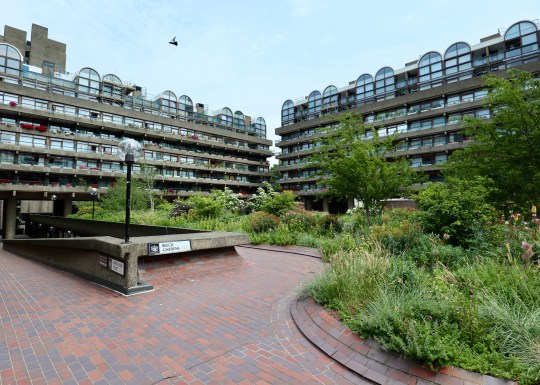


The Barbican Estate was conceived with the ambitious goal of seamlessly integrating the war-damaged site into the larger fabric of the city. It is, however, widely accepted today that it fell short of this objective, creating a desirable residential enclave rather than a vibrant and inclusive part of the city.

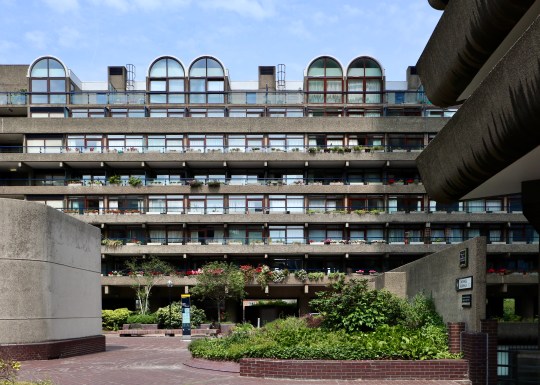

Looking into the estate from the main entrance (a deliberately inconspicuous ramp not visible from the tube station or even the street), it was pointed out that the estate is full of structures and multi-levelled walkways that you can see but cannot get to without an intimate knowledge of the estate’s layout and a master key to get you through its system of locked gates.

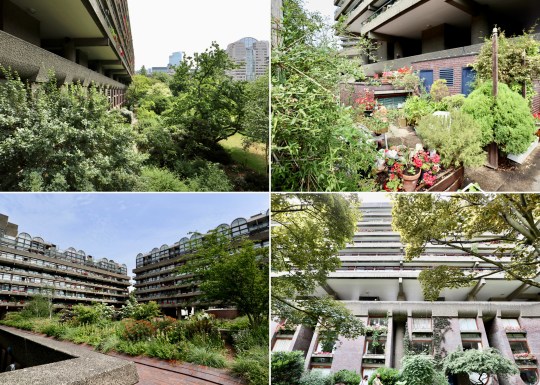

In contrast to the almost impenetrable Barbican Estate, the Golden Lane Estate was designed with openness in mind, with multiple street-level entrances and ways into the estate resulting in most areas being accessible to the public including the communal lawns (save for one private garden) and landscaping. Even the shops built into the edges of the estate were designed to be quasi thoroughfares with entrances at either end and therefore accessible from the street and within the estate (though many have shut off the estate-side entrance as it is reportedly difficult to run a shop in this way).
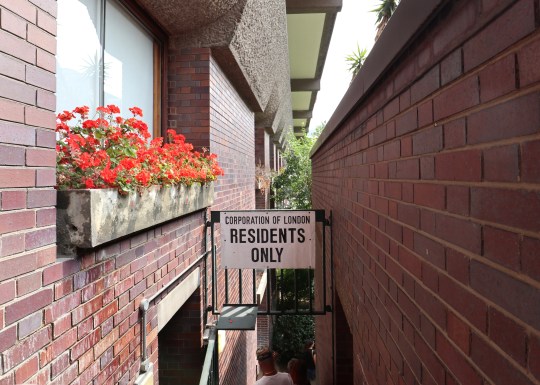


Density and size also set the two estates apart. The Barbican Estate, despite being six times larger than the Golden Lane Estate (40 acres vs 7 acres) accommodates less than three times the number of people (100 people per acre vs 200 people per acre). While this affords Barbican residents more generously proportioned homes and space on the estate, we were told that there is much more of a sense of community and more opportunities for social interaction on the Golden Lane Estate. This can be attributed to there being less space, forcing people to interact in the smaller lifts and communal areas, but also because Barbican residents are reportedly more inclined to keep to themselves.


Despite the fact that the Barbican Estate is technically a council estate, owned by the Corporation of London, it was primarily designed with affluent residents in mind as the Corporation of London wanted to attract a specific demographic to the City of London, requiring potential residents to prove earnings of 5.5 times the rent of the flats.


Due to the introduction of the right to buy scheme in 1982, 98% of Barbican flats are now privately owned and this is likely to rise to 100% as we were told that when a rental lease ends on one of the few remaining Corporation of London-owned flats, they are sold on privately. In contrast, the Golden Lane Estate was designed as social housing for key workers such as policemen, nurses and street cleaners. Today, the Golden lane estate is 50% privately owned by long leaseholders (owing to the right to buy scheme) with the rest owned by the Corporation of London and rented out as social housing.


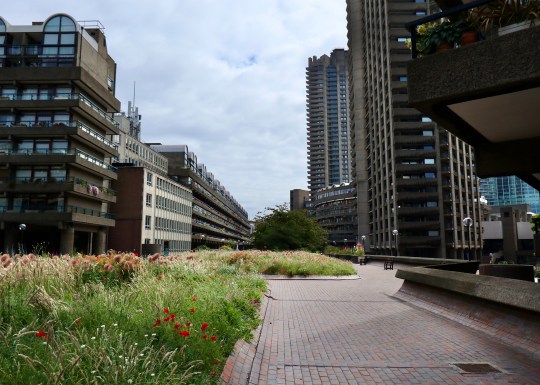
Walking around the gated parts of the Barbican Estate, there was a definite feeling of exclusivity and privacy – everything looked beautifully maintained and you couldn’t see anyone’s front door without further access keys (Lauderdale Tower and Cromwell Tower are the only apartment blocks that have their entrances at street level).
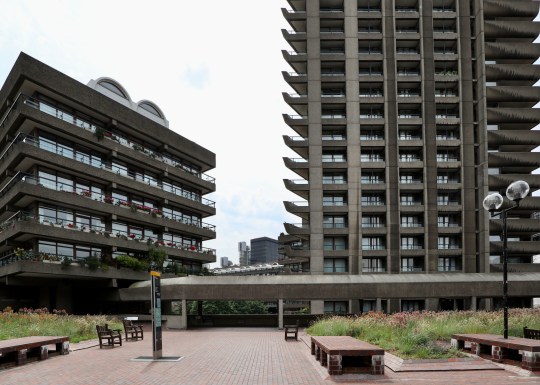
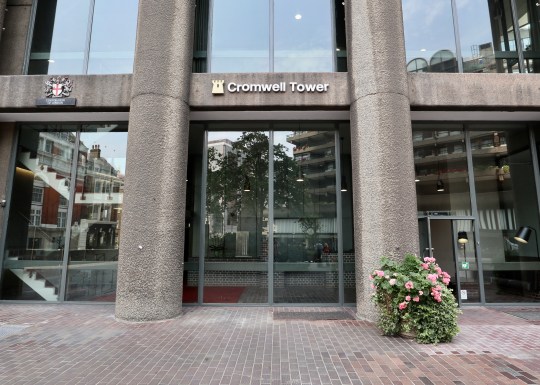

We were told that there was something of a class system within the Barbican Estate, with those in the larger three-bedroom flats on the higher floors of the towers (or indeed, the lucky few in the podium houses, which I visited back in 2017 on an Open House tour) feeling a sense of superiority over their less fortunate neighbours in the smaller flats and studios in the lower rise blocks on the estate (granted that this was just one resident’s personal perspective). It all sounded rather snobbish.
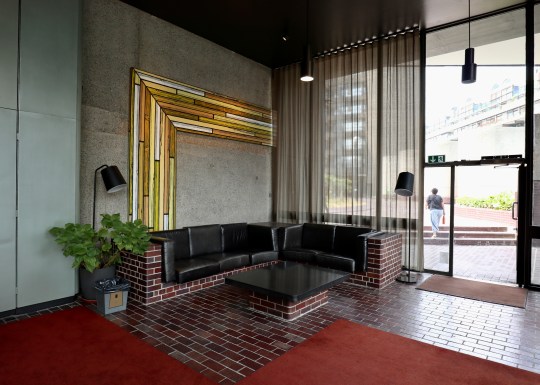
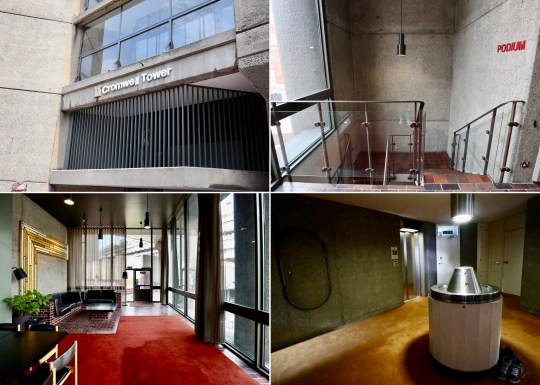
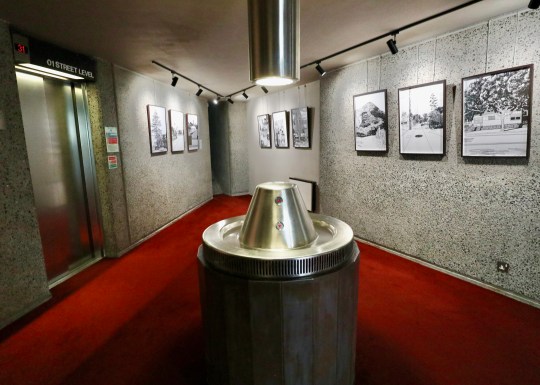
We were fortunate enough to be shown inside a Flat 1A type in one of the Barbican towers (this was the first time I had seen any of the communal areas up close – unsurprisingly, they were a lot like the public areas of the Barbican Arts Centre with similar fixtures and fittings). Photography was not permitted inside the flat so I have used photos of an identical flat in Shakespeare Tower that is currently for sale via Hamilton Brooks.
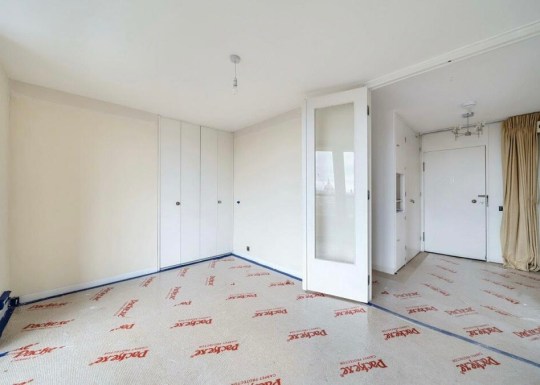
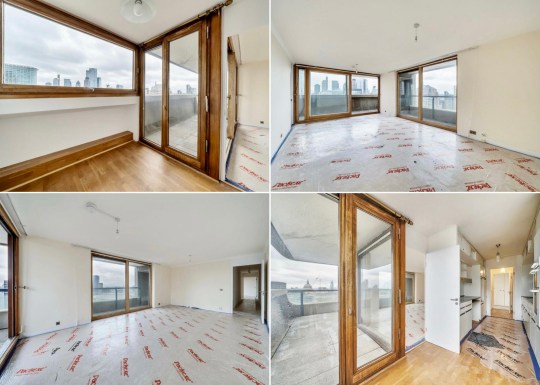
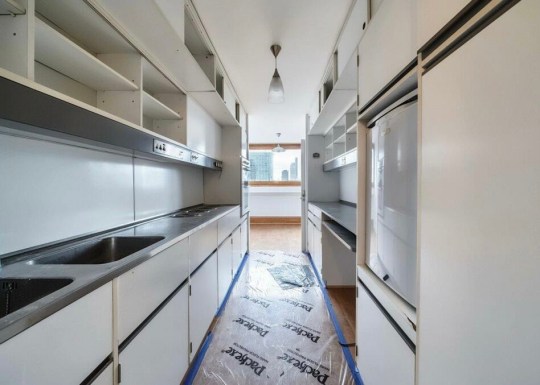
The flat had a straightforward linear layout which allowed for relatively generous room sizes compared to other flats on the estate split over several levels. The flat also had a sweeping balcony that swept around the perimeter of the living room and bedrooms.
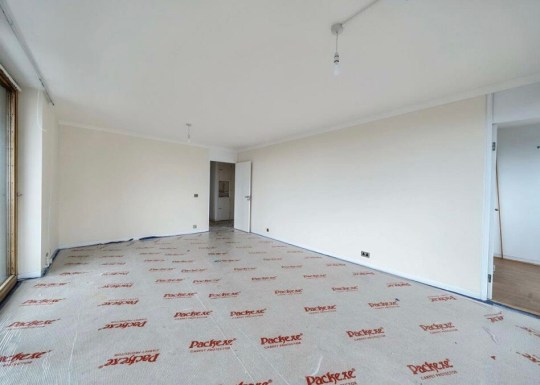

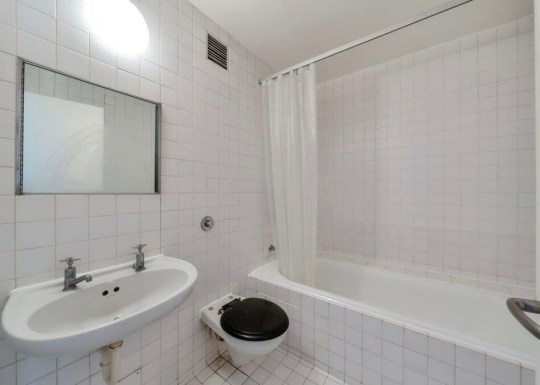
The owner of the flat had retained the original underfloor heating and Brooks Marine bathrooms and kitchen, which reportedly still worked well despite falling apart due to the fact it was over 50 years old. We were told that it is a requirement under the lease to lay fitted carpets in all of the flats for noise insulation purposes. It is clear that not everyone observes this rule (many flats on the estate are ostensibly uncarpeted) but we were told that if someone complains, this term of the lease is rigorously enforced and flat owners have been known to be required to replace expensively fitted flooring with carpets.
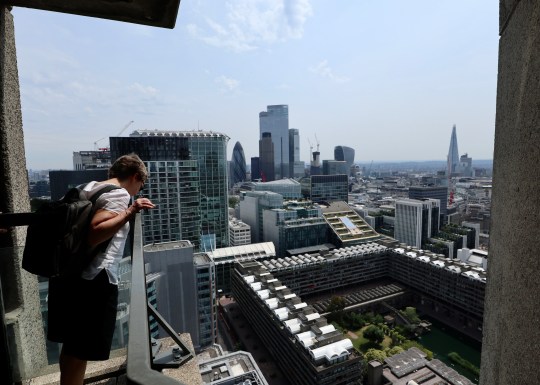

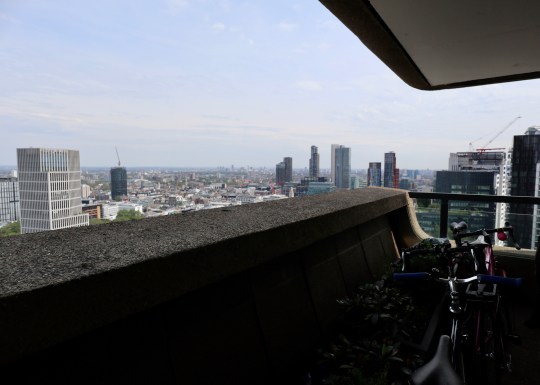
We were told that the flats were designed with much less storage than people have today as people then generally had fewer possessions (though I still spied a number of fitted wardrobes). The flat was still serviced by the French patented and designed Garchey waste disposal system, which enables residents to dispose of small items of rubbish such as tin cans, though a lot of people have now removed their system (the system, we were told, sometimes smells). Rubbish is otherwise collected daily from small two-sided cubby holes outside the flats.


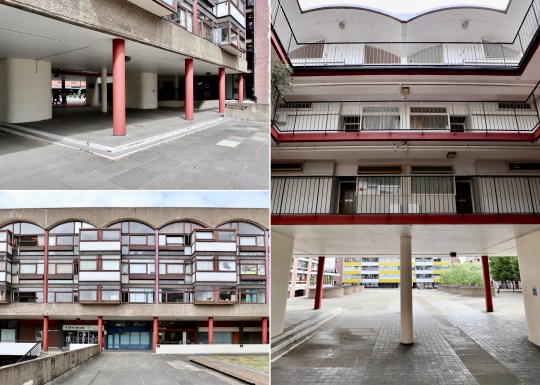
Walking around the Golden Lane Estate was an entirely different experience to the Barbican Estate. Having had it pointed out to me, there was that aforementioned feeling of openness and accessibility – you could see lots of people’s front doors (originally all flats on Golden Lane Estate were completely accessible but now have been fitted with entry phone systems) and while the buildings were laid out across a number of levels, everything was still very accessible with lots of ramps and a clear layout. Unlike with the Barbican Estate, it was very clear how to get everywhere on the estate.


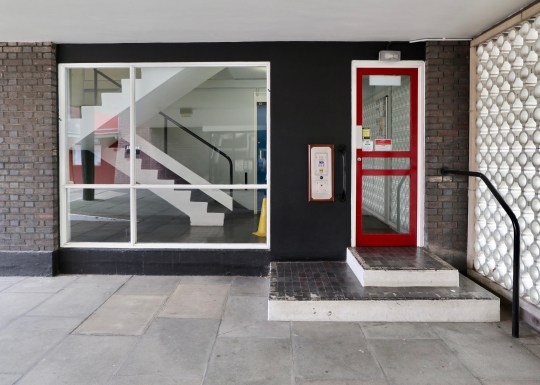
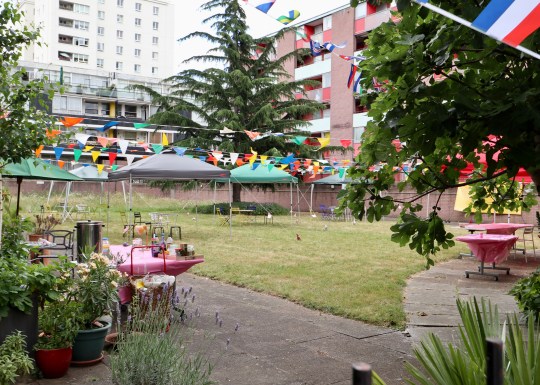
Adding to the sense of community were the communal gardens (not enough room for allotments but residents tend to grow things in bags), the Sir Ralph Perring community centre for elderly residents in the middle of the estate (which contained some nice Ercol furniture), tennis courts and gym/swimming pool. By way of contrast, the Barbican Estate has no community centre (we were told this was quite fitting as there isn’t really a sense of community) and the on-site gyms are all privately owned by third parties.
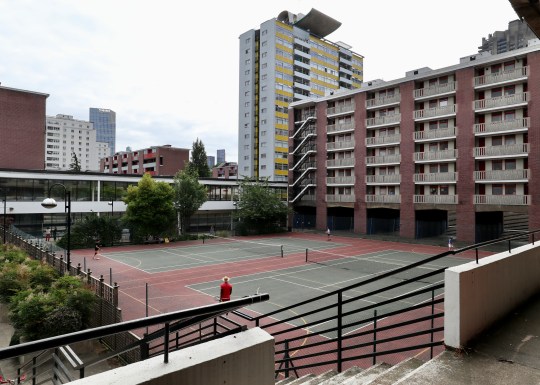
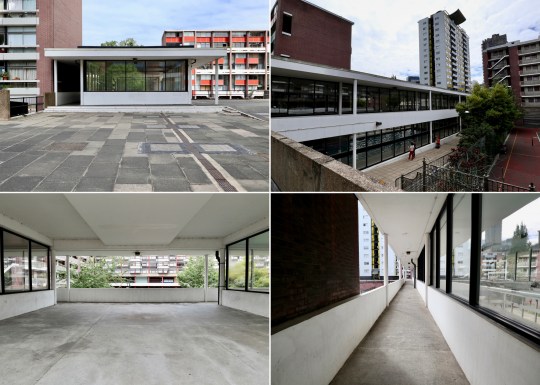

It had to be said that the Golden Lane Estate was slightly less well maintained than the immaculate Barbican Estate with a few buildings showing signs of disrepair. Residents did, however, appear to make a lot of effort with their balconies and gardens with many of the flats allocated enough outdoor space for people to consider their own.


Compared to the uniformly brown Barbican Estate, the different residential blocks Golden Lane Estate were pleasingly colour coded, the best example of this being the 16-storey Great Arthur House, which stood in the middle of the estate clad in cheery yellow screen printed glass. We were told that the sculptural element at top of Great Arthur House was a tribute to Le Corbusier and that there used to be a garden for residents at the top of the building which was closed off after a number of suicides.
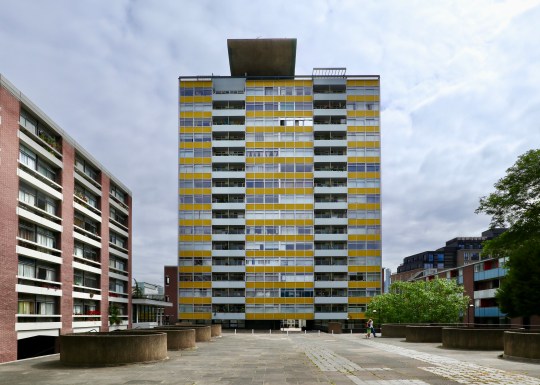
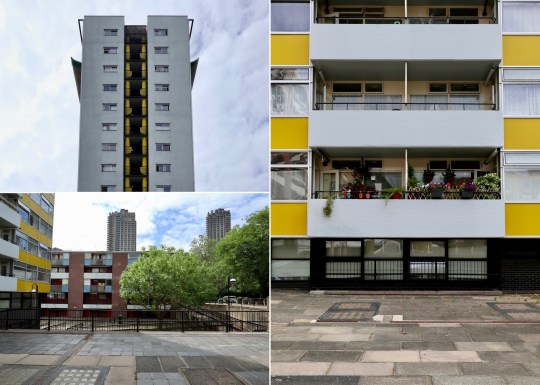

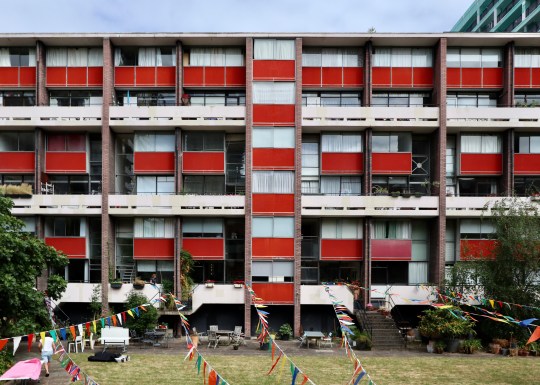
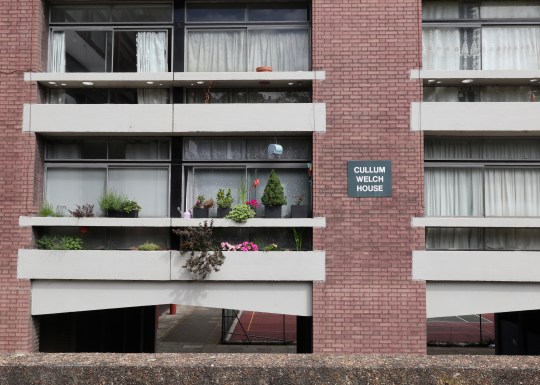
Other blocks included Cullum Welch House, which was comprised entirely of small 30m2 studio flats (we were told that these were so well designed that having less space per person didn’t mean that they were more cramped – they just required the resident to own less stuff), Great Arthur House containing one bedroom flats with very narrow kitchens (too narrow to even be a galley kitchen) and bathrooms, Bowater House, Bayer House and Basterfield House each containing two floor duplex flats and with cantilevered staircases (I visited one of these in Bayer House all the way back in 2014 when I started this blog and called it my dream home at the time) and Crescent house containing distinctive barrel vaulted studio flats with a small bedroom enclosure.

 Modernist Pilgrimage