Category: Property Search
Keeling House, Bethnal Green E2
Keeling House, Bethnal Green E2
Grade II listed apartment block
Architect: Denys Lasdun
Year built: 1954-1957
I’ve always liked the idea of living in Keeling House: it is, in my opinion, one of the best looking modernist tower blocks in London and handily, its Bethnal Green location would be within walking distance of the office. As a result, I jumped at the chance at viewing one of the flats when it came onto the market earlier this year as part of my ill-fated property search.
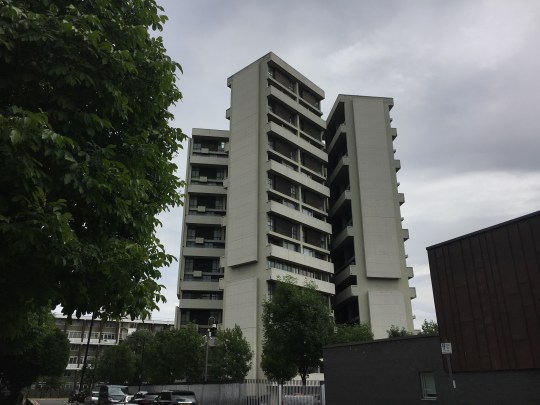
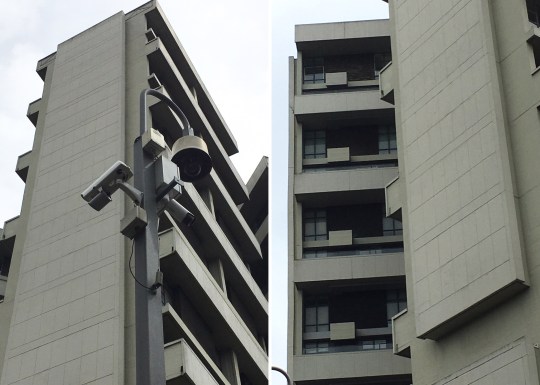
Whilst first impressions of the area immediately surrounding Keeling House weren’t overwhelmingly positive, the exterior of building did not disappoint. Originally built between 1954 and 1957, Denys Lasdun’s design for Keeling House shunned the traditional slab block in favour of an unusual winged plan (four blocks arranged around a central service tower), giving the building the appearance of a futuristic concrete windmill. The winged plan also means that there are only four flats per communal stairwell, originally designed to encourage the occupants of the flats to interact with each other.

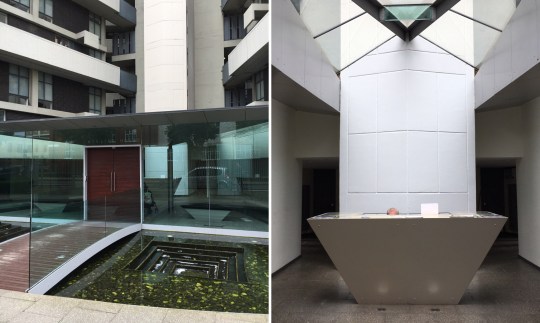
The communal areas were renovated in 2001 when the building was converted from social housing into a block of luxury flats. I think the architects, Munkenbeck + Marshall, may have gone a bit overboard with this task when it came to the downstairs lobby: the bridge, trickling water features and stone sculptures simultaneously evoke a Pierce Brosnan-era James Bond film and a corporate waiting room. I thought it was all a bit unnecessary and definitely not in keeping with the period of the original architecture.
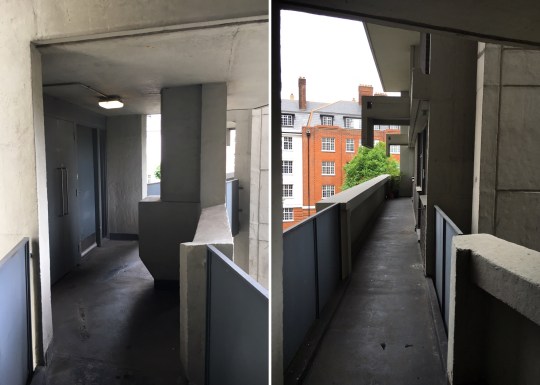
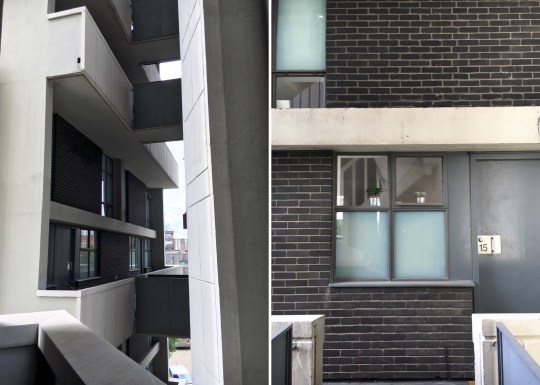
The flat that I was viewing was a split-level 2-bed occupying the second and third floors of the building. Apart from the ground floor flats and the penthouse that Munkenbeck + Marshall tacked onto the top of the building, I understand that all of the flats have the same layout. The lower floor of the flat consisted of an open plan living area and kitchen with a balcony and the upper floor contained the bedrooms and (very small) bathroom.
I must say I was slightly underwhelmed by the flat, which felt a little cramped and tired. The bathroom suite and admittedly well designed and attractive kitchen units (built into recesses in the walls to save space) clearly hadn’t been updated since 2001 and there was a distinct lack of storage, particularly when it came to the bedrooms. The outlook wasn’t fantastic either (other estates or the tops of other estates) though a flat on one of the higher floors would probably have been much better in this regard.
At the original £600k asking price, I wouldn’t have had any funds left to restore it to its former glory though I understand the seller may have since accepted an offer at around £580k.
Frobisher Court, Forest Hill SE23
Frobisher Court, Forest Hill SE23
Apartment block forming part of Dulwich Wood Park estate; winner of Civic Trust Award 1964
Architect: Austin Vernon & Partners
Year built: 1959
I’ve wanted to buy one of these Austin Vernon & Partners flats in the Dulwich Wood Estate ever since I went to see one in Raleigh Court last year. Even though that particular example was a bit decrepit with rubbish views into other people’s flats on the estate, the combination of the pleasant, almost wooded setting, the mid century communal areas and the spacious, open layout of the flat led me to keep an eye out for other flats on the estate coming onto the market.
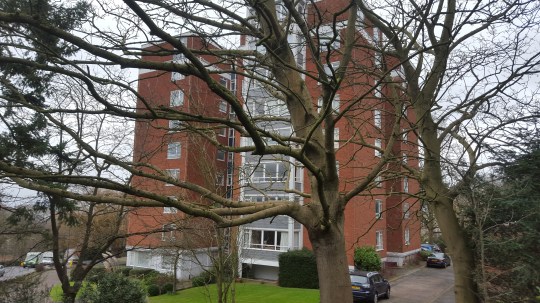

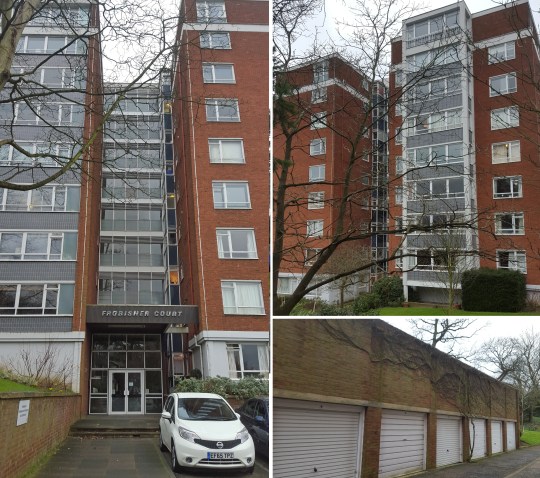
One year down the line, I’ve seen six other examples of the same flat, all of which have been pretty much identical in layout but have varied dramatically in condition from perfection to complete wreckage. Having had bids rejected on two of the better ones and a sale fall through on another (I’m still reeling from the sheer injustice of that experience), I decided to view a 7th floor flat in Frobisher Court that had just come on the market.


Although Frobisher Court looked almost identical to all of the other blocks congregated around Gipsy Hill I’d been to see, it was actually situated a couple of miles north from the rest in the slightly more affluent Forest Hill. The facade and communal areas looked familiar with the slightly oppressive patterned sixties tiling and juddering lift present and correct but this particular building seemed particularly well kept with not a spot of peeling paint or limp indoor plant to be found.

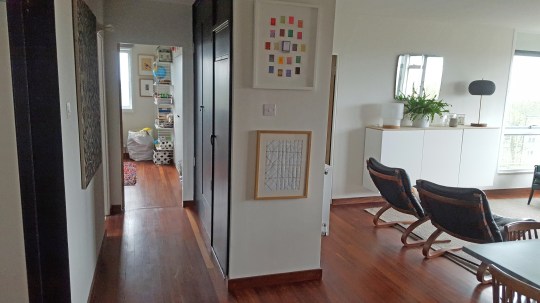
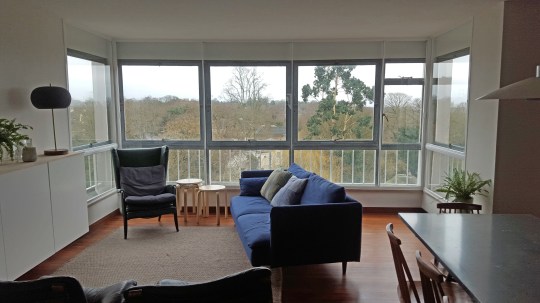
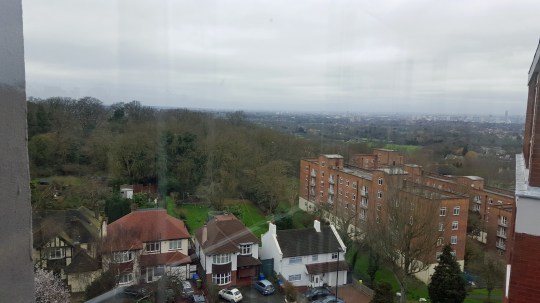
The flat itself, which was situated at the very top of the building, was pretty stunning. It had the same open plan layout of all of the others I’d seen but appeared to have an additional bay window with great, far-reaching views of the surrounding area.
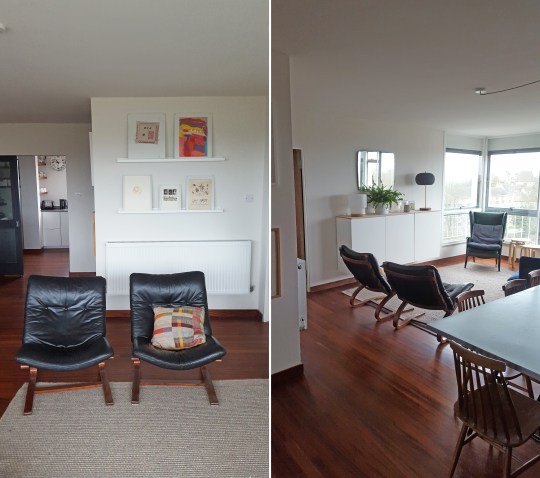
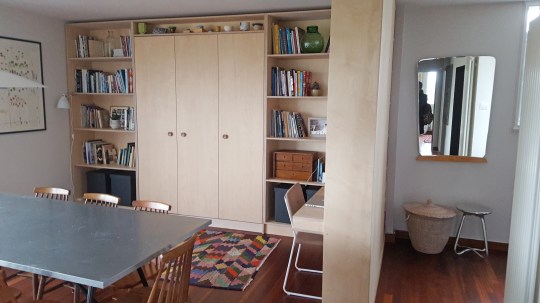
The current owners had made bold but period-appropriate design choices, including some great built-in furniture (I loved the bespoke hallway unit) and coloured feature walls. Unlike all of the other flats of this type I’d seen, the solid wood flooring continued beyond the main living areas into the bedrooms, which somehow made the flat seem more spacious.
The only downside to this particular flat, which I loved and could completely picture myself living in, was the asking price: it was an absolutely ridiculous £195,000 more expensive than the last one of these flats I viewed. I appreciate that you sometimes need to pay a premium for a well-presented property but in my opinion, no amount of nice built-in furniture or pretty views is worth an additional £195,000. The last time I checked, this flat was still on the market. If the owner were willing to reduce the price to something more sensible, I may well make an offer.
Orchard Close, Honor Oak Park, London SE3
Orchard Close, Honor Oak Park, London SE3
Seventies terraced bungalow
Architect: Unknown
Year built: Late 1970s
I wasn’t sure what to expect when I turned up to view this bungalow in Honor Oak Park. My hopes weren’t especially high: the estate agent’s photos were rubbish to the extent that it was impossible to tell what the bungalow looked like from the outside, it didn’t look like there was a lot of space judging from the floor plan and I knew nothing about the area. However, the blurb’s description of an “open plan living area with a vaulted ceiling” and the idea of owning a freehold property in London for under £500,000 was enough of an incentive to go and take a look.
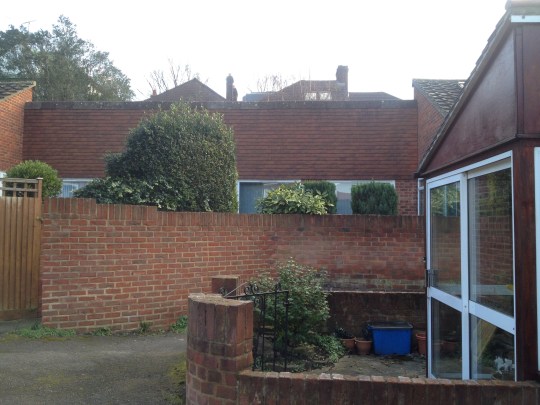
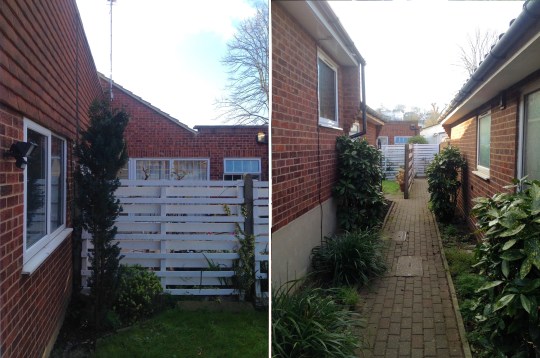
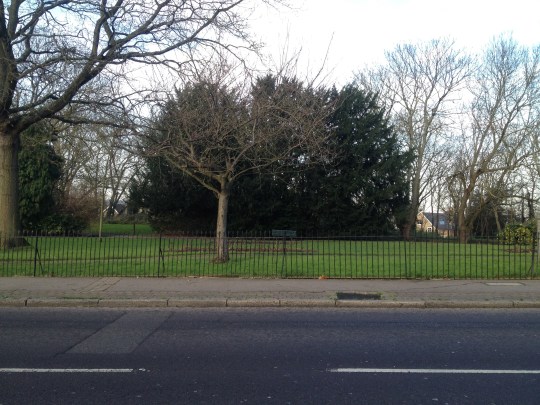
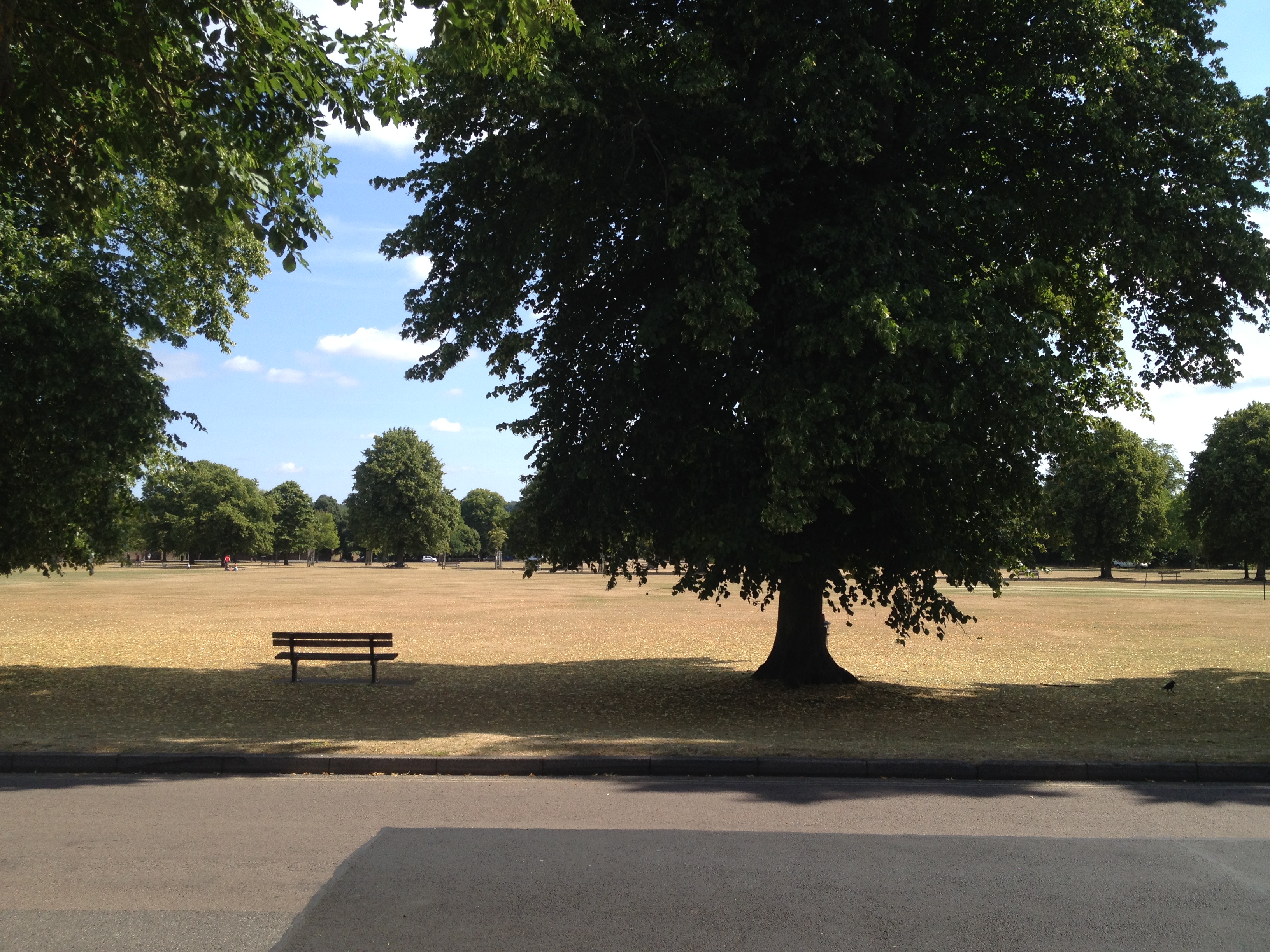
First impressions were mixed. The area seemed pleasant enough and there was a leafy park just across the road from property. Contrary to expectations, the bungalow wasn’t a detached property and was instead part of an unusual terrace of bungalows, all joined up in a slightly higgledy-piggledy manner. The triangular pitched roofs gave the development a jagged silhouette that wasn’t entirely pleasing to the eye.
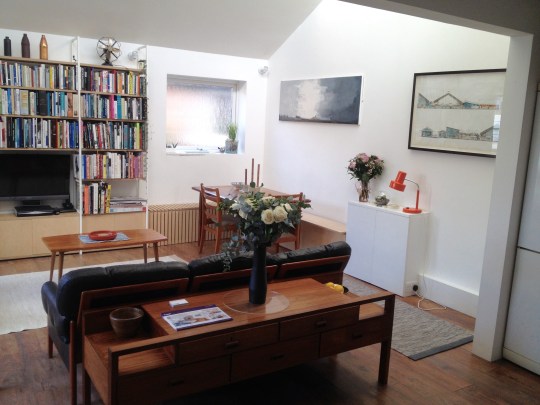
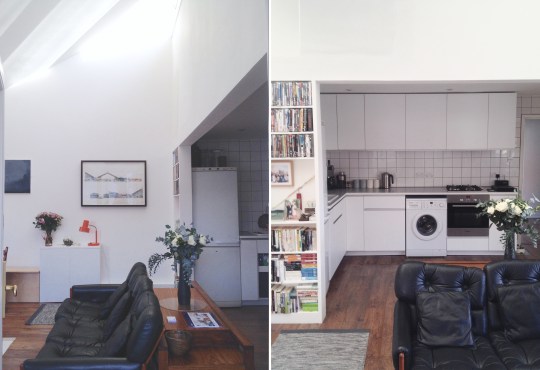
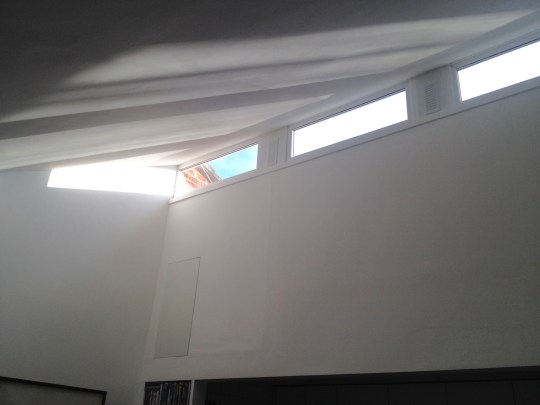
The bungalow’s main entrance was a sliding patio-type door onto which a slightly makeshift-looking porch had been built. The sliding door opened straight onto the main living area, which was actually a pretty unusual and impressive space thanks to the vaulted ceiling and the amount of natural light coming in through the patio door and skylights. The rest of the property was more standard: two smallish bedrooms, an inoffensive but slightly dated bathroom and a small walled garden. A further exit next to the bathroom opened onto a narrow passage which ran alongside the whole length of the terrace, apparently for fire safety reasons.
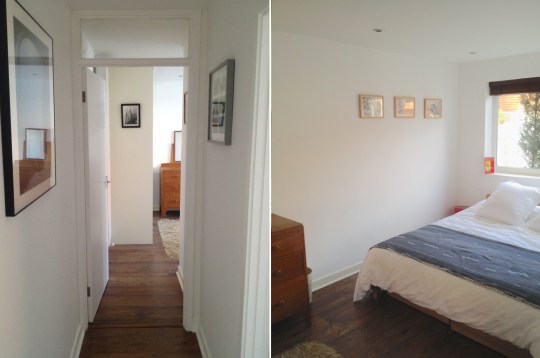
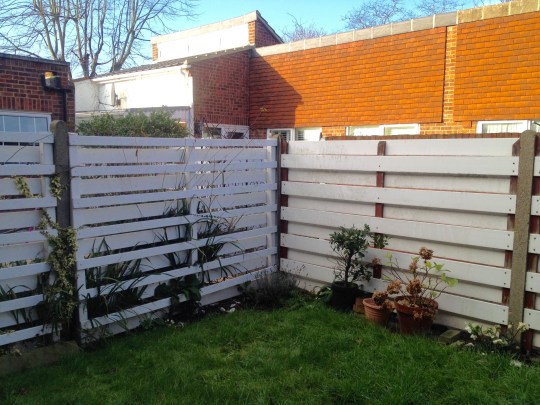
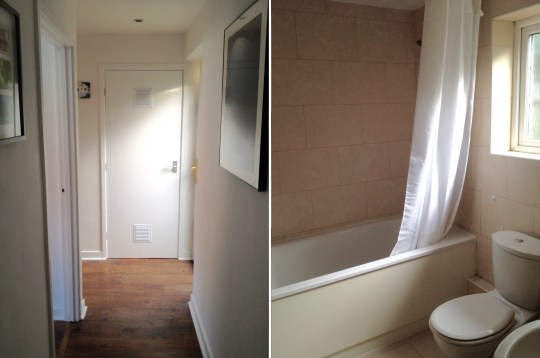
I did like this property on the whole. I was quite taken by the main living area and the good decorative order overall was such that I could imagine moving straight in with all of my things without even needing to paint a wall. However, rather typically, it had been snapped up by the time I’d even thought about a second viewing.
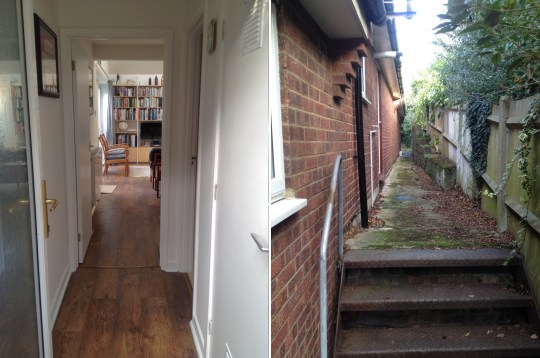
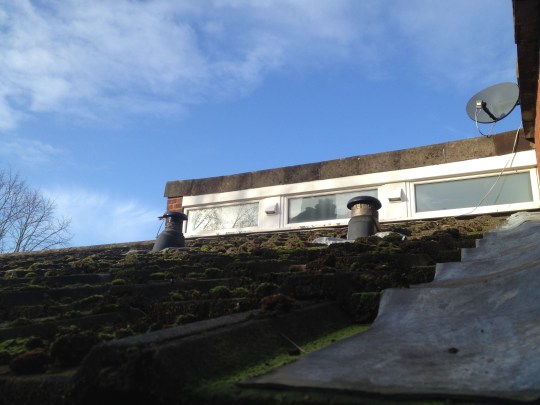
Apologies for the appalling image quality in this post – my expectations were clearly so low that I didn’t even bother to bring my proper camera along to the viewing.
Hallgate, London SE3
Hallgate, London SE3
‘Span’ flat in Grade II listed Hallgate, which forms part of the Cator Estate
Architect: Eric Lyons
Year built: 1950s
My interminable search for a modernist property, which has now been going on since June 2015, brought me to yet another Span development, this time in Blackheath.

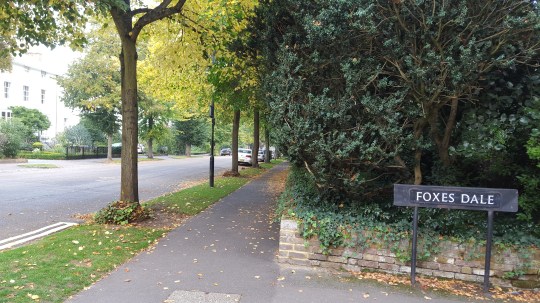

Hallgate is a Span development of flats forming part of the Cator Estate: accessed via Blackheath Park, a wide and tree-lined private drive, it feels tranquil and removed from the main roads, traffic and any commercial activity. Hallgate shares many features with Parkleys in Ham including those elegant, open porches, wide rectangular windows and flat roofs but the choice of materials and colour palette (white cladding, sand-coloured brick and grey slate) gives Hallgate a less aggressively retro, more timeless appearance.


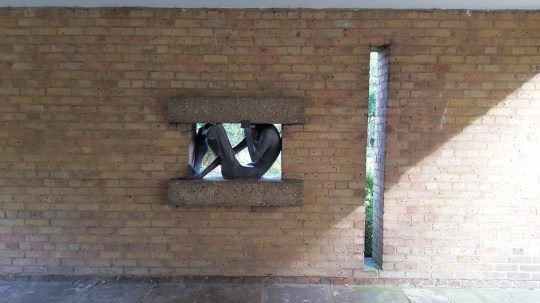
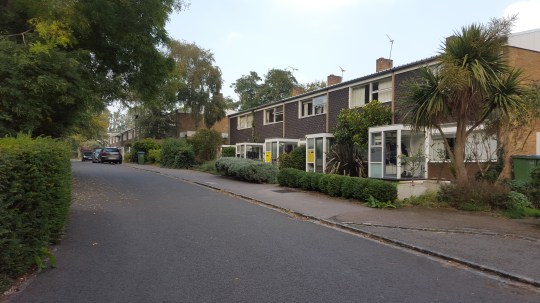
Further distinctive Span housing lies behind Hallgate along The Hall, a snaking road lined with rows of neat, boxy two-storey houses, which looked almost exactly like the Span houses that I visited in Teddington and a further cluster of flat-roofed apartment blocks arranged around a communal green, which looked like those in Parkleys except these had a striking, rather curious grey-and-green colour scheme. The communal grounds are typical for a Span development: lushly planted and well maintained, thanks to an astronomical service charge.


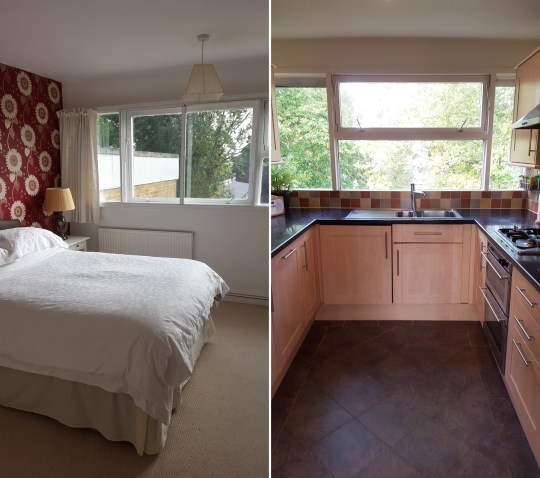
Unfortunately, although I liked the setting and the development’s exterior, I found the Hallgate flat itself a bit disappointing. Whilst the living room and appended dining area room had a pleasant outlook onto the estate and was positioned to catch plenty of light, the bedrooms were small and the kitchen, bathroom and decor in general were all a bit tired. Creaky timber-framed windows aside, which have to be retained for Grade-listing purposes, it didn’t have any original features.



Langham House Close furniture
Whilst the flat in Langham House Close wasn’t quite the right fit for me, I was quite taken by its futuristic-looking mid century modern style.
I was determined not to use the expression “get the look” but this is effectively the purpose of this blog entry:

- TEJN faux sheepskin rug, IKEA
- Sisal flooring, buy something similar at urbaneliving.co.uk
- Arne Jacobsen Grand Prix chair, Skandium
- Vitsoe 606 Universal Shelving System, Vitsoe
- Earl Saarinen Tulip round dining table, TwentyTwentyOne
- Artek 900 Tea Trolley, Pink Apple Designs
- Eames Modernica rocker, SCP
- Arne Jacobsen floor lamp, Skandium
- 101 Moov sofa, TwentyTwentyOne
Garden Royal / Heath Royal, Putney
Garden Royal / Heath Royal, Putney
Architect: Unknown
Year built: 1960s
I don’t know much about the history of these two developments in Putney other than that they look, to my untrained eye, a bit 1960s. Given the similarities between the two blocks – Garden Royal (orange frontage) and Heath Royal (dark grey frontage) – I assume that they were built as two phases of the same development at around the same time.
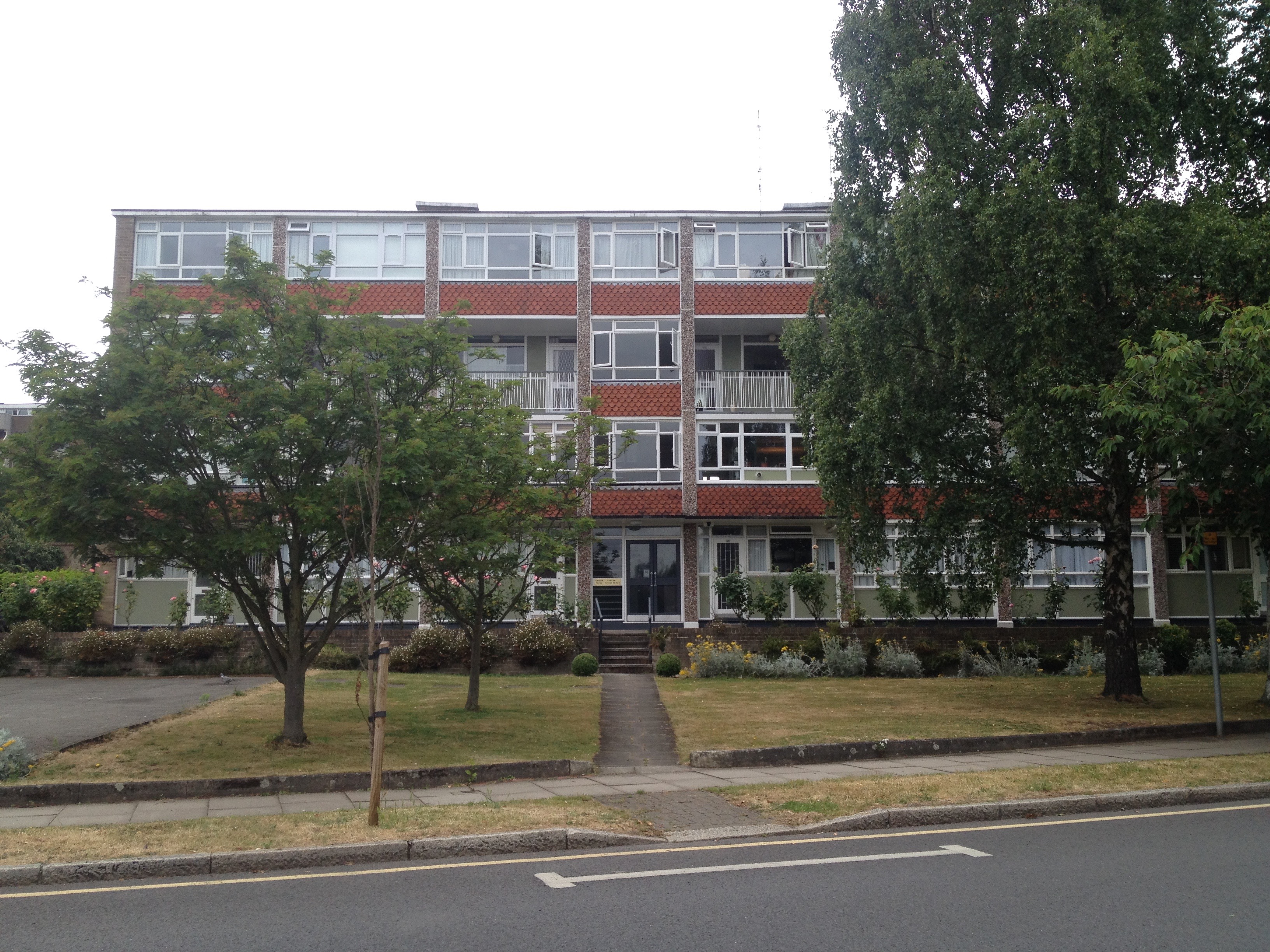
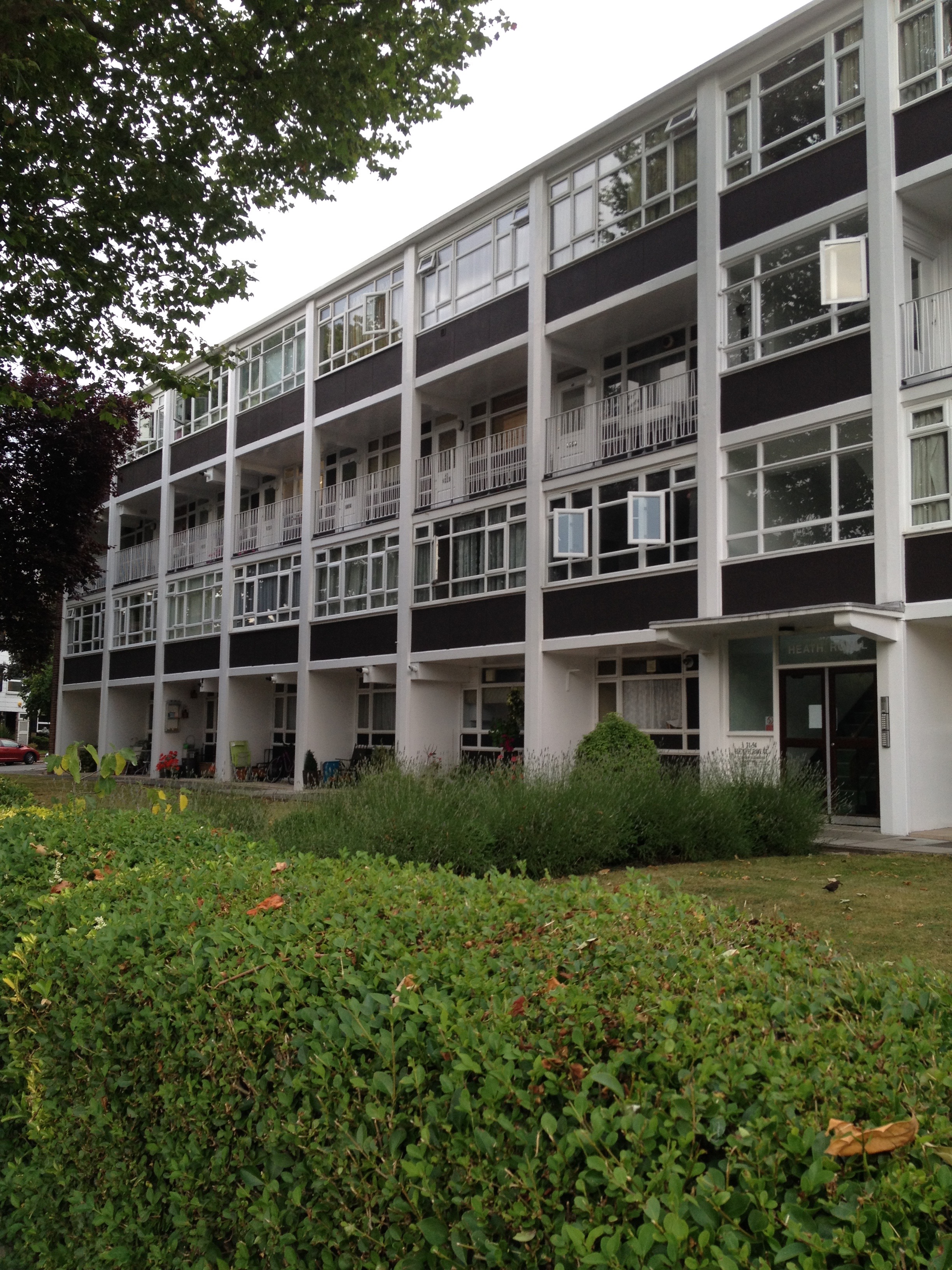
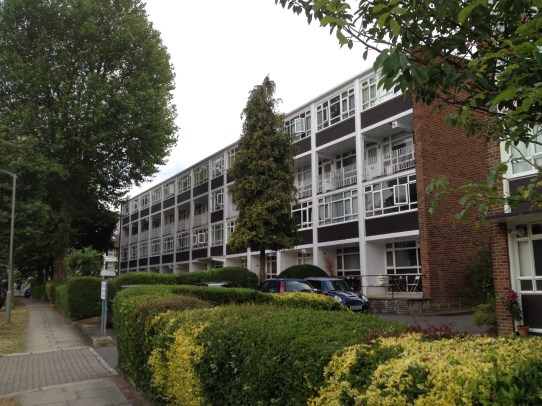
Each of Garden Royal and Heath Royal consist of three perfectly cuboid four-storey blocks angled around some nicely kept gardens and rather suburban-looking garages. Whilst the development is evidently a 1960s build with vaguely retro stylings, there is a distinct absence of design flourishes or interest: I don’t think either block would warrant being part of the Open House scheme, for instance.
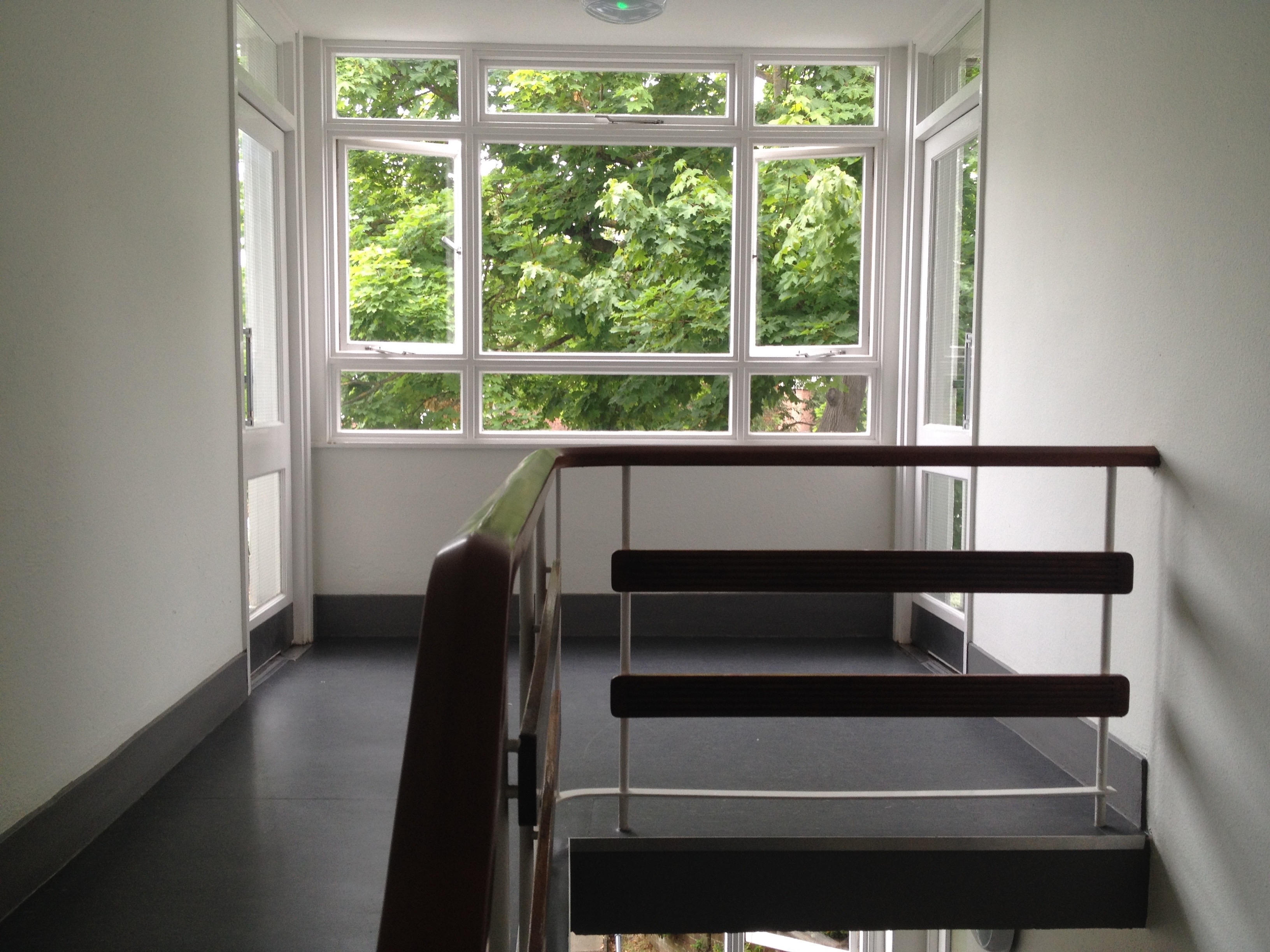
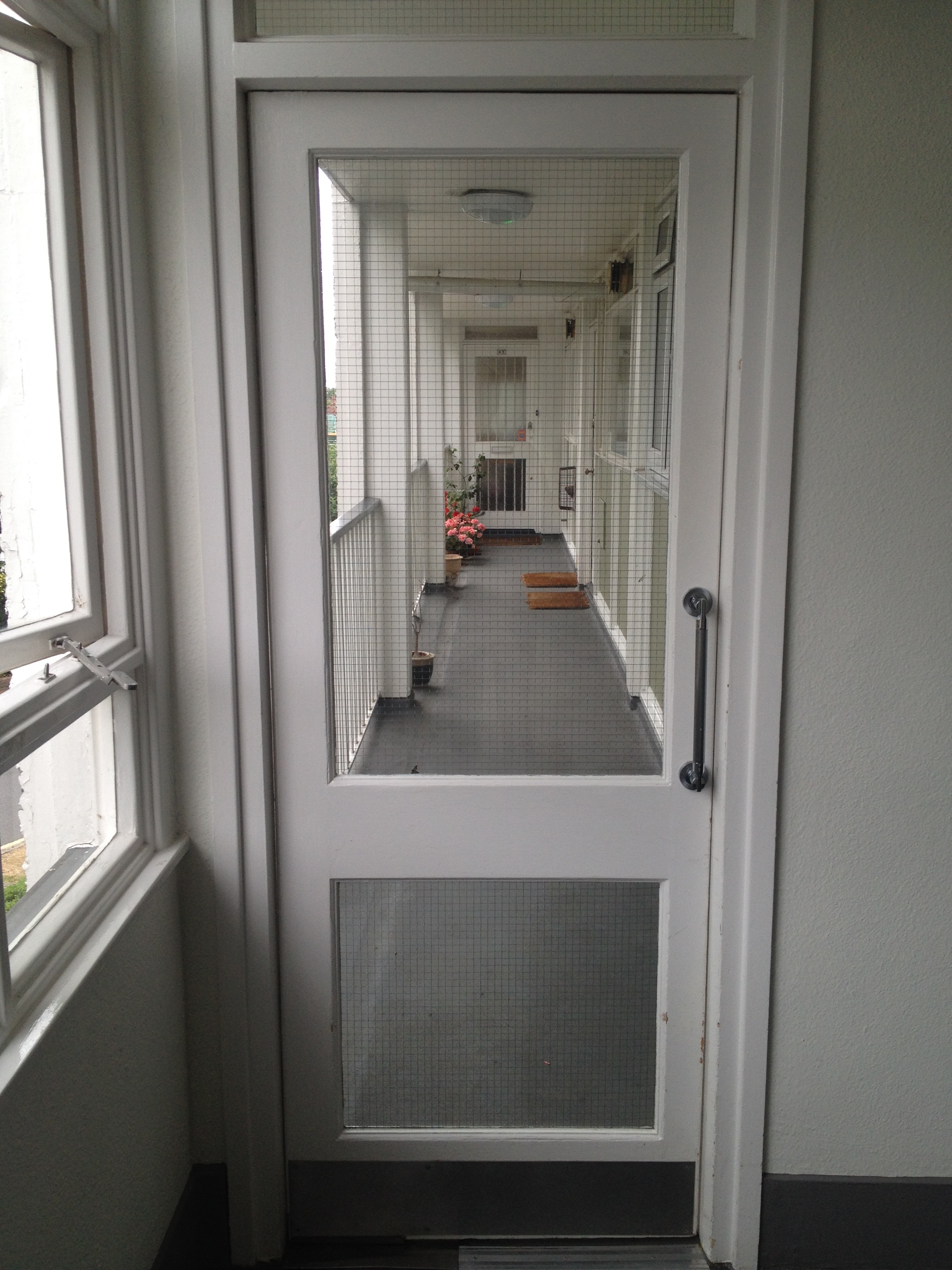
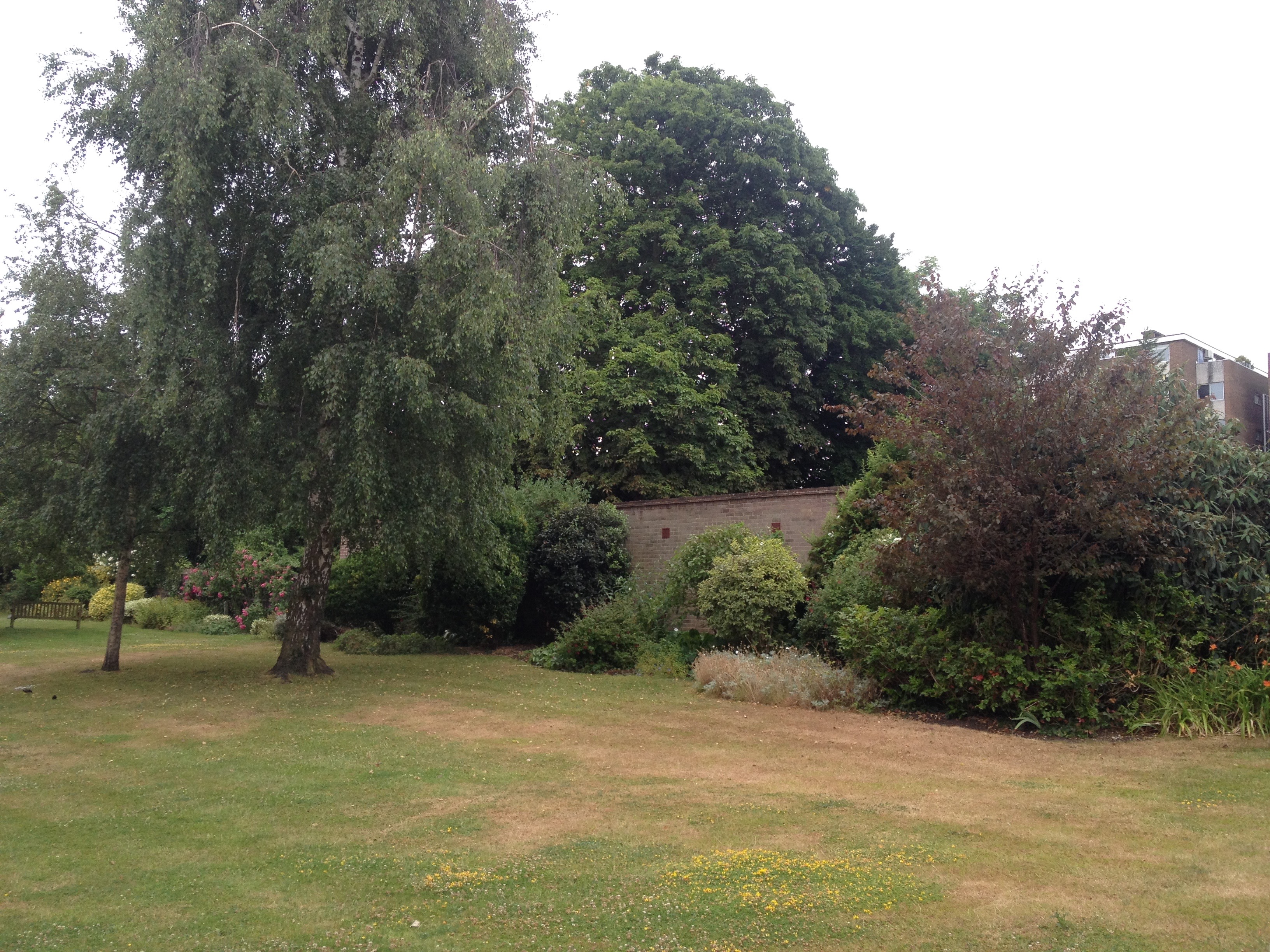
Each flat within Garden Royal and Heat Royal is a split level duplex spanning either the ground and first or second and third floors with a layout reminiscent of the dream flat that I visited in the Golden Lane Estate last year (kitchen and living room downstairs, open staircase in living room leading to two bedrooms and the bathroom upstairs). I viewed two flats with exactly this layout: one in Garden Royal and another in Heath Royal.
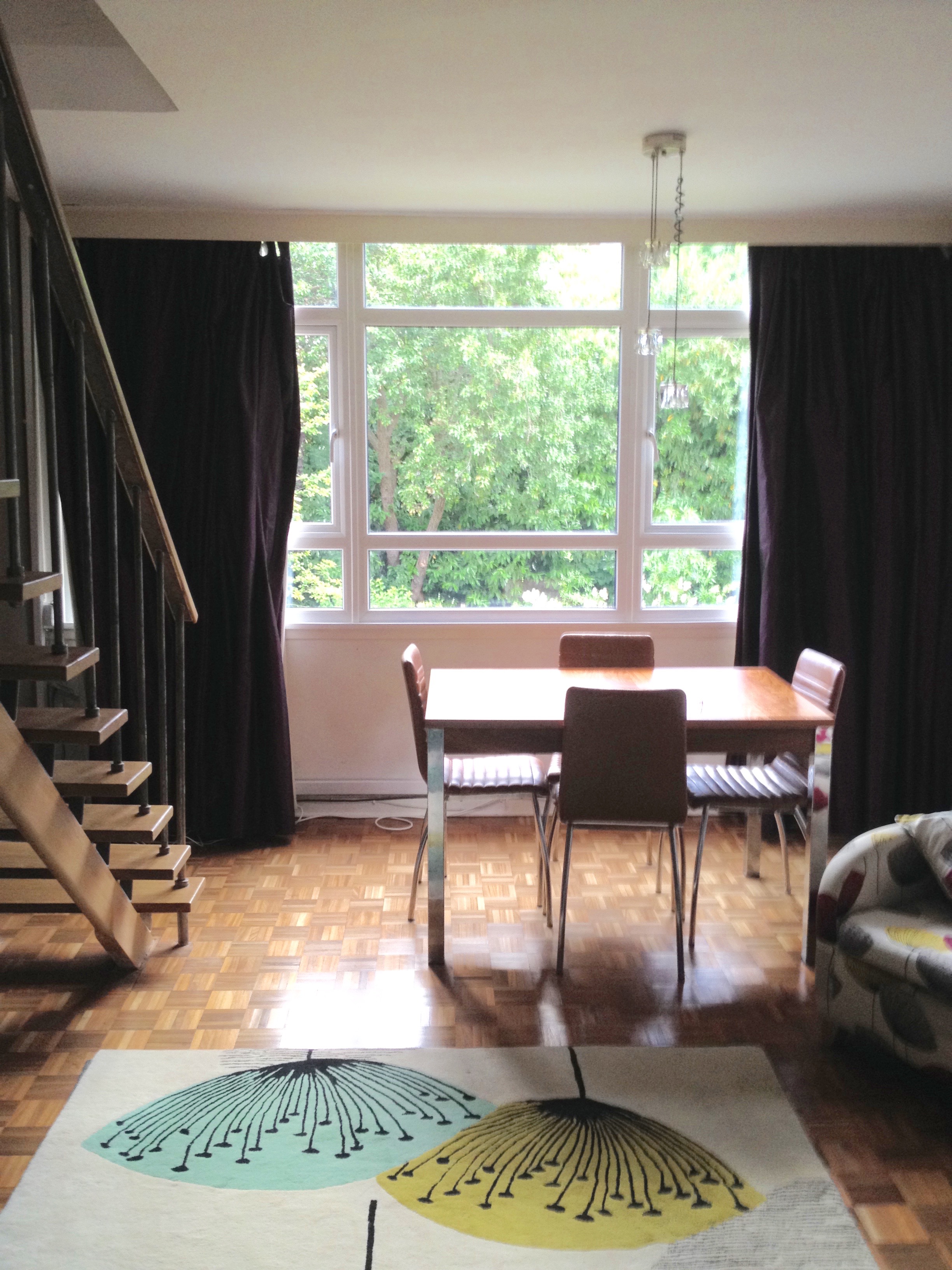

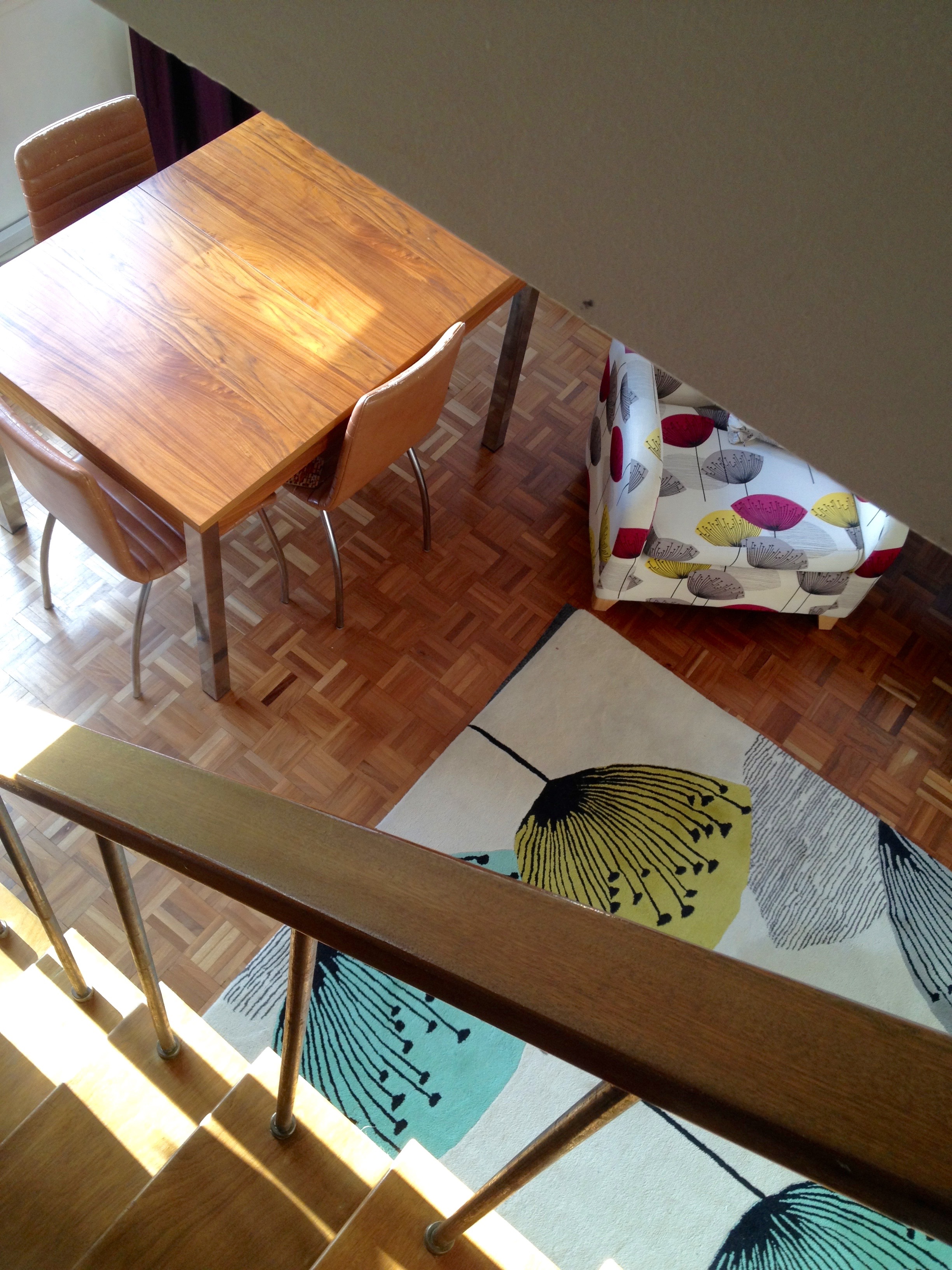
Both flats were attractive and bright, with the original parquet flooring in the living rooms and the open staircase providing an element of architectural interest. I liked the flats enough to put an offer in on one of them but ended up having to withdraw for reasons that I won’t go into here. As far as I’m aware, at least one of the two flats is still on the market for £475,000.
Langham House Close, Ham, Richmond-upon-Thames
Langham House Close, Ham, Richmond-upon-Thames
Architect: Stirling & Gowan
Year built: 1957-58
Like the Parkleys development that I visited earlier this year, Langham House Close is a spectacular Grade II listed modernist apartment block situated in the ridiculously inaccessible Ham.
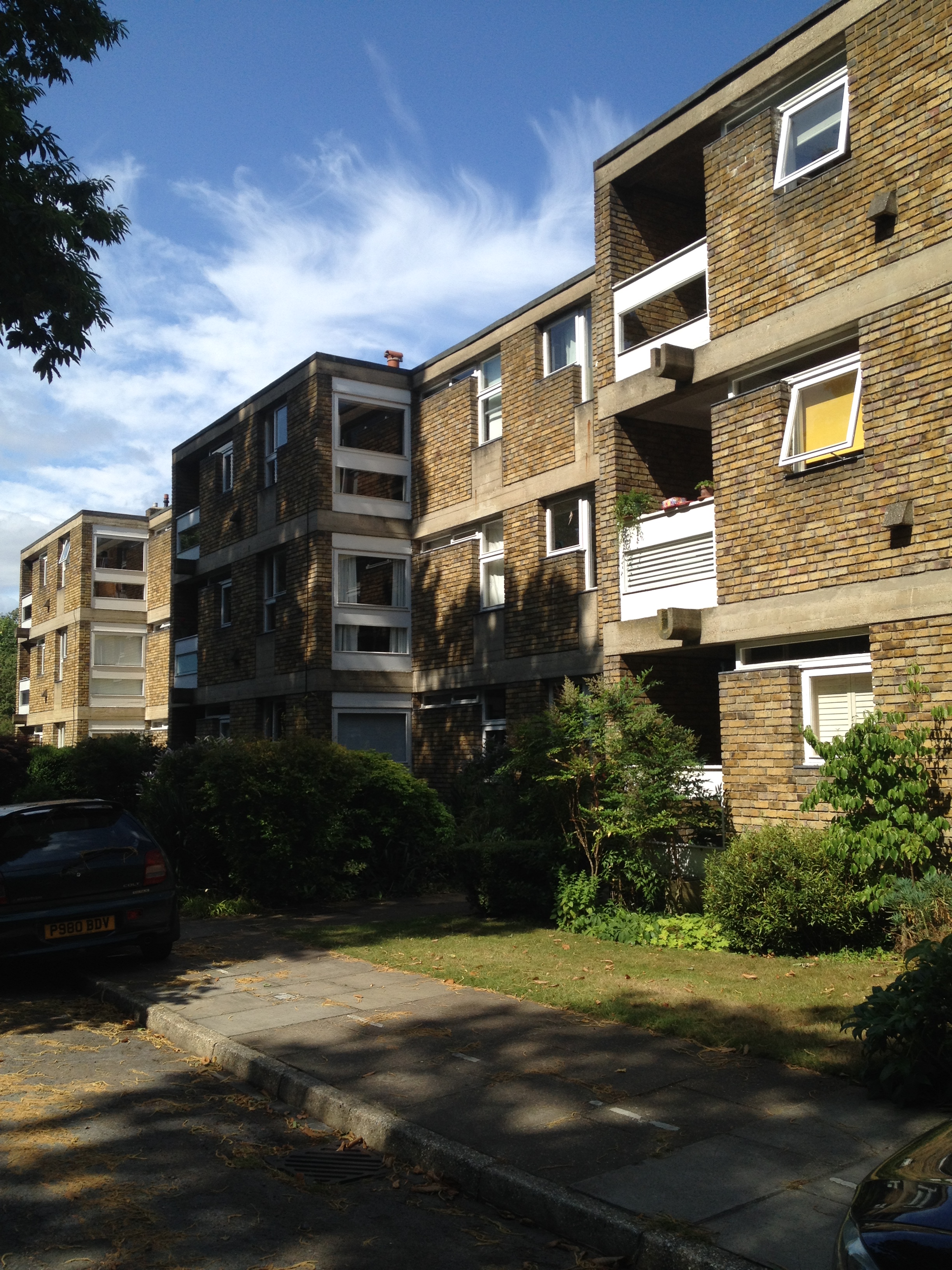

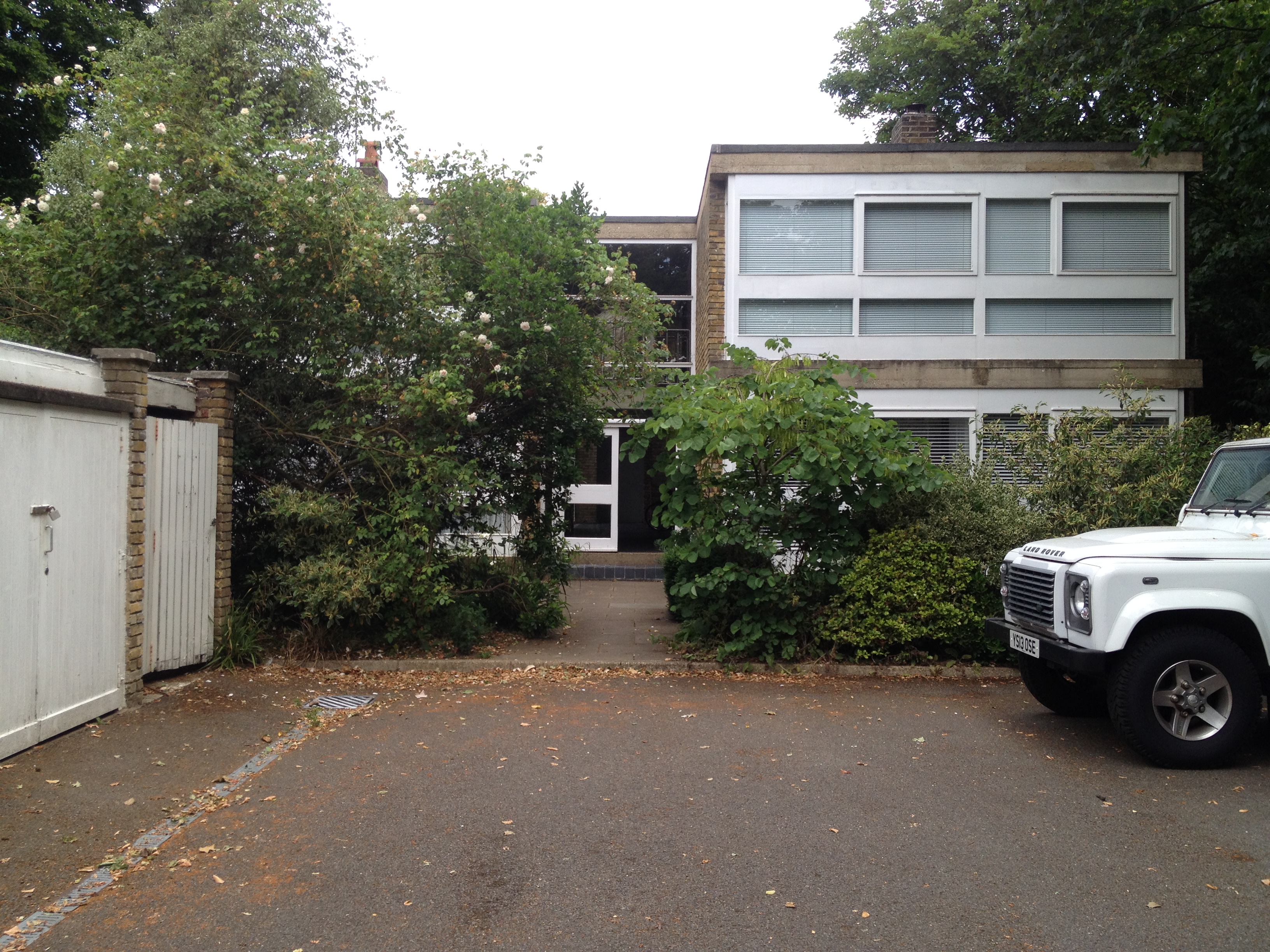
The low-rise development is comprised of a cluster of small, boxy two-storey blocks and a larger, three-storey block surrounded by mature, gently sloping gardens. The buildings have been beautifully maintained and contain a lot of features of architectural interest: the communal hallways, for instance, feature pre-cast shuttered concrete, curved steel handrails and elevated walkways.
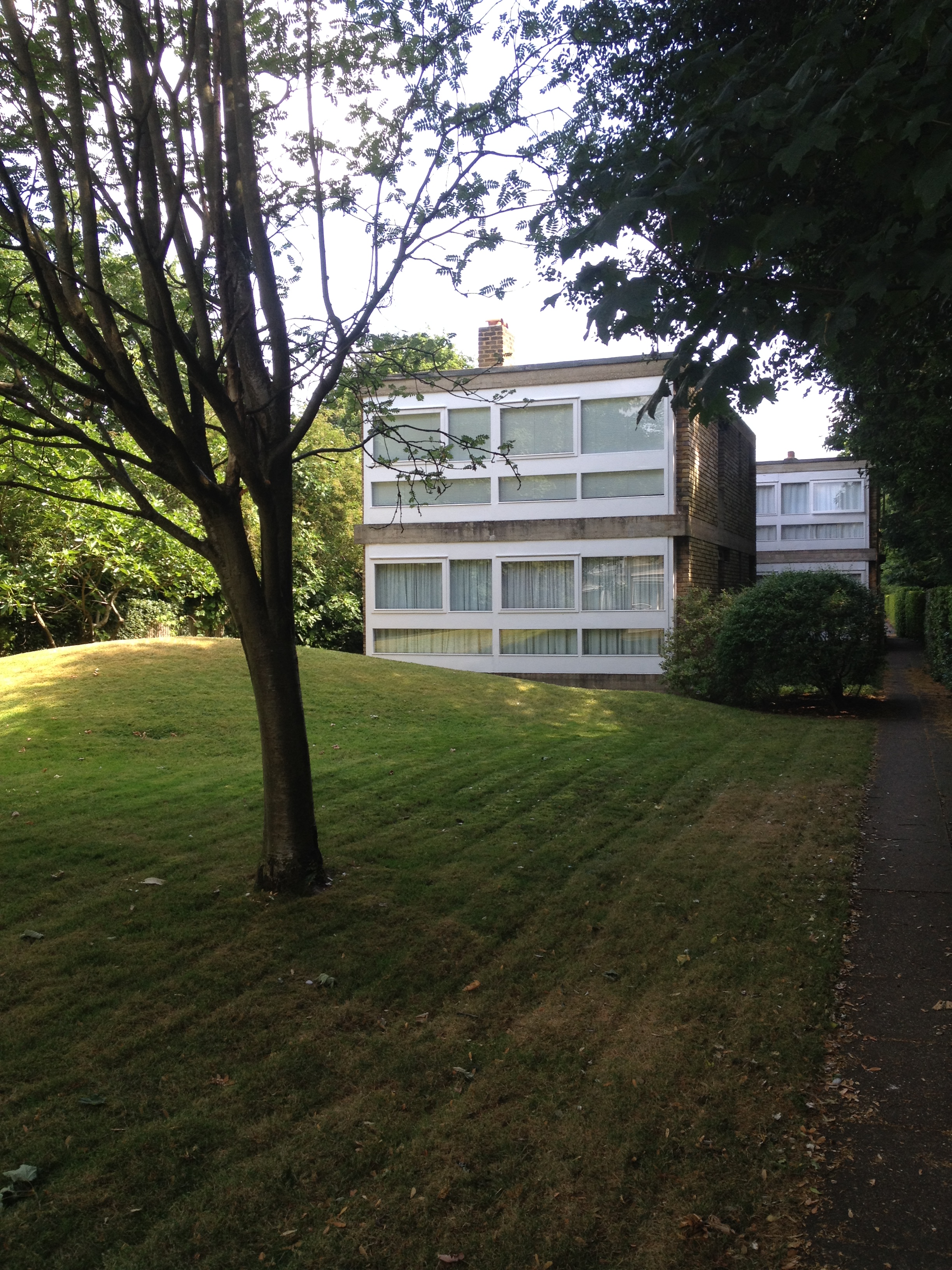

The flat that I viewed was on the ground floor of one of the two storey “garden pavilion” blocks. I would usually dismiss a ground floor flat out of hand but the design and construction of the flat (extensive glazing, flowing open plan layout) meant there were fine views from all of the rooms out onto the gardens and not, notably into any of the other flats.
The flat contained two bedrooms, a bathroom and a main reception room divided by a floating internal wall (featuring a fireplace with exposed concrete mantelpiece) into kitchen/dining and living areas. The flat was not by any means large but felt reasonably spacious, again due to its design and layout.
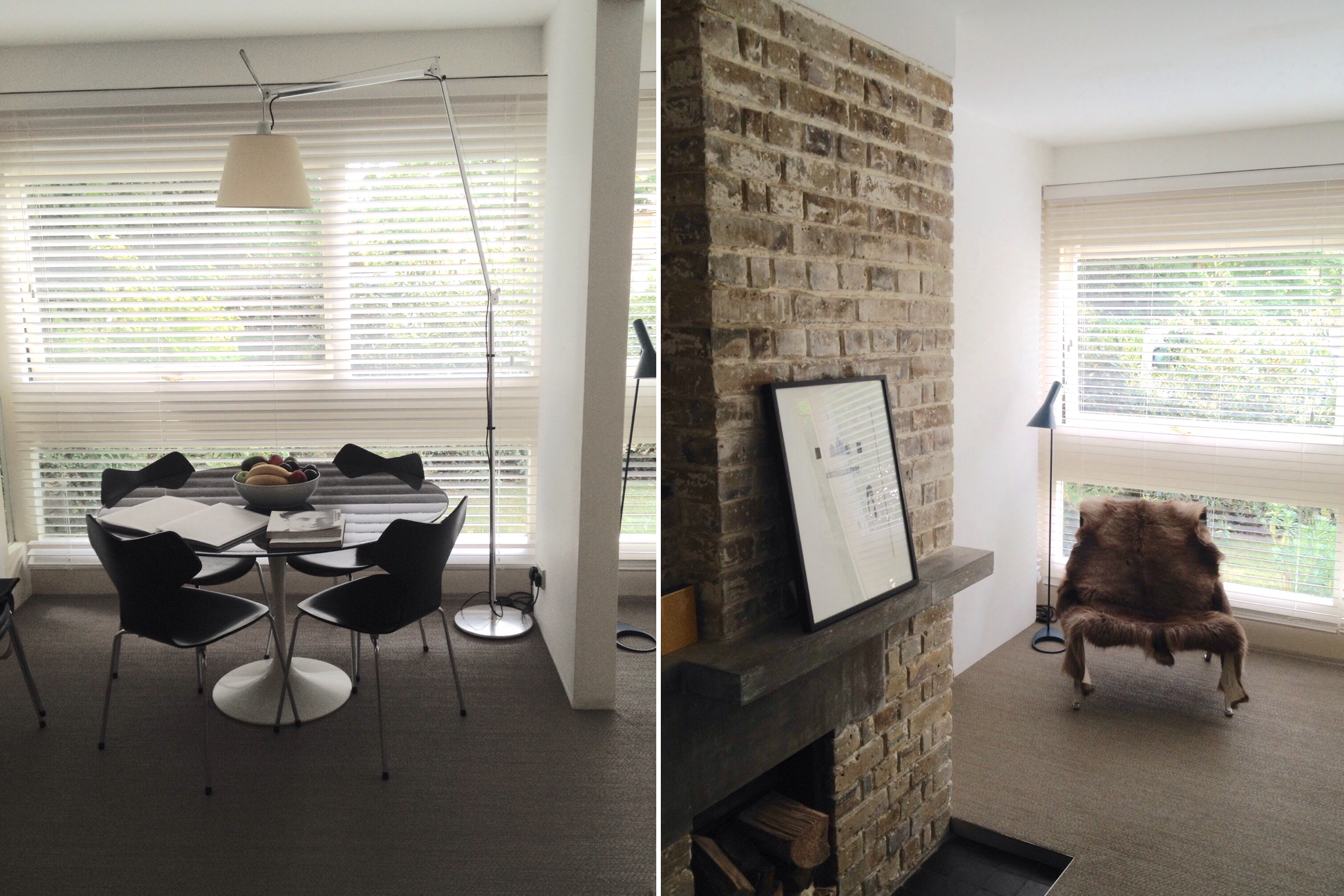

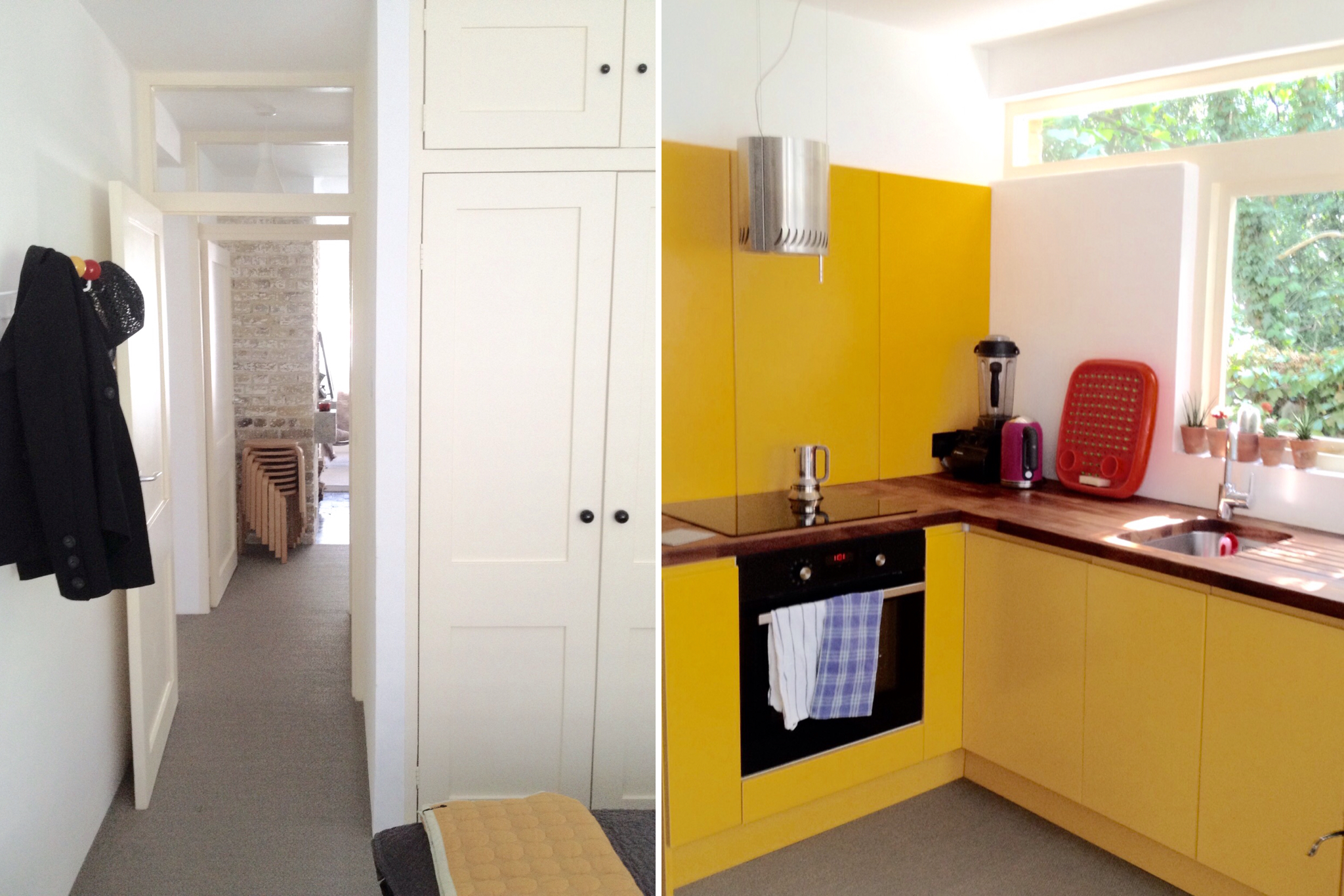

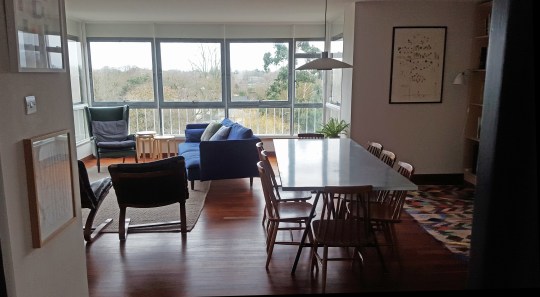
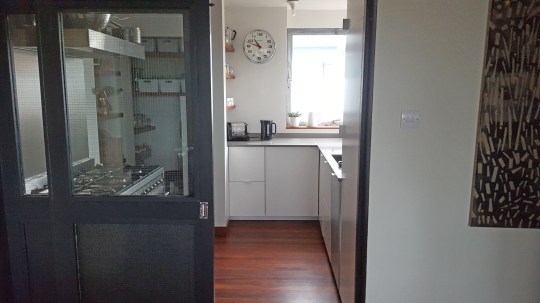
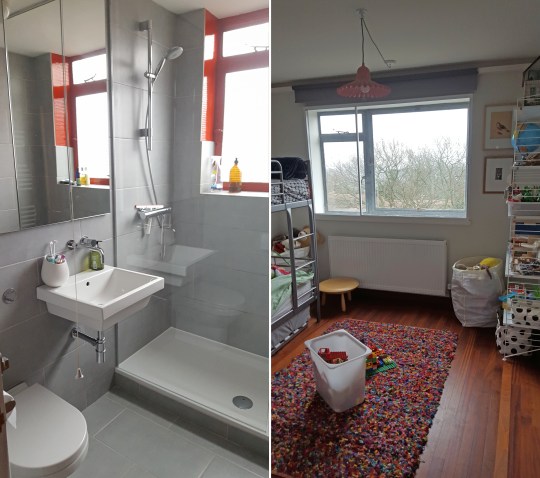
The flat had been decorated in a somewhat futuristic-looking mid century modern style. The overall colour palette was pale (white walls, faded exposed brick and concrete, light grey sisal flooring) with occasional dashes of colour (those kitchen cabinets in a primary yellow, for instance). The furnishings were a mixture of very expensive Danish design classics and IKEA. Every single item in the flat had clearly been carefully chosen with a view to achieving a certain look: even the toys in the children’s bedroom were aesthetically pleasing.


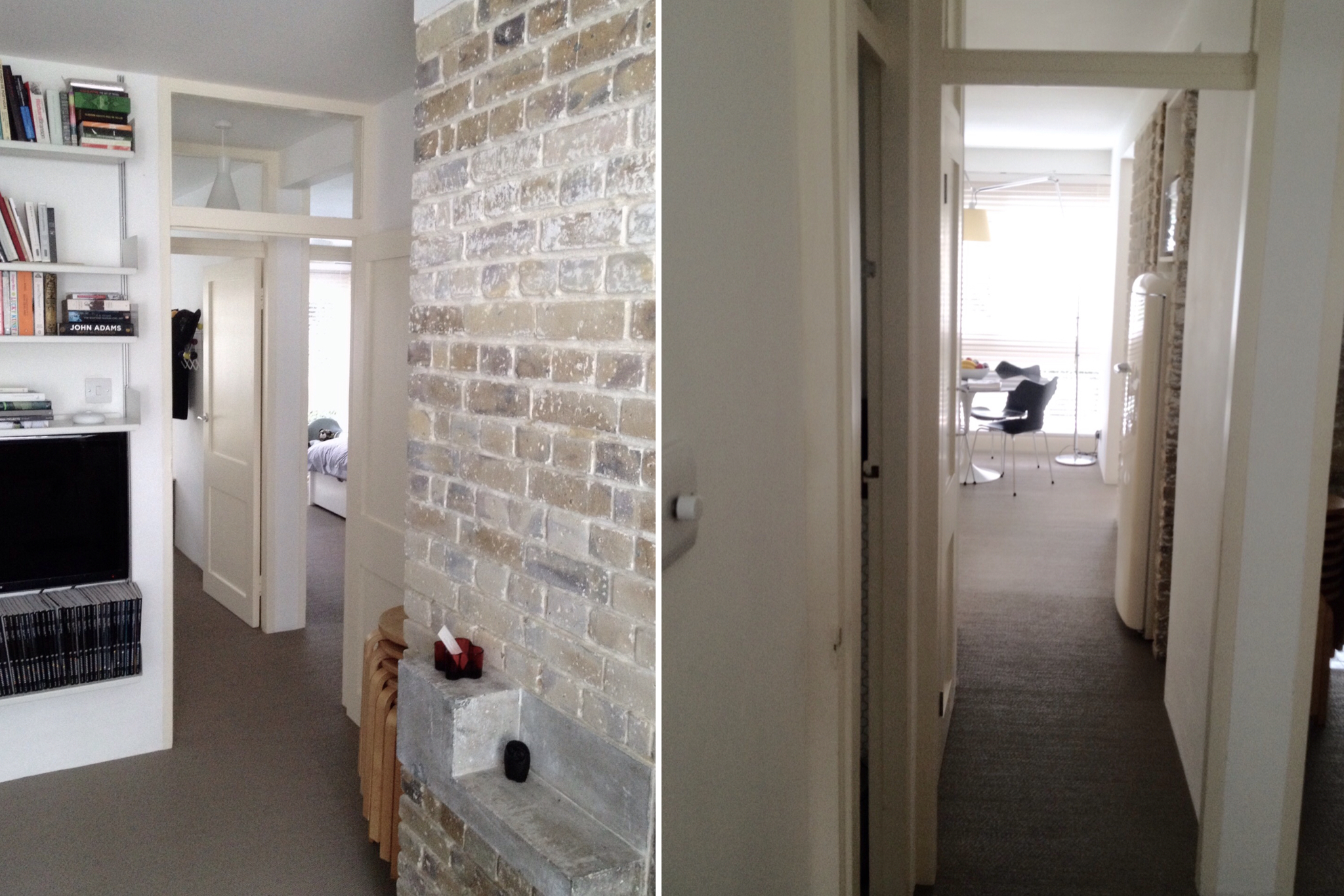
I loved this development and this particular flat (though I’d probably prefer one of the larger flats with a balcony in the three storey block given the choice) but Ham’s inaccessibility took this place out of the running. It seems like other prospective buyers share my concerns: the flat has been on the market for a while and has been recently reduced from £475k to £450k.
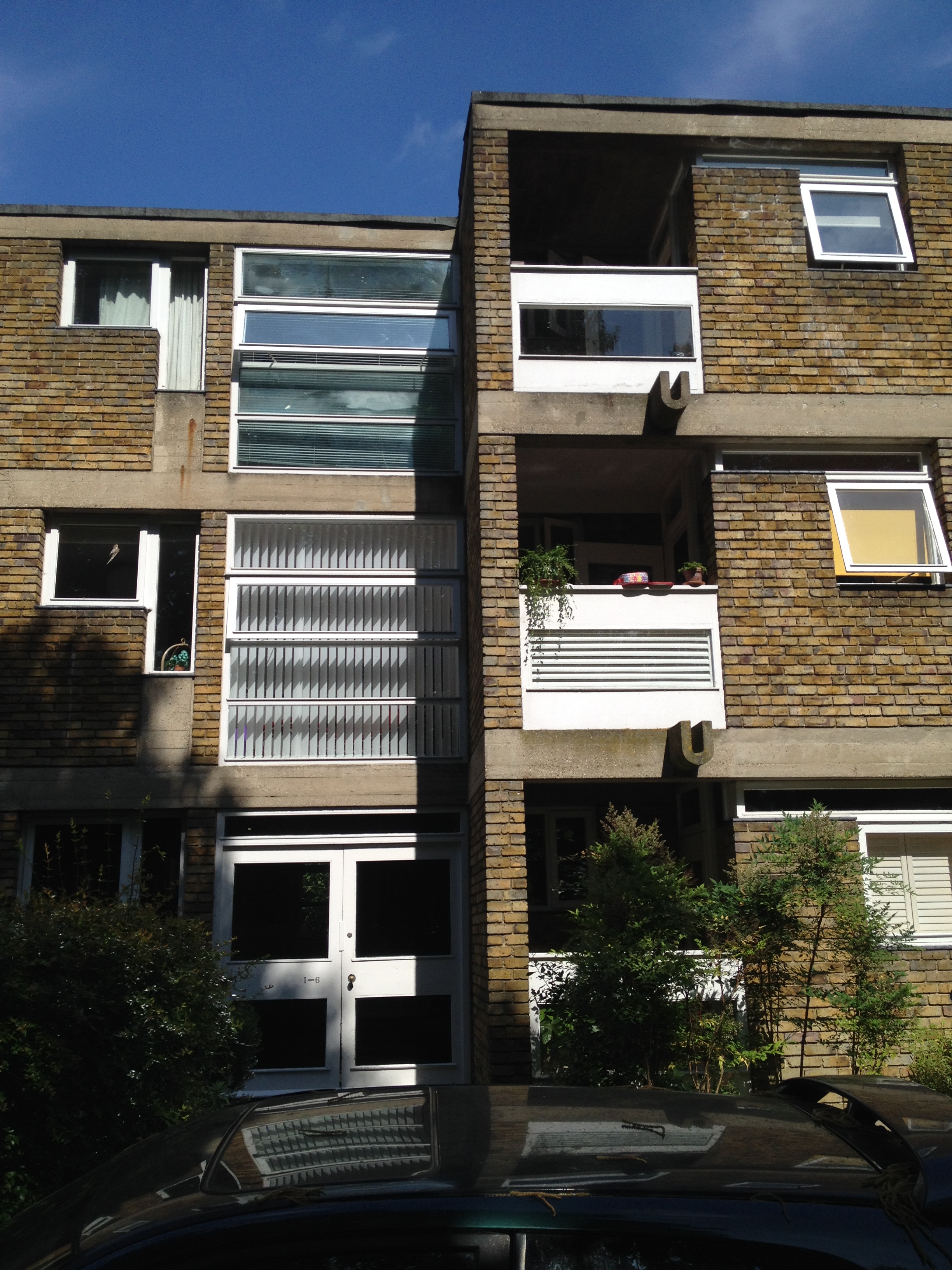
DKH building, Dog Kennel Hill SE19
DKH building, Dog Kennel Hill SE19
Winner of the RIBA Award for Best New Housing in London
Architect: John Smart Architects
Year built: 2008
I had no intention of viewing any newly built properties as part of my search but the estate agent photos of a flat in this Grand Designs-style modern building really sold the idea of living in an architect-designed glass-filled, semi-industrial looking space so I went along to the open day with an open mind.
First impressions weren’t great: whilst the exterior of the building was striking (an imaginative mix of glass, timber louvers, mesh panelling, stone gabions and coloured panels), the dried up plants, peeling panels, clearly vacant units and shabby surrounding area gave the whole development a slightly down-at-heel feel.

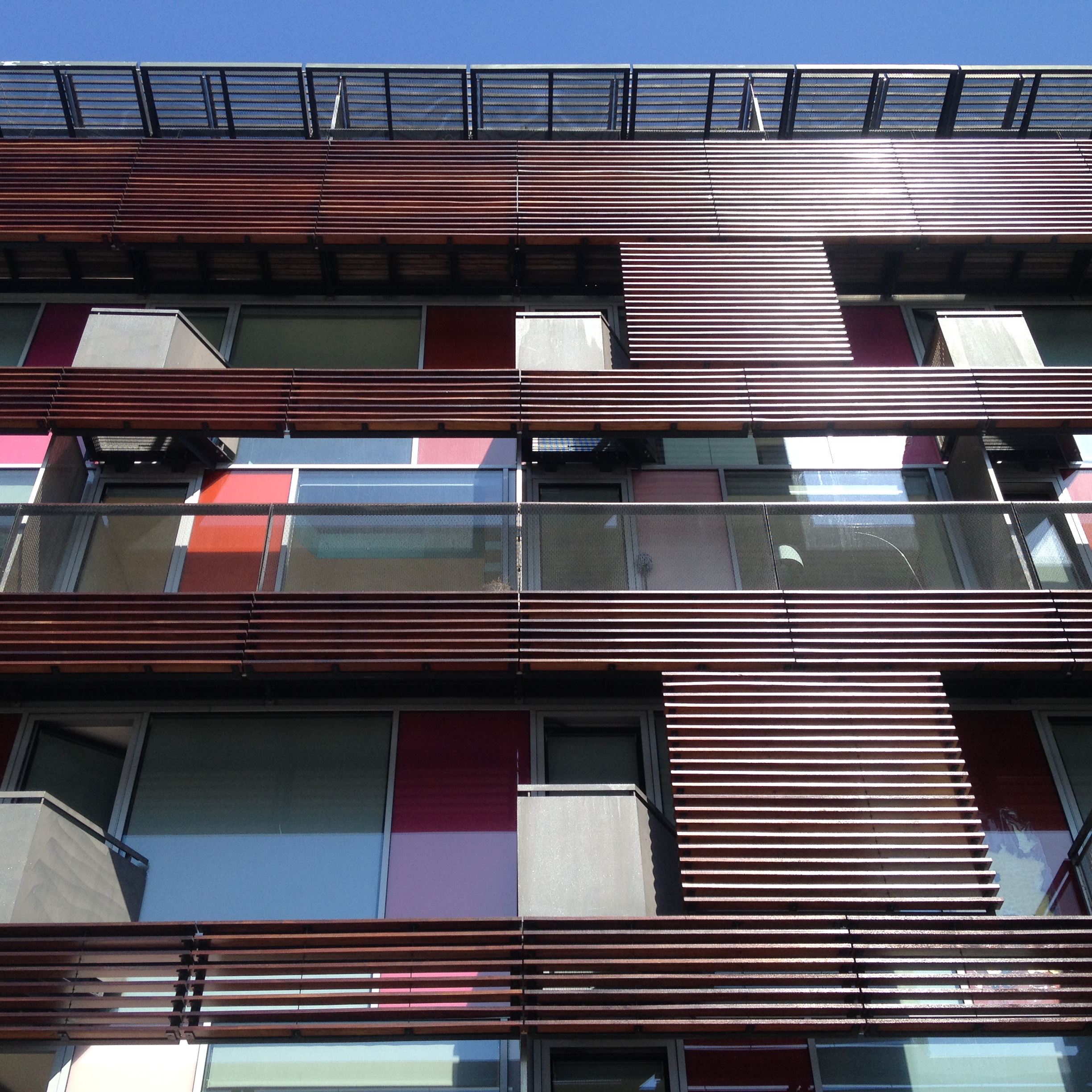

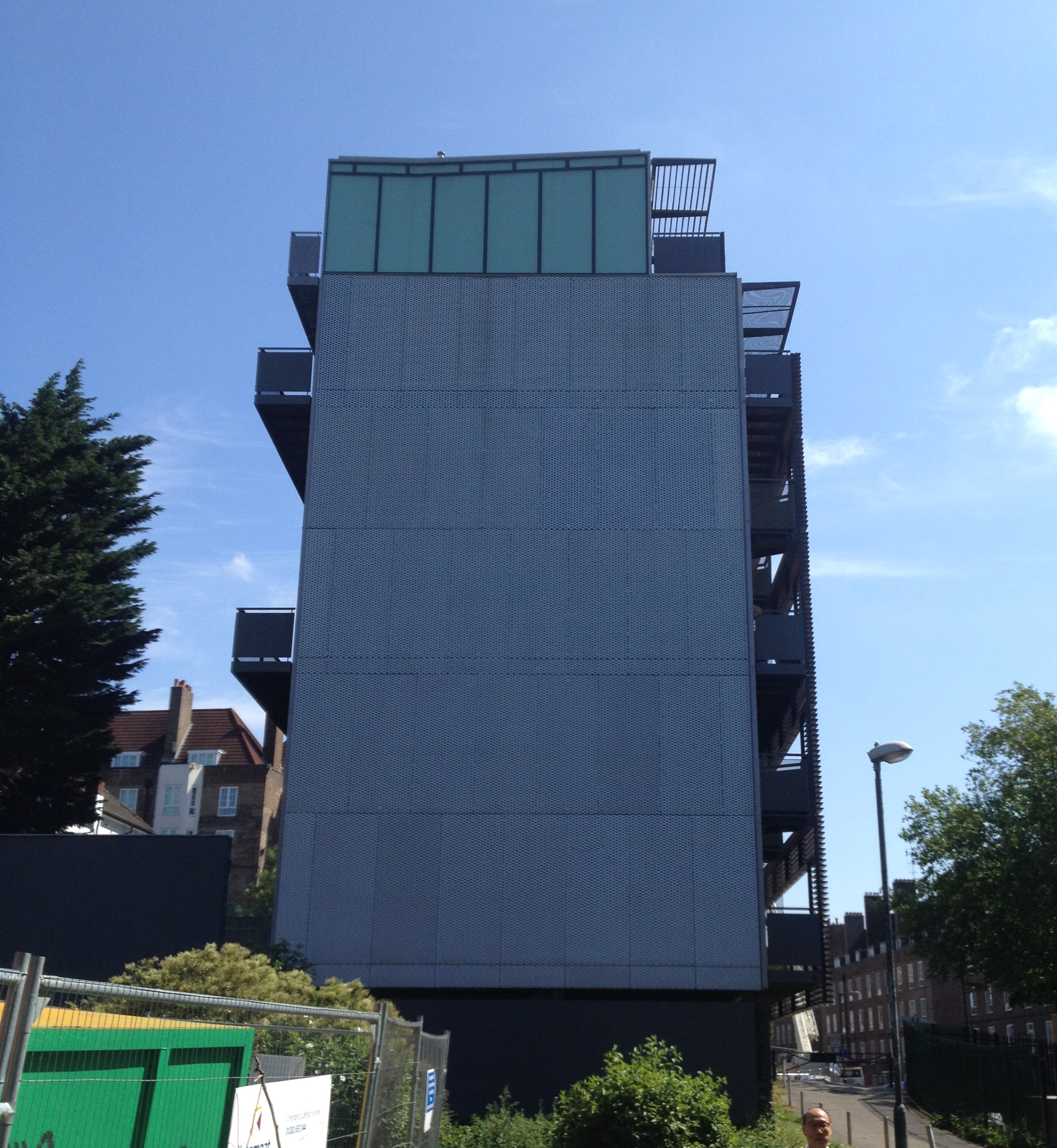
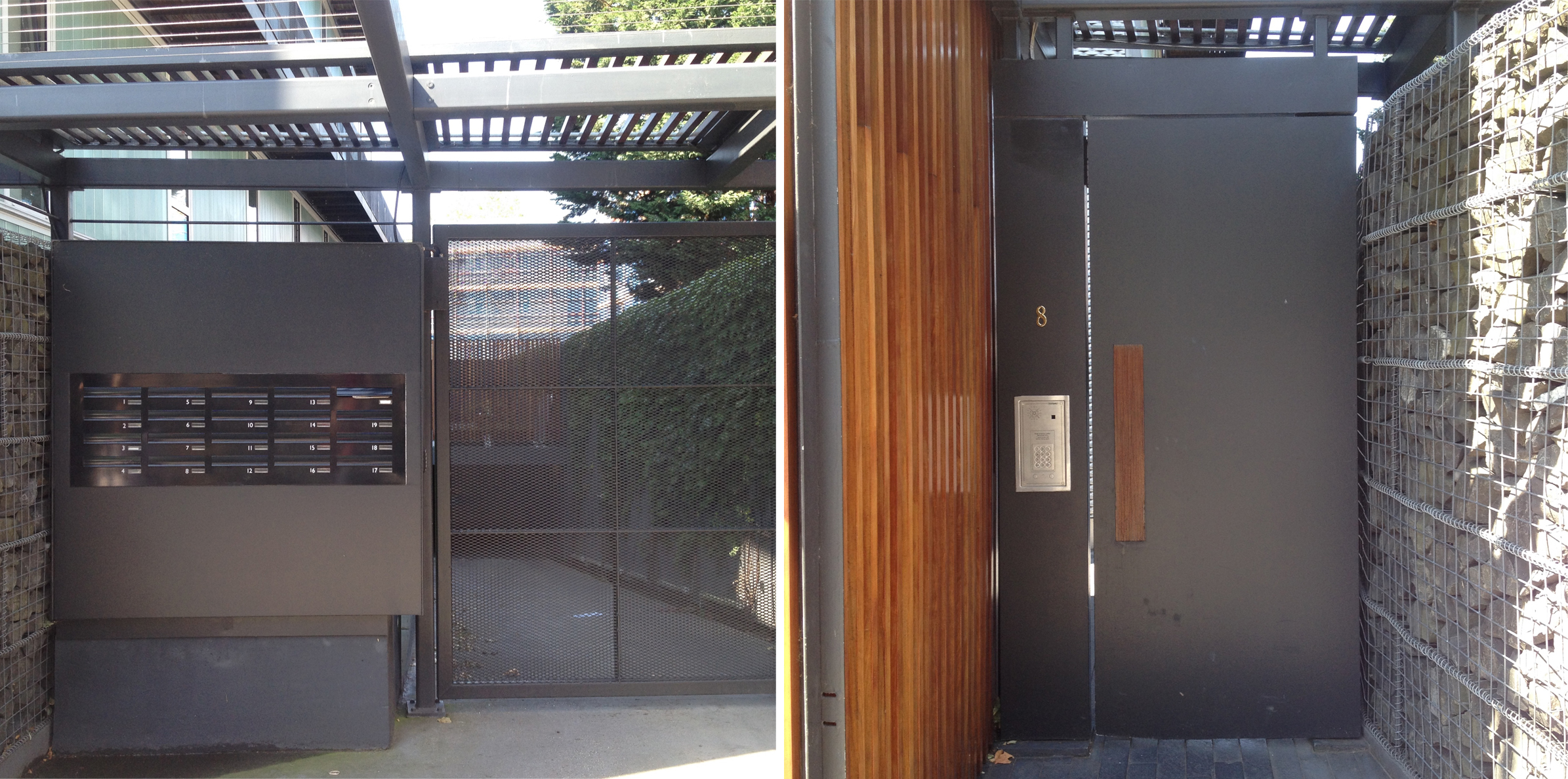
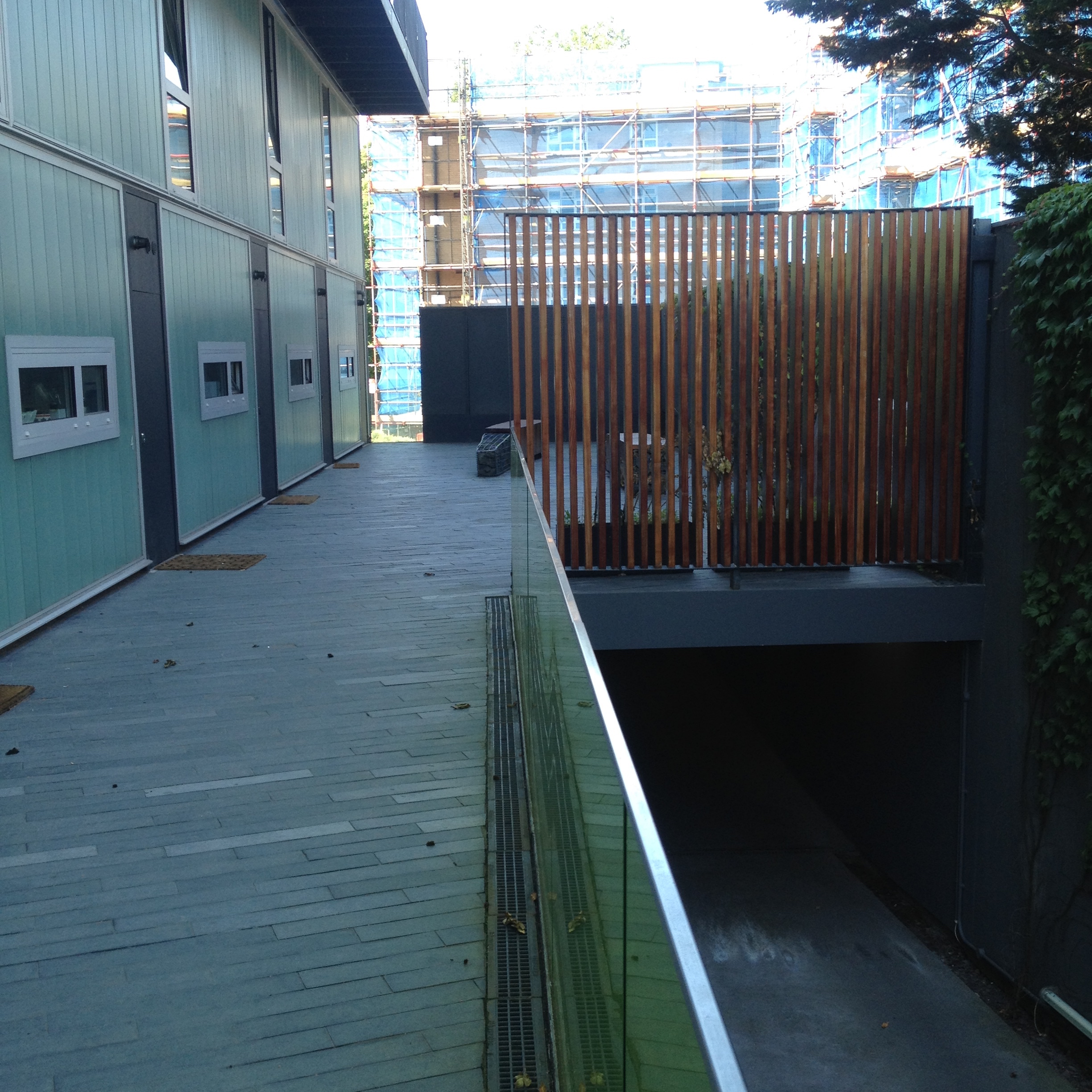
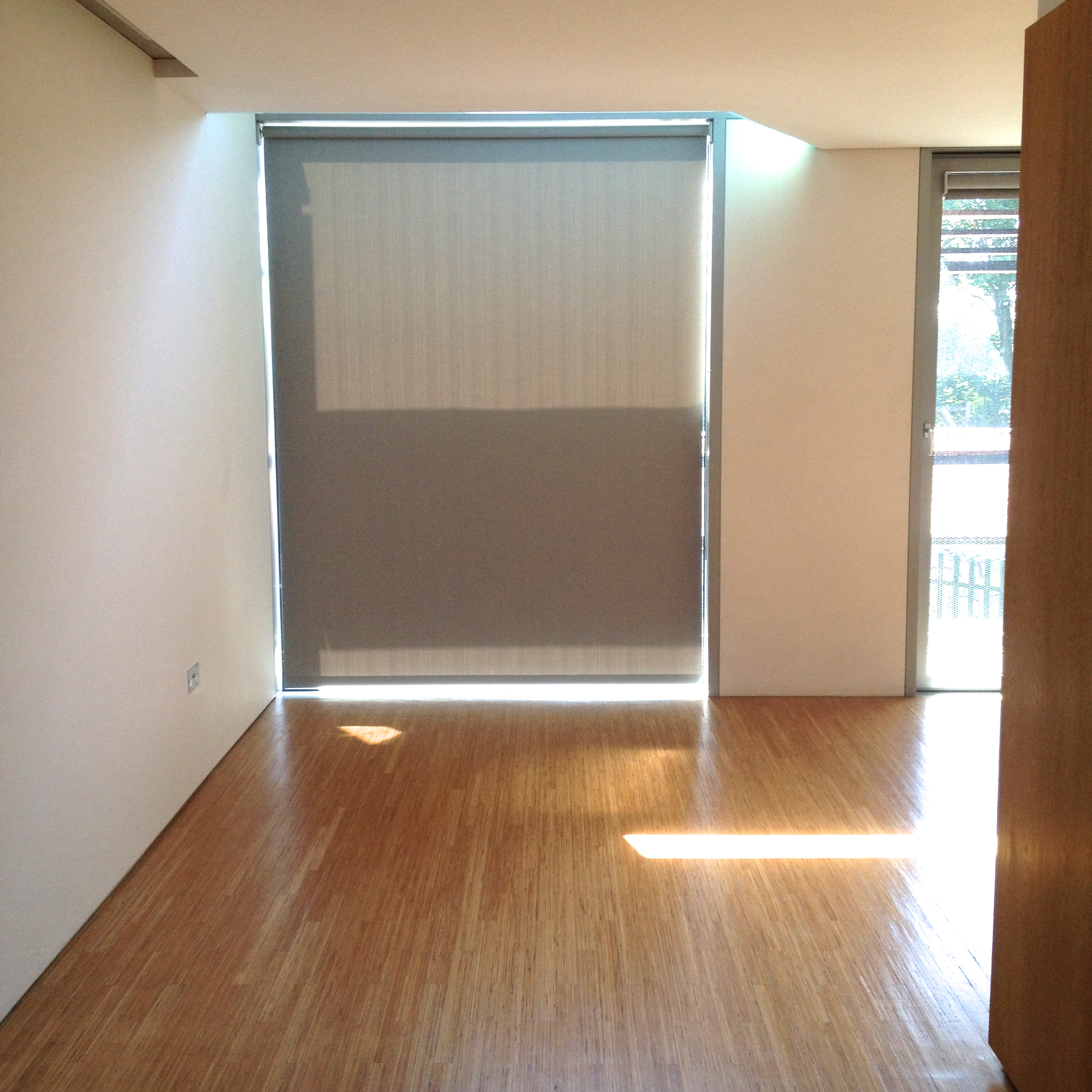
Things slightly improved once inside. The lower floor contained a compact reception room comprising open-plan kitchen, living and dining areas, opening onto a balcony (albeit one that looked out onto the basketball court of the local comp). A narrow slither of the room was double-height, with glazing extending up onto the upper floor, meaning that one of the bedrooms on the upper floor had a void overlooking the reception room – a nice design feature. Up the glass and wooden stairs were two smallish bedrooms (one with that void taking up valuable floorspace an a further balcony) and a bathroom with what appeared to be a concrete basin. It was all quite high-spec and the use of materials was interesting but the small room sizes and complete absence of built-in storage meant that it was difficult to actually imagine living in it.
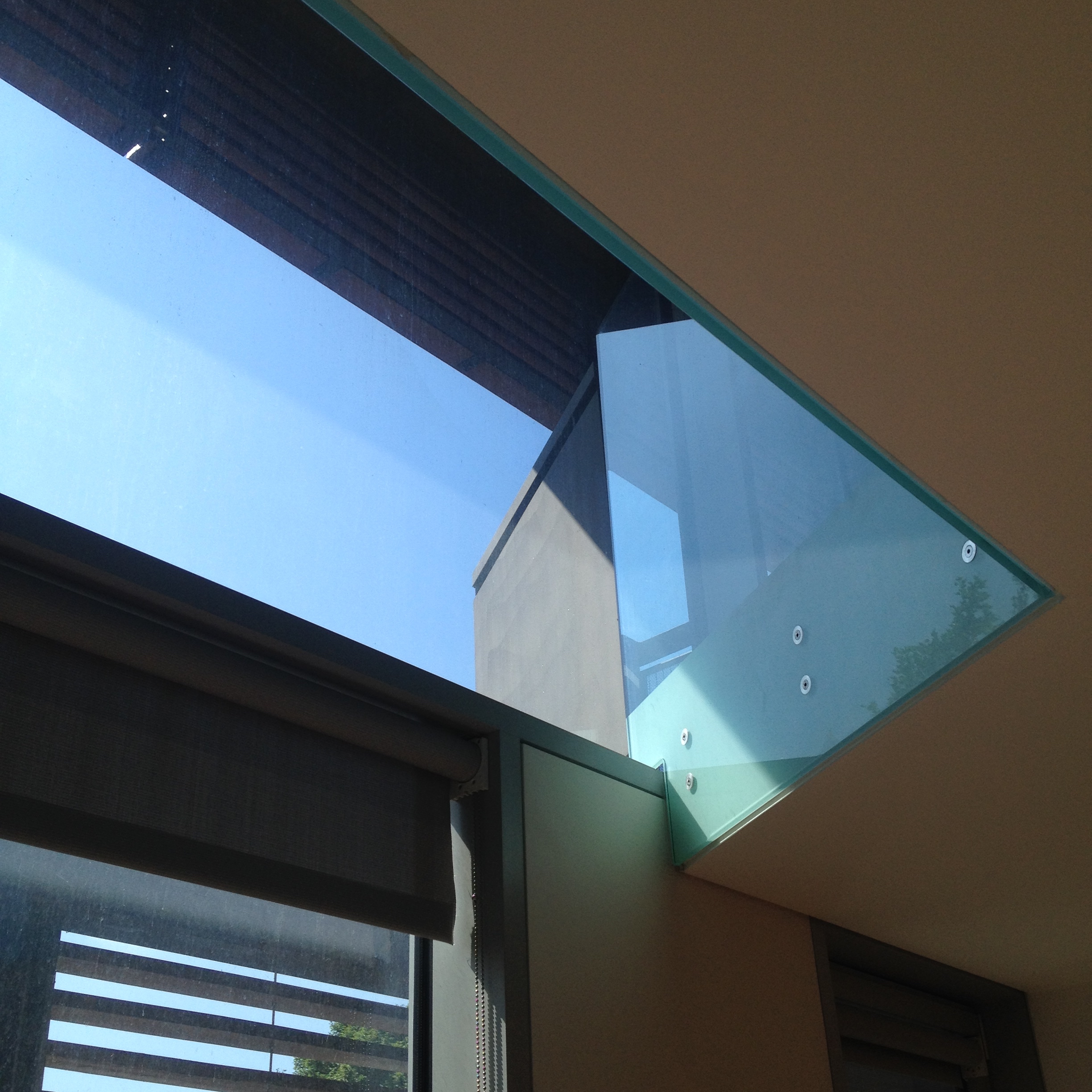
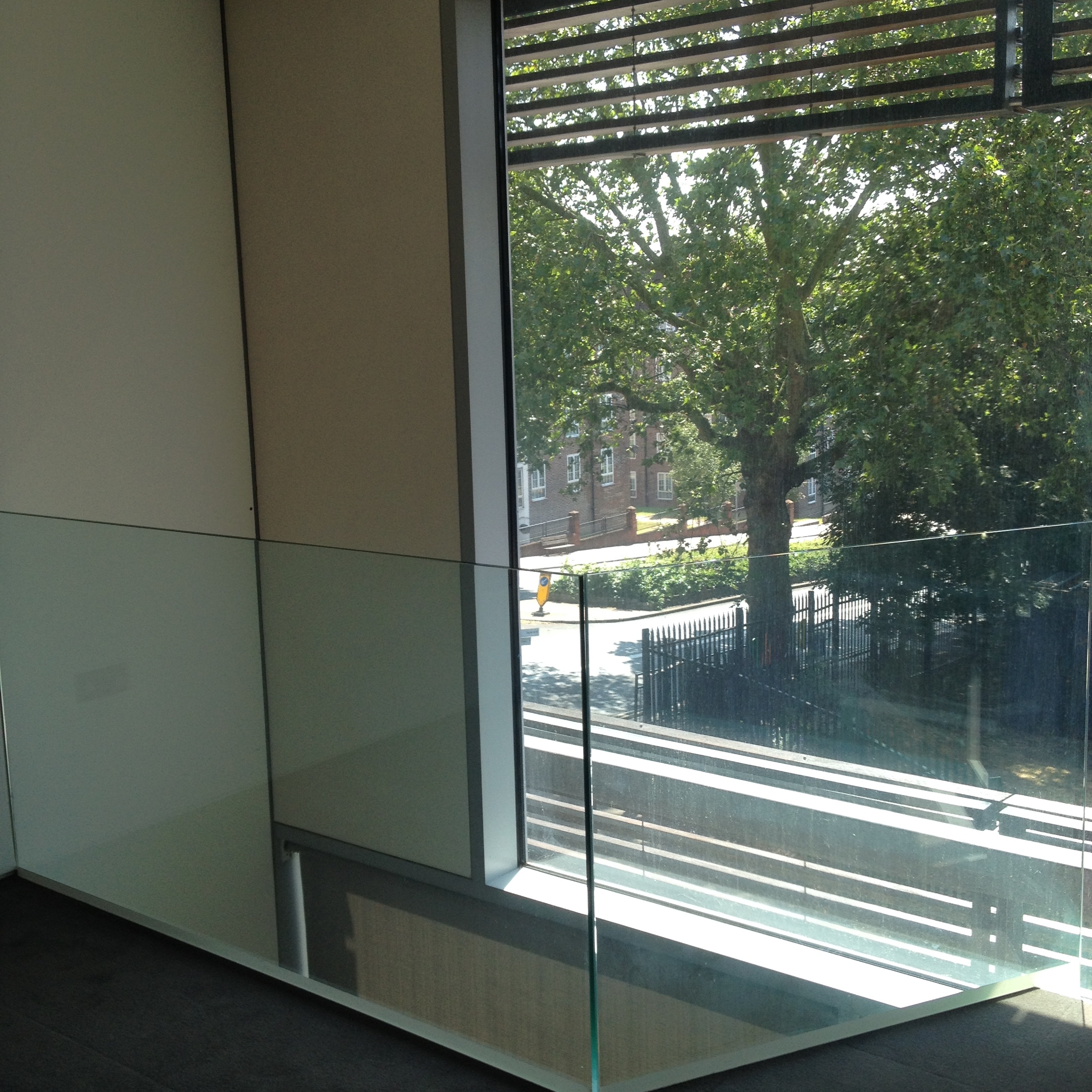

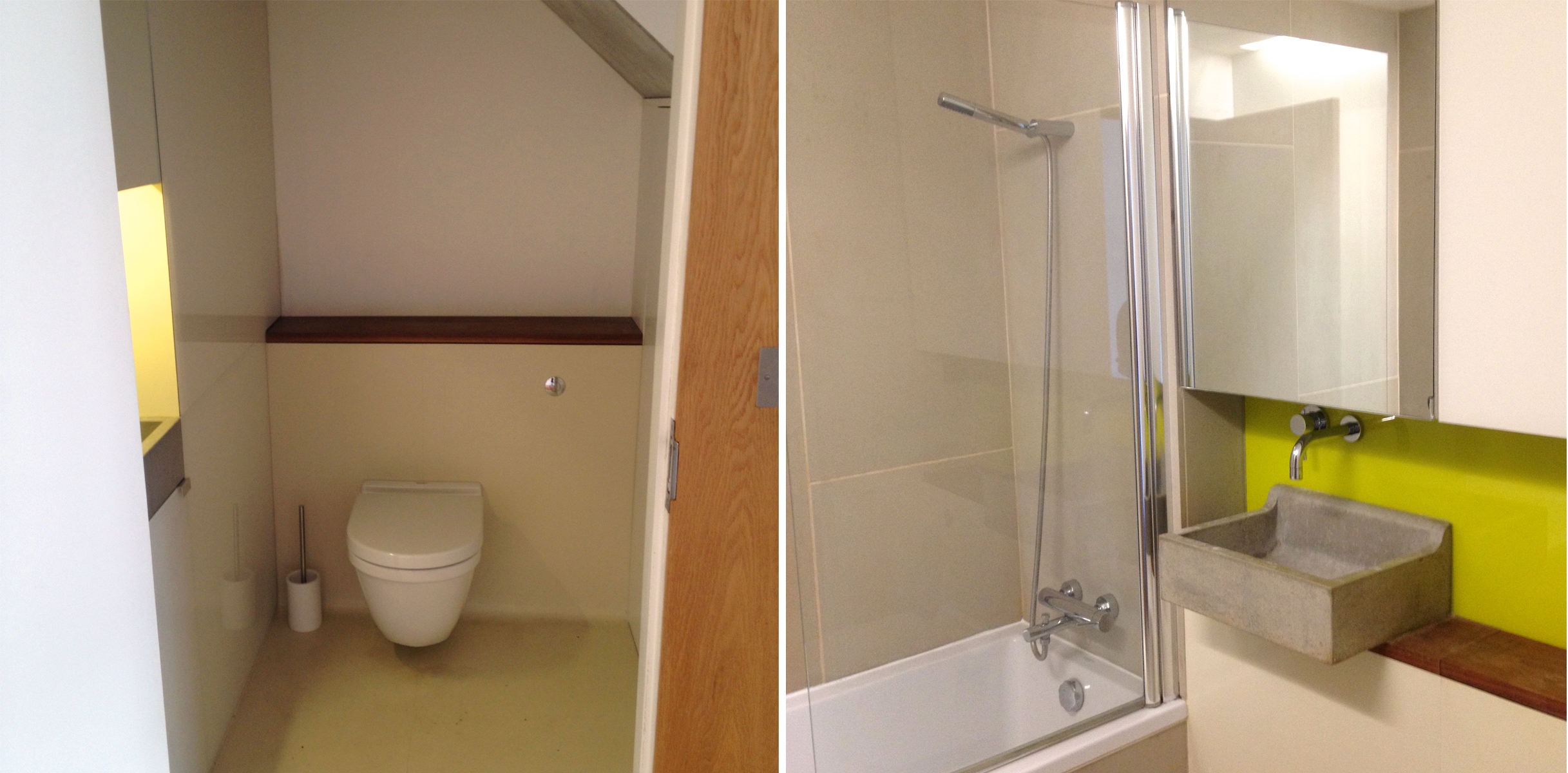
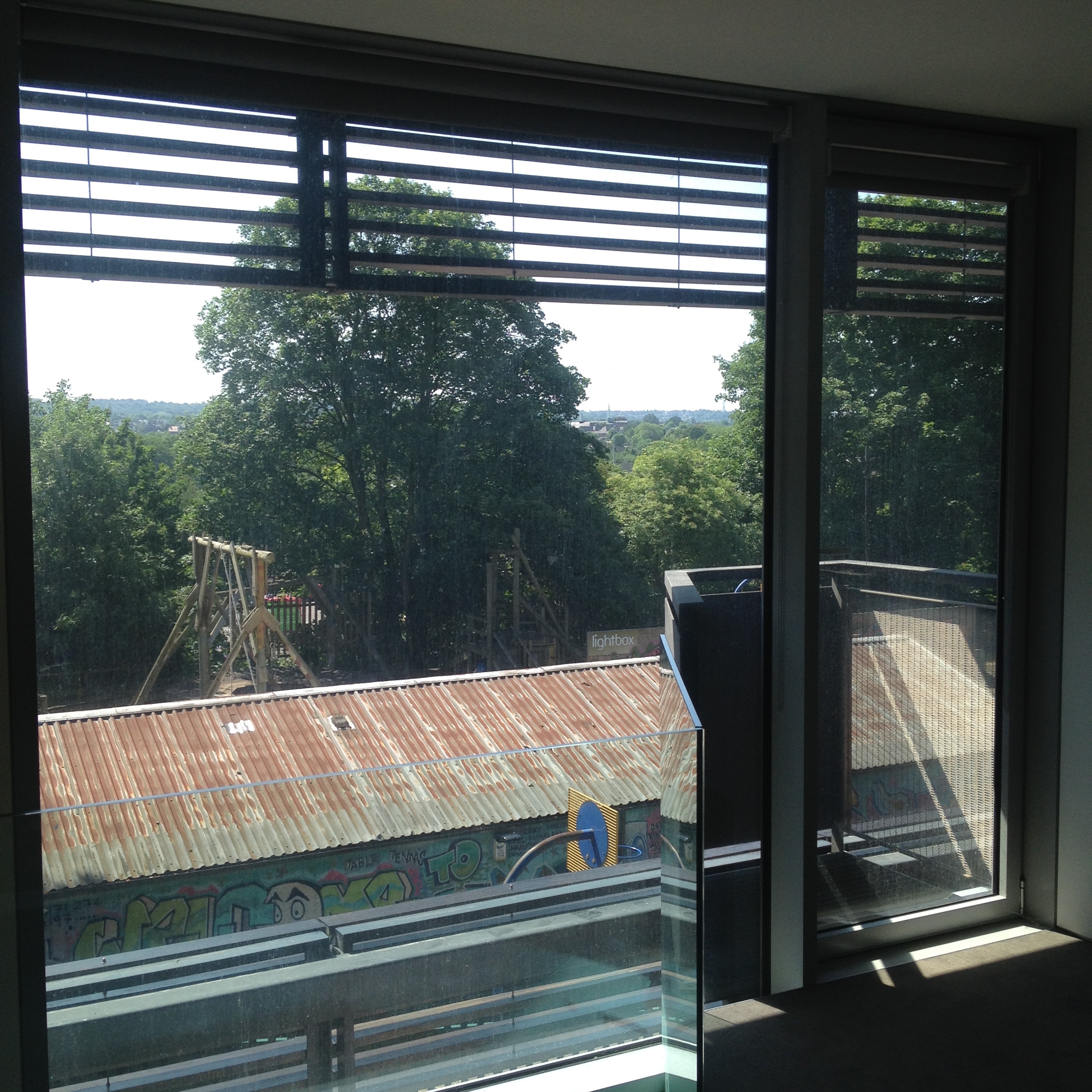
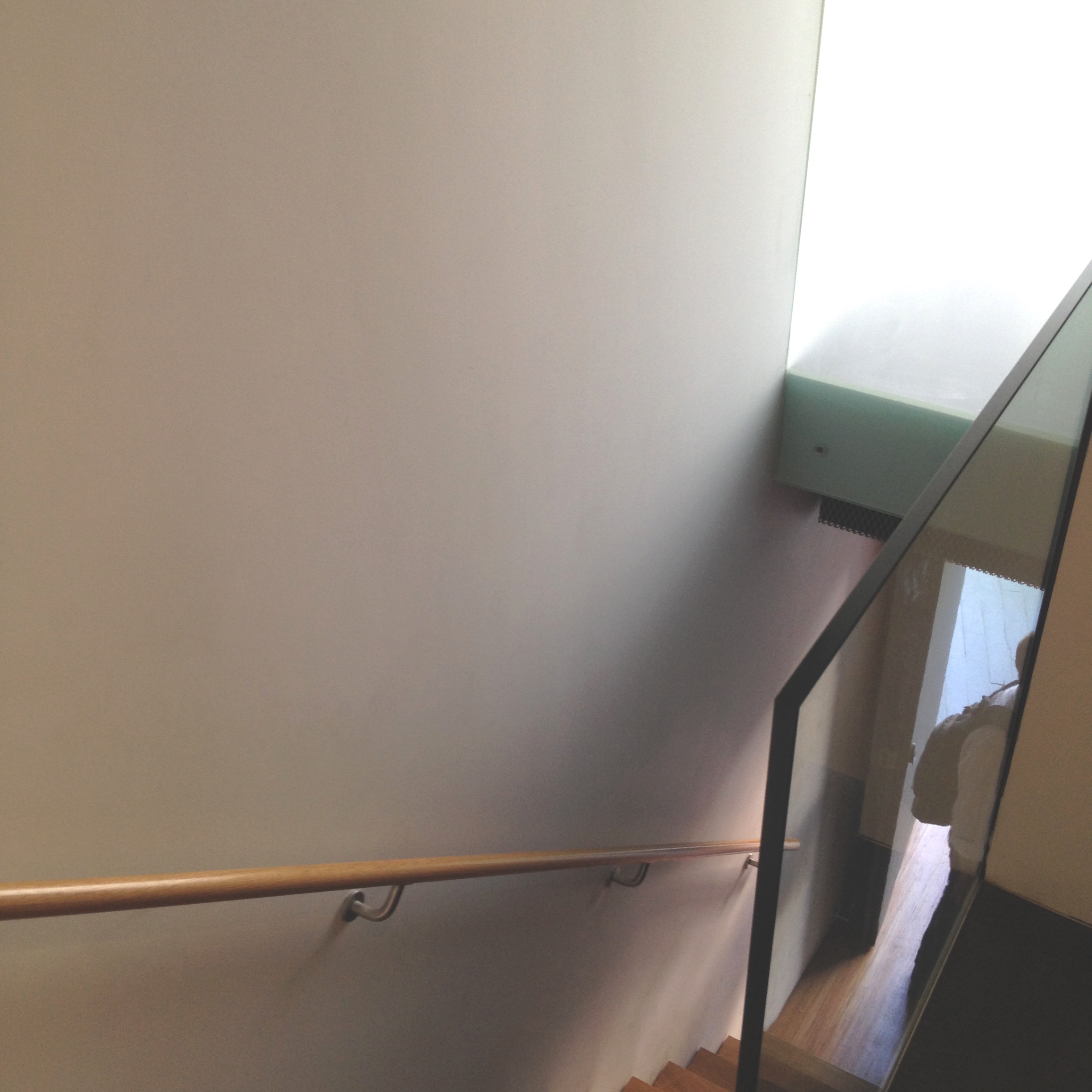
I can see why the building won several awards when it was completed in 2008. It’s a striking piece of architecture, especially when considered as a complete unit. The fact that the rear elevation is made almost entirely from opaque glass means that the whole thing apparently lights up like a magic lantern at night. However, a magic lantern does not necessarily a suitable home make so I passed on making an offer.
Claudia Place, Southfields SW19
Claudia Place, Southfields SW19
Three blocks of flats and maisonettes linked together with curved stair towers. Horizontal profiled metal cladding.
Architect: Farrell Grimshaw
Year built: 1973
I’d never heard of this unusual 1970s modernist development in Southfields until I stumbled upon it during a Rightmove browsing session.
Tucked away in a quiet cul de sac up the hill from Southfields station, the development comprises three adjoining blocks of flats, maisonettes and townhouses linked together with unusual greenhouse-like stair towers. The facade of the building looks like it is made up of wooden slats but it is apparently metal cladding.


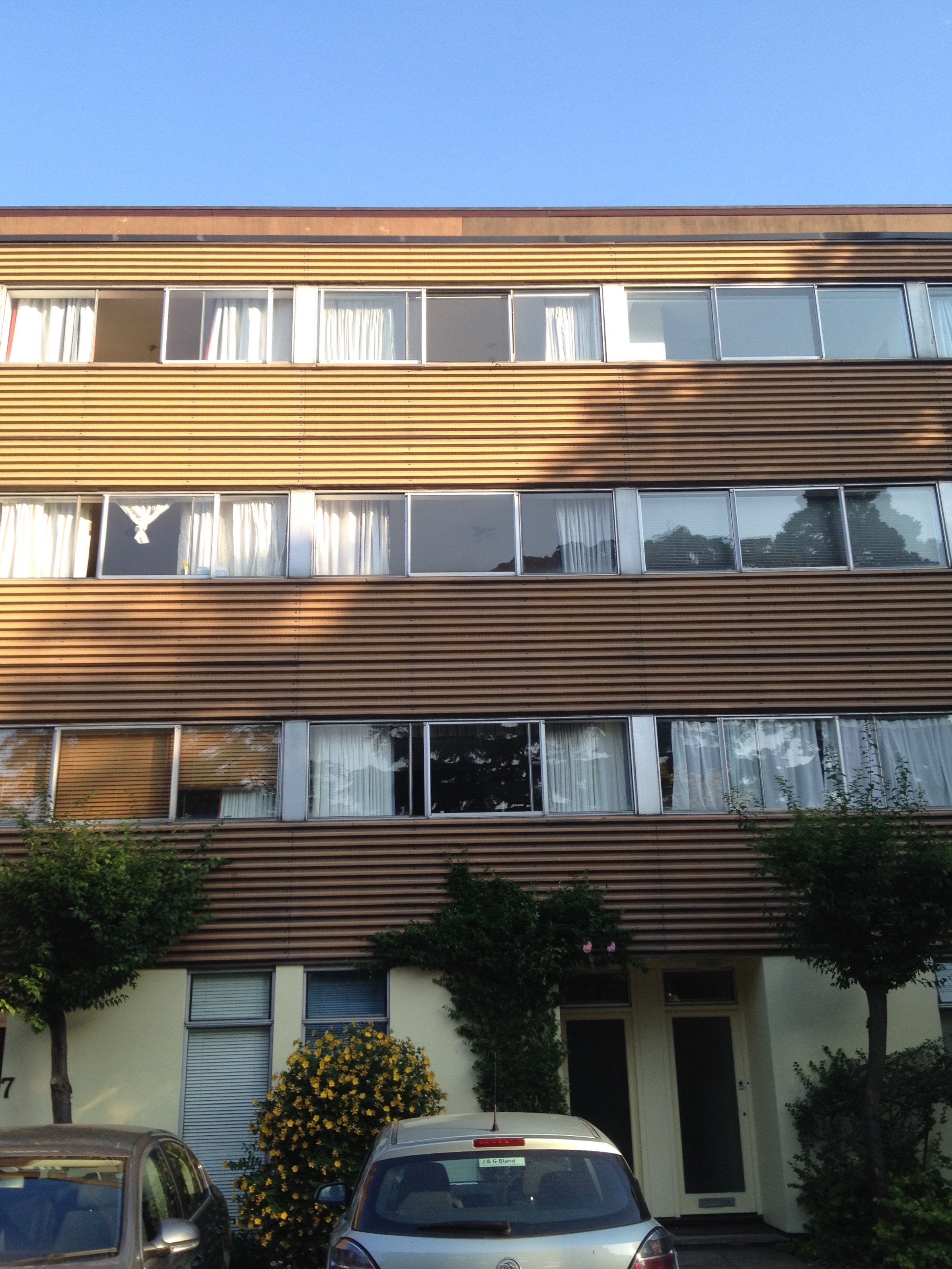
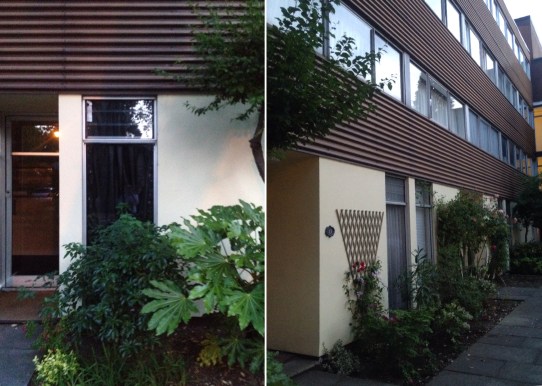
I viewed a 2-bedroom split-level flat in the development a couple of weeks ago. Upon arrival, first impressions were very positive: the grounds were beautifully landscaped (I particularly liked the ivy covering the entire side of the row of townhouses) and the striking external facade of the building looked immaculately maintained. Unfortunately, the interior communal areas weren’t nearly as impressive (dimly lit with walls painted in an insipid shade of cream and that thin blue carpet often used in offices).
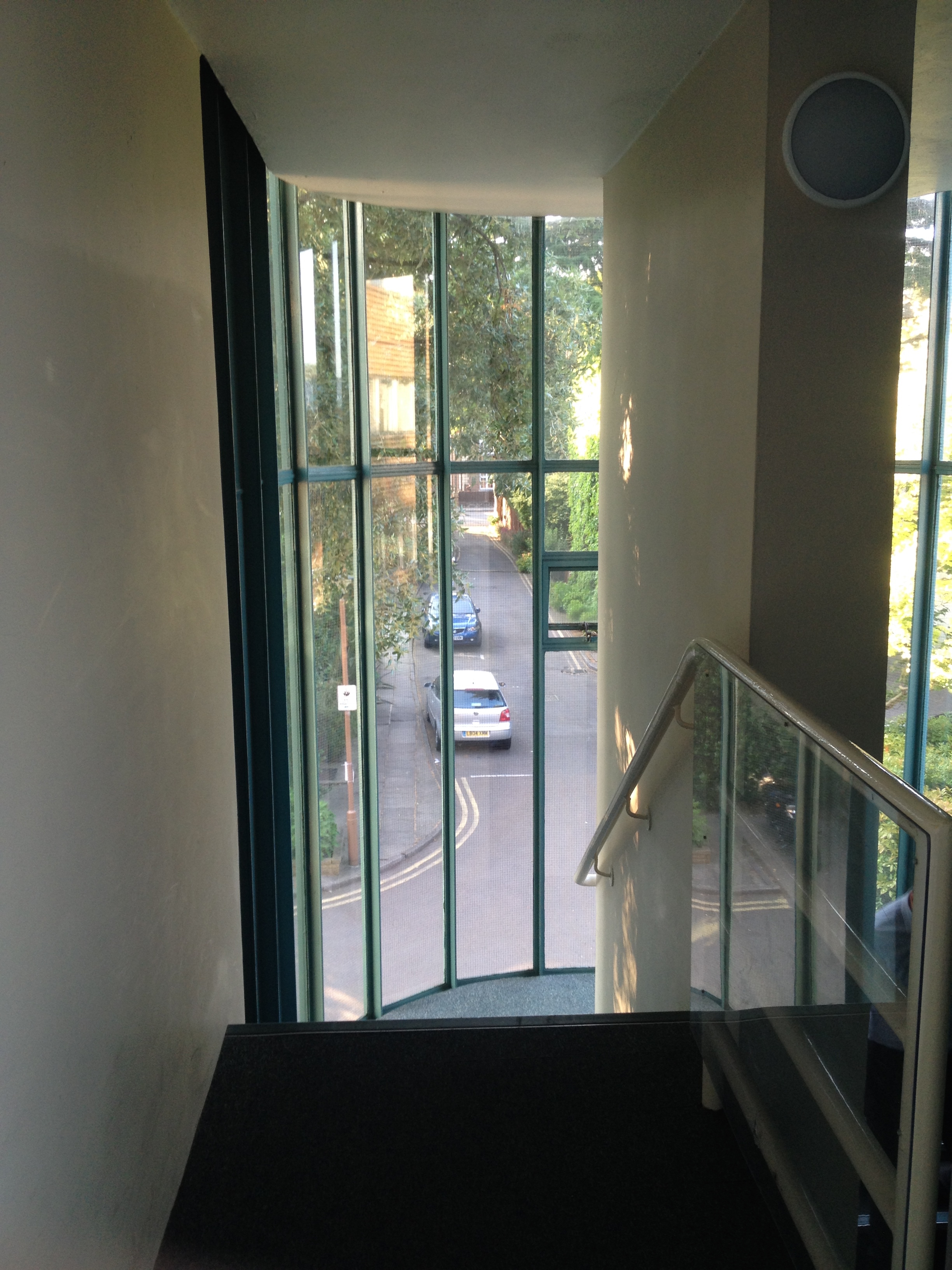
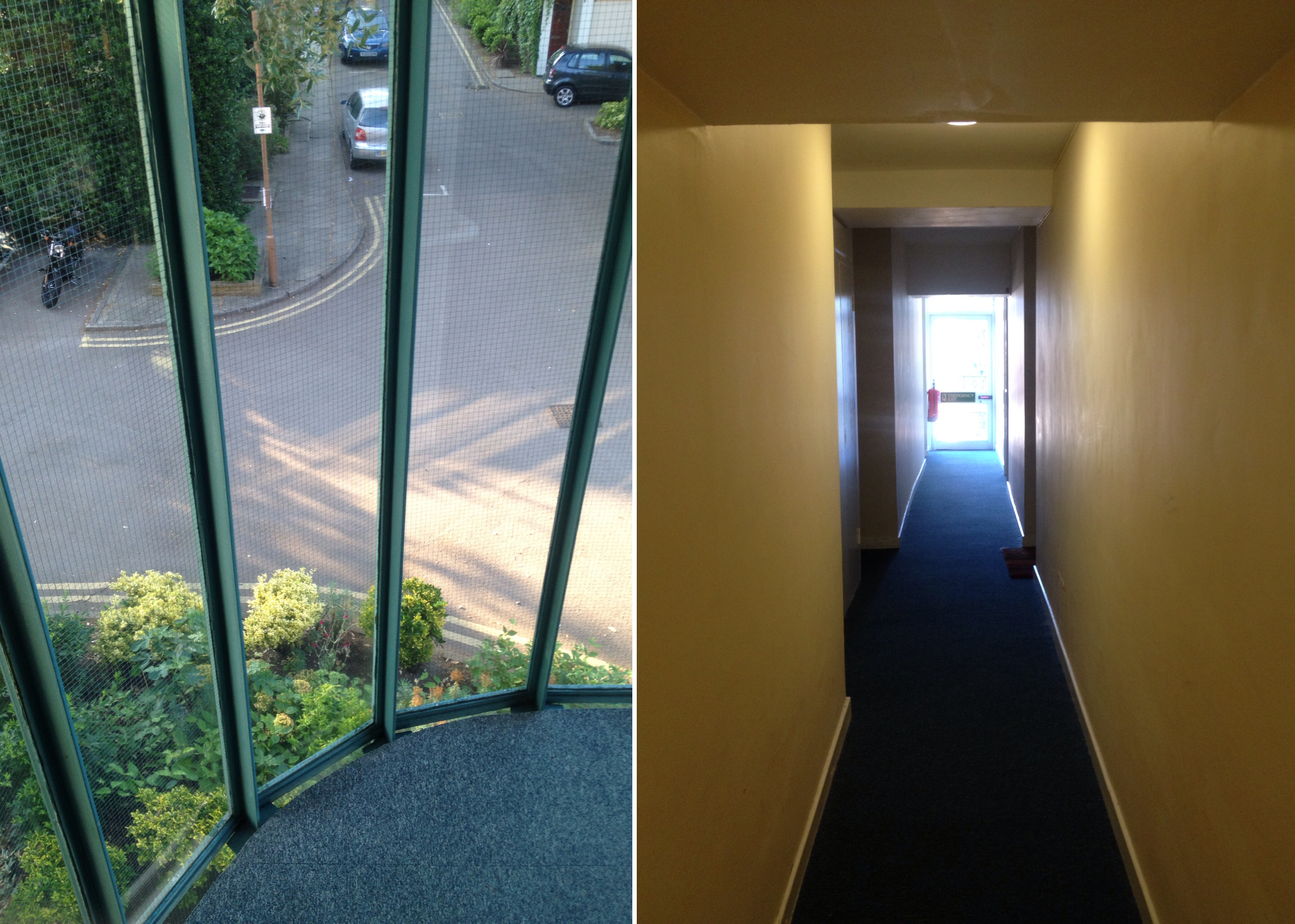
The flat itself had an interesting layout split over three floors: bedroom 1 and the bathroom were on the second floor, bedroom 2 and the open plan kitchen/living area were on the third and a large roof terrace occupied the fourth. There was quite a lot of floorspace but the odd proportions of some of the rooms (the kitchen/living area was unusually long and narrow) and the split-level layout with three floors of rooms stacked on top of each other gave the flat an oddly claustrophobic and disorienting feel overall. The pink, red and green colour scheme and furnishings did not help matters.


The outlook was also mixed: the views from the rooms facing out onto the nicely landscaped cul de sac (the two bedrooms) were pleasant whilst the views from the living area and terrace, which backed quite closely onto an enormous, rather depressing housing estate, were not.


I’m sure that with enough money (probably about £20k), the flat could be made to look pretty good. I was also informed that the terrace could be converted into an additional room. Unfortunately, this wasn’t a project that I felt motivated to take on.
Grenville Court, Crystal Palace SE19
Grenville Court, Crystal Palace SE19
Apartment block forming part of Dulwich Wood Park estate; winner of Civic Trust Award 1964
Architect: Austin Vernon & Partners
Year built: 1959
My search for a modernist property in the Crystal Palace area inevitably brought me back to the Dulwich Wood Park estate that I last visited a couple of months ago. This time I viewed two flats on the first and sixth floors of Grenville Court, Raleigh Court’s paler-coloured neighbour.
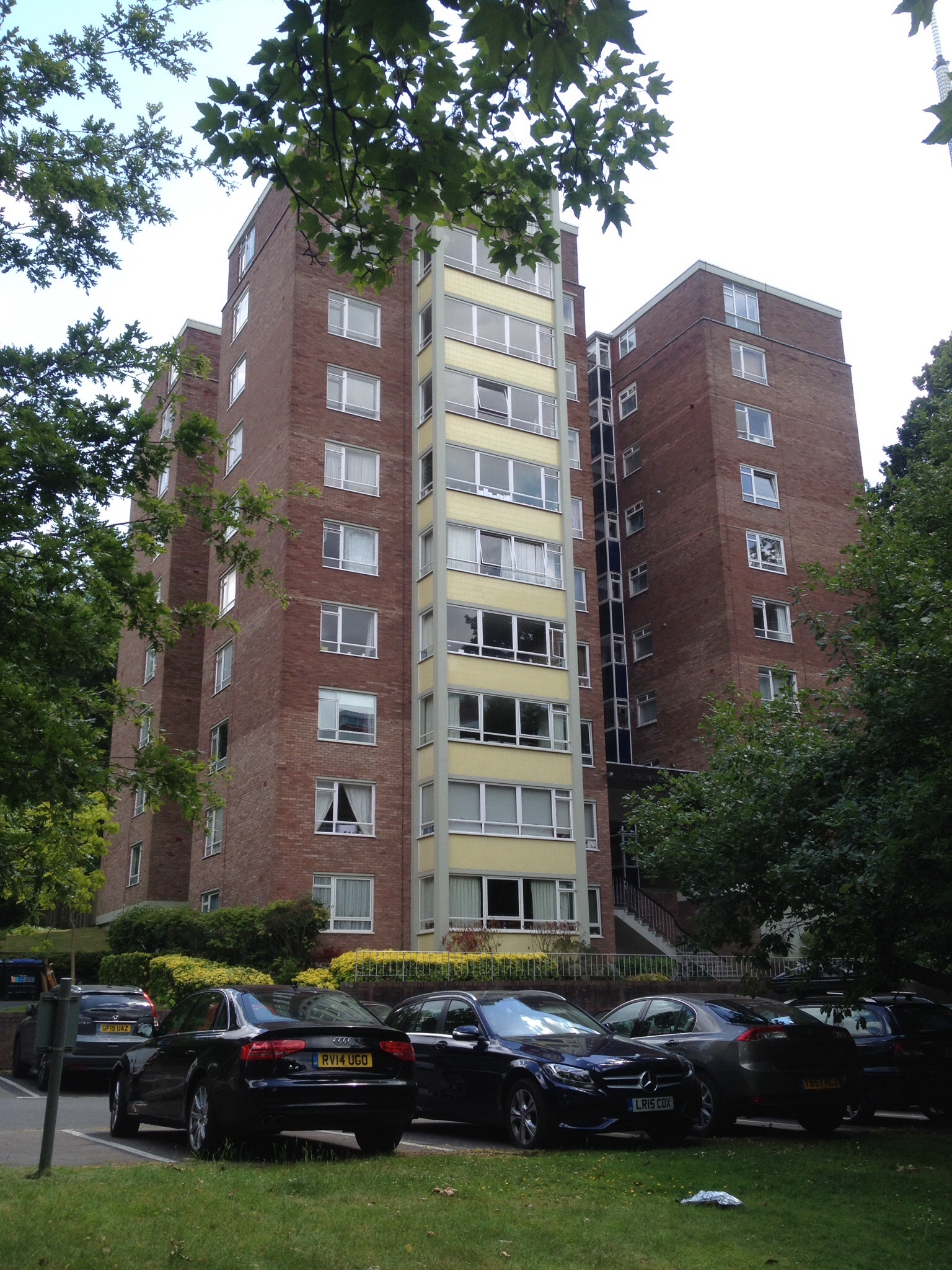
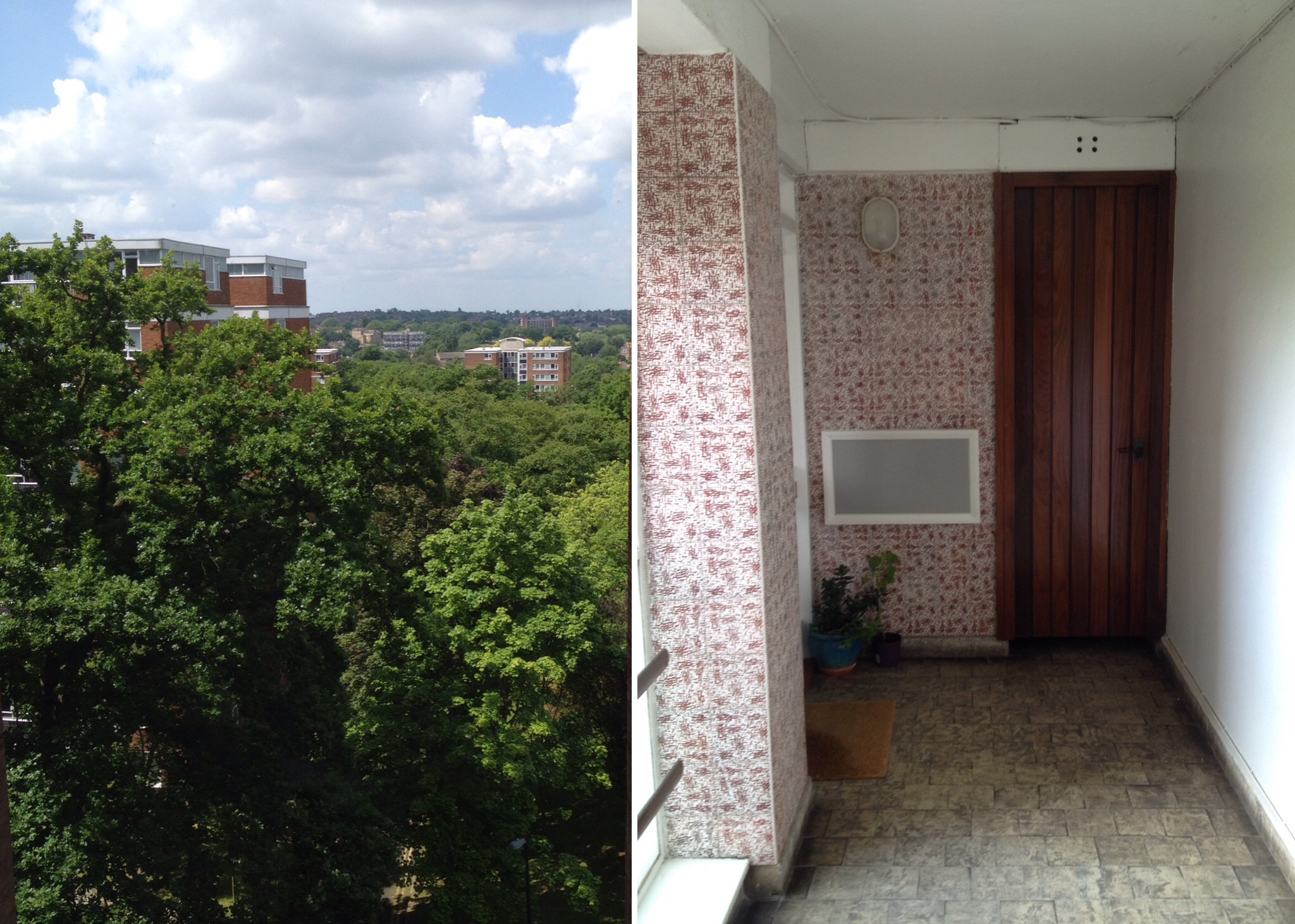
The two flats were identical in layout to one another and the flat I viewed in Raleigh Court last time: two decent-sized adjoining bedrooms, lengthy open plan living area with a steel-framed window spanning the length of the space, kitchen, bathroom. The only difference from the flat in Raleigh Court was the addition of a glazed partition separating the living area from the hall which was a nice design feature but made the space feel a bit more hemmed in.


Unlike the flat I saw last time in Raleigh Court, both of these flats had decent views facing out onto woodland rather than other blocks in the estate. The flat on the sixth floor obviously had the advantage of a high vantage point but the views from the windows of the first floor flat weren’t bad either.

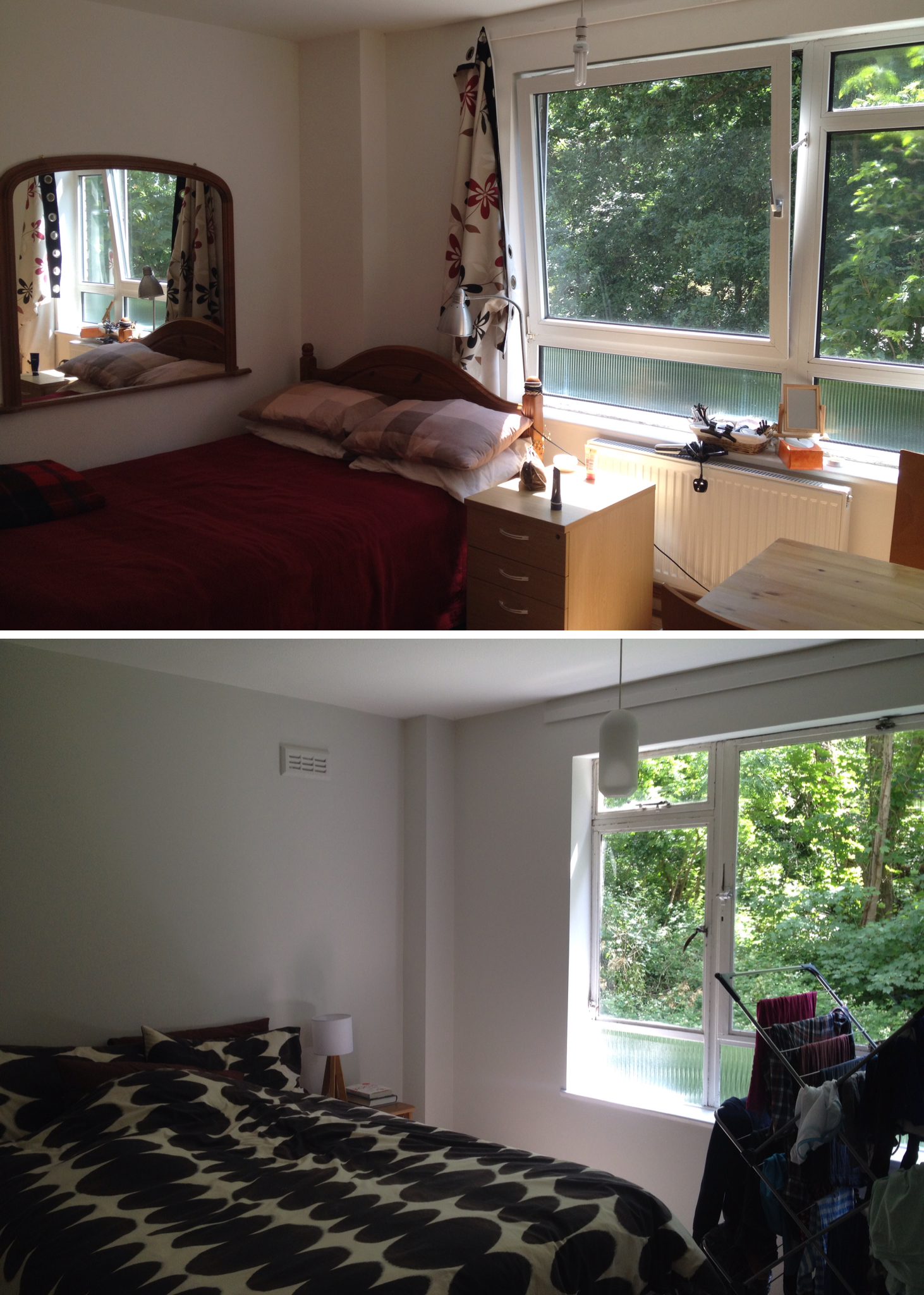
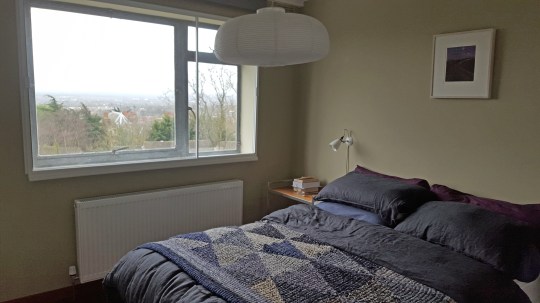
In terms of decor, both flats had most of the original features intact (cupboard doors, window frames etc.) but the first floor had been given a recent mid century modern makeover, which made it the more appealing flat of the two despite being on a lower floor.
I put in an offer on the first floor flat for the asking price but was promptly outbid, which indicates competition for a flat in decent condition on this estate is rife.
More photos of the first-floor flat that wasn’t meant to be:


 Modernist Pilgrimage