Category: Travel
Noguchi Museum
I learned two things whilst visiting this museum: (i) Isamu Noguchi designed a lot of interesting stuff in addition to that ubiquitous glass-topped coffee table now found in corporate waiting areas the world over; and (ii) there is an unexpectedly substantial amount of arts and culture to be found in Queens, New York.
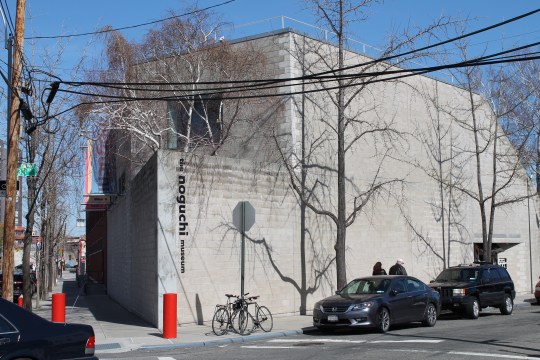

Despite being home to the Noguchi museum amongst other interesting galleries and institutions (the Museum of Moving Image is also well worth a visit), Queens is still a somewhat ungentrified neighbourhood. It is, by turns, residential and industrial, filled with uninspiring low-rise buildings and warehouse-type structures. It doesn’t help that the Noguchi museum, seemingly together with all of the other galleries and museums in Queens, are all situated a very, very long walk away from the subway.


I’d say that the Noguchi museum is worth the trek though: it’s housed in an interesting converted industrial building, made up of ten galleries on different levels with an open-air sculpture garden at its centre. Its contents are intended to be a greatest hits compilation of Noguchi’s work (mainly carved blobs of marble and stone of varying sizes in aesthetically pleasing shapes and colours). That corporate coffee table inevitably features.

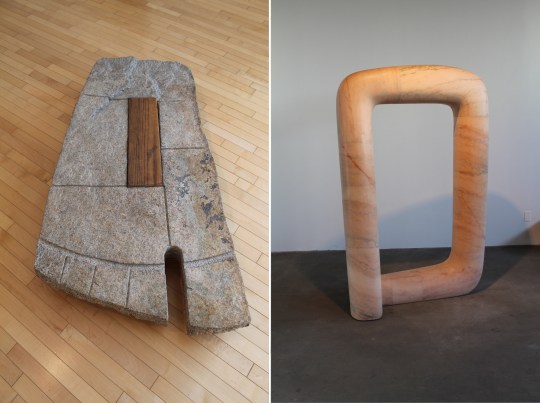
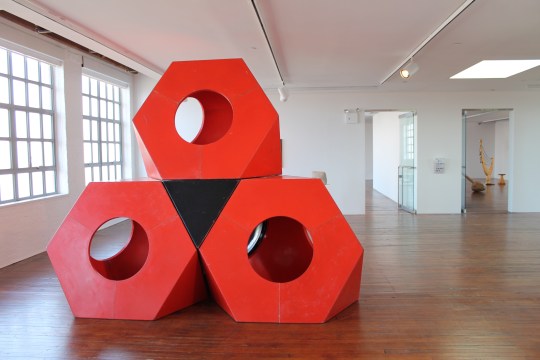
The garden is filled with Noguchi’s larger, outdoor sculptures and is unsurprisingly, Japanese-themed given Noguchi’s heritage. Cherry blossom trees, lots of rocks, the sound of trickling water and very high walls mean that it’s easy to forget you’re in the middle of Queens, New York.


The Museum Shop, where you can buy a number of Noguchi’s works (unfortunately excluding the stone blobs), is pretty good too. Featured objects include his Akari Light Sculptures, lamps first produced in Japan in the fifties, made from Japanese washi paper and bamboo ribbing; and his furniture designs, including that corporate coffee table. You can also buy other mid-century staples including George Nelson clocks and Eames chairs though I can’t think why you’d buy them here – they’re not exactly an impulse museum gallery shop buy.


New York design stores
New York, rather like Copenhagen that I visited in 2014, is an excellent place to go shopping for overpriced design items. All tastes are catered for with lots of vintage stores in Brooklyn and the Lower East Side and higher end places in Chelsea and Soho. My pick of the most interesting stores are as follows:
The Apartment
Good for: home decor inspiration (rather than actual shopping)
Price: expensive

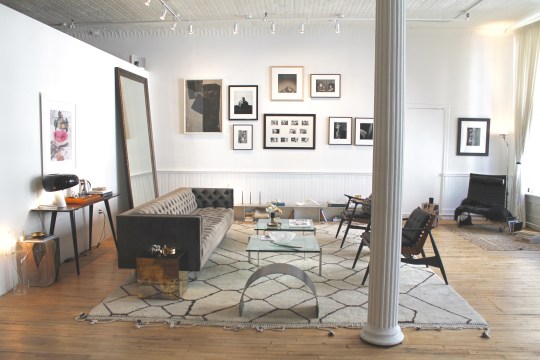

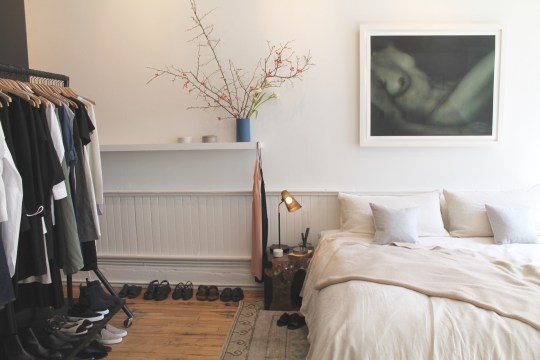
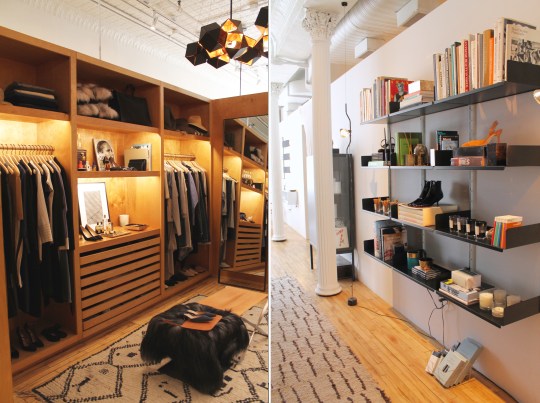
Laid out and furnished to resemble the luxurious apartment of a New York rich bitch, The Apartment is more of a “lifestyle showroom” than shop. The space, a large Soho loft, is loosely divided into living areas (including a pretend kitchen and flatteringly-lit walk-in wardrobe), and is filled with tasteful items, all of which are for sale. It’s a bit pretentious and everything is hideously expensive but it’s a novel concept and well worth a visit. That is, if you can find the very discreet entrance/lift sandwiched in between two shopfronts on Greene Street.


Objectify 139
Good for: hipster junk
Price: cheap to moderate


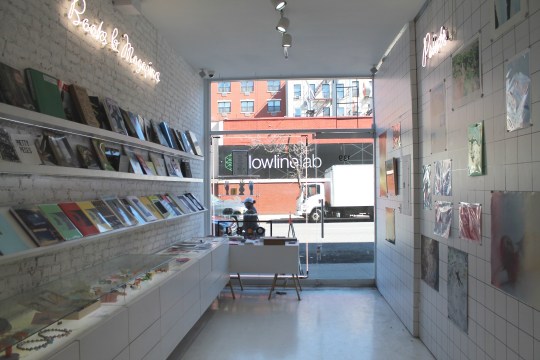
The person behind this trendy Lower East Side store would probably baulk at the comparison but if American Apparel branched out into selling artwork, records, design items and books, it would probably look a bit like this. The stock, which is appealingly laid out and quite reasonably priced, is secondary to the store’s “vibe”, which makes you feel hip just by being in there. I was so seduced by the experience that I ended up buying a print that I only realised was absolutely terrible once I’d brought it home, outside of the context of the store. Be warned.


Room and Board
Good for: high quality modern American homewares
Price: Expensive


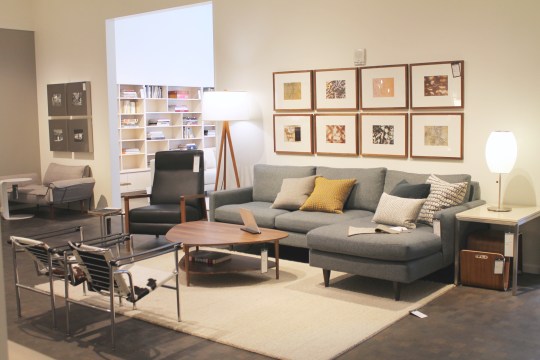
I’d never heard of this US-only furniture and homewares brand before visiting New York so I found the experience of wandering around the enormous, attractively laid-out Chelsea showroom quite exciting. The style of the furniture and homewares is a high-end, distinctly American take on mid-century modern in that everything is slightly oversized, glossy and comfortable-looking. Whilst I generally prefer a more vintage aesthetic (some of the styled room setups were a little too polished and minimalist for my taste), there’s no denying the quality of the product and design across the board – a couple of the mid century-inspired armchairs were particularly covetable.


Atlantic Avenue vintage furniture stores
Good for: mid century originals
Price: moderate to expensive


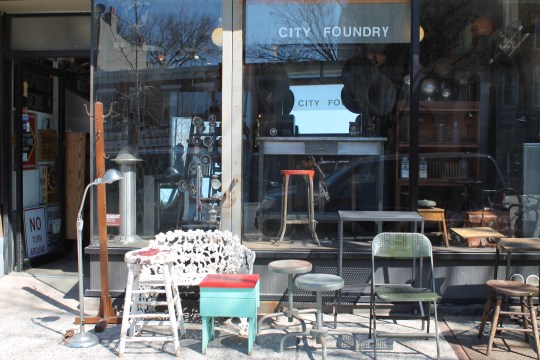
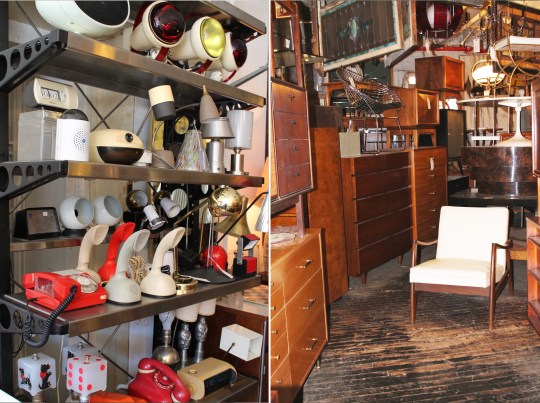
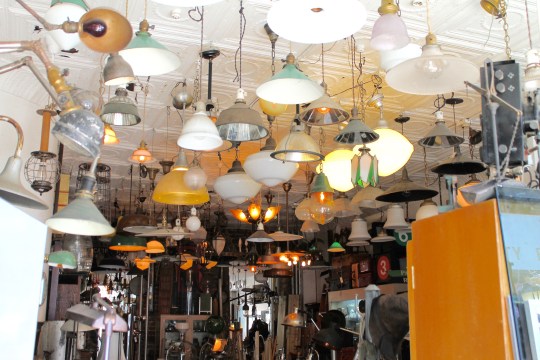
There appears to be a concentration of stores along Atlantic Avenue in Brooklyn which specialise in selling vintage mid century furniture. I visited two fairly representative examples of this kind of store – Horseman and City Foundry – and found both to be interesting if slightly overwhelming. Both stores are packed to the rafters with mid century antique cupboards, sideboards, chairs, tables, lighting and all manner of other items, all piled on top of each other. I spotted a number of beautiful pieces in amongst the organised mess that you’d be unlikely to come across in the UK but prices were relatively high so I left empty handed.
Steven Alan Home Shop
Good for: overpriced homewares
Price: expensive


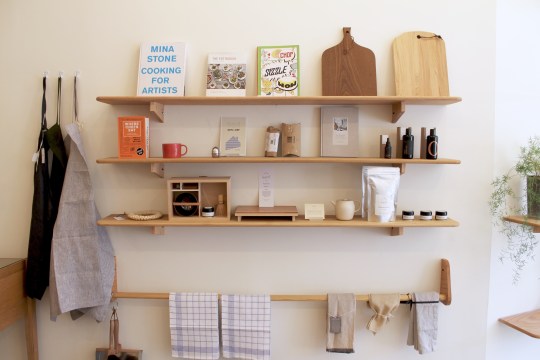
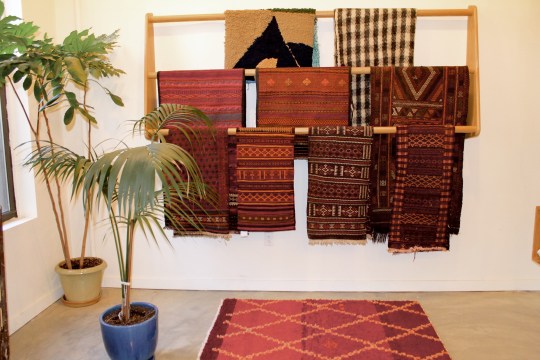
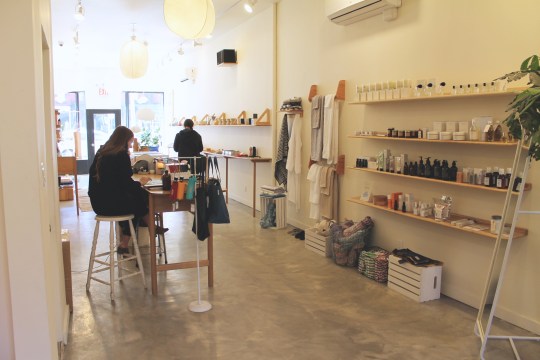
Another store I’d never heard of before visiting New York, Steve Allan appears to be a U.S. clothing brand that has branched out into attractive if slightly overpriced homewares. The delicate artwork and vaguely ethnic looking rugs and blankets at the back of the store were particular highlights.
Other:
MoMA Design Store
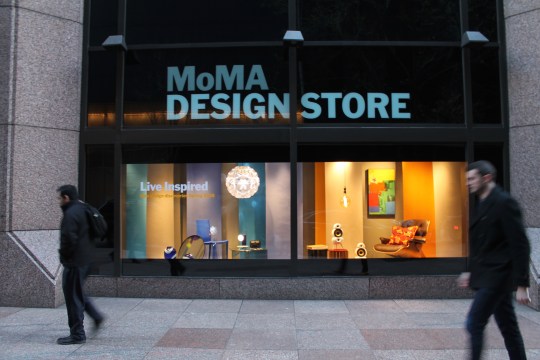
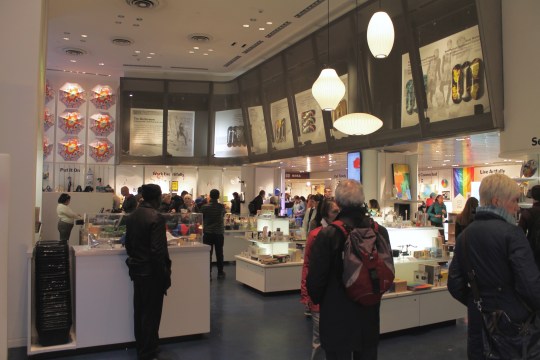
Effectively the MoMA gift shop minus the touristy tat, the MoMA Design Store (across the road from MoMA) sells slightly more substantial design objects and accessories. It’s worth popping into if you’re visiting MoMA but it doesn’t warrant a dedicated trip: there wasn’t anything for sale that I hadn’t seen in other shops or online before.
Gentry


This menswear store has an unexpected living room/vintage homewares section upstairs that provides a fitting backdrop for the mens’ bespoke tailoring service.
Organic Modernism

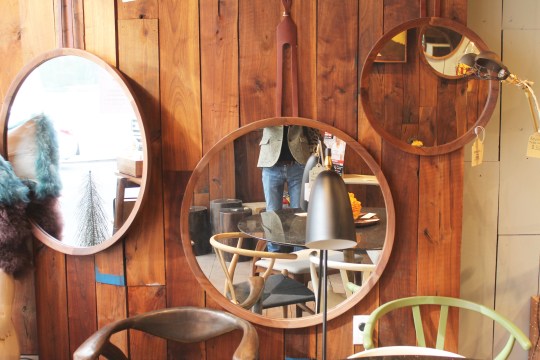
The name of this small Chelsea store describes its aesthetic pretty well. Whilst not all of the heavy wooden furniture was to my taste, there were some crude yet oddly charming paintings and bronze pieces that I might have bought if there hadn’t been the issue of having to lug everything home to the UK.
Modernist Pilgrimage to New York
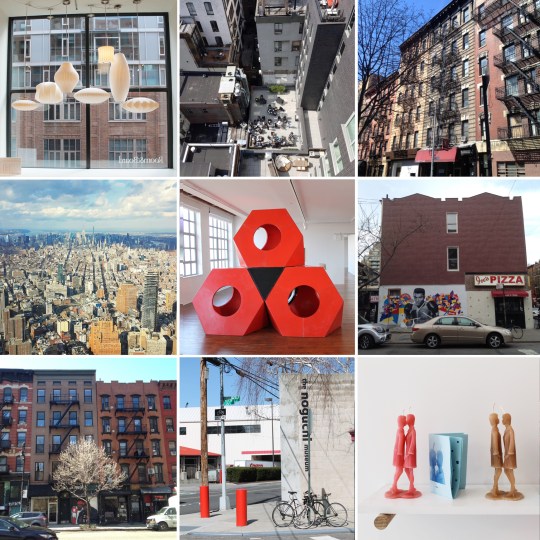

Due to a combination of bad timing and disorganisation, I didn’t actually manage to visit any modernist buildings during my recent trip to New York, including possibly one of the most famous examples of Brutalist architecture in the world. I did, however, wander around a lot of design shops and visit a couple of museums that may or not be of interest to readers of this blog – entries to follow.
Villa Savoye, Poissy
Villa Savoye, Poissy
Modernist Le Corbusier-designed villa situated on the outskirts of Paris
Architect: Le Corbusier
Year Built: 1931
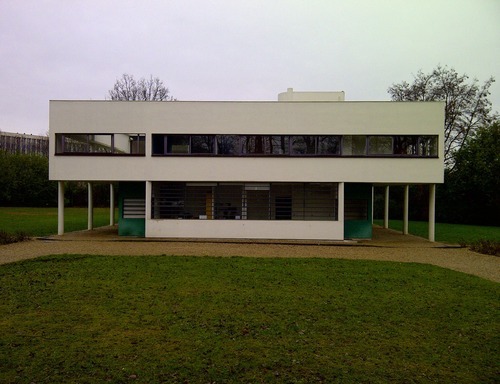
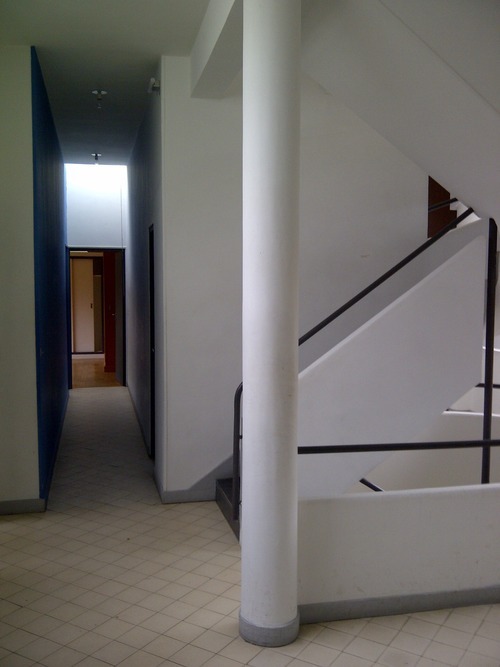
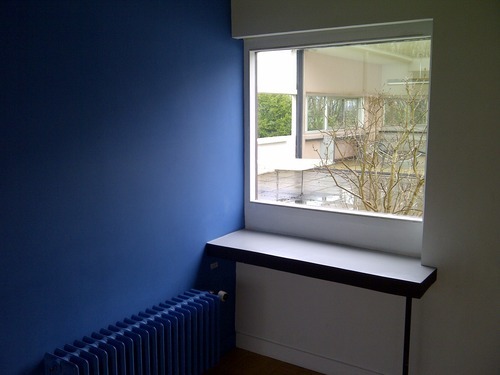
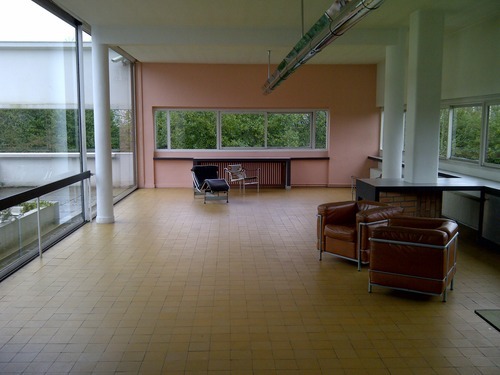
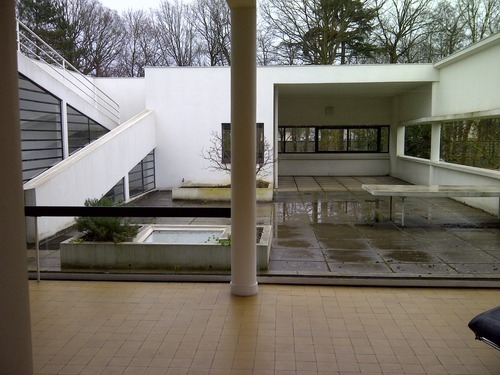
This magnificent Le Corbusier-designed villa is incongruously situated in what is now a sleepy, somewhat down-at-heel suburb about an hour and a half north of Paris.
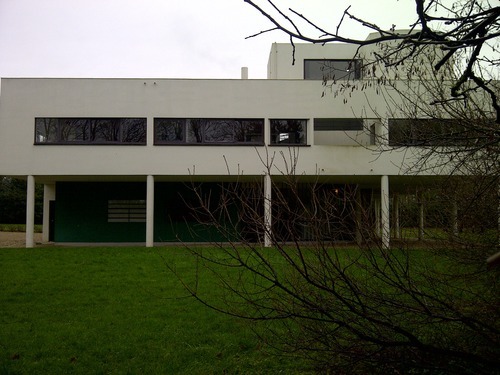
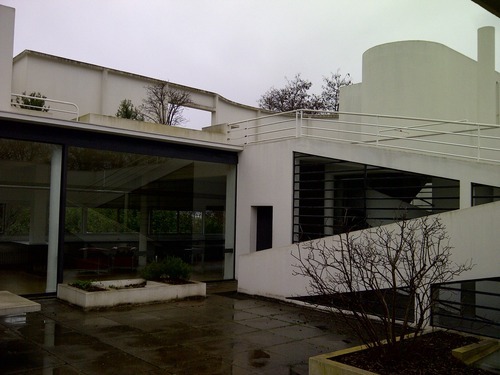
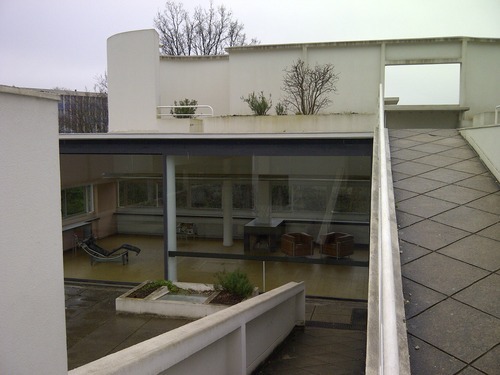
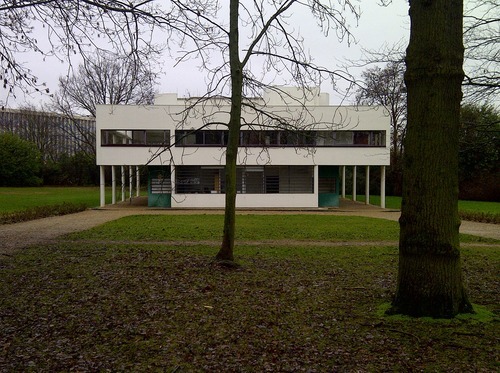
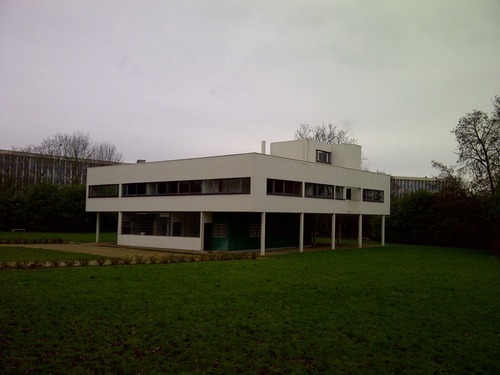
The villa is tucked away from the main road in the middle of a wooded plot of land. Looks-wise, it’s quintessential LeCorbusier with its white reinforced concrete exterior, extensive glazing and portico of flanking columns, which supports the upper levels of the building. The villa is effectively in the middle of a field so it can be viewed from all angles from the outside: each of its four aspects is a different (and interesting) arrangement of lines and shapes.
The interior layout needs to be experienced in person to be properly appreciated. The four columns in the entrance hall seemingly direct you up a continuous ramp. This wide ramp, which can be seen from almost everywhere in the house, continues up to the first floor living area and salon before continuing externally from the first floor roof terrace up to the second floor solarium. Wandering through the villa up the ramp is curiously reminiscent of navigating a very beautiful multi-storey carpark.




Copenhagen flea markets
I love a good flea market rummage. It’s probably a good thing that there aren’t really any in London or my home would be overflowing with old toot by now. Copenhagen has a few decent flea markets – there aren’t quite as many good ones as in Berlin and the Danes do not seem to respond well to shameless haggling but I did manage to pick up some nice stuff on my way round.
Frederiksberg flea market
Good for: mid-century homewares, lighting, rich peoples’ bric-a-brac


This was the best flea market I visited on this trip: enormous and packed with what seemed to be a mix of private and professional sellers, the range of old toot on offer was varied and generally of high quality. I picked up an enormous Knoll interior design tome, a rather creepy (but excellent in my opinion) statue of a baby’s head, a glass jar to hold my kitchen utensils and a low Aalto-style stool, which I got for about £2.50. Of note were seemingly discarded Poul Hennigson lamps, strewn all over the place as if worthless!
Vanløse flea market
Good for: mid century homewares, antiques


This is billed as a ‘real Danish fleamarket’ on the Visit Copenhagen website. First impressions are that it is a bit sparse and small (there are only about 25 stalls) but upon closer inspection, what is there is generally very good and well laid out. I picked up some unusually shaped salt and pepper shakers and some mid century-looking plant pots. I would have picked up some of the gorgeous Liberty-esque cushions had they not been down-filled. Prices obviously depend on the stall owner but there are bargains to be had.
Norrebro flea market
Good for: nothing


Perhaps I came too late in the day but this was literally crap piled up along the side of a very busy, dusty road. Avoid.
Lyngby flea market
Good for: stumbling upon something decent amongst a load of old toot


The Visit Copehagen website calls this ‘one of the nicest flea markets in Copenhagen’, which having visited the place, seems a bit generous. Again, perhaps all of the best stuff had been sold by the time I’d arrived but the items on sale in this cobbled carpark were mostly rubbish. It reminded me of a car boot sale only without the cars- no professional sellers, just members of the public having a clear out. I did manage to pick up a rather beautiful silver Georg Jensen piece from an old woman for a bargain which made the trip almost worthwhile.
Charlottenlund flea market
Good for: Bargains, rubbish clothes


Another place that reminded me of a car boot sale without the cars. Too many stalls of rubbish clothes and toys but there’s some decent homewares to be found at good prices. I managed to pick up some decent pottery ‘n’ plastic.
Total haul:


Copenhagen design stores
As you might expect, Copenhagen has a good range of design stores selling the well-designed wares that the city has become known for. Shopping for overpriced design items is generally a pleasant experience in Copenhagen with most of the best stores clustered around the Strøget area. I managed to pick up a nice range of plane-friendly rugs, posters and homewares from the stores below:
Dora
Good for: genuinely quirky design objects
Price: expensive


Every (expensive) item in this store has been displayed to appear as if it has been thrown together haphazardly. The stock is a mix of carefully selected design classics (Aalto stools etc.) and some genuinely quirky stuff, presumably sourced from independent designers. I liked the range of patterned slates though I was unsure of their function (very expensive, heavy placemats?) and homespun-looking textiles. The only item I could justify purchasing from a price perspective were some rather delightful balloon animals. It has just occurred to me that these cost about £10(!) each.
Stilleben
Good for: high quality homewares with a dusty pastel colour palate
Price: expensive


Everything in this store is undeniably beautiful and is beautifully presented (especially the prints upstairs – very inspiring) but the overall effect was a bit too feminine for my tastes. Perhaps it is the colour palate: it’s all dusty pinks, mint greens, copper and soft greys (admittedly with a bit of black, which does contribute some edge) but with not a primary colour in sight. I left empty handed.
Hay flagship and Hay House
Good for: everything provided you like the Hay look
Price: moderate to expensive


Although Hay is now stocked internationally (there’s a concession in most high end design stores in London and Selfridges), the sight of the complete range of beautiful stock all in one place is a sight to behold. There are items at every price point ranging from stationery and small design objects for the equivalent of less than £10 to big bits of furniture in Hay’s trademark unusual shapes and colours. There are two stores: the original flagship and ‘Hay House’ which occupies the top two floors of a building that overlooks the square. Although Hay House is the larger of the two and has a pleasingly gimmicky ‘mini mart’ section, I found the smaller flagship much more inspiring. I bought a printed canvas shopper bag and a articulated wooden foot.
Maduro
Good for: rugs, prints, assorted homewares
Price: moderate


This store sells a colourful assortment of homewares that appear to be exclusive to this store. About half of the stock seems to be child oriented (including lovely vintage animal prints and design objects by Ingela P Arrhenius) that might look odd in a home without children. I came away with a reasonably priced monochrome rug and a line drawing print of a defiant-looking, very underweight young woman.
Just Spotted
Good for: modern graphic prints
Price: moderate


Small, nicely laid out poster store selling a small range of modern graphic prints and accompanying frames. I particularly liked the landscape/animal hybrids (I opted for the wolf). Perhaps a few too many cartoon prints. Service is genial and helpful.
Illums Bolighus
Good for: those who do not have to consider a budget
Price: offensive


Illums brings together every high-end Danish design object and displays it in a sprawling department store setting. Perhaps I was just bitter that I couldn’t afford anything but I did not find this to be a pleasurable shopping experience: it’s too hot and the sheer number of items and displays serves to cheapen everything somehow. Somewhere like Liberty or Selfridges does this sort of thing better by dividing the stock into zones.
Other:
Superlove

A small store selling a few design items alongside some rather tacky women’s clothing. The stock is colourful but expensive for what it is.
Plint

A centrally located homewares store suffering from an identity crisis. First impressions are that it is a budget retailer that wants to recreate the Stilleben experience/colour palate. Closer inspection reveals some quite high prices and some tacky product selection. It would be more appealing if it were much cheaper.
Ordrupsgaard Museum and Finn Juhl’s house
This really was a pilgrimage into what felt like the Danish countryside but was well worth it. I am unsure of how this site came together because there is a very odd mix of styles at play but the overall effect is very pleasing indeed: there’s the original neo-classical mansion, the 2000s era Zaha Hadid-designed modernist extension and then Finn Juhl’s modernist house. All I can say is that Finn Juhl had impeccable taste. The house is a one-storey but multi-levelled dwelling with a glass porch separating the two wings of the house. Particularly impressive is the look-through when standing in the lounge. The house is filled with loads of beautiful built-in furniture and free-standing pieces, which are now well known as design classics. The artwork, particularly the portrait hanging in the lounge, is a stunning collection of mid-century paintings. The whole effect is just very inspiring.
Ordrupsgaard Museum:


Finn Juhl’s house:


Louisiana Museum for Moderne Kunst, Humlebaek, Denmark
Half of this gallery’s appeal is the setting. It’s located by the coast with gardens (dotted with glorious Henry Moore statues) that seem to cascade down dramatically towards the sea. The architecture is fascinating too – there’s the original, traditional house, which looks like something out of Louisiana in the Deep South with its white clapboard walls and porch and then the spectacular modernist extension(s), which resemble something out of a Japanese-themed Bond film from the 60s. The site is sprawling and there is literally something surprising/delightful at every turn (a view, a lake, a slide built into the forest). Well worth the pilgrimage out to Humlebaek.


Modernist Pilgrimage to Copenhagen


Entries about pilgrimages to Danish modernist buildings, design shops and flea markets to follow…
 Modernist Pilgrimage