The Japanese House: Architecture and Life after 1945, Barbican art gallery

I love a good exhibition at the Barbican. The brutalist gallery space with its unusual yet logical layout has played host to a run of excellent, sometimes outlandish shows over the years – the sex one and the Viktor and Rolf one with all of the creepy dollies spring to mind as being particularly memorable.

The current exhibition, a Japanese-themed extravaganza focusing on architecture and Life after 1945, was just as good as its predecessors and is likely to be remembered as the one with the Japanese house in the middle of it.

27007808_unknownimg_564927007968_unknown

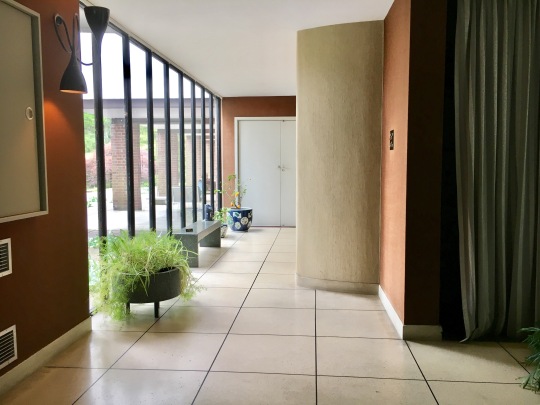
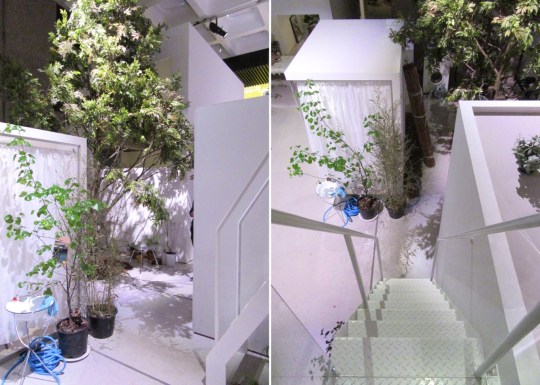
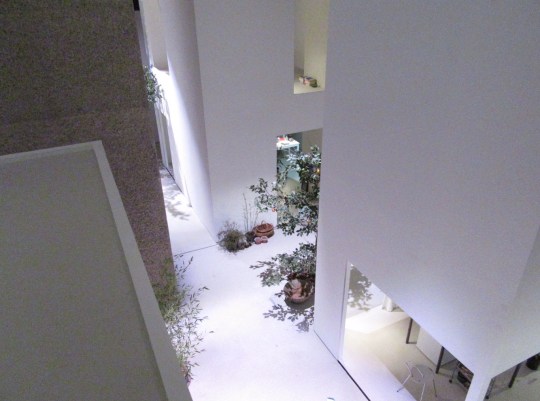
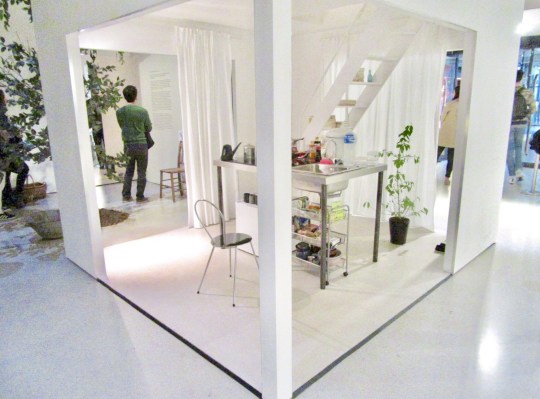
Said house was a fully furnished 1:1 scale replica of the Moriyama House by Pritzker-prize winning architect Ryue Nishizawa from 2005. The house consisted of ten white-coloured individual units, strikingly intertwined with the brutalist architecture of the Barbican gallery space. Where the gallery obstructed the architecture of the house, the structure was sliced open to expose the domestic interior in section.

27009312_unknownimg_5646img_5373

Most of the house was fully accessible: you could amble in and out of the units and garden and the lighting of the gallery was adjusted every hour to quite convincingly mimic dawn to dusk.

img_564727008944_unknownimg_5645

As well as the house, there were loads of interesting images, smaller scale models and videos of equally striking postwar Japanese architecture and design on display. The exhibition is on until 25 June 2017 and is well worth a visit.


Hyndewood, Forest Hill, SE23 

Hyndewood, Forest Hill, SE23
Mid-century extended end of terrace house
Architect: Norman Starrett
Year built: 1950s-1960s

Due to a happy change of circumstances, I’ve changed the focus of my longstanding property search from a modernist property for one to a modernist property for two.

I’ve always quite liked Forest Hill as an area – it’s commutable into the city, it has nice green spaces (including the Horniman Museum gardens with that fantastic view across to the city and Dawsons Heights), the amenities are decent with a nice mix of pointless artisan and essential shops and most importantly, it has a fair amount of nice mid century modern housing stock, including one of those Austin Vernon and partners blocks that I went to see last year and rows of less well known but still interesting-looking terraced houses.

27010832_unknownimg_5609

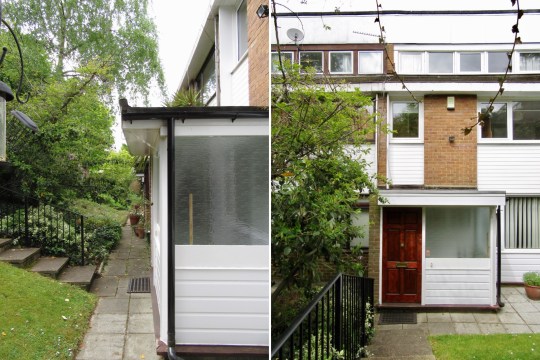
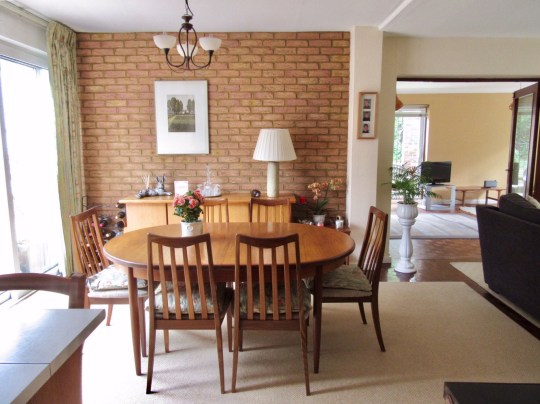
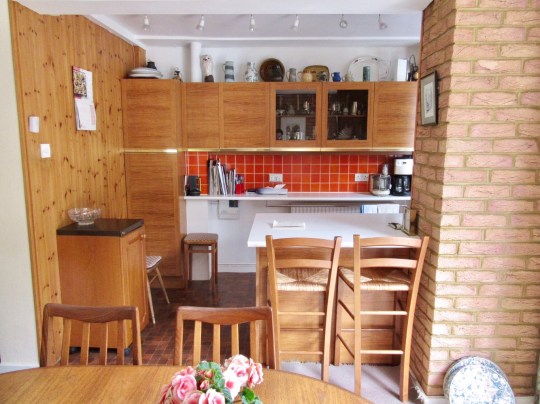
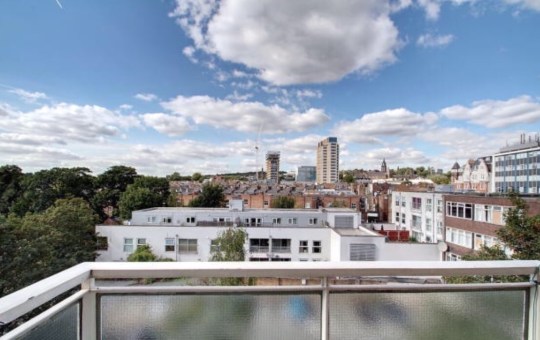
This house was at the end of a Norman Starrett-designed terrace down a very quiet little close containing a cluster of mid century houses and flats. It looked enormous from the floorplan due to a ground floor extension on the side of the house and appeared to have retained a lot of original 1960s features, including a very stylised kitchen and a lot of wood panelling.
27010608_unknown27010256_unknown

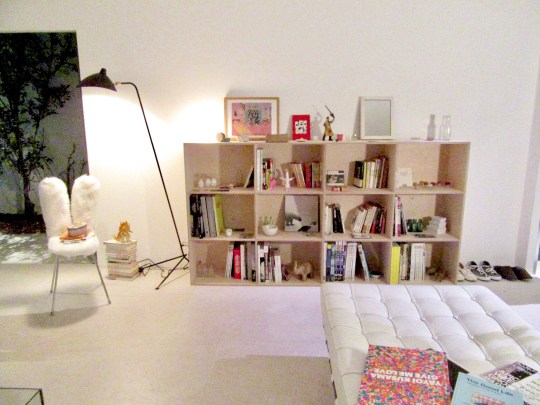
In person, the house was even perhaps bigger than I was expecting it to be. The amount of floor space on the ground floor alone was probably bigger than a lot of two bedroom flats in London that I’ve seen, containing two adjoining reception rooms (both with original parquet flooring), that very retro kitchen, a utility room and a downstairs bathroom. Patio doors led out onto a small paved garden.

27010688_unknownimg_561027010672_unknown

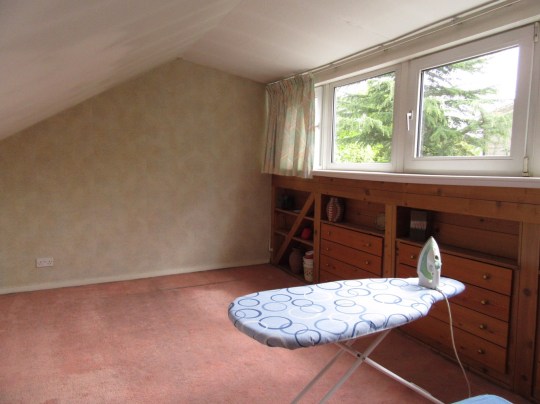
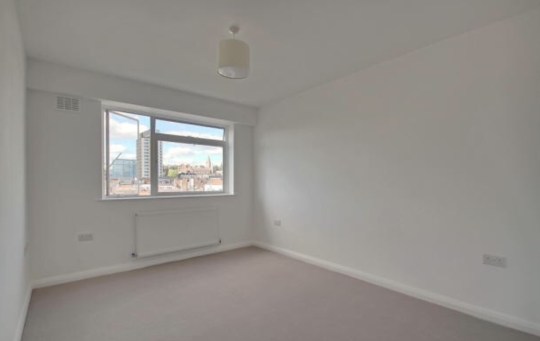
Upstairs were three bedrooms (two double, one single) and a further bathroom (this one with a very period avocado suite) and another bedroom up a further flight of stairs at the top of the house.

27010080_unknown27010016_unknown

The seller was an elderly lady who had lived in the flat for over thirty years and while she clearly hadn’t updated anything during that period, she had maintained everything pretty well, which meant that the house was a nicely preserved time capsule. With a small amount of cosmetic updating (repainting the walls, replacing the carpets upstairs and probably that avocado bathroom) and a bit of good mid century furniture, the house would have been absolutely beautiful.

27009952_unknownimg_561127009984_unknown

The house was also quite keenly priced at £600k, a decision on the seller and agent’s part to get as many offers as possible (most likely over the asking price), allowing for the property to be sold as soon as possible. We didn’t end up putting in an offer as the timing wasn’t quite right (and we had a fair amount of competition from other buyers) but this house will certainly serve as a benchmark for the purposes of our property search going forward.

Modernist makeover of Clapham flat – the results

More than eight months after posting this blog entry about my plan to give the living room in my friend’s flat a makeover, it’s finally done! I’m pleased with the finished result but then I would be: it looks like a slightly more muted and less cluttered version of my own living room. The only thing missing is some kind of wall-mounted retro shelving unit, which I would totally have snuck in if I could have.

27002528_unknown

As I mentioned in my original post, the room is a bit of a restrictive L-shape with a very narrow section due to the way that the flat was converted (this is exactly why I prefer modernist purpose built flats to higgledy piggledy period conversions!).

img_5478

This made it a bit of a challenge to accommodate a sofa, dining table and tv in a way that made sense. The way it was arranged before didn’t work, with that massive rectangular dining table and four high backed dining chairs squashed into the narrow section of the room, the tv on a stand in the corner and not one but two humongous cuboid-shaped sofas taking up the rest of the space.

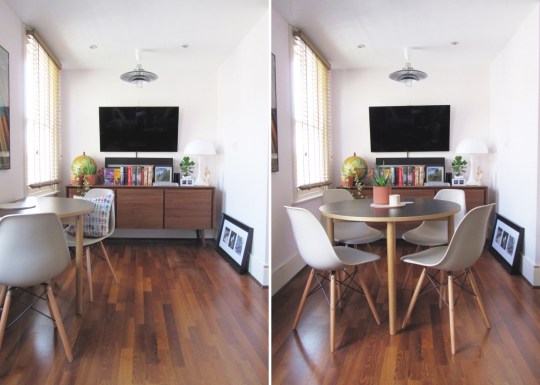
To make it feel less crowded and free up more floor space, I decided to position the sofa and tv facing each other at each end of the room and a drop-leaf circular table in between them, to be pulled out and extended as needed.

27006672_unknownIMG_5255 copy (1)

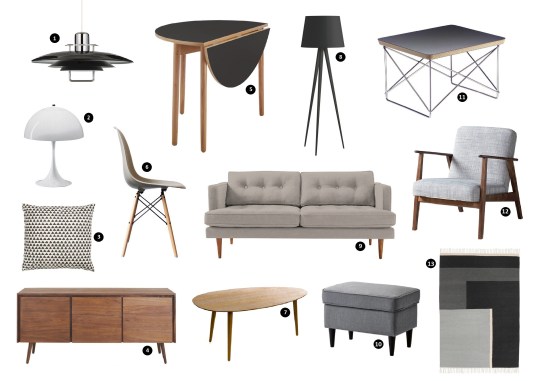
Of the options available, I chose the Suki table from Habitat with the laminate top (it comes in black or white) as it vaguely reminded me of those Aalto 90 Series tables, which I would totally buy for my own living room if it weren’t for the fact they are only made in pale birch which would clash horribly with the rest of my furniture. As for the dining chairs, we probably could have been a bit more adventurous but we ended up going for a set of cheap and cheerful Eames DSW knock-offs.

27009664_unknown-1img_5259

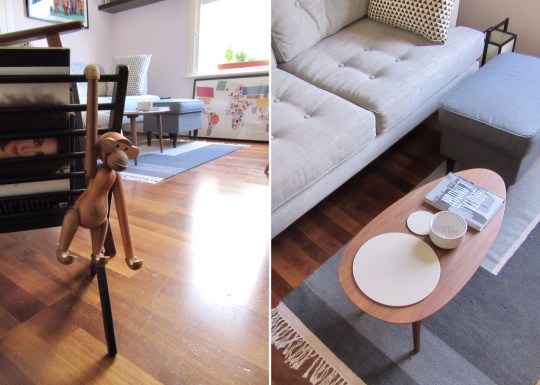
The sofa was a bit of a headache. We originally chose a grey version of the Mistral sofa from Heals (the same one as mine – as I said, this definitely was a case of recreating my own living room somewhere else due to my limited interior design ideas) but this wouldn’t fit up the incredibly narrow staircase leading to the flat (another reason that I prefer logically proportioned practical purpose built modernist purpose built flats to period conversions!) and neither did the hardly enormous Kotka from Made.com. We didn’t want to go for anything modular so we ended up getting the rather petite Peggy two-seater from West Elm, which the delivery men were only just about able to squeeze up those dratted stairs. Despite its size, it’s pretty comfortable especially when paired with the Strandmon footstool from Ikea though I concede it’s not quite as comfortable as the humongous blue cuboid that it replaced. The armchair is the ubiquitous but well-designed (and cheap) Ekenaset from Ikea.

27002976_unknown

The rest of the furniture and accessories are mostly high street and internet finds: the Dansette-style record player is from Aldi of all places (credit to retrotogo.com for drawing my attention to it) and the Eames LTR side table and Poulsen Panthella lamp are pretty good knock offs from replica online stores that have now shut down due to the annoying but sort of understandable change in legislation.

img_526027002704_unknown

Is there anything else I would change? Probably those floating shelves in the corner – I would have replaced them with some string-style shelving but they’re actually sealed onto the wall on one side which would have created a bit of a mess of we’d tried to remove it. The walls could also do with being repainted to get rid of that slightly pinkish hue and I would ideally reposition the pendant lamp so that it hangs in the centre of the room rather than over where the old dining table used to be. These small niggles aside, I think that the newly configured room both looks and functions better than it did before and I’m grateful to my friend for indulging my amateur interior design project, which I’ve really enjoyed working on. I have my sights on the bedroom and hallway of the flat next…

img_5341

  1. Belid Felix Rise and Fall Ceiling Light, John Lewis
  2. Louis Poulsen Panthella lamp, replica bought from now defunct Voga.com but original available from Skandium
  3. Cushions, H&M Home
  4. Vince walnut sideboard, Habitat
  5. Suki round drop-leaf table, Habitat
  6. Eames DSW dining chairs, replicas bought from now defunct Vitainteriors.com but original available from Skandium
  7. Flashback coffee table, La Redoute
  8. Yves black tripod lamp, Habitat
  9. Peggy sofa, West Elm at John Lewis
  10. Strandmon footstool, IKEA
  11. Eames LTR side table, replica bought from now defunct Vitainteriors.com but original available from Skandium
  12. Ekenaset armchair, IKEA
  13. Kelim rug, Ferm Living

Modernist Pilgrimage to Las Vegas

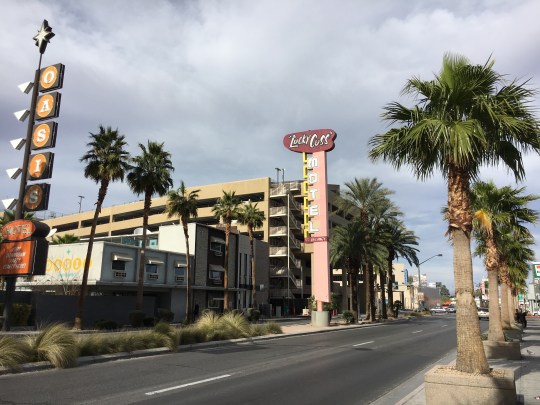
I recently visited Las Vegas for the first time and was unsurprised to find that it wasn’t exactly overflowing with modernist architecture. That isn’t to say there was a complete absence of interesting sights. Every so often, you would see an occasional bit of fifties/sixties architecture that had somehow escaped being bulldozed in favour of yet another tacky themed hotel.

img_4377

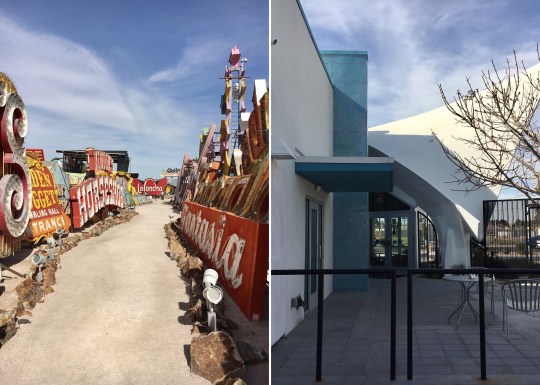
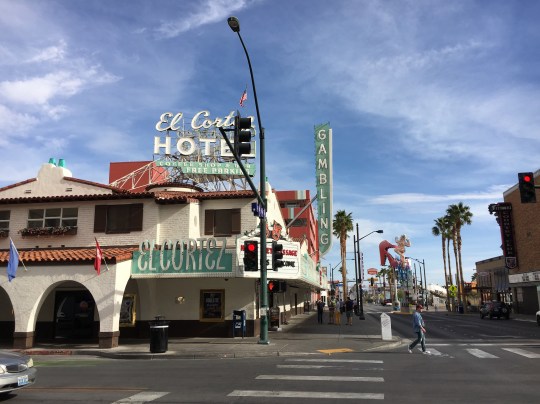
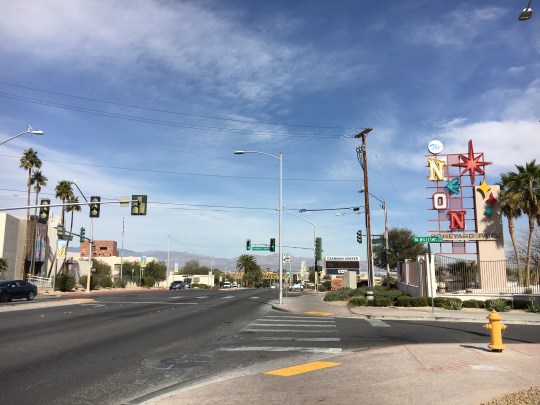
The Neon Museum featured signs from old casinos and other businesses from Las Vegas’ past in a slightly surreal outdoor “boneyard” setting and had a spectacular restored lobby shell from the former 1950s La Concha Motel as its visitor centre (what a motel that must have been!). The boneyard stays open well into the night so you can see all of the vintage signs lit up in all of their neon glory.

img_4351-1img_5336-1img_4382

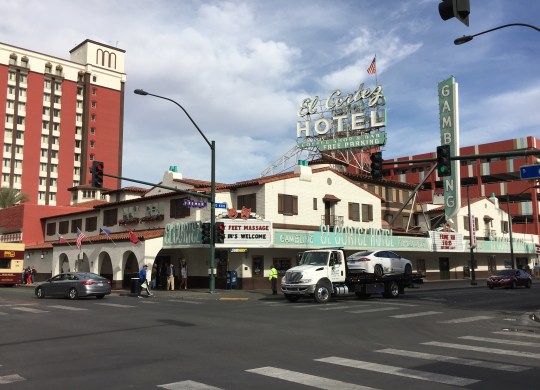
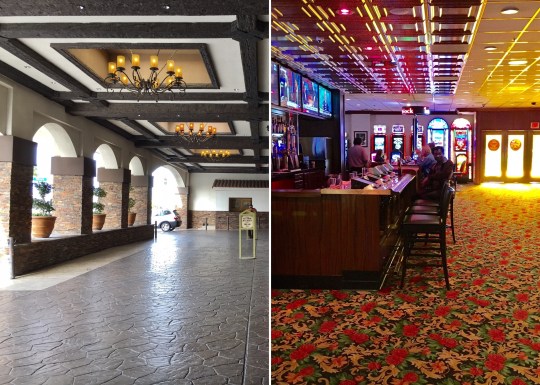
The El Cortez, one of the oldest casino-hotel properties in Las Vegas and one of the very few to have never changed its exterior facade since it was last modernised in 1952, had a slightly dodgy Spanish colonial theme going on. Whilst it wasn’t exactly typical mid century modern fare, the unmodernised facade and interiors made for an interestingly musty 1950s time capsule.

img_4400img_4674-1img_4396

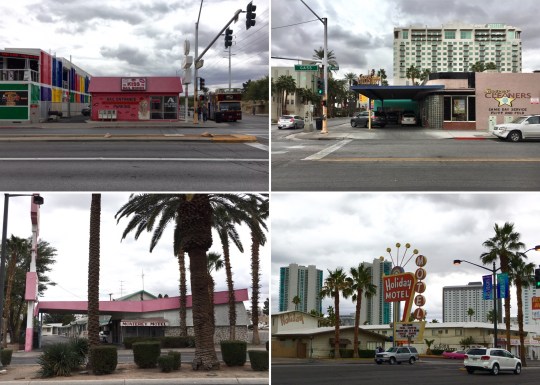
We also came across a smattering of other interesting fifties/sixties buildings and a surprisingly good selection of retro shops, nestled in between tawdry looking chapels (including a drive-thru option apparently popular with celebrities).

img_5337img_4389

In short, if you venture away from the strip, it is possible to catch glimpses of the Las Vegas of yesteryear, which in my opinion appeared to be a more interesting and glamorous place than it is today.

img_4277

Church Garth, Pemberton Gardens N19

Church Garth, Pemberton Gardens N19
Mid-century apartment block
Architect: Unknown to me
Year built: 1960s

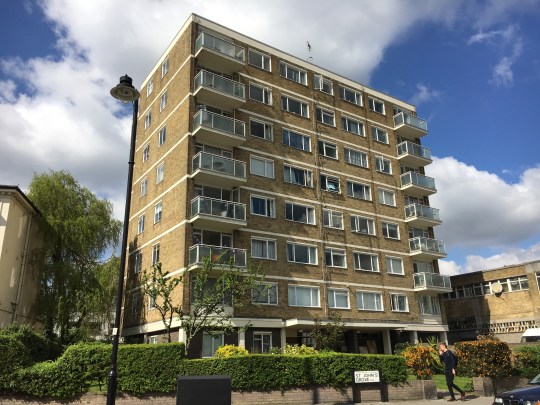
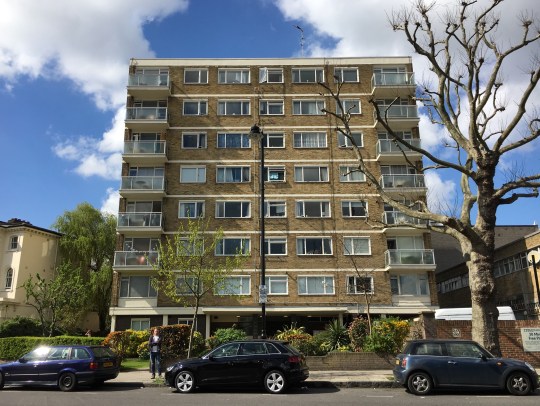
I have been intrigued by this 1960s apartment block in Archway ever since I saw it featured in an episode of Location, Location, Location a couple of years ago. The episode featured a nice thirty-something, creative couple seeking a 2 bedroom flat in London for about £300k (this must have been more than five years ago because that figure seems ridiculous now). The flat they ended up buying was really attractive with a good, logical layout (a nice big hall with decently proportioned rooms branching off it), parquet flooring, a balcony and lots of natural light.

img_5111

Five or so years down the line, a 2 bedroom flat came in the block came onto the market at £485k. Given the state of the ridiculously inflated market, I actually thought this was a very reasonable price for the area and went to have a look.

img_5112-1

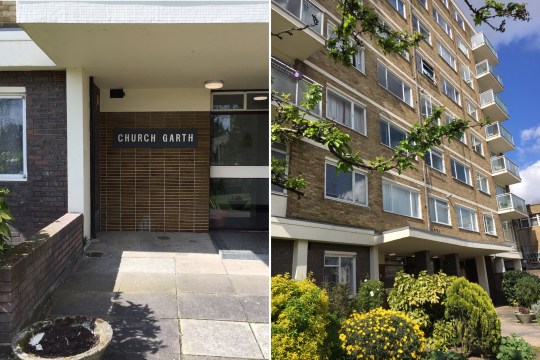
The exterior of the building, the garden and thecommunal areas were exactly how I remembered them from the programme: 1960s-looking but not overly stylised. The location was also very good: about two minutes’ walk from the tube and on an attractive residential street opposite a church (probably how it got its name).

Unfortunately, the flat itself was not great. While it was very bright, with light coming in from two sides, it had a different layout to the one featured on Location, Location, Location, with an L-shaped corridor as a hall, a long narrow kitchen and a small second bedroom. The kitchen and bathroom needed replacing, everything needed repainting (and possibly replastering in places) and it was stuffed to the gills with the current tenants’ belongings (the living room was being used as a third bedroom).

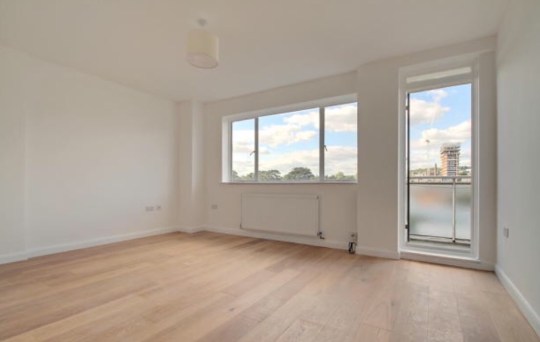
I didn’t take any photos because it would have been too intrusive to do so but I did find some photos online of a recently renovated version of the same flat which sold for £515k:

img_5122

Looking at these photos, it’s difficult to believe it’s basically the same flat as the one I saw today – given the choice between the two, I think I would pay an extra 30k for all of that work to have been done by the time I moved in.

img_5123img_5125

I’m going to continue to keep an eye on the block to see if something slightly less decrepit than the one I saw comes onto the market.


Eames wire chair and bikini

I’ve wanted a black Eames wire chair ever since I saw this blog post on Door Sixteen so when I saw one (on a rolling base, no less!) at the annual SCP warehouse sale, I snapped it up.

SCP is known for stocking eames chairs manufactured by Modernica rather than the official licensors Vitra and Herman Miller. Although this means that Modernica chairs are not the official licensed versions, the build quality is generally considered to be better (their shell chairs are made of fibreglass rather than mounded plastic – image below courtesy of the Modernica blog) and there is more of a variety of shell and base combinations, including the combination of wire chair shell on a rolling base that I bought.

img_5057

I really liked the way my new wire chair looked uncovered but after two days of actually sitting on that unforgiving wiry seat, it became apparent that I’d need some kind of cushion. I considered various options but decided nothing would look as good as an eames-designed bikini seat pad. I found this US website which sells bikini seat pads in a variety of fabrics (I particularly liked this retro Eames pattern) but at USD$150 plus $30 shipping, it would have cost more than the price I paid for chair itself.

img_4856

I eventually bought a blue vinyl bikini pad from a very helpful eBay vendor who sells official Vitra bikini pads at a slightly less extortionate price (where he gets them from I do not know). It was a bit of a struggle to get the bikini pad on but I actually really like how it looks and the fact that the chair no longer leaves imprints on my thighs is a bonus.


Modernist Pilgrimage to San Francisco

Whilst San Francisco is known for being design-oriented and architecturally characterful, it’s not a exactly a place resplendent with mid century/modernist places of interest. That said, the modernist sights that I did come across in between visiting the Golden Gate Bridge, the Painted Ladies and other decidedly un-modernist attractions were great and more than worth documenting for the purposes of this blog.

Marin County Civic Centre

img_4055

Without doubt one of the strangest buildings that I’ve ever visited, the Marin County Civic Center is situated about half an hour north of San Francisco and contains the area’s government administration offices, law courts and library. Its striking, other-worldly appearance means that it has been used as a filming location for many a sci-fi film, including 90s Ethan Hawke/Uma Thurman vehicle Gattaca (one of my favourite films of all time, mostly due to its futuristic mid century aesthetic).

img_3871img_4716

The building was architect Frank Lloyd Wright’s last project before his death in 1959 and bears a number of his hallmarks: an earthy colour palette punctuated with garish pops of colour (that shade of blue and gold against the terracotta was certainly a choice), arches, domes, cut-outs and lots of rounded corners (inside, the rounded corridors make you feel like you’re walking around a continuous circular space).

img_3915img_4717img_3958

Slap bang in the middle of everything is a 52.4 meter gold anodised tower, separating the hall of justice and Administration wings together with what appears to be a circular plunge pool and mini waterfall. It’s definitely worth visiting in person: even on a murky, drizzly day I thought it was just magical.

img_3921img_3988

St Mary’s Cathedral

img_3686

St Mary’s Cathedral was conceived by Italian modernist architect Pietro Belluschi and consecrated in 1971. A little underwhelming and beige from the outside (though this may have just been the gloomy weather), it had an awe-inspiring, almost science fiction, space station-esque interior.

img_3725img_4699img_3699

Inside, stained glass windows and concrete, sculptural pillars ascended on four sides and converged at the apex of the concrete textured ceiling. Like St Mary’s Church of the Angels that I visited in Singapore, the space was dramatic yet entirely fit for purpose: the setting, views and scale gave the place a feeling of serenity.

img_4700img_3658

Alameda Point Antiques Fair

img_3593

Simply put, this was one of the largest and best flea markets I have ever visited (and I have visited a fair few over the years). Located across the Bay Bridge in Oakland at the derelict former Alameda Point Naval Air Station, this monthly market is apparently Northern California’s largest antiques and collectibles show.

img_3603img_4675-1img_3591

I was a bit concerned that it might be a bit too professional/expensive for my tastes (I read in advance that all items are supposed to be more than 30 years old with reproductions prohibited) but I was pleased to be greeted by endless stalls of the usual tat that I’m usually accustomed to finding at flea markets. There was plenty of fairly priced mid century furniture, including a covetable vintage eames shell on a black cat’s cradle base (which I would have bought if there would have been a way to transport it back to the UK) and various knickknacks (which I could and did buy).

img_4698

Heath Ceramics

img_4197

I hadn’t heard of Heath Ceramics before visiting San Francisco but the 66 year-old brand is apparently renowned for its signature mid-century-style pottery, commonly found on restaurant tabletops across California. Their recently opened factory/showroom/store, a former linen supply and laundry, in the trendy-but-still-a-bit-rough north-eastern section of the Mission District sells the brand’s wares and aspirational lifestyle associated with it very effectively: the bright and airy space houses ceramic sets arranged according to the year that they were designed, high-end yet homespun-looking textiles, a tightly curated selection of cookbooks, a wall of handmade wooden clocks by House Industries, colourful tiles and a Blue Bottle coffee lounge.

img_4189img_4673img_4191

It was obviously all hideously expensive – I could only justify buying a $20 tea towel – but I thought the trip was worthwhile, if only to see a masterclass in visual merchandising (skip the branch in the Ferry Building, it’s a small kiosk in comparison). The area surrounding the store in the Mission District appeared to be a bit of a creative hub with lots of other interesting independent workshops and stores scattered about.

img_4672img_4204

Trevelyan House, Bethnal Green EC2

Trevelyan House, Bethnal Green EC2
Grade II-listed apartment block
Architect: Denys Lasdun
Year built: 1958

Although I was a bit underwhelmed by the flat I saw in Keeling House last year (in summary, I loved the building but found the refurbished communal areas a bit naff and the flat itself a bit cramped and expensive), I was very intrigued when a flat came up for sale in Trevelyan House, Denys Lasdun’s original brutalist “cluster block” in Bethnal Green.

img_3371

Trevelyan House and nearby Sulkin House have the same innovative design and build as their more glamorous younger sibling: the 24 flats are arranged in three separate eight-storey blocks which form a butterfly shape around a central core containing the lift and stairwells. This layout means that only three flats share a communal landing (rather than dozens of flats sharing a long communal walkway) and the flats get plenty of light from several sides.

img_3380img_3381

Like Keeling House, Trevelyan House is constructed from reinforced concrete and brick and has a similarly striking aesthetic. Although the block was Grade II-listed in 1998, the original steel windows were replaced at some point with cheap-looking uPVC and the fact that the block is still used as social housing means that it isn’t quite as well maintained as Keeling House, which was converted into a “luxury” development in the early 2000s. There is no flashy lobby and concierge here: once you get past the main gate, the communal areas are as no-frills as they come.

img_3366img_4668

The flat on the market that we viewed was a two bedroom, split-level maisonette on the second and third floors of the block. Layout-wise, it was very similar to the one that I saw in Keeling House with the living room, balcony and kitchen on the lower floor and the bedrooms and bathroom on the upper floor.

img_3421img_4671

Despite the dated decor and aforementioned uPVC windows, I actually thought the flat was superior in a number of ways to the one in Keeling House. It seemed to be larger for starters: whilst the Keeling House flat squeezed a compact open plan kitchen into the living room; the Trevelyan House had a similarly sized living room and a decently sized separate kitchen in addition.

img_3415img_4670

Upstairs, the landing area, bedrooms and bathroom also appeared to be slightly more generously sized in the Trevelyan House flat. In addition, the views from the balcony and windows of the Trevelyan House flat were better (not that you could see anything through the yellowing net curtains). The key difference that made the Trevelyan House flat more appealing, however, was the price. Whilst hardly cheap at £435,000 for an ex local authority flat “requiring modernisation”, it was more than £150,000 cheaper than the Keeling House flat.

This beautifully remodelled but otherwise identical flat that I found online gives an idea of what can be achieved with the space with a bit of structural work (the bulk of the effort appears to have gone into reconfiguring the kitchen into a cube which opens out into the main living area).

img_4599img_4667

The work cost £80,000 which means that if I bought the flat that we viewed and renovated it to a similar standard, it would work out as being significantly cheaper than buying a decrepit flat in Keeling House. Unfortunately I came to the decision that I wasn’t ready for such a big project and passed on making an offer (though if the remodelled one came onto the market, that would be a very different story).

img_4603img_4600

Poul Cadovius Royal System

Royal System
Wall-hung storage system
Designer: Poul Cadovius
Year designed: 1948

Updated in 2017 with better pictures

One of my most prized possessions is the rather imposing rosewood Royal System shelving unit that spans one of the walls of my living room.

27535872_unknownimg_331327535984_unknown

The Royal System was conceived in 1948 by Poul Cadovius, a Danish designer. One of the first wall-hung storage systems, it’s comprised of a series of vertically hung wooden rails onto which shelves and drawer, cupboard and work station units can be attached using a screw-free system of interlocking brackets, precisely-angled pegs and slots. The extent to which this system of rails and pegs is relied upon to bear the weight of the solid wood units, the shelves and all of items on the units and shelves (big hardback books, knickknacks, a TV) still confuses and worries me a bit. I still half expect to come home from work to find the whole thing on the floor.

IMG_0864IMG_0865

The Royal System has been a constant and reassuring presence in my life. My dad bought the unit from Heal’s on Tottenham Court Road in the 1970s and it has followed him (and later on, our family) from home to home until he kindly bequeathed it to me when I bought my first place.

IMG_0739IMG_0741

Whilst it looks pretty modish in these 1970s photos (when it was fully assembled, complemented by furniture of a similar style and sparsely populated with my dad’s (now) stylishly retro possessions), my 1990s childhood memories are of it partially assembled (we used the drawer and storage units as random bits of occasional furniture in various rooms of the house) and otherwise crammed full with rows and rows of TDK video cassette boxes containing recordings of my mum’s Chinese soap operas. I remember thinking it looked a bit unsightly and dated and wondered why my parents couldn’t replace it with a nice bit of flat-packed Ikea. It has only been in recent years that I’ve come to appreciate what a great piece of mid-century design it is and I feel very lucky to have it hanging in my living room.

IMG_0874IMG_0872

The Royal System has been reissued recently in more modern finishes (oak and walnut rather than the original rosewood and teak options) and with a slimmer, slightly more refined profile. I am probably biased but I prefer the chunky original (and best), which you can occasionally find knocking about on eBay.

De la Warr Pavilion, Bexhill on Sea

De la Warr Pavilion, Bexhill on Sea
Grade I listed Art Deco contemporary arts centre
Architect: Erich Mendelsohn and Serge Chermayeff
Year built: 1935

I certainly did not expect to come across this modernist treat during a recent visit to Bexhill on Sea. Located on the seafront of an otherwise typical British seaside town, the striking De la Warr Pavilion has a bold, decidedly international look about it, having been built by a band of immigrant architects in the 1930s. After years of neglect, it was deservedly granted a Grade I-listing in the 1980s and has been used as a contemporary arts gallery since 2005.

img_2016img_1944-1

Vaguely resembling some kind of vast ocean-liner both inside and out, the building is a strong, simple construction composed of clean straight lines, plain white surfaces and geometric shapes. The solid cube of the building’s auditorium is offset by the circle of the main stairwell, an open spiral set in a glass cylinder, and the long, horizontal strips of its balconies, oriented to make the most of view, sun and fresh air. Inside, there are touches of 1930s glamour, such as curved Aalto seating, elegant ceiling lamps and that graceful, sweeping staircase.

img_1994img_3230img_2021

The building is is often used as a wedding venue (one appeared to be taking place when I visited) and I can see why: its design, scale and seafront location lend the De la Warr Pavilion a sense of understated drama and elegance. There’s also a nice cafe overlooking the sea and a decent shop which sells the usual array of pleasing design tat.

img_2023img_3224img_2033