Category: Open House
Open House 2019
Having made the most of Open House weekend every year for the past five years, I think I’ve now visited pretty much every major participating building and development of interest from a modernist/mid century perspective. As such, this year’s itinerary involved revisiting the subject of my first ever blog entry, two architect-designed modern houses and a social housing estate that I hadn’t yet visited due to it being almost completely hidden from view.
Highpoint
Highpoint was the subject of my first ever blog entry on this site, which, looking at it now, was pretty ropey in terms of the writing, formatting and photos so I thought I’d go back there and produce something better.

Highpoint II, main entrance
Designed in 1935 by Berthold Lubetkin and Grade I-listed in 1970, Highpoint I was built to accommodate 96 one to three bedroom flats (all generously proportioned) and incorporated many features that were technically advanced for the time – I’m not sure how this is logistically possible but there are no partition walls between neighbours’ flats except in the central spine of the building.
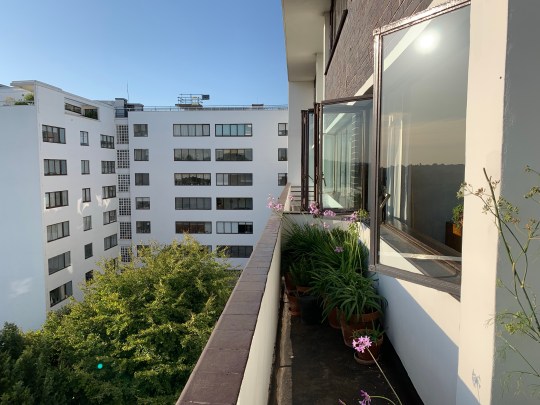
View of Highpoint I from balcony of apartment in Highpoint II

Highpoint I exterior shots and entrance to Highpoint II
Highpoint II was completed on the site next door in 1938. This block was aimed at wealthier tenants (not that Highpoint I was particularly low grade) and was constructed using richer materials including glazed tiles, glass blocks on the staircase towers and marble in the hall. The building was built to accommodate twelve large maisonettes, all of them containing four-bedrooms and two bathrooms split over two floors, with the best ones situated in the central part of the block: these ones were built with double-height living rooms and elegant oval-shaped staircases.
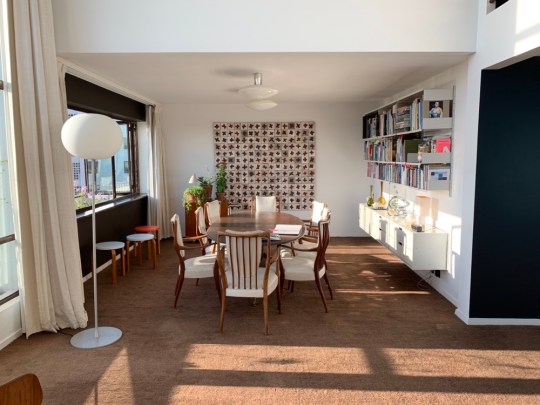
Highpoint II maisonette, dining room

Highpoint II maisonette, oval staircase and double height window

Highpoint II maisonette, sitting room
I remember being completely awed by both Highpoint I and II and fantasised about living there when I visited five years ago. I was equally awed this time: that split-level maisonette in Highpoint II that I featured in my first ever blog post was just as gorgeous as I remembered it: as well as having the double-height living room and oval staircase, it had stunning views over Highgate from both floors, four large bedrooms and two original 1930s bathrooms. Most importantly, the lift up from the ground floor lobby opened directly into the hallway of the maisonette – I’m not sure why but I always associate this feature with extreme luxury.

Highpoint II maisonette, bedroom
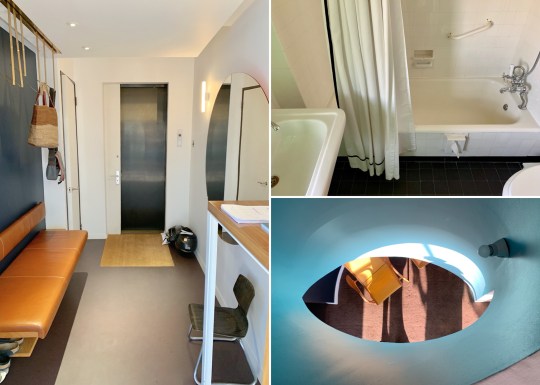
Highpoint II maisonette, entrance hall (with direct lift access), 1930s bathroom and oval staircase

Highpoint II maisonette, office
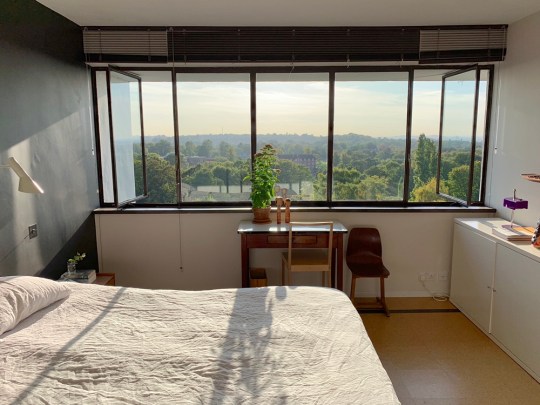
Highpoint II maisonette, master bedroom
The maisonette had the perfect mix of original features (the current owner reportedly bought it from the estate of an elderly lady who left behind a lot of moth-eaten Chanel and hadn’t updated anything since she bought it in the 1930s) and modern styling. Our guide informed us with some regret that the original features in some of the other maisonettes in Highpoint II had been “destroyed by too much money”.
Page High
Page High, a red brick social housing estate consisting of 92 homes, was built in the 1970s above a car park that was in turn above a retail store (Sainsbury’s at the time, now a Matalan outlet).
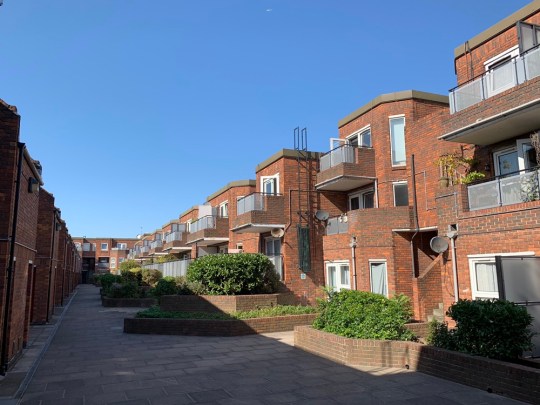
Page High estate, exterior
The estate, accessed from street level by a lift, opened out into wide pathway which ran between two rows of low-rise buildings with stepped balconies, mostly consisting of one and two room apartments, and maisonettes. The overall design was somewhat reminiscent of the Alexandra and Ainsworth estate though on a slighter smaller scale and without quite the same sense of drama.
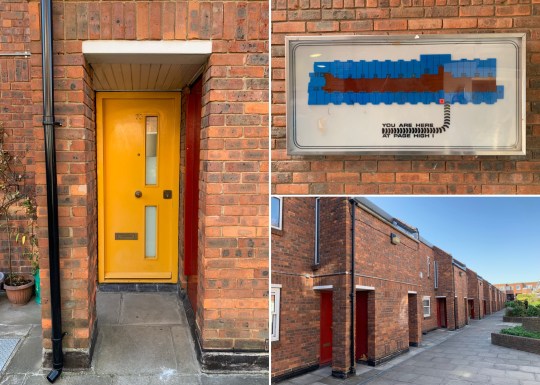
Page High estate, exterior detail
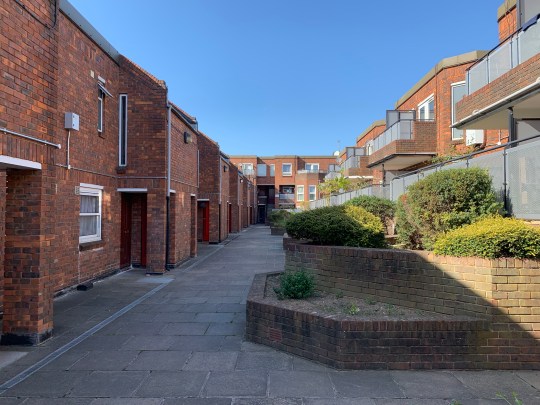
Page High estate, exterior

Page High estate, exterior
Page High, however, appeared to be a very well designed estate. Flats were built with their own front and back balconies, and every ‘ground’ floor flat had a front garden.

Page High estate, exterior detail
In addition, the fact that Page High was seven storeys up from street level meant that it had great views over Alexandra Palace and was remarkably peaceful in spite of its location just off Wood Green High Road. I also liked how well hidden it was: you would never know a development of that scale was there unless you were specifically looking for it.
Springbank
Springbank was one of a pair of semi-detached houses completed in 2014 by SE5 Architects on a large site in Peckham. The house was split over three floors (one of which was a basement level) and despite the very modern finish (lots of glass, steel and blonde wood), reminded me a lot of the original 1960s Lilian Baylis school that was converted into flats a couple of years ago.
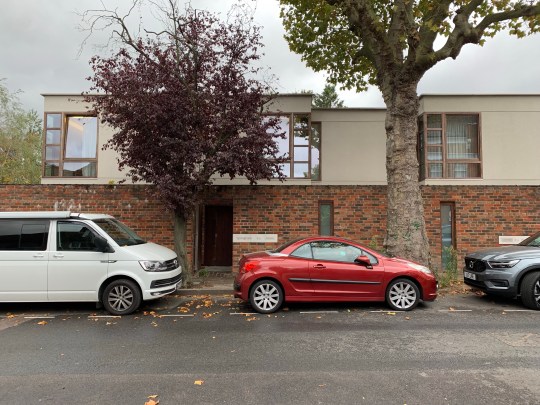
Springbank, exterior from street
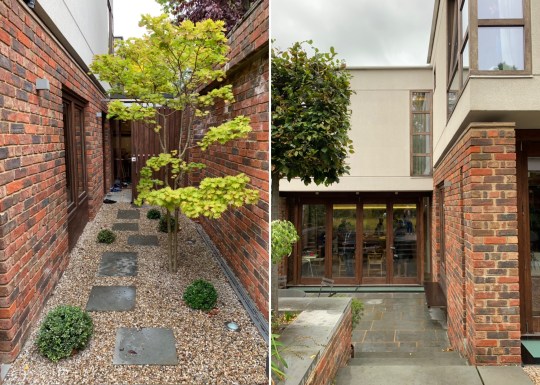
Springbank, exterior from garden
The ground floor contained the living spaces, including a reception room and a large kitchen/diner, both of which had folding doors opening onto the garden, which wrapped around the house on three sides. The kitchen housed a rather envy-inducing walk-in pantry.

Springbank, kitchen/diner and pantry detail

Springbank, garden
In the centre of the house was a winding oak staircase with a glass balustrade and treads of varying lengths connecting the different floors of the house. This led down to the basement level (which contained a utility room and workshop) and up to a glass atrium on the first floor, which flooded the whole house with natural light, even though it was a fairly gloomy day.
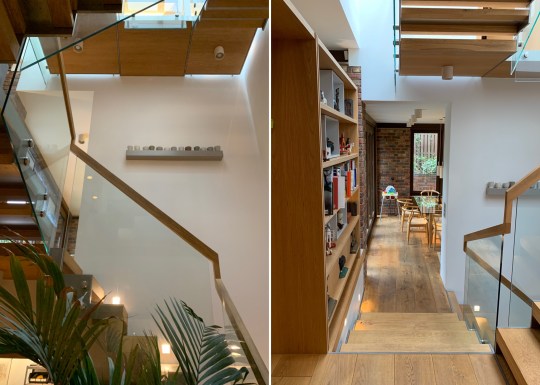
Springbank, staircase

Springbank, staircase
The first floor contained the bedrooms, including a master bedroom with dressing room (like the pantry, this was also envy inducing) and en-suite bathroom, a second bedroom with en-suite shower room, two further bedrooms and another bathroom.
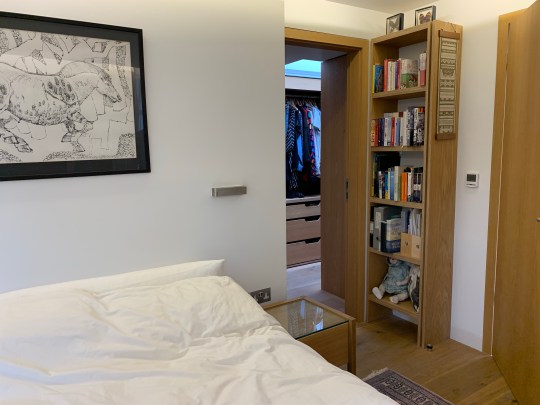
Springbank, master bedroom looking into dressing room

Springbank, first floor landing
I did a bit of research online and the other house in the pair was listed and sold earlier this year for £2.25million.
Kirkwood
Unremarkable from the outside, this 1960s mid-terrace house underwent a dramatic interior renovation and extension in 2017 which turned the poky ground floor level into a spacious open-plan living, kitchen and dining room with broad folding doors that led straight out into the garden.

Kirkwood, exterior
The owners had done a lovely job with the renovation with a range of interesting textures, fixtures and fittings – I particularly liked the the continuous cork flooring throughout the whole of the ground floor and the central glazed partition.
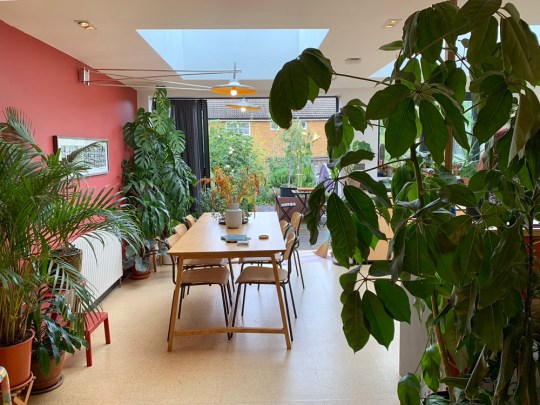
Kirkwood, ground floor extension

Kirkwood, ground floor extension

Kirkwood, garden
I also took note of everything in the bathroom upstairs from the size of the tiles to the bath side panel (a coloured mdf-like material called Valchromat) to the way they’d hung the mirrors so that I can try to replicate what they’d done when we come to do our bathroom renovations.

Kirkwood, bathroom and master bedroom

Kirkwood, bathroom detail (yellow Valchromat bath panel)
Dulwich Artists Open House
The Dulwich artists’ Open House weekend allowed me to enjoy two of my favourite pastimes at once: shopping and nosing around other people’s mid century homes.

(from L-R, starting with top row) works by: Charlene Mullen, Sarah Hamilton, Emily Jo Gibbs, Jo Lewis, Fabio Almeida, Victoria Kitchingman, The Fine Groove, Jim Grundy and Birgitta Pohl
With the goal of finding a suitable artwork to hang on one of the bare walls in the hallway of our house, we set off around the map provided by the organisers. I’ll admit that I chose the places that we ended up visiting 40% based on the art (which I won’t even attempt to write about due to a lack of knowledge and appropriate vocabulary on my part – I’ll provide links to the artists’ websites instead) and 60% based on the house in which the art was being exhibited.
First on the agenda was Sarah Hamilton who was displaying her prints, painting and homewares in her Austin Vernon & Partners-designed house in Peckarmans Wood.

Peckarmans Wood – exterior and grounds
Built in 1963 and widely considered to be the finest of all the 1960s Dulwich houses, her house was one of the larger, two storey types with an upside-down layout (entry and living spaces on the ground floor, bedrooms on the lower lground floor with access to the garden), floor-to-ceiling windows, wooden panelling, pitched ceilings and elevated views over the communal grounds and towards the City.

Peckarmans Wood, interior (Sarah Hamilton)
Just further up the road were Victoria Kitchingman who was displaying her portrait-focussed oil and mixed media paintings and paintings, and Jo Lewis who was displaying her water-based paintings, in Woodsyre, another Austin Vernon & Partners-designed terrace of houses.

Woodsyre, interior (Victoria Kitchingman)
These houses were deceptively substantial, containing multiple, generously proportioned living areas (both artists had knocked through the original kitchen on the ground floor) and five bedrooms spread across four floors.

Woodsyre, interior (Jo Lewis)
Both houses had panoramic views from the top of Sydenham Hill and access to an idyllic communal green at the bottom of the their beautifully manicured gardens.
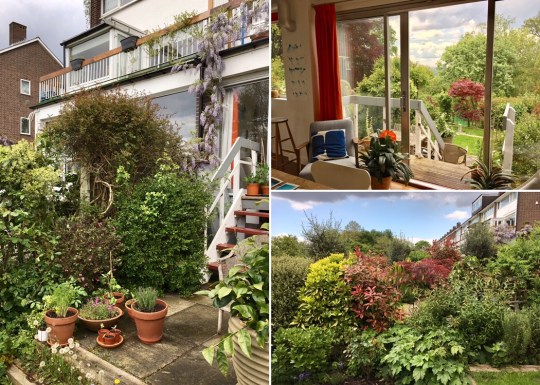
Woodsyre, garden (Jo Lewis)
Next on the list were The Fine Groove and Birgitta Pohl exhibiting intricate wood engravings and functional, decorative stoneware at a split-level maisonette which had the feeling of a house in Breakspeare, a sixties-looking development next to Sydenham Hill station.

Breakspeare (The Fine Groove and Birgitta Pohl)
Joy Godden and Charlie Loxley were exhibiting jewellery and children’s prints in a house in Lings Coppice, which had been reconfigured on the ground floor to create an open plan space with bi-folding doors opening out onto the garden.

Ling’s Coppice, interior (Joy Godden and Charlie Loxley)
Jim Grundy was exhibiting his rather stunning geometric abstract paintings at his classic sixties three-storey townhouse on Half Moon Lane.

Half Moon Lane (Jim Grundy)
Slightly further afield near Denmark Hill was Charlene Mullen displaying her embroidered scenic cushions and ceramics of London at her house in The Hamlet, a rather lovely development of 32 terraced houses arranged in a rectangular formation around a large communal green.

The Hamlet, exterior (Charlene Mullen)
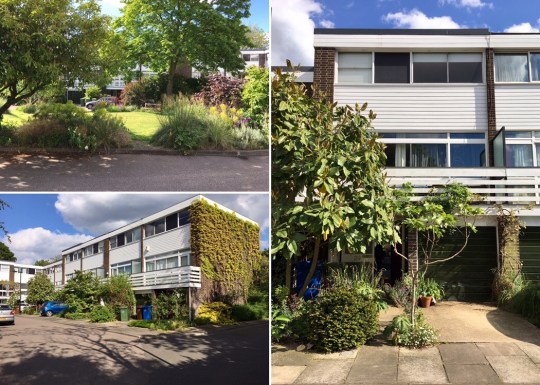
The Hamlet, exterior (Charlene Mullen)
Built in 1967, it was reportedly architect Peter Moiret’s final project before he died so he was intent on designing something special. Split over three floors, the house was generously proportioned with an open-plan, very deluxe-looking kitchen on the ground floor with access to an exotic-looking garden and a split-level reception room on the first floor with a balcony at both ends.
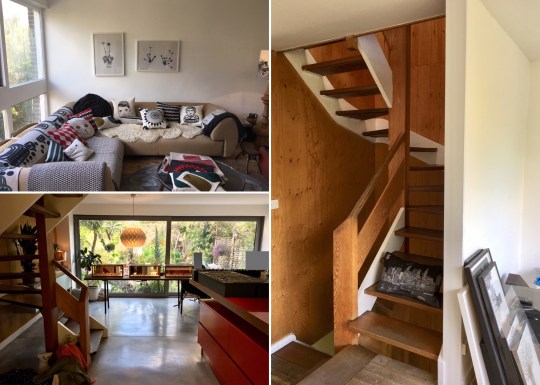
The Hamlet, interior (Charlene Mullen)
Last on the itinerary were Emily Jo Gibbs and Fabio Almeida in Forest Hill. Emily Jo Gibbs was displaying her beautifully delicate hand-stitched textile portraits and still lifes in the classic three-storey sixties townhouse opposite the Horniman Museum that she grew up in.

Tarleton Gardens, interior (Emily Jo Gibbs)
Fabio Almeida’s abstract paintings and collages persuaded us to trek up that hill to the Grassmount development.
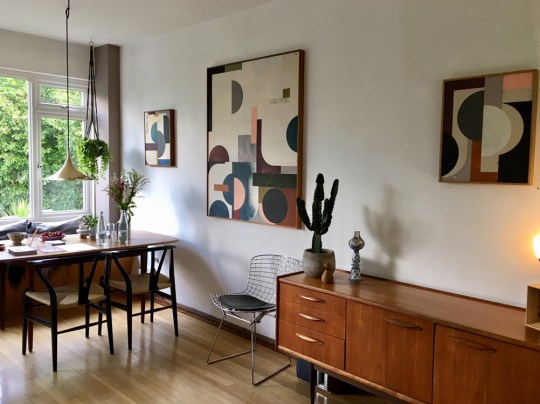
Grassmount, interior (Fabio Almeida)
Like the townhouse in Grassmount that we viewed during our property search, Fabio Almeida’s house was generously proportioned and provided the perfect mid-century flavoured backdrop for his fantastic (and surprisingly accessibly priced) pieces.
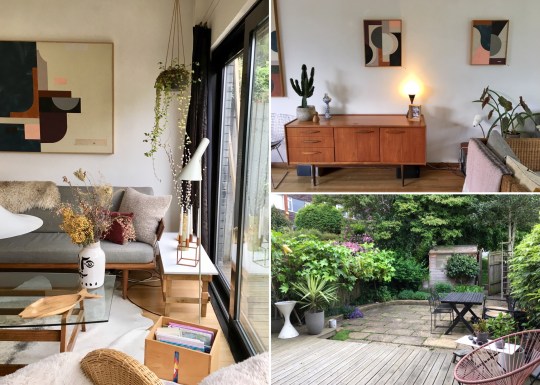
Grassmount, interior (Fabio Almeida)

Grassmount, interior (Fabio Almeida)
St Bernards Houses, East Croydon, CRO
Updated 27 April 2019
Four years after I visited St Bernard’s Close on one of those Open House days and moaned about how infrequently houses on the estate become available, a lovely example of a house has finally come up for sale via the Modern House.

I was actually given advance warning of this listing by the seller, who having seen my original blog entry, kindly gave me first dibs before putting it on the market but given that we’ve just bought and renovated a house, the timing obviously wasn’t quite right.

I remember being quite taken with the houses and the estate when I visited: St Bernards had a very tranquil, European/Swiss vibe to it (not dissimilar to Great Brownings, where we ended up buying) and was beautifully maintained.


The house that has come up for sale is in the sort of condition that I looked for when I was was searching for a mid century property in that it appears to have had some renovations over the years to prevent it from becoming a rundown relic but still has most of its original features intact. The price seems fair as well for a four-bedroom house (though note one of the bedrooms is that slightly odd, windowless “rumpus”).


I’m sure the house will make a wonderful home to another mid century enthusiast – I would advise anyone who is interested to move quickly because it will probably be at least another four years before another one of them becomes available.

15 September 2015
St Bernards, East Croydon CR0
Twenty-one houses, in three hillside terraces, built by Swiss architects Atelier 5 for Wates
Architect: Atelier 5
Year Built: 1969-70
I’ve never been a huge fan of Croydon but I would be willing to move there if I meant that I could live in one of these beautiful little houses.
St Bernards is a group of 21 houses set on three hillside terraces. The development was built by Wates in 1969-70 to a design by the Swiss architects Atelier 5.
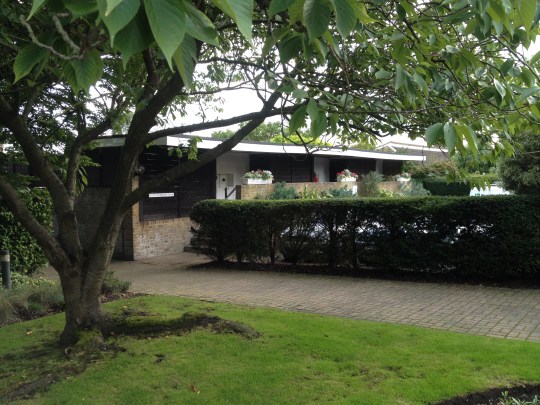

I must say that this development didn’t look like all that much from the street. It had a flat roof, was seemingly all on one storey and there were rows and rows of identical dark timber doors, giving it the appearance of a stable block.
It became apparent, however, that this was all part of the design, which was intended to maximise privacy given the high density nature of the housing. Behind each stable-like door was a small enclosed garden with a pergola. There was an inner door to the house which led to a hall with a dining area and kitchen (lit by a skylight) to the left. Ahead was the living area with a balcony and views over woods and hills. On the right, a passage led to a cloakroom and narrow bedroom.


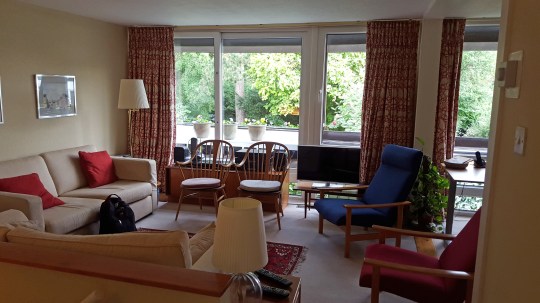
Downstairs (the houses were not one-storey after all), there were two further bedrooms (one of a decent size, the other a bit narrow), which both opened on to another small enclosed garden. There was also a bathroom, a bizarre, windowless ‘rumpus’ (a bunker to comply with Swiss standards) and utility room.

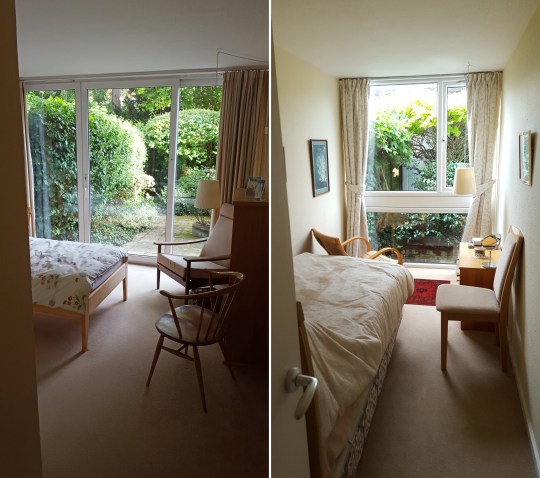
I was fortunate enough to see three different versions of the same house. The first, pictured here, was a beautiful and preserved example of the architect’s original design. I was particularly taken by the ground floor layout which was divided by various pieces of built-in furniture: standing in the dining area at the front of the house, you could look through the built-in open shelving into the kitchen, which opened on the other side into the living room and gardens beyond. The two smaller bedrooms were admittedly a bit corridor-like and the bunker room a bit weird but the overall design and layout more than made up for these shortcomings.

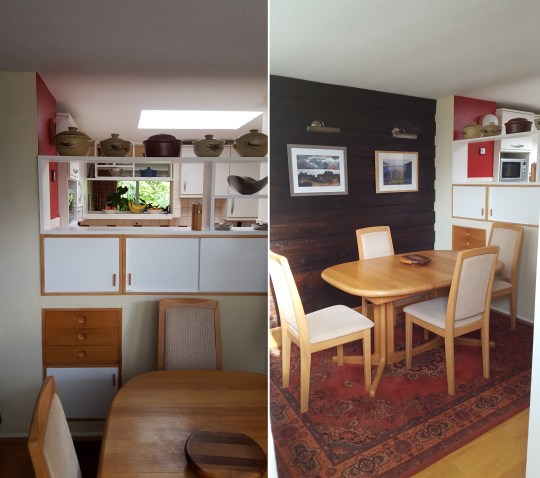
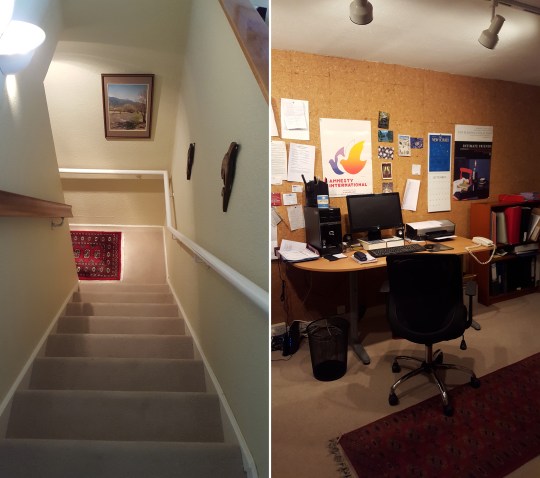
The other two houses had been extensively remodelled by their respective owners, who described ripping out all of the original features in order to replace them with contemporary features. I will admit to finding this distressing!
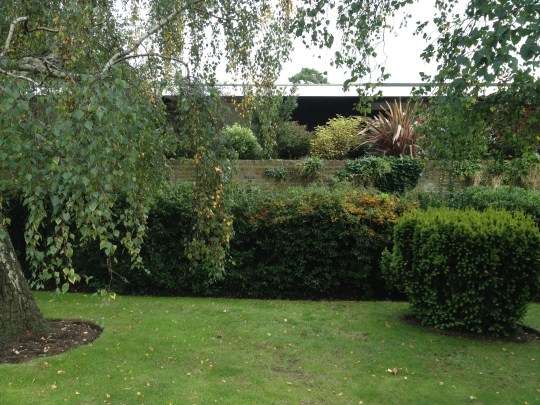
In addition to the small private gardens, the development was surrounded by mature landscaped communal gardens.

I have no idea how much these houses are worth. Reportedly they only tend to come up for sale when someone dies so there’s little chance of me getting my hands on one even if market value is within my price range.
64 Heath Drive, Romford RM2
64 Heath Drive, Romford RM2
Grade II listed modernist villa
Architect: Lubetkin & Tecton
Year built: 1934
My third and final Open House visit this year was to a stunning modernist villa all the way out in Romford, Essex. Amongst the first works of architects Lubetkin & Tecton (who went on to design iconic modernist estates such as Highpoint and Priory Green as well as the penguin enclosure in London Zoo), it won first prize in the Gidea Park Modern Homes Exhibition held in July-August 1934, costing only £900 to build.

64 Heath Drive, which was made out of painted reinforced concrete and had a flat roof was apparently designed to be one of a row of similar, low cost modernist houses that would give the impression of one long white wall but these houses were never built.

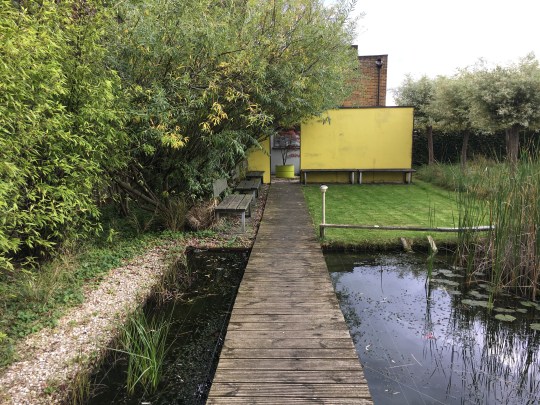
The house had an interesting L-shaped plan with all of its principal rooms (living room, dining room, bedrooms) and huge steel framed windows cleverly positioned to face into a stunning landscaped garden with a koi carp pond while the kitchen, original maid’s room and garage were positioned to look out onto the street. Upstairs, the master bedroom opened out onto a substantial terrace which was also accessible via a steel bridge and staircase from the garden.
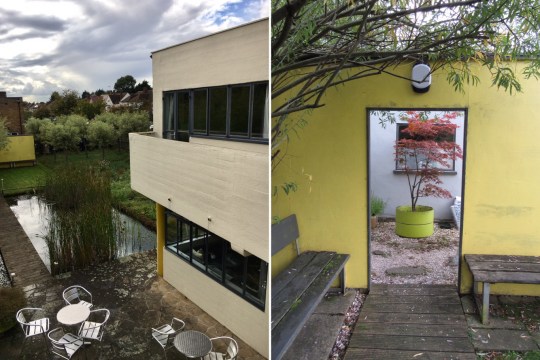

Decor-wise, the current owner had clearly made a huge effort to restore the house to its former glory over the years (the living room was particularly stunning) and had made alterations that were sympathetic to the original design but admitted that the house was no museum to modernism – it was first and foremost a home that catered to the needs of his family and contained a hotpotch of styles and eras.


According to Zoopla, the house is worth between £700-850k, which seems entirely reasonable for a house of such architectural significance.


Isokon Lawn Road Flats, NW3
Isokon Lawn Road Flats
London NW3
Architect: Wells Coates
Grade I listed modernist apartment block designed as a progressive experiment in new ways of urban living
Year Built: 1934
I previously visited the Isokon building and mini museum when I started doing this blog. I didn’t have access to the interior of the building so all I came away with were some rather lame iPhone 4s-quality photos of the exterior and the recreation of the kitchen and bathroom in the museum. My more recent trip as part of London’s Open House weekend, which involved a tour of the communal areas and a selection of the different types of flat in the building, was far more fruitful.
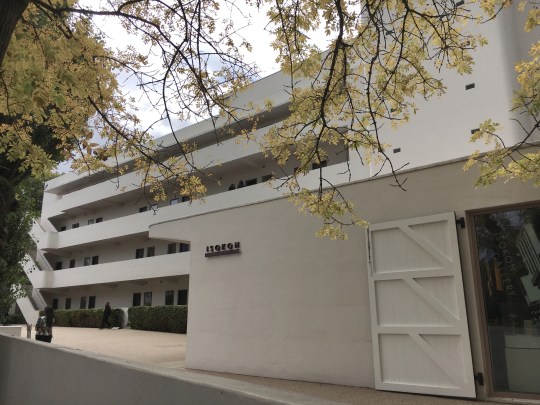
As I described in my previous blog entry, the building was designed by architect Wells Coates for Molly and Jack Pritchard as an experiment in minimalist urban living and consisted of 24 tiny standard-sizes studio flats, 8 one bedroom flats, a (now closed) kitchen and staff quarters and a large garage. The Pritchards lived in a one bedroom penthouse flat at the top with their two sons next door in a studio flat.

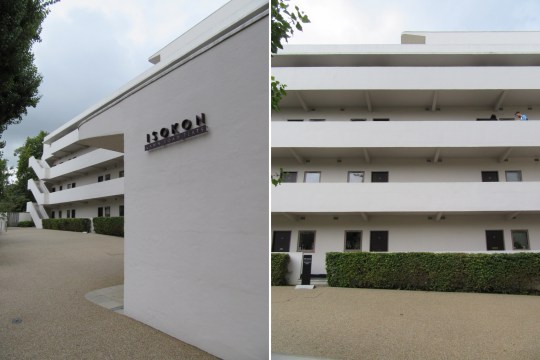
As part of the Open House tour, we were showed inside two examples of the standard studio flat and excitingly, the slightly larger-than-standard studio and penthouse on the top floor.
Upon entry into the building, I was struck by the elegantly modernist communal areas decorated with a cool grey, white and wooden colour scheme. The two standard-sized studios that we were shown were accessed via open walkways.
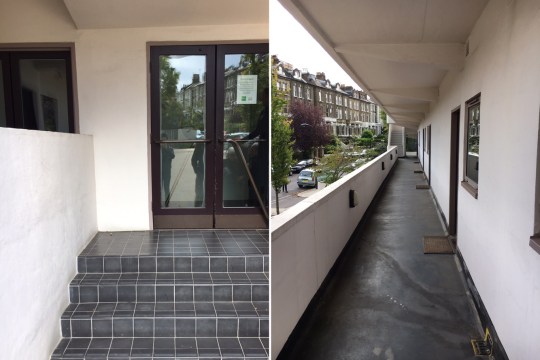

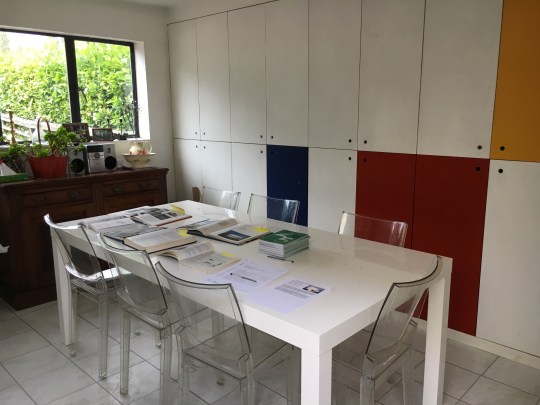
The standard-sized studio flats were very small indeed (we were told that current regulations would prohibit flats of that size being built nowadays) but were well designed, with their original built-in and cordoned off kitchen and bathroom areas intact. We were told that these flats were sold on a shared ownership basis for £95k in 2003.

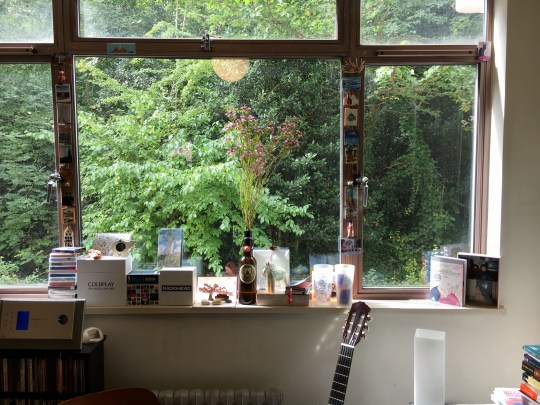
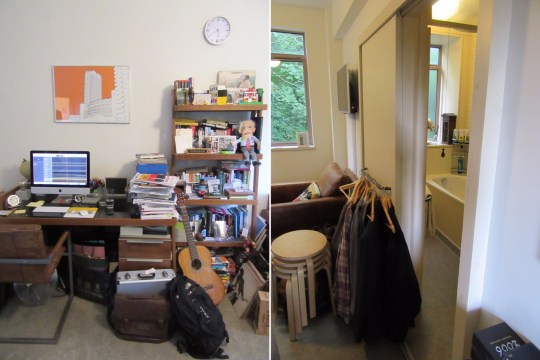

The studio flat on the top floor (originally inhabited by the Pritchards’ sons but now owned by someone capable of living a very minimalist lifestyle with almost no possessions) was more generously proportioned.
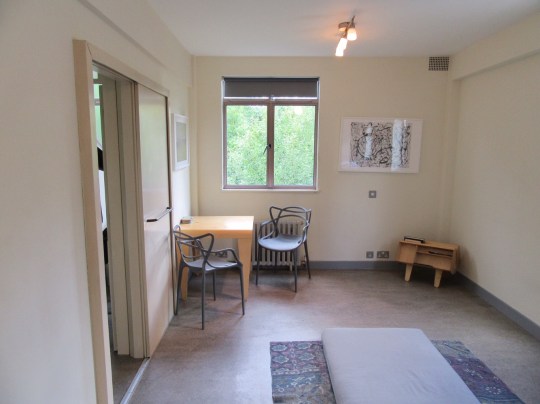

However, it was the penthouse which had (for want of a better expression) the wow factor. Clad almost entirely in plywood (both the walls and the floor), it had a separate bedroom and large living room which opened out onto an enormous terrace.


The penthouse, which I’d previously seen featured in the Evening Standard, is currently owned by the founder of aspirational Scandi furniture store Skandium and so was beautifully furnished with a mixture of furnishings and design objects appropriate to the era of the building.


I have no idea how much something as special as the penthouse would cost but one bedroom flats and studios have come onto the market before and sold for between £500-600k, which I think is a fair price for living in such a stunning Grade I-listed piece of architectural history in a very nice area of North London.
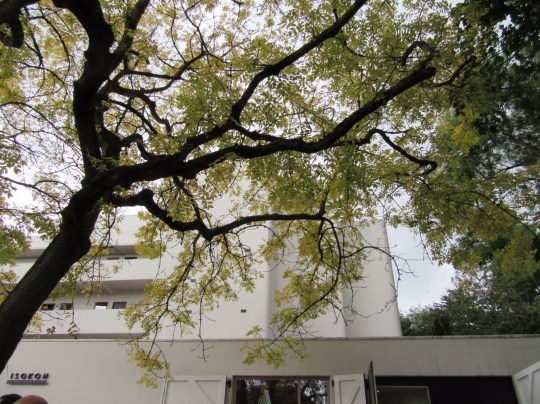
Lambert Jones Mews, The Barbican EC2
Lambert Jones Mews, The Barbican EC2
Four bedroom family home on the Barbican Estate
Architect: Chamberlain Powell & Bon
Year built: 1974
I have come to terms with the fact that I am very unlikely to fulfil my dream of living on the Barbican estate in my lifetime: given my current situation, the studios and one bedroom flats are too small and anything larger than that is either bad value for money (the average price for a two bedroom flat appears to be around £850-900k) or just completely unaffordable.
The Lambert Jones mews houses are definitely an example of the latter so when I saw that one of the houses was open to the public as part of Open House this year, I seized the chance to have a nose around a house completely out of my reach.
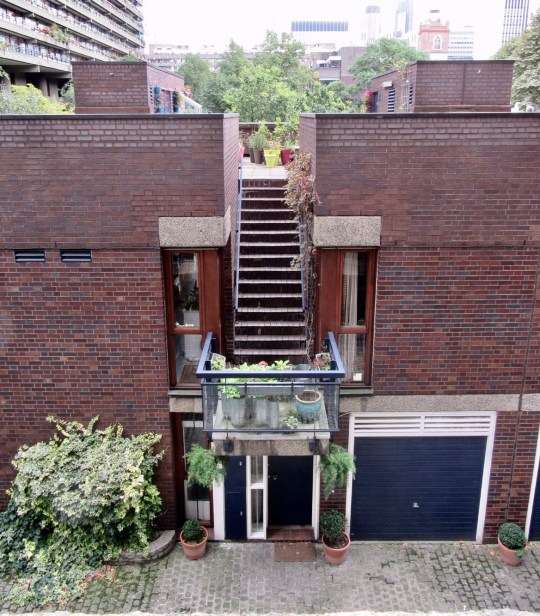

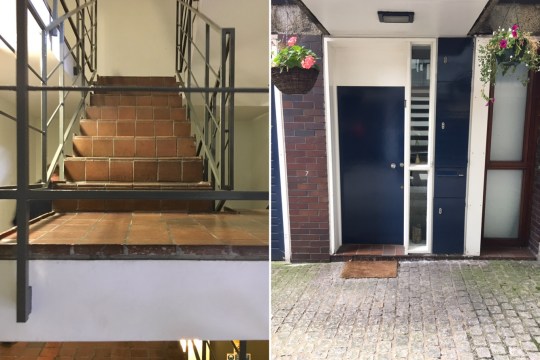
The house, one of only eight on the entire estate, was accessed via a residents’ stairwell and private cobbled street (apparently designed to resemble fashionable West End mews housing) usually sealed off to members of the public.

The ground floor contained two bedrooms, one of which had direct access to the residents’ gardens, a bathroom, the integral garage which the owners had converted into a further bedroom and the main reception room which had a double height ceiling and window overlooking the gardens.
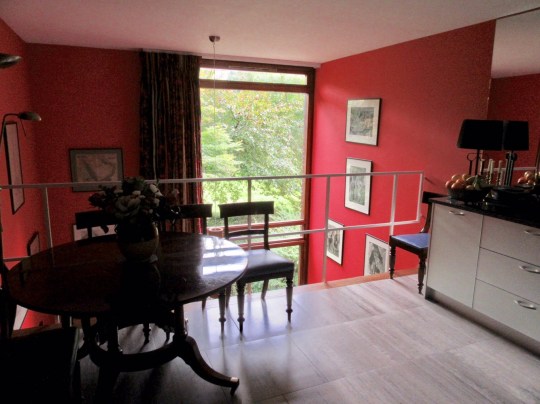
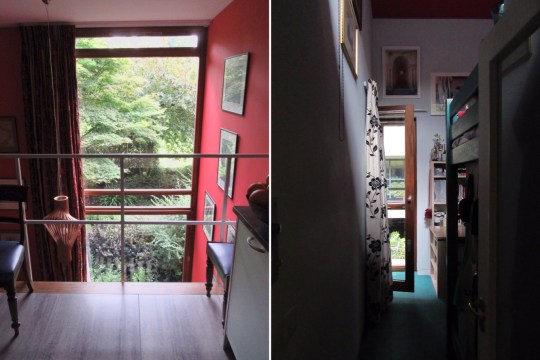
An open tread iroko staircase led upstairs to a galleried dining area (from which you could look down over the main reception room), a second bathroom, the master bedroom with some nice views over the gardens, the kitchen and another bedroom, both of which had double height ceilings and led out onto a small balcony. From here, a further flight of external steps led up to a private roof terrace which was connected by a communal walkway to the roof terraces of the neighbouring houses and looked out over the residents’ gardens and the Barbican Centre.


The house was full of the details associated with Barbican properties: sliding partition doors separating living and sleeping areas, strategically placed windows, exposed concrete and brickwork, that handy cupboard by the front door for storage, postal deliveries and rubbish collection and all of the original plug, light and switch fittings. While there was a lack of light (perhaps due to these houses being slightly walled in by the rest of the estate?), this was a very special, rare house and clearly one of the most prestigious residences on the estate.
As one of the owners put it, Barbican residents often progress through a “Barbican food chain” from studio flat to one-bedroom flat to two-bedroom flat to three-bedroom flat in one of the towers and then if really fortunate, to one of these four bedroom mews houses at the very top of the chain (!).


The Lambert Jones mews houses do occasionally come up for sale. This more neutrally decorated example was sold for £2.5 million earlier this year.

Pullman Court, London SW2
Pullman Court, London SW2
Grade II* listed Modern Movement building
Architect: Frederick Gibberd
Year built: 1937
Of all of the Open House properties that I visited this year, I think that Pullman Court was possibly my favourite.
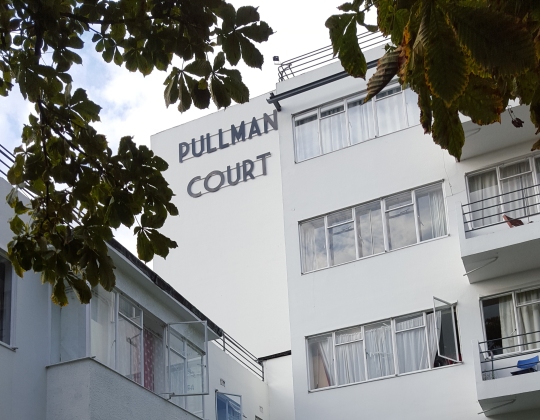
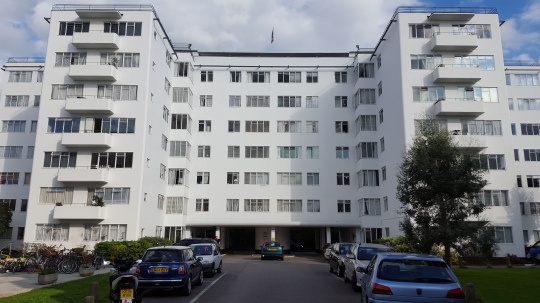
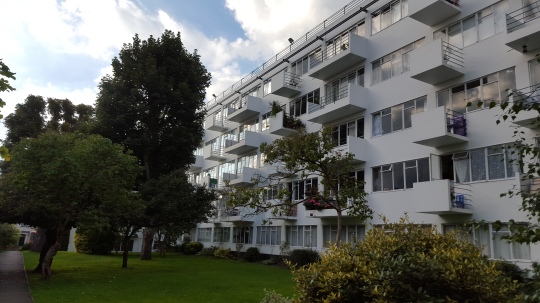
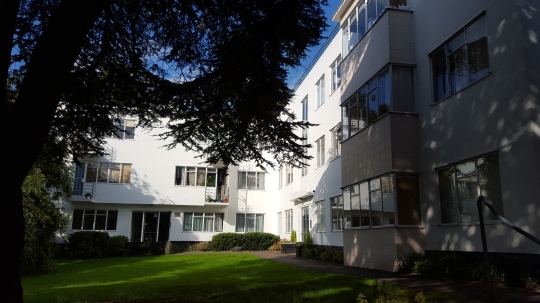
A striking wall of 1930s white modernism, Pullman Court is made up of a total of 218 homes ranging from one-room studios to larger four-room flats. The development comprises two five-storey blocks which run along a central driveway leading up to two seven-storey cruciform blocks at the rear of the site. There are also five three-storey blocks which face out onto Streatham Hill – the location is perhaps Pullman Court’s only downside.
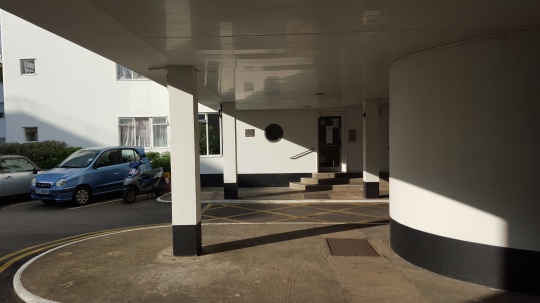
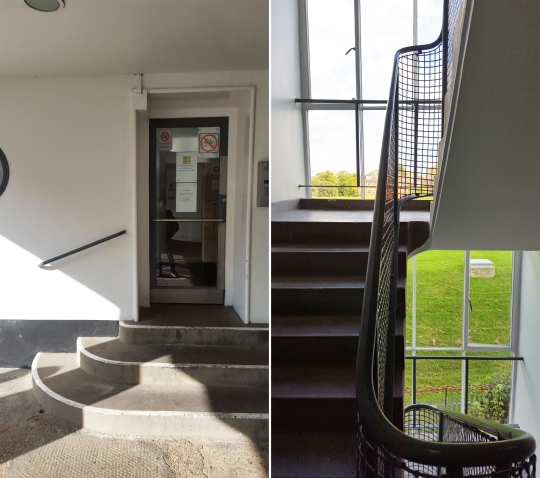
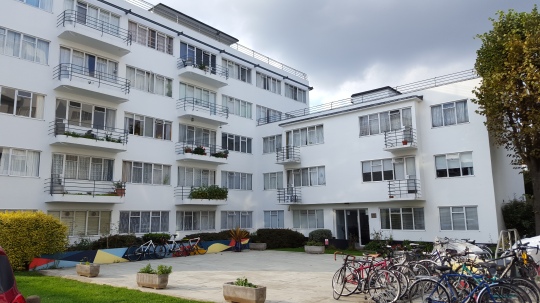
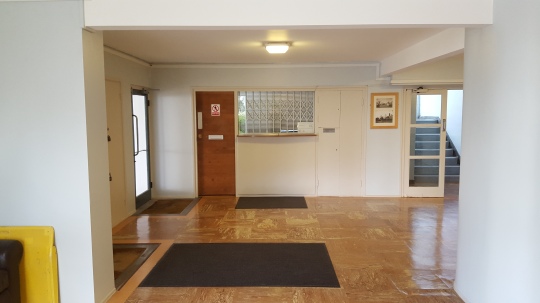
Whilst the majority of the original amenities (which included roof gardens, an open air swimming pool, a restaurant and social club) are no more, Pullman Court still exudes a sense of 1930s glamour, not dissimilar to the the Isokon building in North London. The once-portered lobbies are luxurious with highly polished parquet floors, columns and round feature windows and the grounds are beautifully landscaped and maintained.
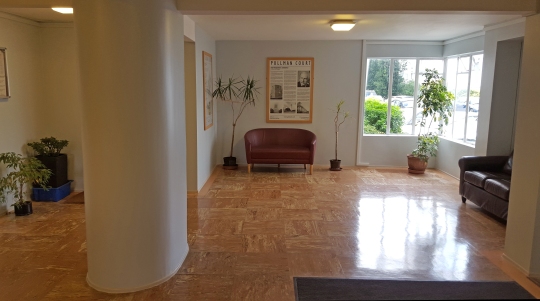
There were two properties open to view as part of the Open House scheme: both were two bedroom flats but differed in terms of layout and aesthetic.
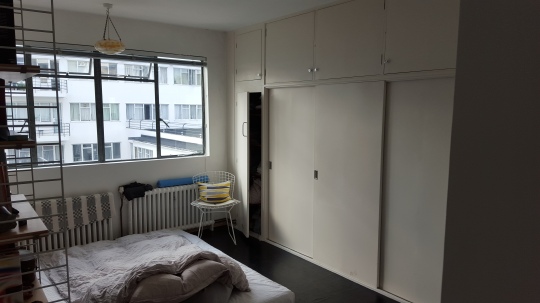
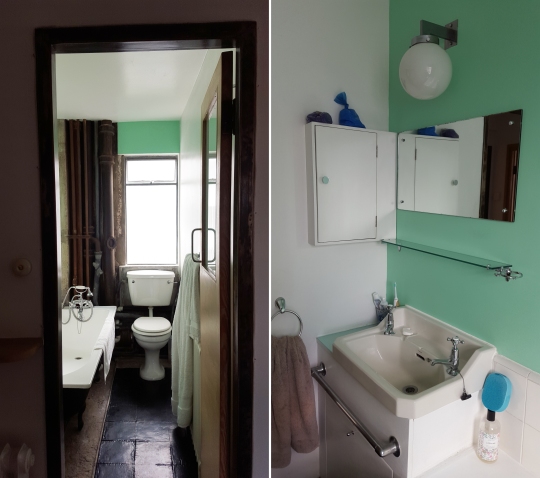
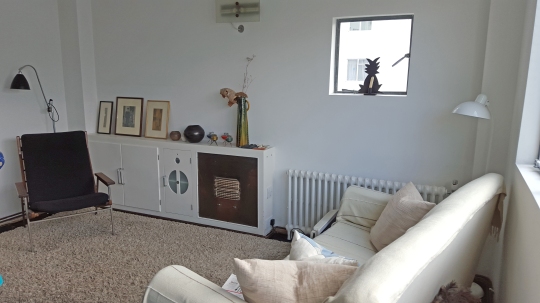
The first had been restored by the owner to reflect the stark modernist aesthetic of the era in which Pullman Court was built. The owner had managed to salvage the original streamlined kitchen units, bathroom suite and fitted furnishings, including a wall of cupboards in the master bedroom and a modern electric fireplace for the living room. I was quite taken with the black flooring in particular.
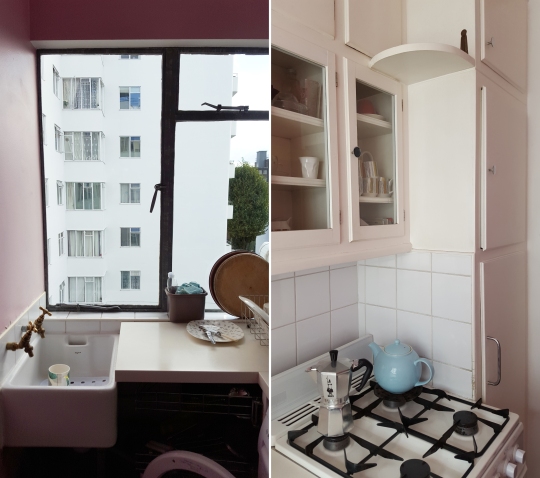
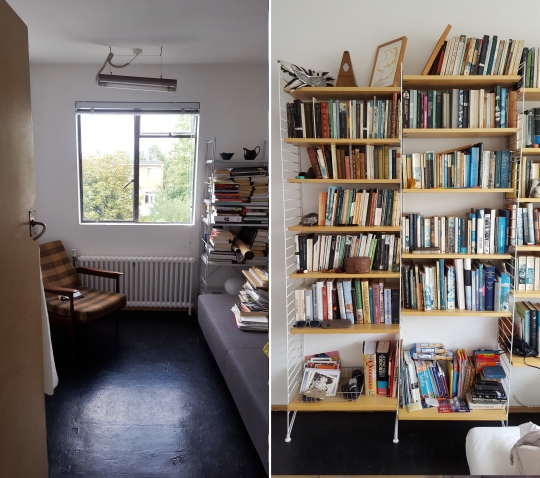
The flat wasn’t large but the layout of the flat gave the impression of spaciousness, perhaps owing to the wide rectangular hallway which linked the relatively small bedrooms, kitchen, bathroom and living room, accessed at the end of the hallway by glass double doors. This flat also had a south-facing box of a balcony accessed from the living room which looked out onto another block in the estate. I would usually view this as a negative but the external facades of the buildings were so striking, I don’t think I would mind looking out onto them every day.
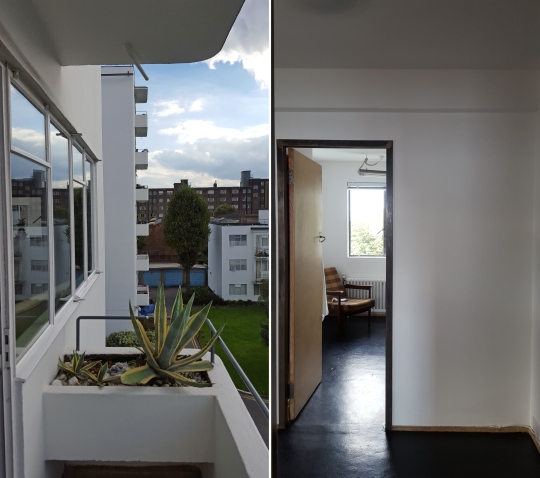
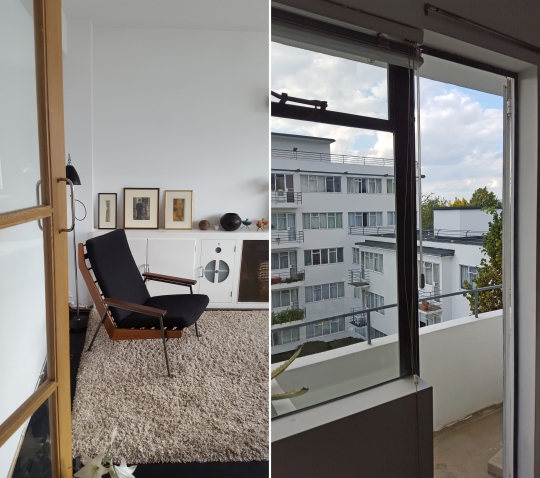
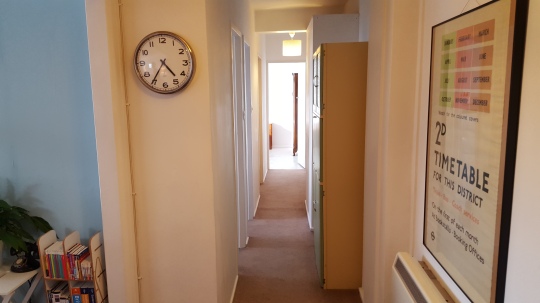
The second flat was decorated in a more homely style with carpeted floors, softer furnishings and a modern kitchen and bathroom.
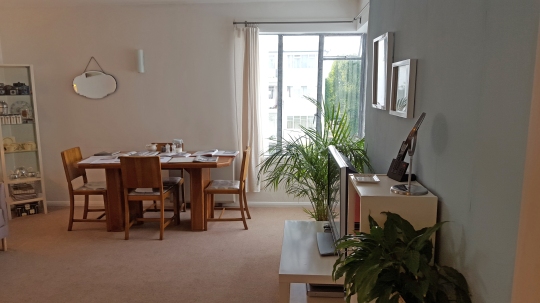
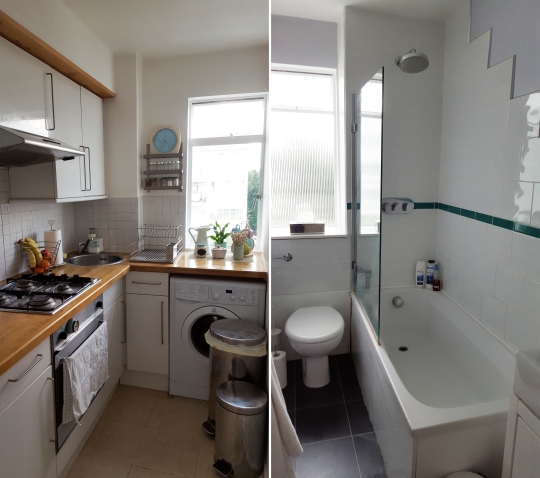
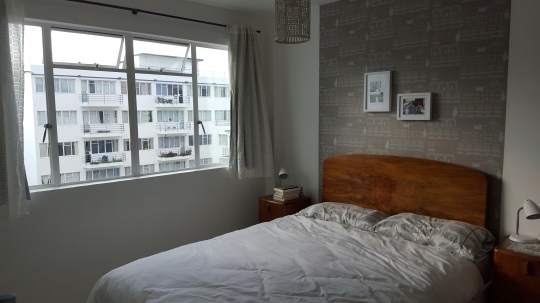
The overall effect still managed to be striking thanks to the original windows, those views onto the bright facades of other buildings in the development and various small period details.
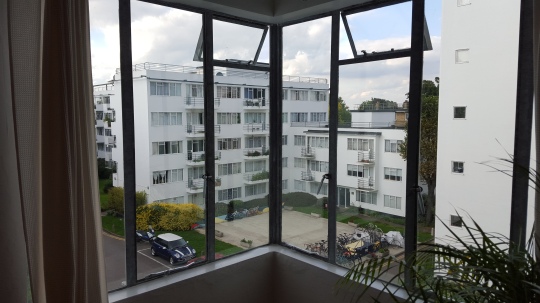
I have only ever seen one or two of these flats come onto the market and I remember them to be surprisingly affordable (around the £300,000 mark), most likely due to the location. The Modern House has a ground floor example listed here in its “Past Sales” section. If one on a higher floor became available, I think I would seriously consider making the move to Streatham to bask in all of Pullman Court’s modernist glory.
Stoneleigh Terrace, London N19
Stoneleigh Terrace, London N19
Modernist housing estate built during golden era of Camden public housing
Architect: Peter Tabori
Year built: 1972-79
Stoneleigh Terrace (also known as the Whittington Estate and Lulot Gardens) is a striking North London seventies housing estate consisting of 240 homes varying from one-bedroom two-person flats to six-bedroom eight-person houses. Bearing a passing resemblance to the Alexandra and Ainsworth estate that I visited last year, it is almost entirely structurally composed of concrete and features a similar stepped, angular design.


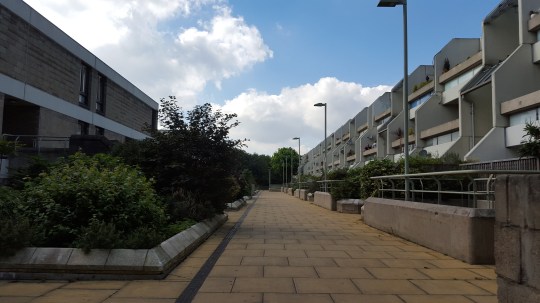
The estate is in a good state of repair and the bright colour palette (the concrete was painted a bright shade of cream in the nineties) means that it doesn’t have that concrete jungle feel, unlike some other estates from the same era.
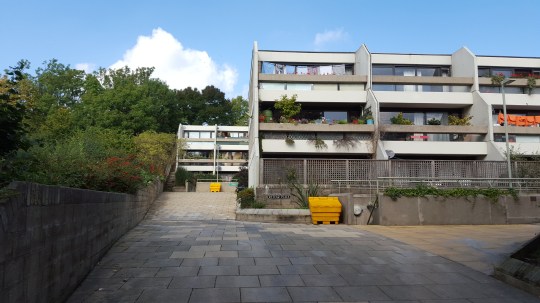


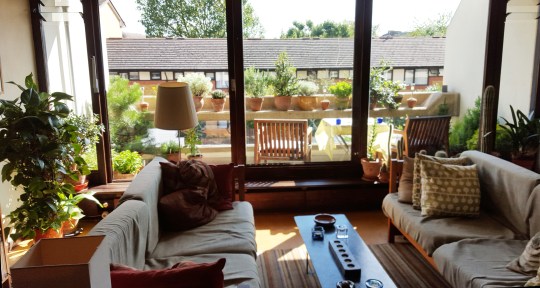
8 Stoneleigh Terrace, a two-bedroom split-level maisonette, was open to view as part of the Open House scheme. The flat was accessed from the ground floor, which contained a hall, main living area and kitchen, each divided by sliding partition doors. A fully-glazed wall, with heating concealed beneath a low wooden bench, separated the living area from the terrace and an internal window between the hall and the living area further dissolved the space, as well as providing borrowed light.


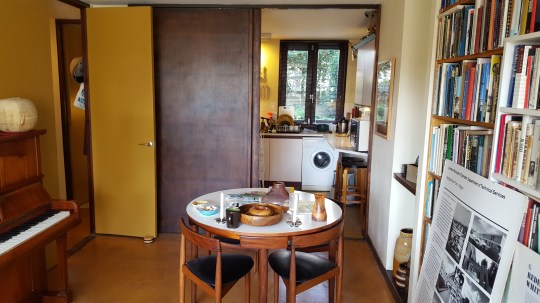
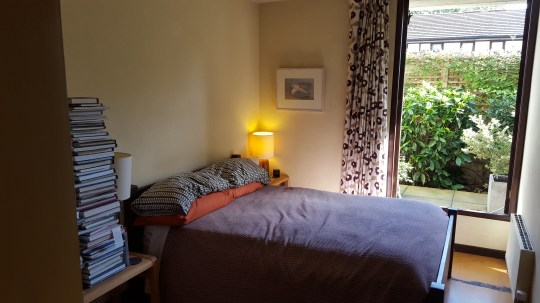
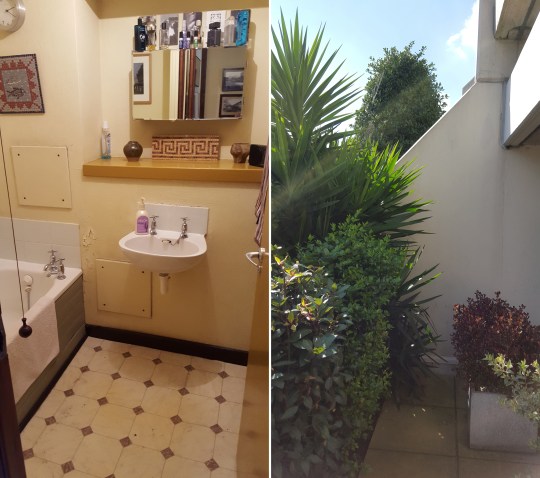
Downstairs were two bedrooms, which both opened onto a small courtyard, the original bathroom and a large box room.
Whilst the estate is primarily populated by local authority tenants, a number of the properties are privately owned, which occasionally come up for sale. I have never seen a flat as big as 8 Stoneleigh Terrace on the market but I have seen a couple of one bedrooms priced at around the £400,000 mark.
Trellick Tower, London W10
Trellick Tower, London W10
Grade II listed modernist apartment block
Architect: Ernö Goldfinger
Year built: 1968-1975
Bounded by the Grand Union Canal and the Paddington mainline, Trellick Tower is the dominant feature rising out of a housing estate of 317 homes built between 1968 and 1975.


The tower, which is described as iconic by those who like it and an eyesore by those who don’t, consists of two blocks (one of 31 storeys and one of 7) and is entirely built of bush-hammered in-situ reinforced concrete. Whilst it was originally conceived as social housing, the tower has somehow become one of London’s most fashionable and desirable addresses in recent years with a significant proportion of the flats owned by private individuals.
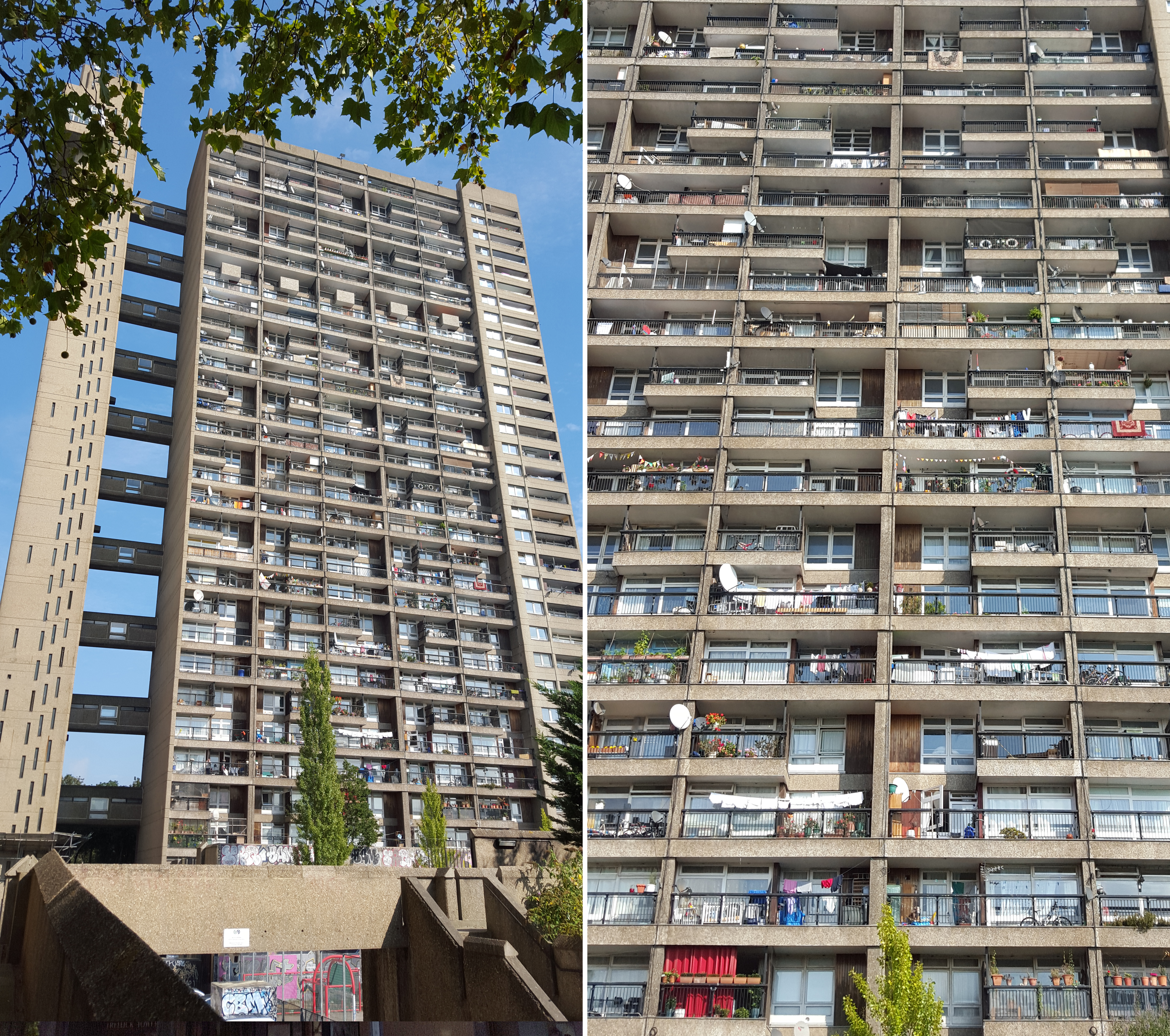


Standing at the foot of the 31-storey tower, the building is impressive in an intimidating, monolithic sort of way.


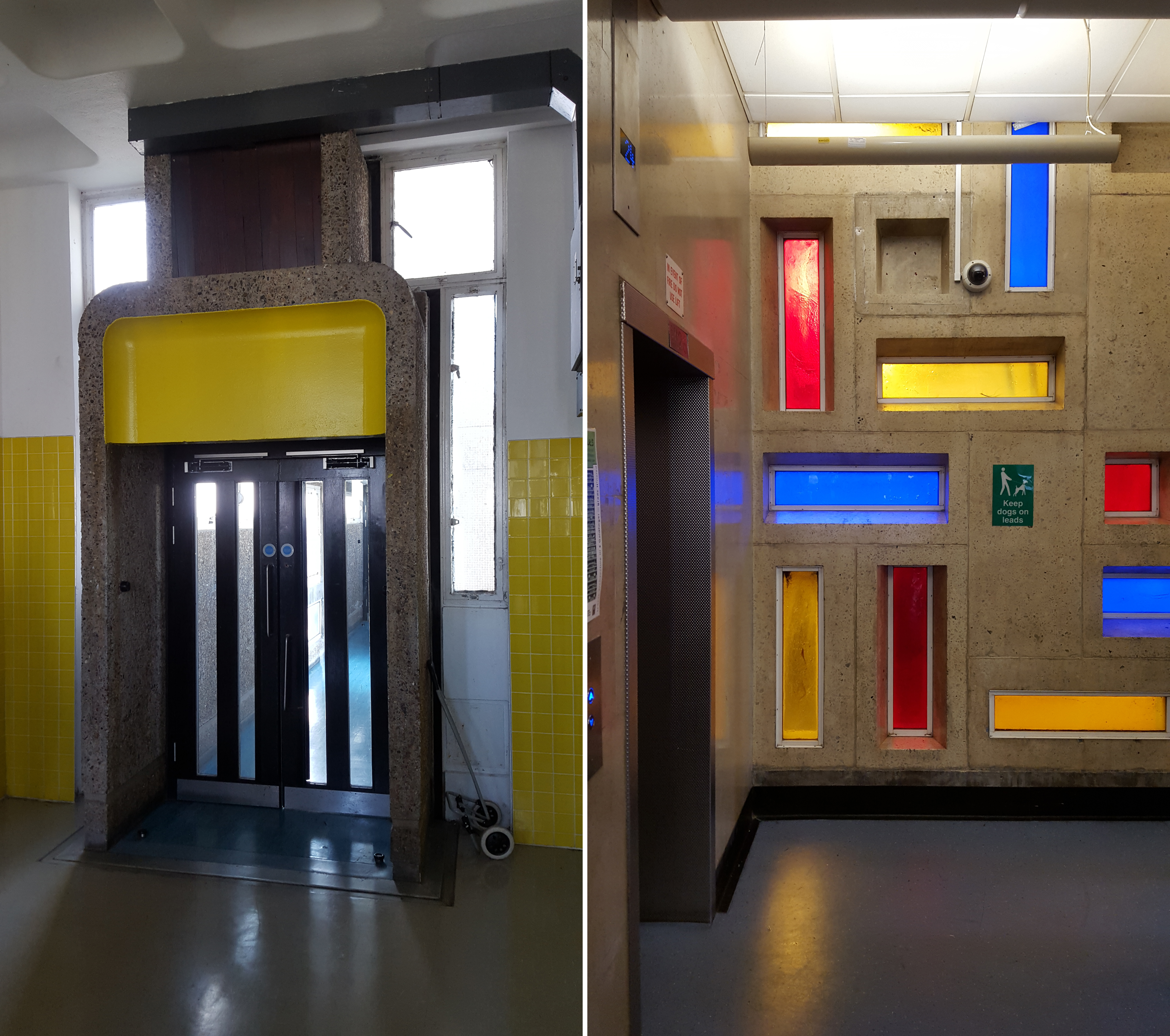
Once inside, however, it becomes apparent that the building is well kept and the original architecture, exposed concrete walls and colourful tiling have been extremely well preserved or sympathetically updated. The panoramic views from the landings and corridors on the higher floors are pretty spectacular.


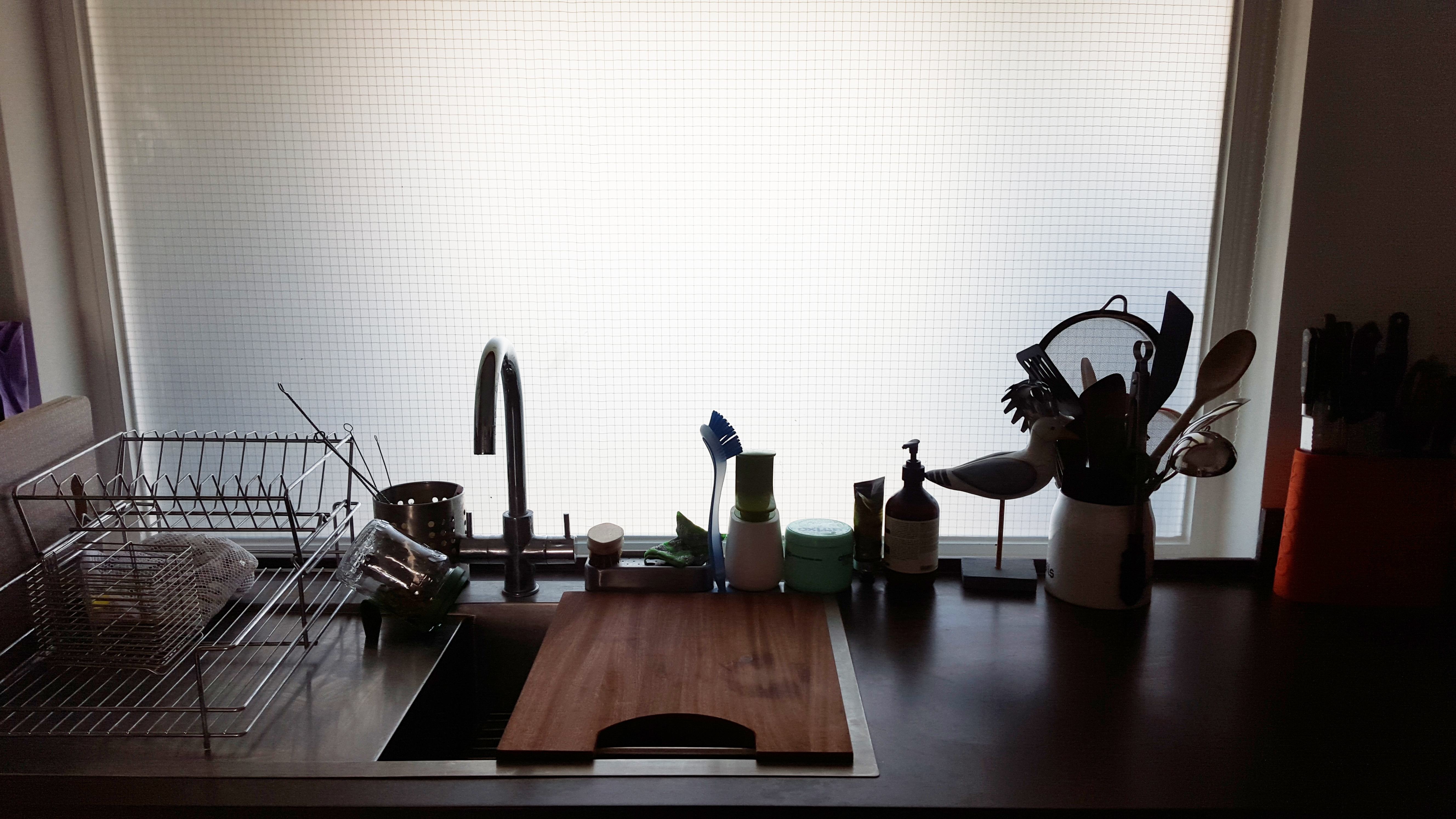
Two types of flat were open to view as part of Open House: a one-bed and an enormous split-level three-bed. The one-bed was bright and reasonably spacious with floor-to-ceiling glazing in the living room opening out onto a balcony with an impressive view of the city below. The three-bed was naturally more impressive with generously proportioned rooms and a long balcony which spanned the length of the living room and the substantial kitchen-diner. The views of the Grand Union Canal snaking through the city from the bedrooms really were something else.


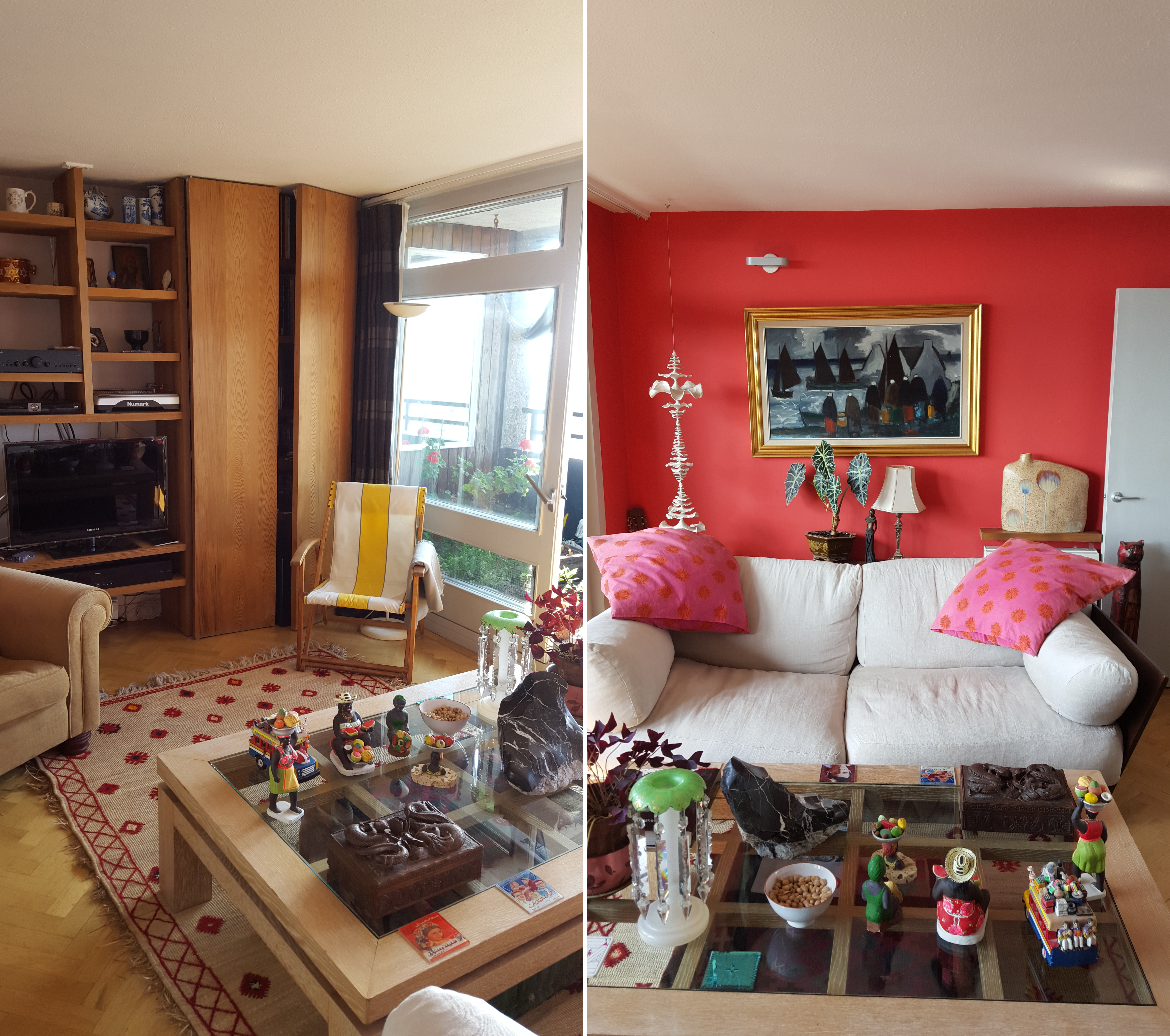

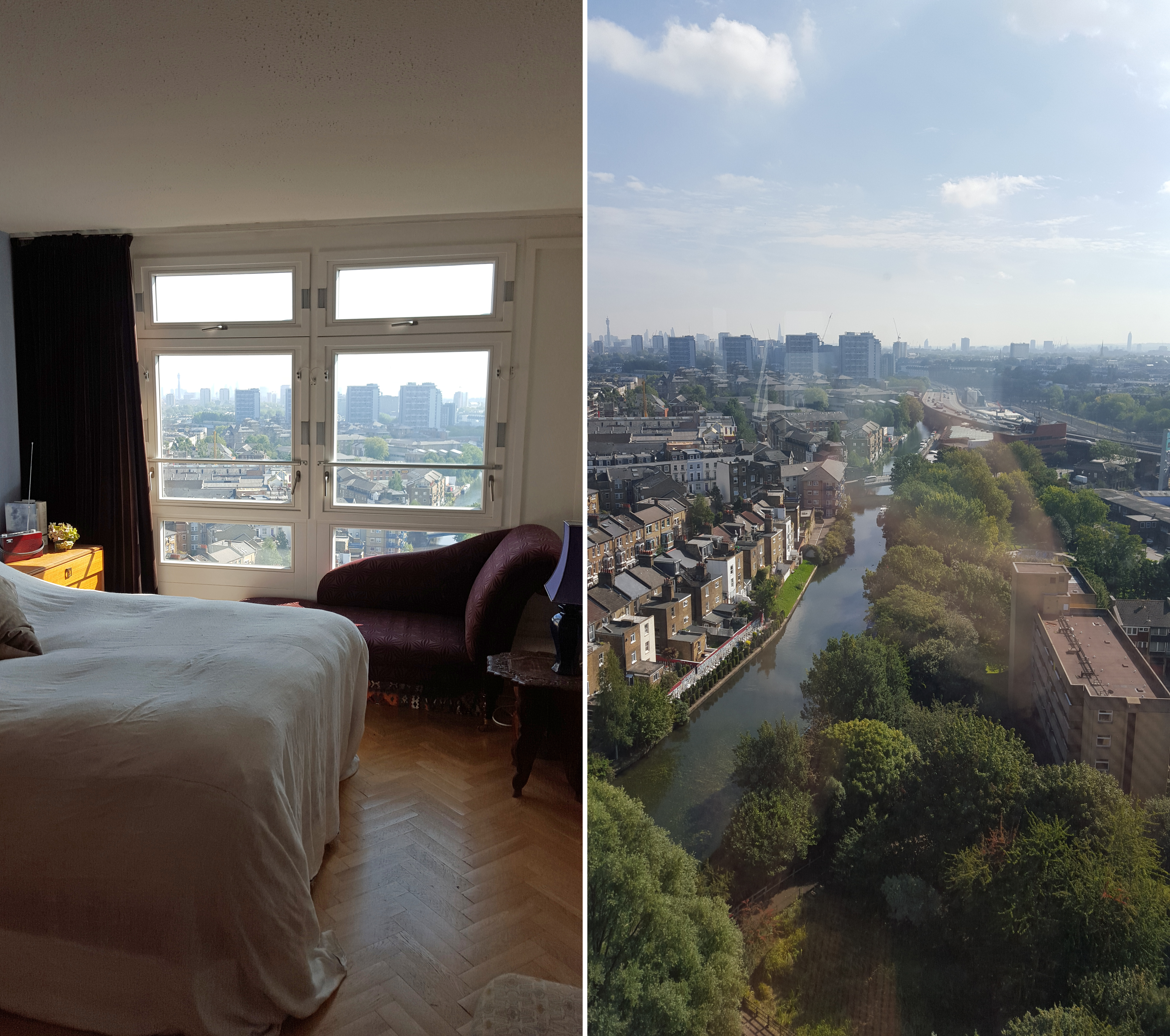
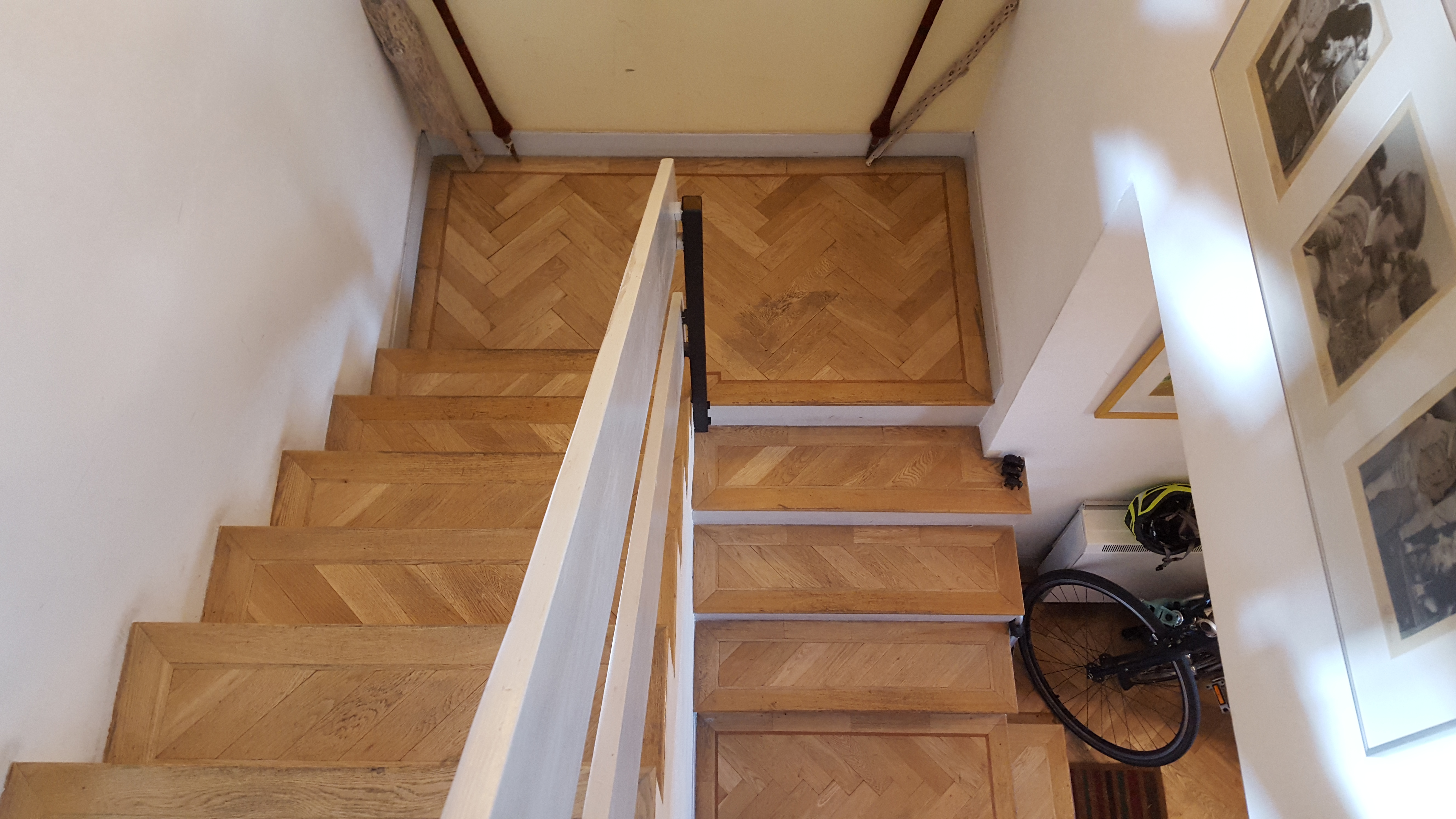
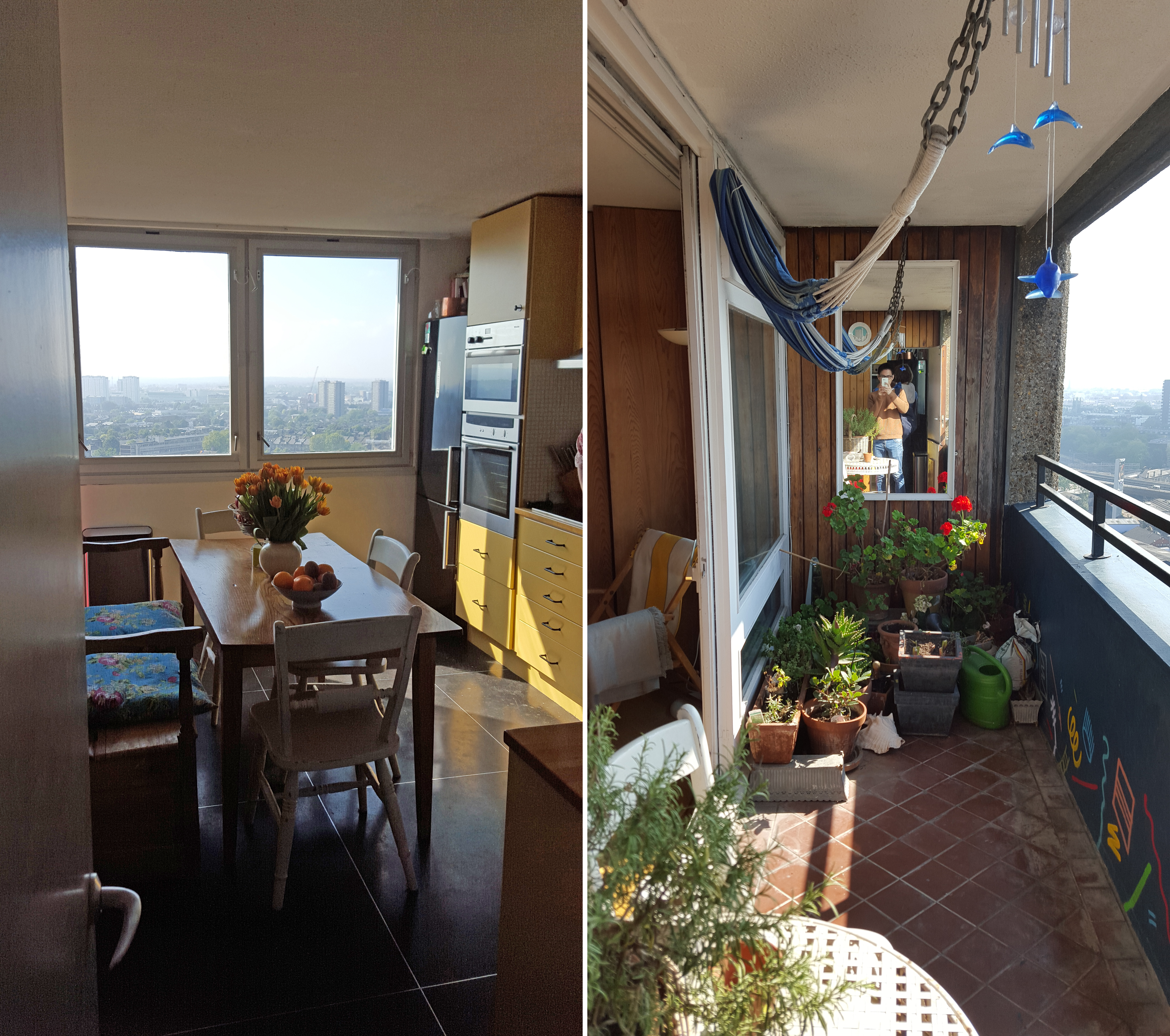
I haven’t seen a flat come up for sale in the tower recently but I reckon the one-bed is worth around £500,000 and the three-bed close to a £1million.
Priory Green Estate, Kings Cross NW3
At first glance, this centrally located housing estate doesn’t appear to be anything out of the ordinary. However, upon closer inspection, the fact it was designed by Lubetkin (the architect responsible for the spectacularly luxurious High Point in Highgate) becomes apparent.

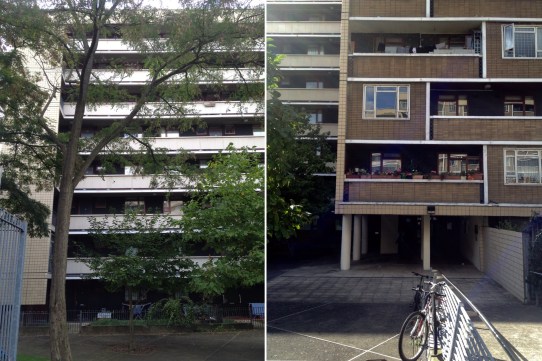

Small details, such as the putty-coloured square tiling covering sections of the facade, the tapered, almost sculptural stairways, white columns dotted here and there, the elegant grey and dark red colour scheme and even the typeface used for the door numbers all typify Lubetkin’s modernist style. The layout of the blocks make perfect sense: communal walkways on one side of the building, private balconies on the other, meaning that all flats are dual aspect.
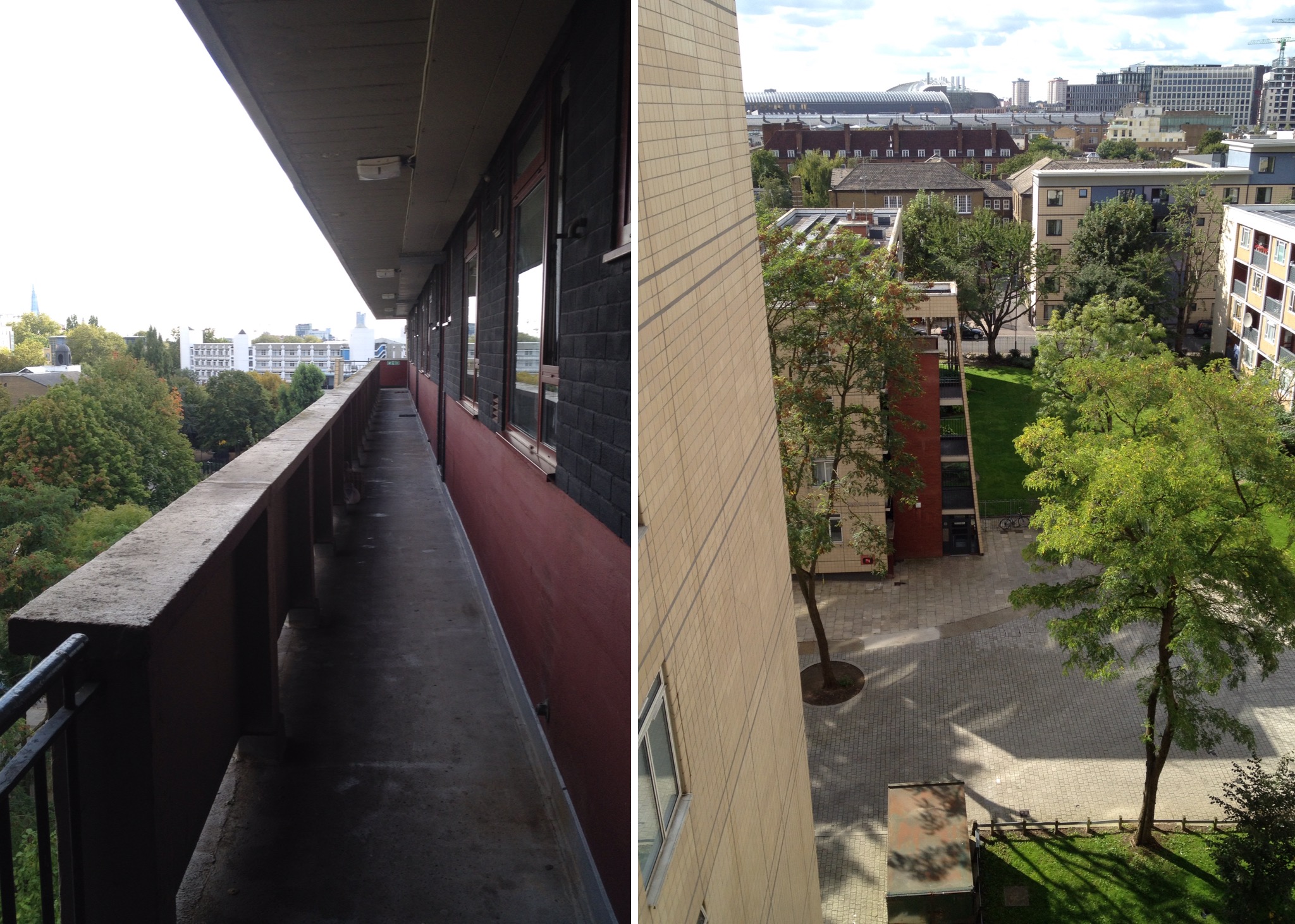
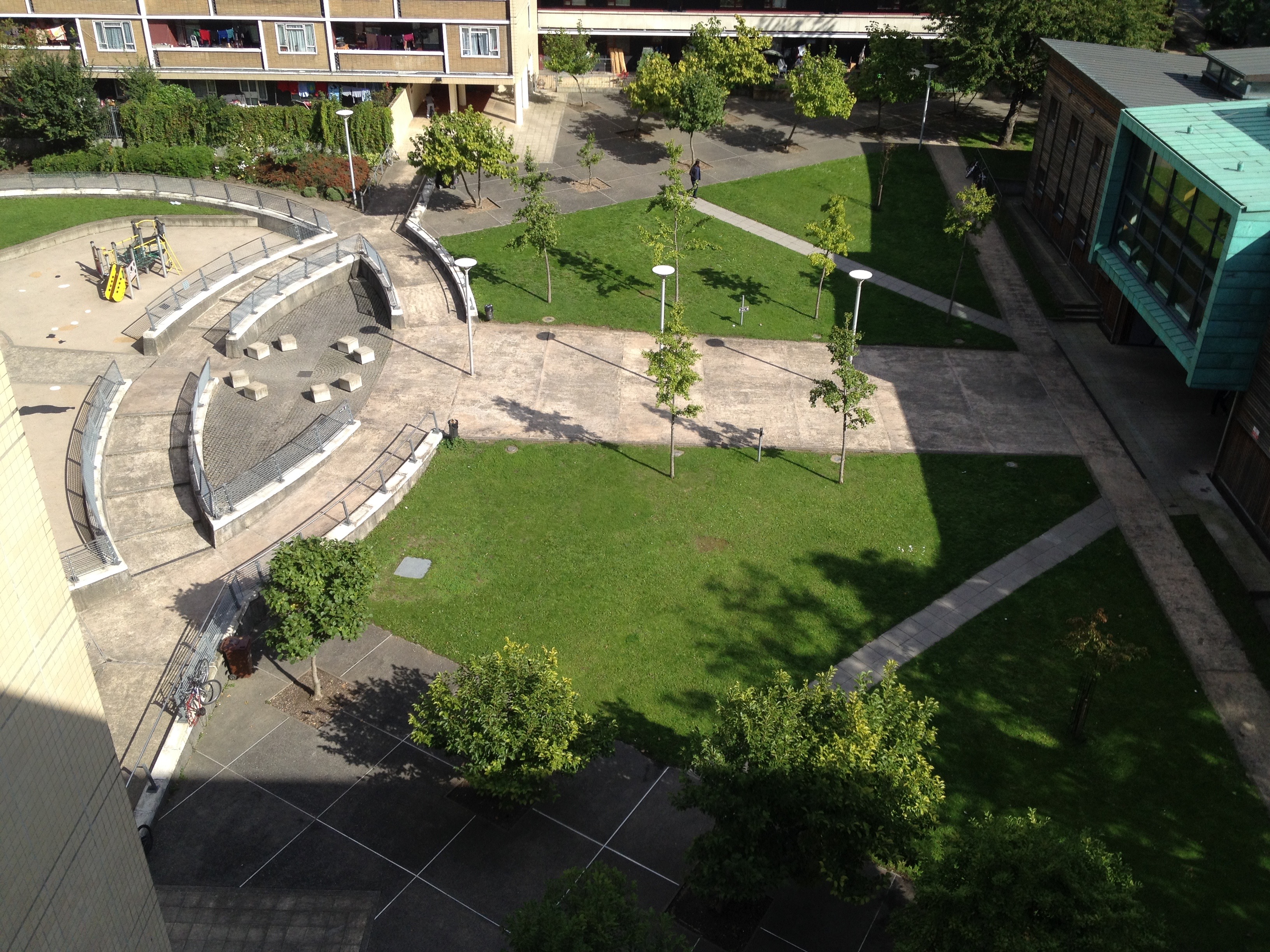
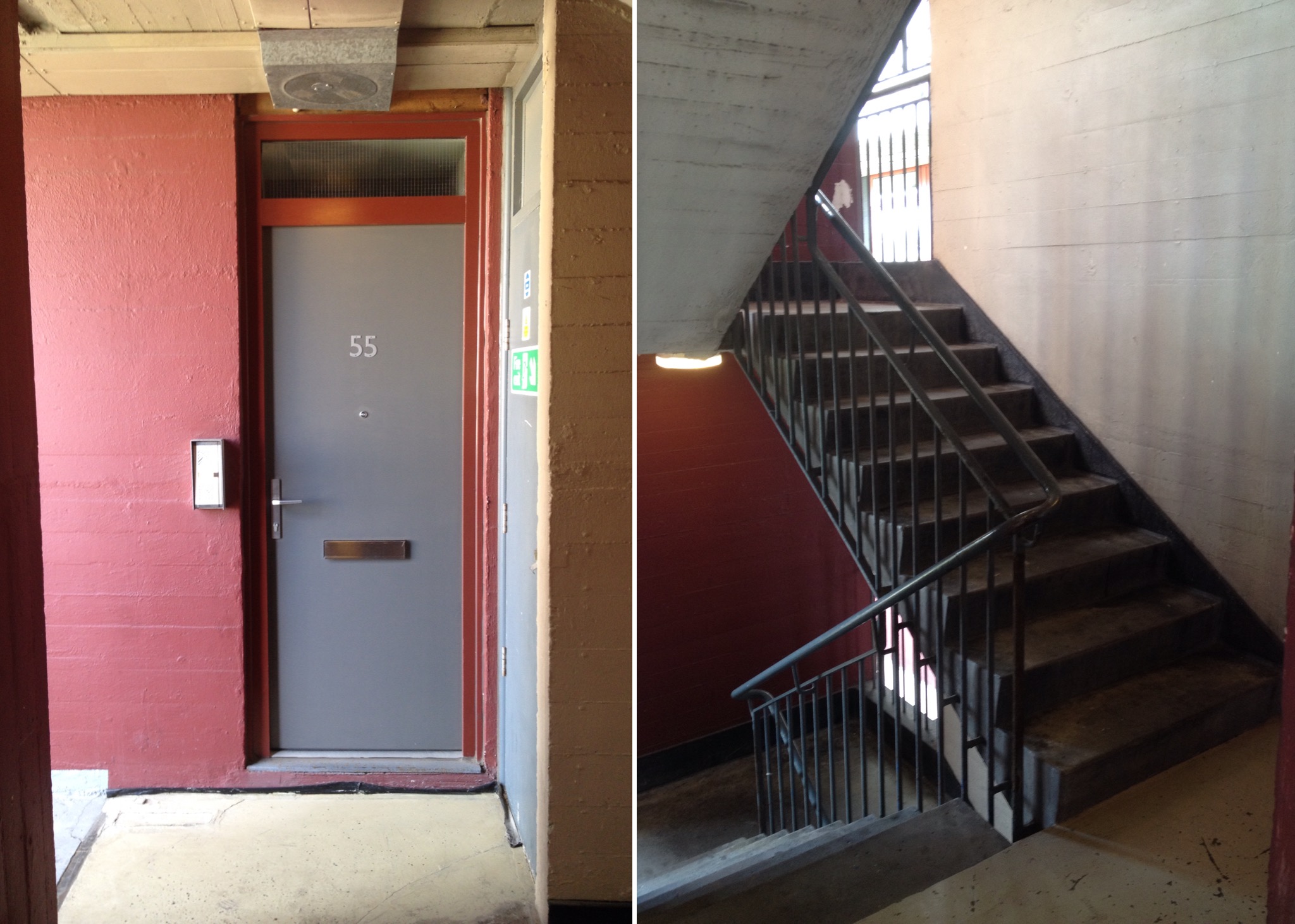

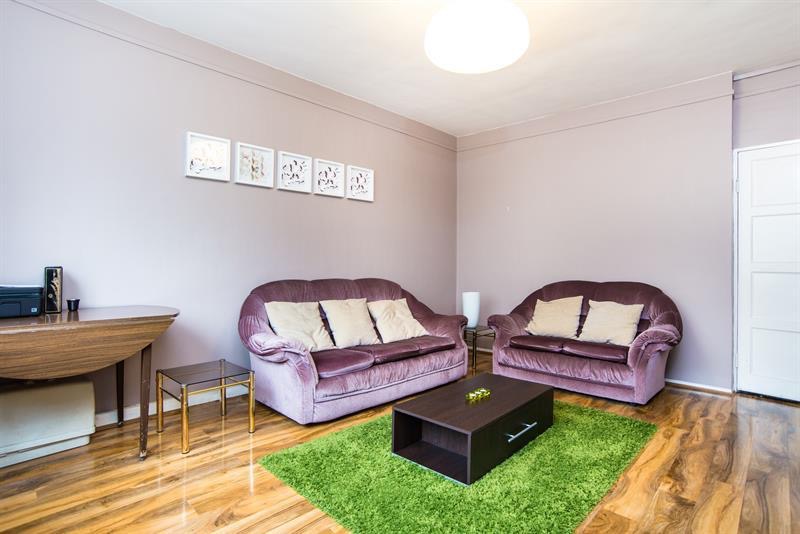
The flats weren’t open to view but I understand that they’re all split level and have reasonable proportions as these photos from Modernist Estates suggest. The estate seems to be well maintained and quiet (it was, apparently, a hotbed of criminal activity for a time) but Lubetkin design features or not, the fact remains that it is a council estate in Kings Cross.


 Modernist Pilgrimage