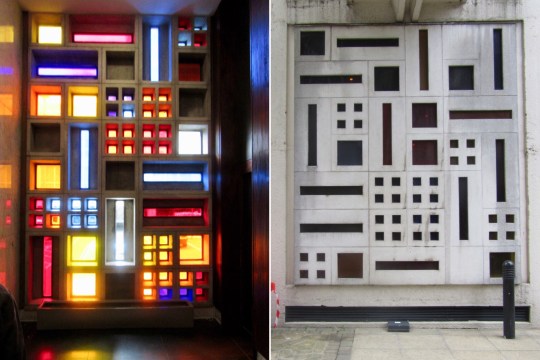
Great Brownings, Dulwich SE21

Great Brownings, Dulwich SE21
Scandinavian-style mid-century estate surrounded by woodland
Architect: Austin Vernon and Partners
Year built: 1966

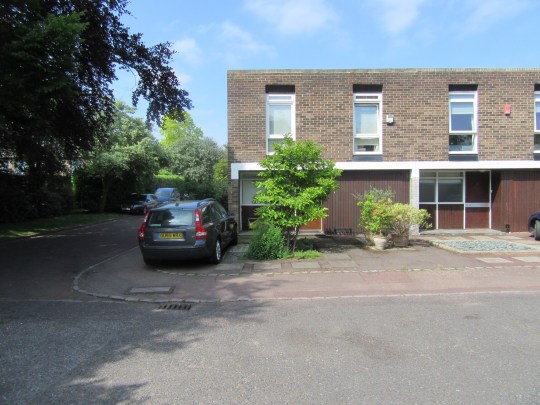
After years of looking for a mid-century property in the right location, at the right price, on the right estate and with the right number of original features intact, we finally found a house that fulfilled most of these criteria in Great Brownings.

30980496_unknown

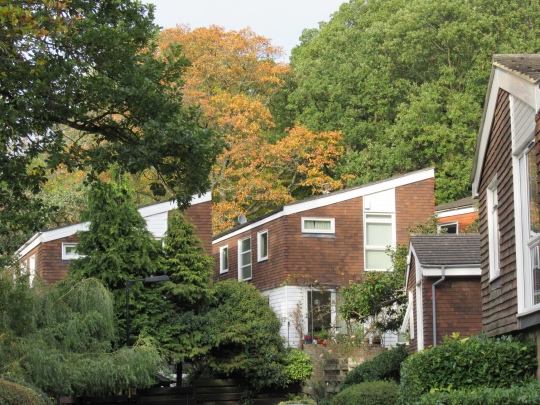
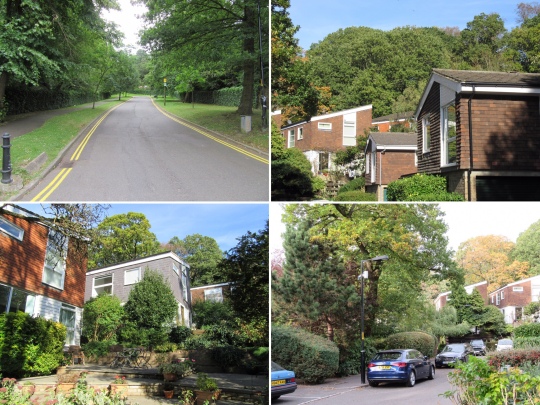
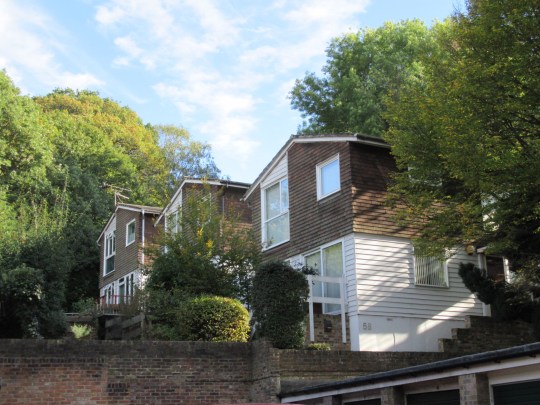
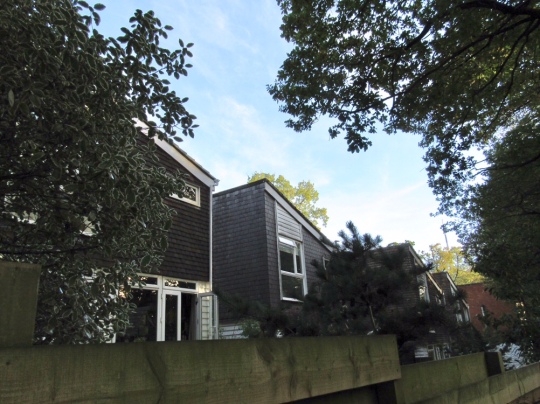
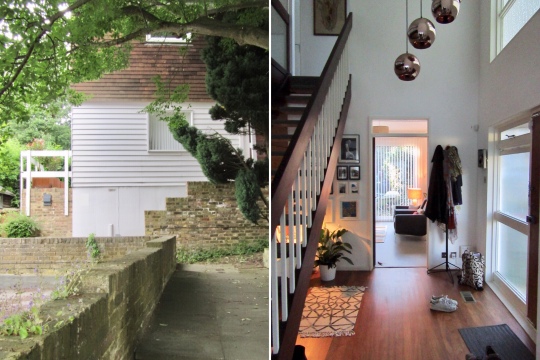
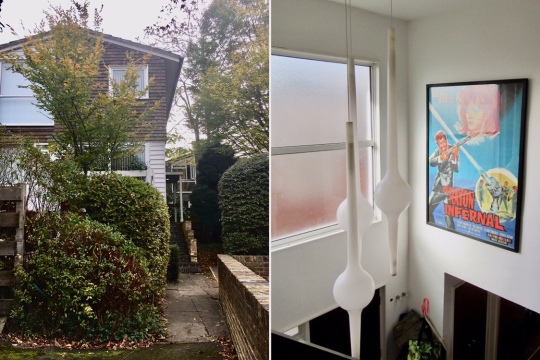
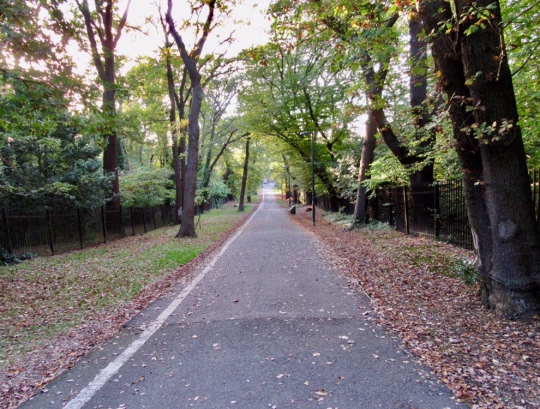
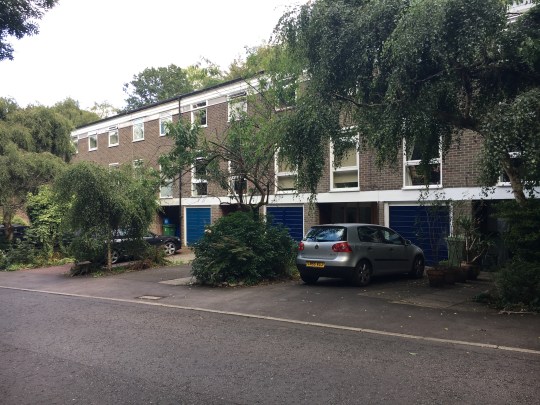
Resembling something out of Scandinavia or even Japan, Great Brownings is a rather unusual estate of gingerbread-looking houses integrated into the steep slopes of the Dulwich Woods.

img_2686-2

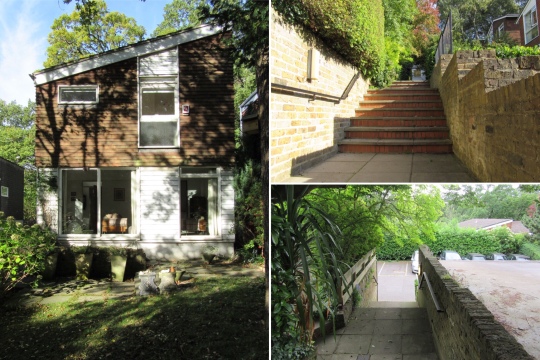
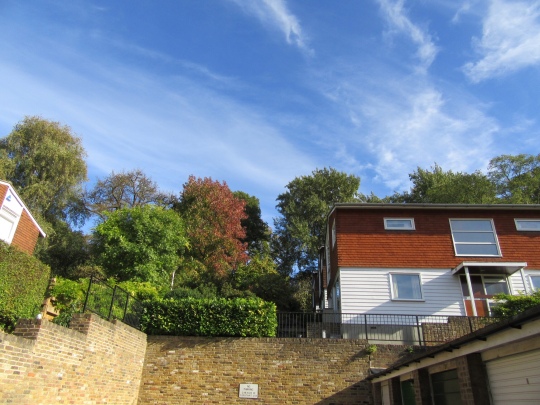
The estate was designed by Austin Vernon and Partners in 1966 and was built across tiered levels, connected by brick and stone staircases and walkways carved into the natural landscape. Unlike the buildings in the more conventional Austin Vernon and Partners-designed estates nearby (such as Lings Coppice, Walkerscroft Mead and Giles Coppice), the Great Brownings houses were built with timber frames because the steep slopes of the land prevented easy access for normal heavy building materials.

img_267830980032_unknown

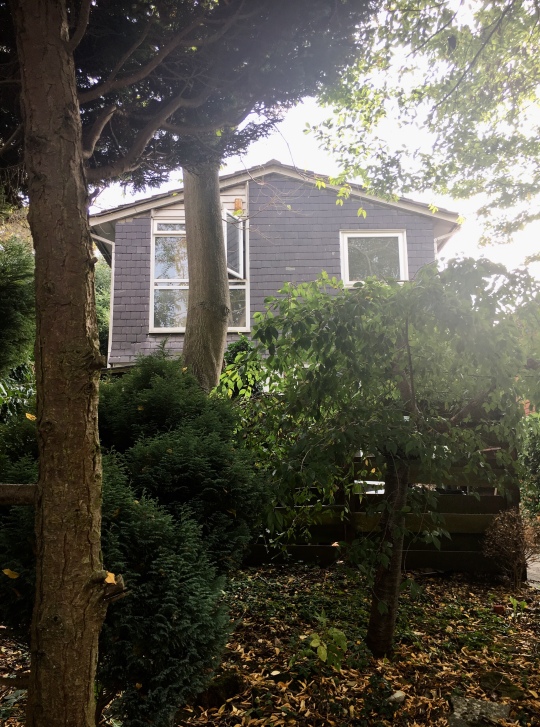
Properties on the estate range from two-bedroom apartments over the garages to four-bedroom detached houses, all built in a consistent style with white cladding, either terracotta or grey slate tile and either pitched or sloping roofs.

30979952_unknown30980560_unknown

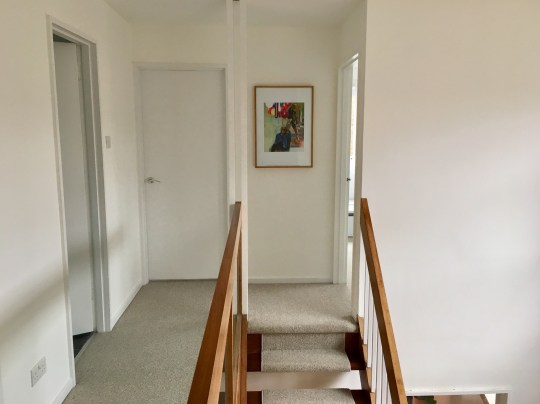
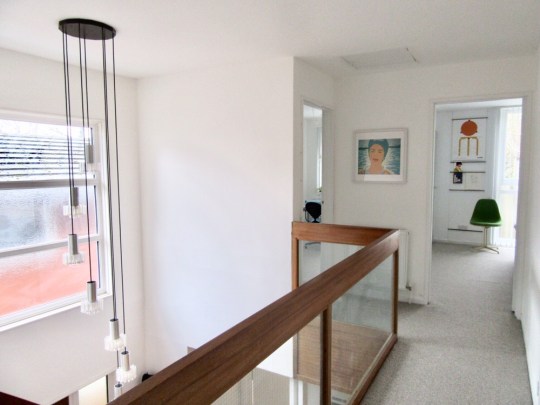
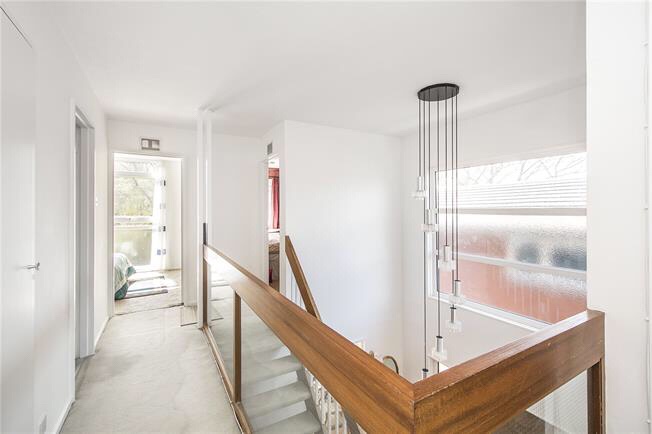
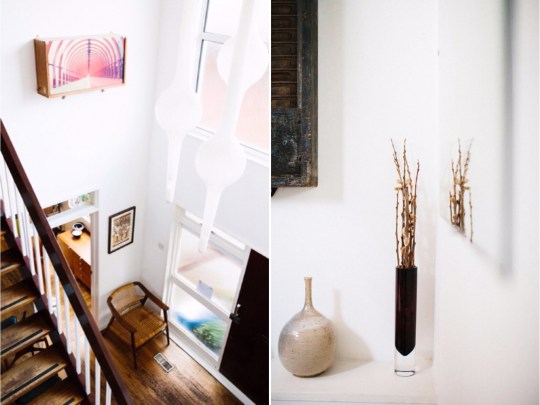
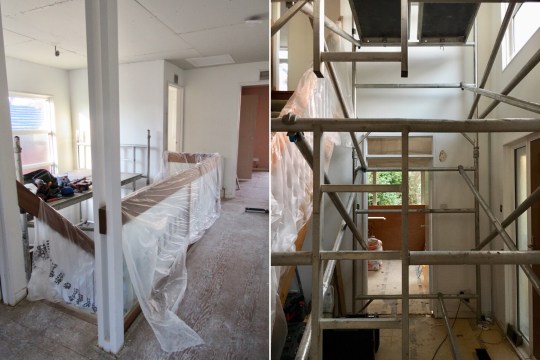
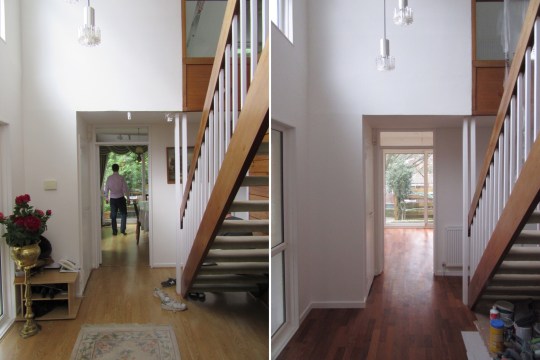
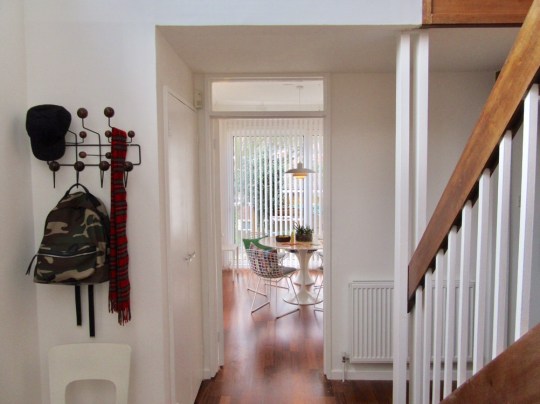
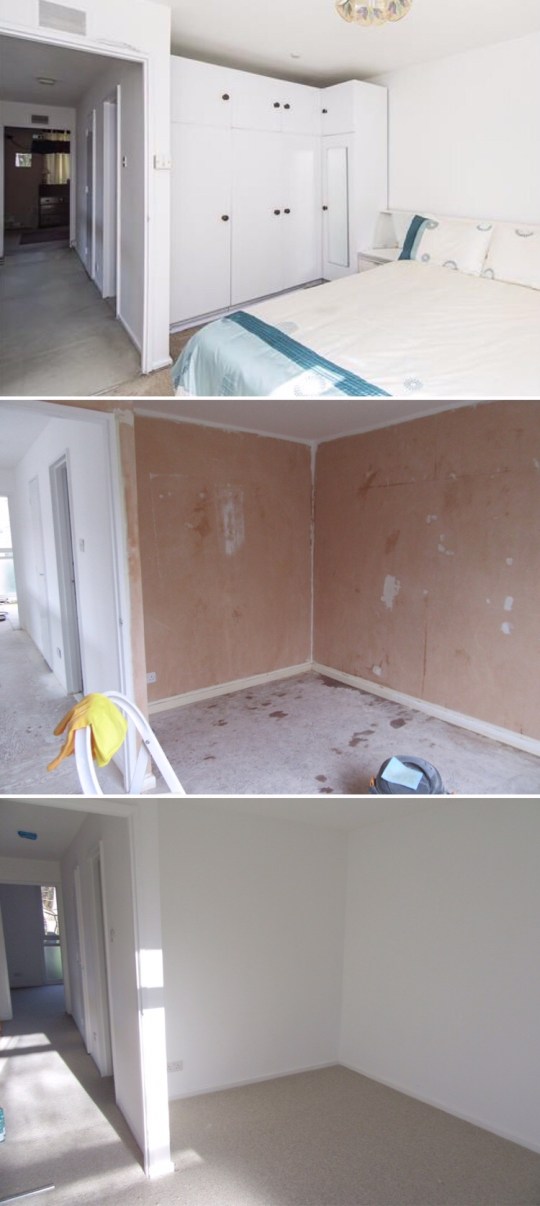
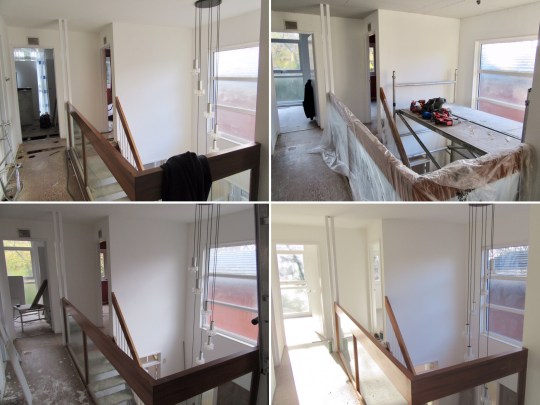
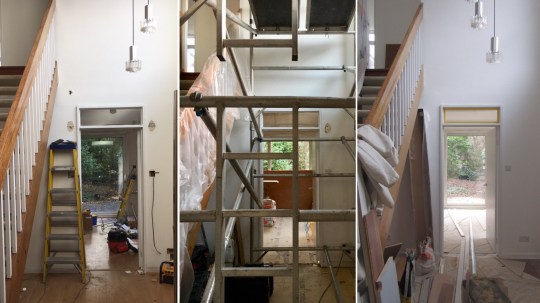
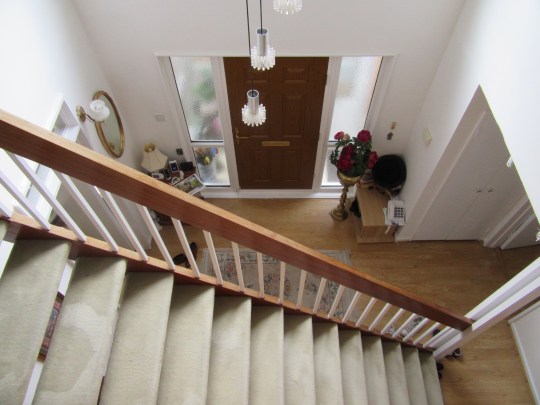
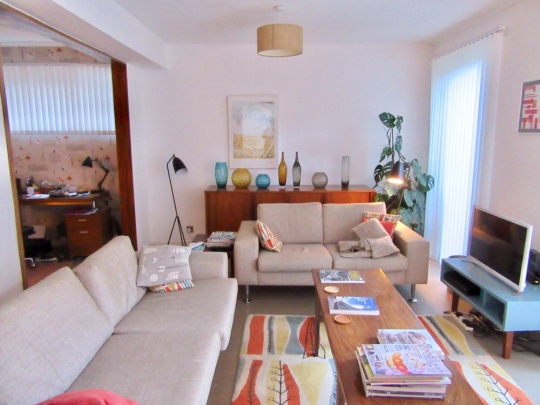
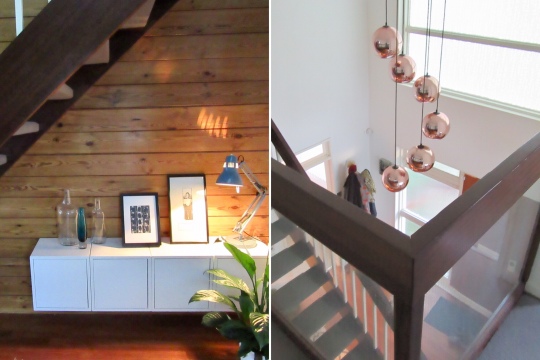
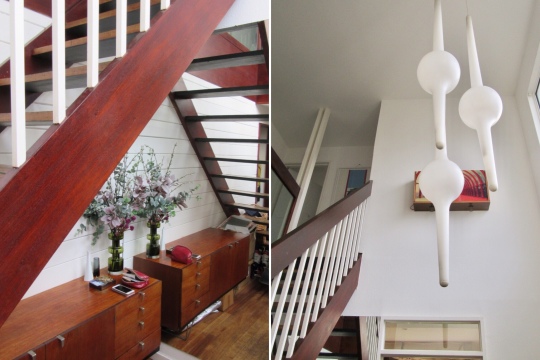
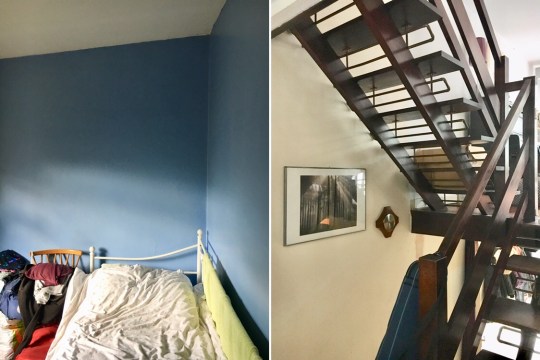
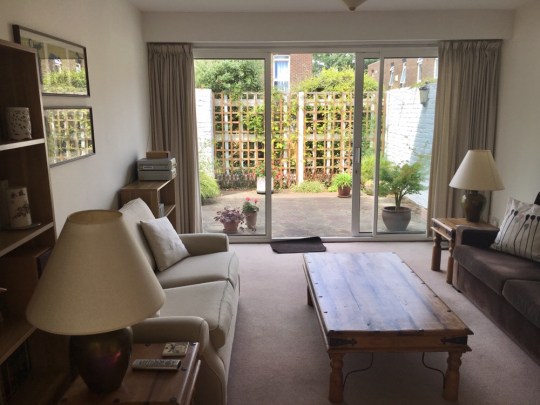
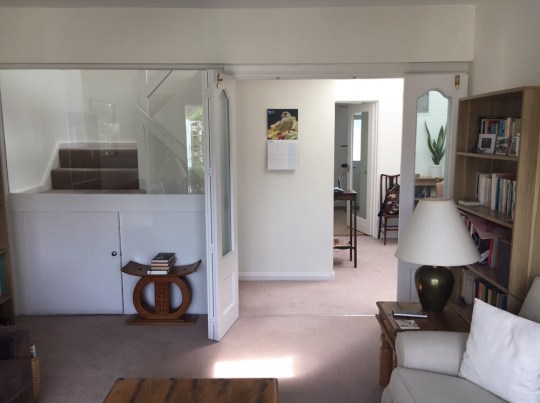
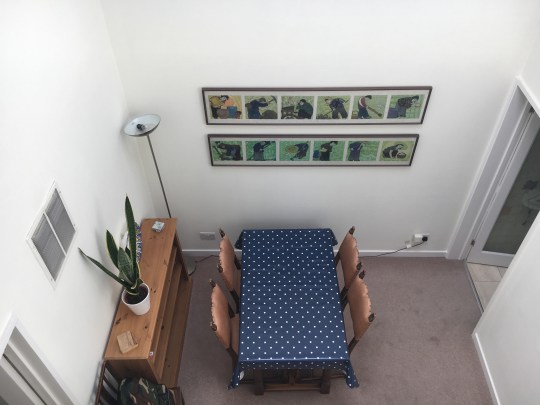
The house that we ended up buying is one of the grey slate tiled four-bedroom houses. As far as we’re aware, all of the four-bedroom houses originally had the same layout with the main entrance at the side of the house opening into a double height hallway which branches off into the living room opening out onto the rear garden on the right hand side and the dining room and kitchen opening out onto the front garden on the left hand side. A timber open tread staircase leads up to the upstairs landing overlooking the double height void and branches off into four bedrooms (two double (one with en-suite), two single) and family bathroom.

img_245630184736_unknown

Although it was apparent that the house needed quite a bit of work and we were a bit nervous about the non-traditional timber frame construction (which thankfully didn’t end up being a problem for our mortgage lender), we fell for both the house and the estate almost immediately. The tranquil, wooded setting was something we’d never have expected to find 15 minutes away from central London and the style and layout of the house (large windows, quadruple aspect, double height hallway/void, patio doors on both sides of the house, lots of timber) were unlike anything else we’d seen during our search.

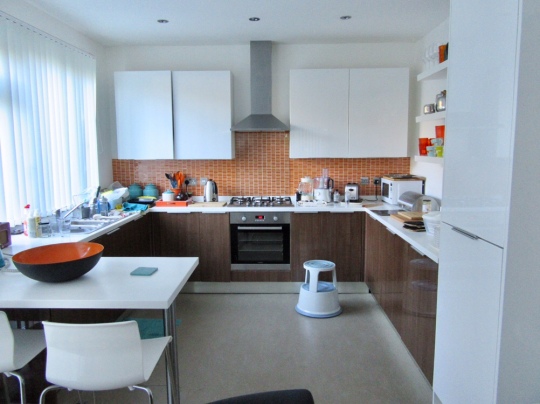
Two of our neighbours were kind enough to let us have a look around their beautifully renovated homes, which gave us an idea of the potential of these houses.

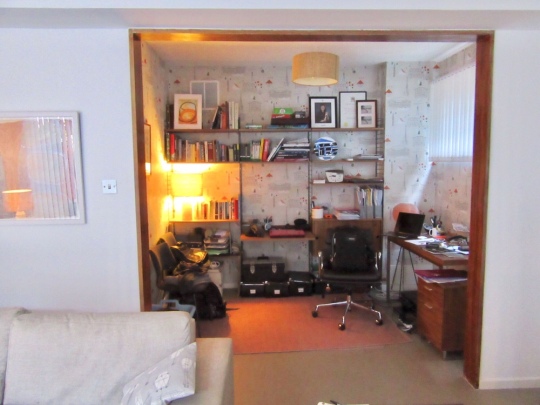
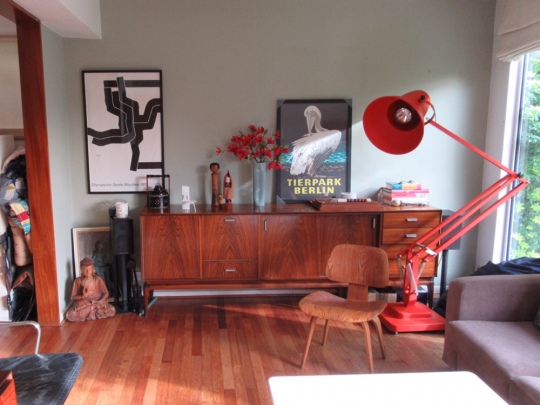
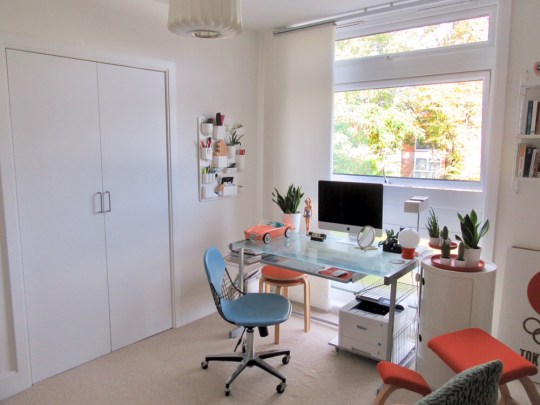
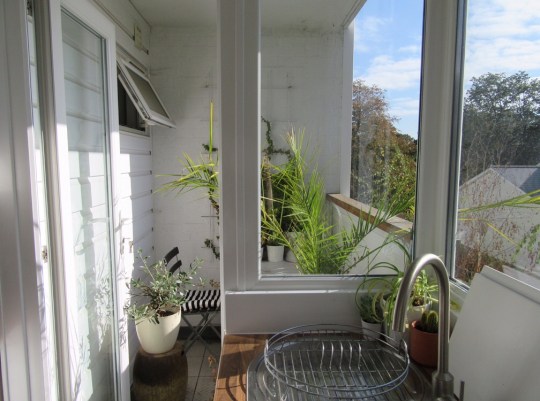
img_2673-130979456_unknown30979504_unknownimg_267430979440_unknown

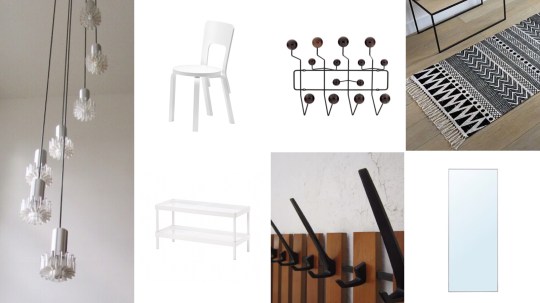
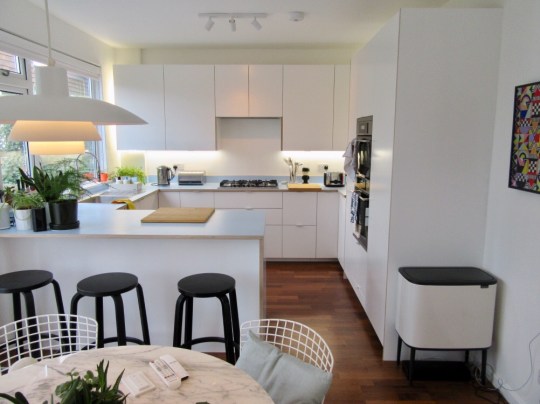
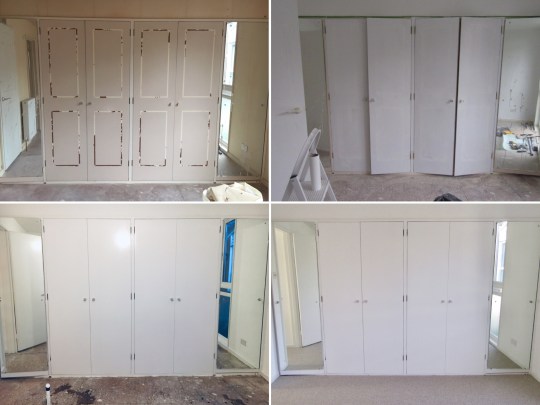
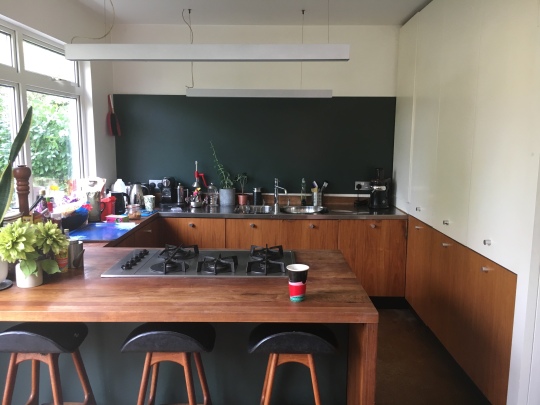
Both houses provided us with plenty of inspiration for what we’re going to do to ours, including knocking through the existing separate kitchen and dining room, redoing the floors in something resembling the original hardwood floorboards, fitting vertical blinds and reinstating the original timber porch. Although neither of our neighbours opted to do so (and their houses look tidier as a result), we will also be replacing the hot air heating system with a traditional wet heating system with radiators due to the fact that I am a chronically dry individual.

img_2681-2img_245230980448_unknownimg_2679-130980416_unknown30980144_unknown

Clearly, we have some way to go before our house resembles either of these stunners but what we do have are a plan, spreadsheet, a list of the names of some tradespeople and a healthy amount of self delusion as to the probably gargantuan size of the task ahead. I plan to document the renovation process over the coming months, most likely starting with the kitchen.

30980608_unknown

Goodbye to The Firs

After several years of looking for a proper mid-century property (first a flat as a single person and then a house as half of a couple) and documenting the process on this blog, we finally completed a purchase on a mid-century house last week. The house and modernist estate that we ended up choosing is a matter for a whole other blog entry and the renovation job will provide me with material for a whole series of blog entries (which I will need given that I won’t have any more flop viewings of unsuitable properties to write about).

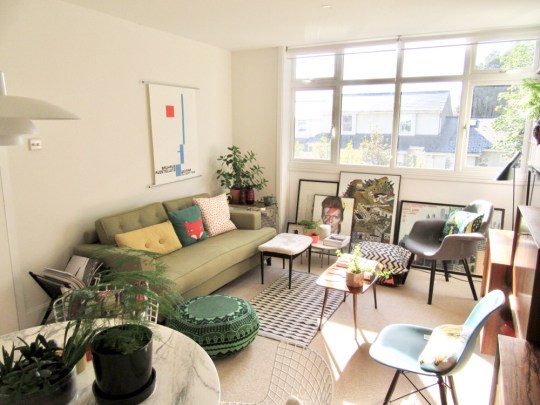
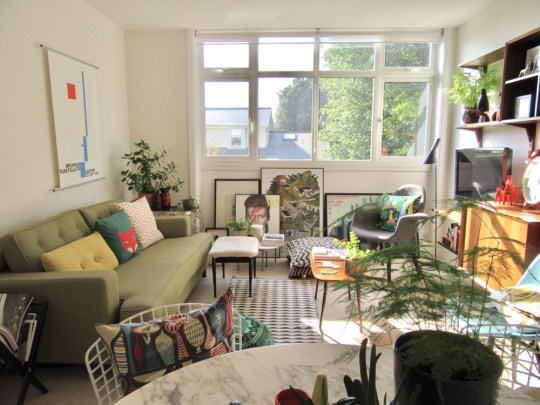
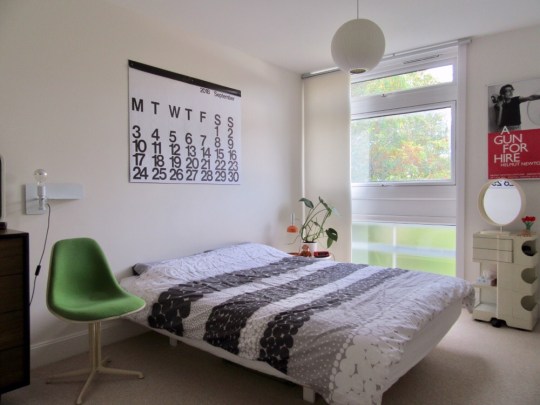
In the meantime, if anyone is looking (or knows anyone who is looking) to rent a nice, vaguely mid-century two-bedroom flat in an Greater London postcode, let me know. It’s been a really great place to live over the past five years (quiet, well maintained block, nice neighbours, leafy street, close to the station) and has never caused me any problems. It will also be significantly less cluttered/more spacious once I’ve moved all of my tat to the new house.

30714608_unknown30714672_unknown30714784_unknown30978400_unknown30978528_unknown30978544_unknownimg_233730978816_unknown30978880_unknown30977600_unknownimg_234030977648_unknown30714880_unknown30715232_unknown30715392_unknown

Peckarmans Wood, Dulwich SE26

Peckarmans Wood, Dulwich SE26
Midcentury town house
Architect: Austin Vernon and Partners
Year built: 1960s

I mainly associate Peckarmans Wood near Sydenham Hill with those amazing ranch-style houses with pitched roofs built by Austin Vernon and Partners in the 1960s. Forming part of the same development, this house that we went to see recently didn’t have quite the same wow-factor but was nevertheless architecturally interesting and a bit different to your usual mid-century terrace. It also shared the same wooded setting (quite literally, the walk from the station to the terrace of houses was through some kind of wood).

img_1857img_1894

While the house wasn’t in the best condition and hadn’t been presented in the best way for the viewing, it was pretty substantial in terms of size and unusual in the way it was split over four floors. Upon entry, you had a cloakroom and storeroom. A short flight of stairs went up to the kitchen and dining room, which opened out onto the garden. A further short flight of stairs led up to the living room. Another short flight of stairs led up to one of the bedrooms and the bathroom and the final flight of stairs led up to three further bedrooms, which appeared to have pitched roofs and there was also some kind of skylight in the hallway.

img_2335img_1883img_2334

With quite a lot of investment, this could have been a spectacular house. Looking down the terrace of houses, it was clear that a couple of the others had been restored to their full potential and the setting was absolutely beautiful. At the time of writing, the house is still on the market, having been recently reduced.

img_1891img_1892

Grassmount, Forest Hill SE23

Grassmount, Forest Hill SE23
Midcentury town house
Architect: Unknown to me
Year built: 1960s

The fact that this house was in a development called “Grassmount” accessed by a road called “Taymount Rise” coupled with its listing which boasted of “views across London” should have prepared me for the very steep hill that it was necessary to climb in order to reach the front door. Unfortunately, there are few activities that I dislike more than climbing steep hills or staircases so I’d pretty much decided that this house was a no before we’d even been inside.

img_2215

This was a shame because the house was beautiful. For a 1960s mid century townhouse, it was unusually wide and substantial with an open plan kitchen/diner and small living room on the ground floor and two bedrooms and a bathroom on each of the first and second floors.

img_1990img_1798

The front garden and at the rear were beautifully landscaped and kept and the decor was as exactly I’d have had it if I had the confidence to go for such a rich, dark colour palette. Appliances and things like the windows and patio doors looked expensive and satisfyingly chunky.

img_1989img_1991

The only change I’d have made would be to convert one of the first floor bedrooms back into the main living room by removing a partition wall and use the small living room on the ground floor as a study. But that would literally have been it – everything down to the cork flooring to the colour of the front door was perfect.

img_1987img_1788

The perfection of the house was reflected in the relatively high price, which seemed fair enough for a substantial house with a decent amount of space that had undergone a great renovation job. I had to remind myself of that steep hill to stop myself from being tempted.

img_1988


Ling’s Coppice, Dulwich SE23

Ling’s Coppice, Dulwich SE23
1960s terraced house with atrium
Architect: Austin Vernon and Partners
Year built: 1968

We didn’t end up making an offer on that beautifully renovated but expensive house in Ling’s Coppice but we liked the development enough to come back to view this slightly less striking but cheaper example.

30180160_unknown30180128_unknown

This was fundamentally the same house as the one we saw last time except this one had the original layout (unconverted garage, kitchen and living room accessed by separate doors, 4 bedrooms with a small bathroom upstairs) intact. Unfortunately, the original warm air heating system was intact as well.
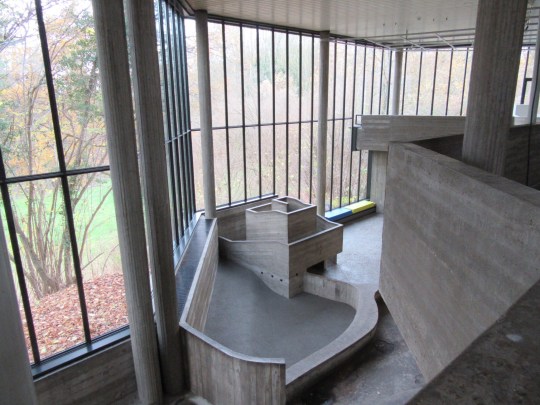
img_1721img_1722

Decor wise, the house was relatively neutral if a bit bland with all of the mid century features that characterise these houses slightly camouflaged under layers of off-white paint, beige carpets and 80s/90s-looking additions and renovations.

img_1982img_1710

The asking price was pretty fair – it wouldn’t have taken too much work to restore the house to its best – but we saw another property on the same day which turned our heads (more on that soon). As far as I’m aware, the house is still on the market.

img_1705img_1983img_1727-1


Elephant and Castle 20th Century Society Tour

I recently attended a 20th Century Society walking tour around Elephant and Castle, taking in the various housing estates, the much maligned shopping centre and the interiors of Draper House and Metro Central Heights (aka Alexander Fleming House) by Ernö Goldfinger.
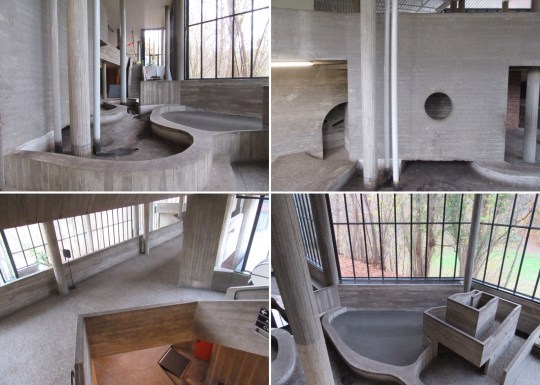
Seemingly one of the last areas in zone 1 to undergo complete regeneration, Elephant and Castle has (regrettably in my opinion) seen major change in recent years to revamp its down-at-heel, brutalist image. The 42-storey Strata tower (the one with that hideous fan thing on top) was completed in 2010, One The Elephant (another rather bland 37-storey tower) was completed in 2016 and a number of further new high rises have planning permission. The shopping centre, which has been scheduled for redevelopment for about 30 years, is apparently (finally) going to be demolished later this year.

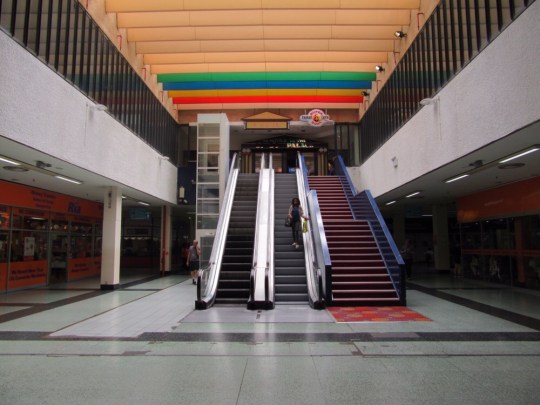
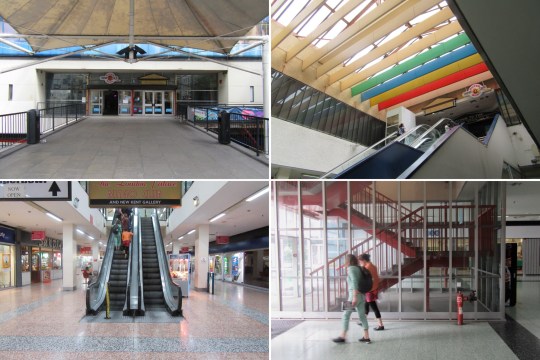
This was where the the walking tour started. Designed by Boissevain & Osmond and opened in 1965, the shopping centre was one of the first US-style indoor shopping malls in Europe with enough space for over 100 retail units spread across on three levels surrounded by public space and incorporating the railway and tube stations. Unfortunately, it never really took off as a retail destination and fell into disrepair over the years. Walking around it on the tour, there were glimmers of the architects’ vision for a shopping centre of the future: light and airy concourses with daylight reaching deep into the building (not something that could be said of either Westfield shopping centres), neat design touches such the rainbow panelled ceiling, terrazzo marble flooring and striking red staircases.

30183824_unknownimg_1848

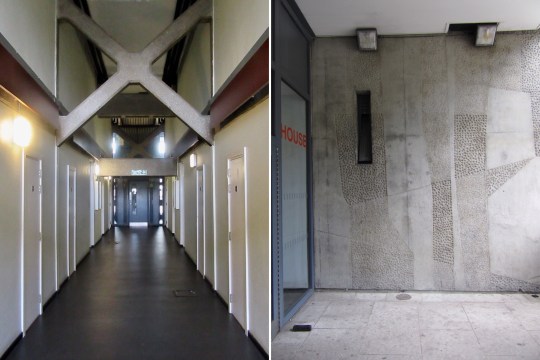
Next on the tour was Draper House, a 25-storey tower forming part of the Draper Estate. Designed on 1958 and completed in 1963 under the principal housing architect HJ Whitfield Lewis, it was constructed with a reinforced concrete frame with pre-cast floor and cladding. We were invited in to walk across a striking if rather austere and prison-like walkway on one of the upper floors but unfortunately not inside any of the flats, which I understand to be spacious and split level in a lot of cases.

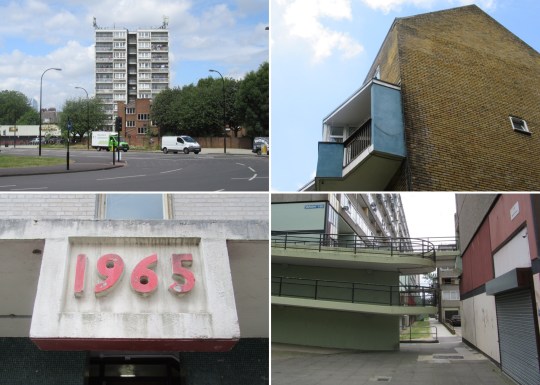
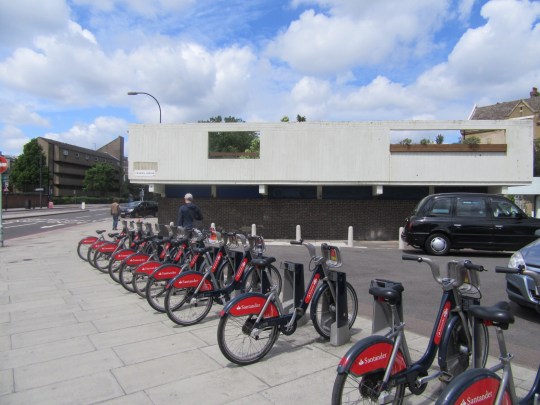
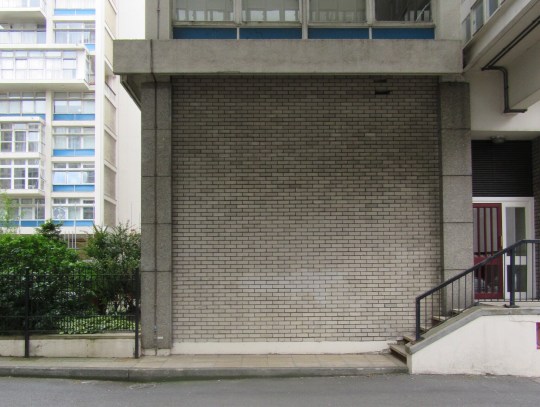
Other sights on the tour included the Lubetkin-designed Dorking House (unremarkable but for a great “1965” sign), the slightly overwhelming Symington House (a fortress of ice white and blue) and an strange pale-coloured structure (I’m not entirely sure what purpose it served – a communal seating area? Parking?) attached to a towerblock that looked an awful lot like La Villa Savoye in Poissy.

The last stop on the tour was Metro Central Heights (previously Alexander Fleming House), a vast concrete complex built between 1959 and 1967 by Hungarian-born modernist architect Ernő Goldfinger (also responsible for Trellik Tower). The multi-winged, multi-storey building (55 metres at its tallest point) housed the Department of Health and Social Security until 1989 after which it sat empty until 1997 when it was converted into around 400 residential apartments and renamed Metro Central Heights.

Alexander Fleming House, as it was

I’ve always had the impression that the conversion wasn’t particularly well executed: flats in the building that I’d seen online looked oddly proportioned and fitted with ugly late 90s kitchens and bathrooms inconsistent with the era of the building. In addition, while I can understand why they decided to freshen the original and very brutal concrete facade by painting over it, I’ve never liked the rather hospital-like white and blue colour scheme.

img_1845

My negative impression of the building was mostly dispelled after the tour. The internal courtyard, with its unexpected Japanese garden was striking, the communal areas were well kept (the lift lobbies featured the original stained glass windows) and we were told that management has plans to paint the blue exterior panels a more appealing colour in the near future (the options were various shades of putty).
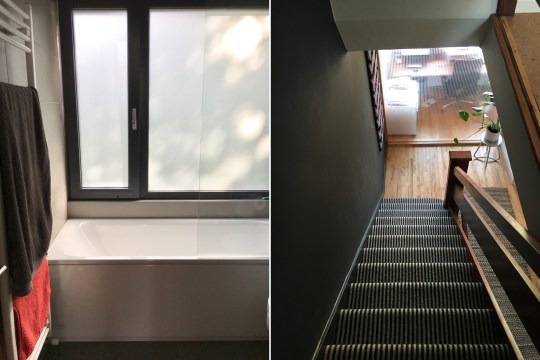
img_1844

Unlike the ugly examples I’d previously seen online, the flat that we were invited in to see was light-filled and well-proportioned though the owner did concede that it took a while to find a flat in the building as good as this one. The Modern House currently has a similarly nice example for sale on its website.

Historical photos courtesy of a Google search…

Modernist pilgrimage to Taipei

Taipei had some great brutalist architecture and was clearly quite a design-centric city with some great independent stores selling beautiful objects at decent prices in the Datong district (the areas around Dihua Street and Zhongshan metro station in particular). I wish we’d had longer than a day and a half to explore.

30451056_unknown30450880_unknownimg_155530450224_unknownimg_149330450416_unknown30450912_unknown30450288_unknownimg_155730451808_unknownimg_1377

Modernist pilgrimage to Hong Kong

Hong Kong is notoriously unsentimental when it comes to preserving its heritage, constantly demolishing anything remotely old to make way for brand new glass and steel skyscrapers. That said, there was still plenty to appreciate from an architecture and design perspective during my recent trip there (even if none of it was really mid century or modernist).

30185216_unknown

Highlights included:

– The three brightly coloured interconnected buildings in Wan Chai: the Blue House, Yellow House and Orange House. Now a grade one historic building, the Blue House is a four-storey tenement building and one of the few remaining examples of a tong lau: a style of residential building notable for balconies that were built in the late 19th century in Hong Kong and southern China. The Blue House houses a museum and contains private living quarters. The Orange and Yellow Houses are also primarily residential buildings featuring around 20 residential flats each.

img_137330185504_unknownimg_1485

– The old Hollywood Road Police Married Quarters, a grade III listed 1950s building now used as a mixed-use venue for arts and design. In 2014, after nearly 15 years of disuse, the building was renamed PMQ and opened to the public. The building’s residential units were turned into studios, shops and offices for selling pleasing but overpriced design tat and hosting exhibitions.

30448800_unknownimg_1489

– Hong Kong Cultural Centre, a tiled salmon pink building which was designed in the 1970s but only opened in the late 1980s (and therefore has elements of both decades in its design).

30186064_unknownimg_1567

– Other interesting modern buildings

30185872_unknownimg_1490img_0949


Ling’s Coppice, Dulwich SE23

Ling’s Coppice, Dulwich SE23
1960s terraced house with atrium
Architect: Austin Vernon and Partners
Year built: 1968

I’ve always admired Ling’s Coppice, a neat-looking 1960s housing estate in Dulwich made up of two-storey terraced houses notable for having double-height atrium-style dining areas (leading to them being locally referred to as “the atrium houses”).

30179904_unknown

Forming part of the Dulwich Estate, the houses were built in 1968 by Austin Vernon and Partners in U-shaped terraces with gardens that opened onto communal landscaped amenity areas. Though a little outside of the price range we had originally envisioned, we decided to take a look at a particularly nice example of a house on the estate that had recently been reduced in price.

30180288_unknownimg_0623

Though I’d passed Ling’s Coppice many times on the bus, I’d never had the opportunity to have a wander around the estate properly. It was as nice as I’d expected – rows of immaculately kept houses and neatly trimmed retro-looking shrubs.

img_0614-1

The interior of the house that we viewed was, in short, spectacular. The entrance hall led straight into the double height dining area, which was flooded with light from a large square skylight overhead and overlooked by an upper-floor gallery. This led through to a living area, which opened out onto a small but well tended garden, and an open sided staircase. The current owners had converted the garage into a storage room and a substantial utility room (in my view, the ultimate indulgence).

30180464_unknownimg_061130180416_unknown

The upstairs was no less attractive, the upstairs gallery looking out over the dining area and branching off into two bedrooms on one side and a further bedroom and the bathroom on the other (the original layout had four bedrooms and a small bathroom but the current owners had traded the fourth, smallest bedroom for a more substantial bathroom, a worthy trade-off in my opinion).

30180320_unknownimg_0618

I was quite taken with this house, far more so than with any of the other properties I’d seen as part of my long running search (the only other property having the same effect on me was an Austin Vernon and Partners flat that I tried to buy about two years ago). This, however, was reflected in the price of the house, which I’m sure would be enough to buy a small mansion in Sutton.

We haven’t ruled out this house but have decided to keep looking at properties at the same price point to see what we can get if we are willing to stretch our budget to the absolute maximum.

img_1269

Feature in House Beautiful magazine, 1968 (courtesy of lingscoppice.org)

img_1270

Feature in House Beautiful magazine, 1968 and original floorplan (courtesy of lingscoppice.org)

Property search 2018 roundup

We started looking in earnest for a mid century house this year with a £600-700k budget and a south London location in mind. Here’s a roundup of the houses that we’ve seen (and haven’t bought) to date:

Victoria Drive, Southfields

img_9866

This sixties 3-bed end of terrace in Southfields looked promising from the photos – I liked the fact it had two adjoining reception rooms (the second one the result of an extension) and saw the pine panelled ceiling throughout the whole of the ground floor of the house as a selling point rather than an eyesore.

img_9853img_0376

Visiting the house in person, however, I wasn’t entirely sure about it. The £650k asking price was ok but we’d seen bigger places for the same price. The last time I checked, the house was still on the market and had been reduced to £625k.

img_9848

Topsham Road, Tooting

28864000_unknown

This sixties 3-bed semi was extremely incongruous on a street of Victorian-era terraced houses near Tooting Bec underground station. I quite liked it from the outside, it was conveniently located and was very reasonably priced at around £640k but it was a bit dark and characterless inside and I felt too overwhelmed by the amount of work that would be needed to get it into a decent state. This clearly didn’t put off another buyer who bought it two days after our viewing.

28864384_unknown28864176_unknown28864064_unknown

Kay Road, Clapham

29653040_unknown

I suspected that this ultramodern house sandwiched between two Victorian properties on the Clapham/Stockwell border would be a bit small but went to along see it anyway because I was intrigued by the photos of a timber-cladded living room and Grand Designs-worthy facade.

29653120_unknownimg_0382

Built a couple of years ago on a tiny plot of land by the architect owners, the house was full of neat design touches including a lot of (much needed) built-in storage, skylights and unusual uses of materials.

29653088_unknownimg_0380

The house had an upside-down layout with two bedrooms and the bathroom on the ground floor and an open plan living area and kitchen on the first floor with a balcony spanning the length of the room. Despite the fact it was all very attractive (with a great view from the balcony of some brutalist towers), there wasn’t an awful lot of house for the £700k asking price.

img_0080-1

Reynard Drive, Crystal Palace

img_0372

Unlike the Kay Road house, this place had an abundance of space. Situated at the end of a row of terraced houses with unusual inverse pitched roofs in a quiet cul de sac near the Crystal Palace Triangle, the house had been extended to the side and had 4/5 bedrooms, a very large lounge, two bathrooms and a nice garden which led directly into woodland.

img_0373img_0374

All in all, while it needed a bit of work and the layout was a little odd owing to the way in which the extension had been tacked onto the side of the house, there was a lot there for the £700k asking price (reduced from £750k) and the number of interested buyers reflected this – there was a practically a queue to get in and it was snapped up the day after we went to see it.

img_0375

Augustus Road, Southfields

img_9903

Priced at £650k, this 3-storey sixties (or maybe seventies) townhouse was a little ugly from the outside but had four bedrooms and was in a decent location in Southfields. The fact that a more modernised but otherwise identical house in the same terrace was sold last year for around £100k more made this house seem like excellent value.

img_9929img_9940

Visiting it in person, however, it looked like it would be an £100k project to get it into a decent condition (we’re talking holes in the ceiling), which felt too ambitious given our limited experience renovating houses. The last I heard, the owners were taking it off the market to do some of the work to it themselves, most likely with a view to relisting it at a higher price.

img_0383

Balham Park Road, Balham

img_0171

Conveniently located (a few minutes’ walk from Balham tube down the side road next to Du Cane Court), this mid-century end of terrace house was a little boxy from the outside but was nicely proportioned and would have made for a manageable project if we’d gone for it. At £700k, however, it did seem rather expensive for what it was.

img_0174img_0378img_0181