Category: Travel
Carl Larsson-gården (Lilla Hyttnäs), Sundborn Sweden
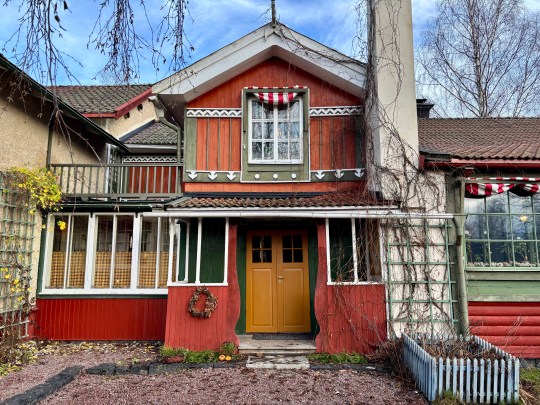
During a recent trip to Stockholm (which unlike neighbouring capitals Oslo, Helsinki and Copenhagen seemed to have a dearth of mid century/modernist attractions), I decided to make the long journey north to visit Lilla Hyttnäs, a late 1800s cottage and the home of Carl and Karin Larsson, in the tiny village of Sundborn outside Falun in Dalarna.
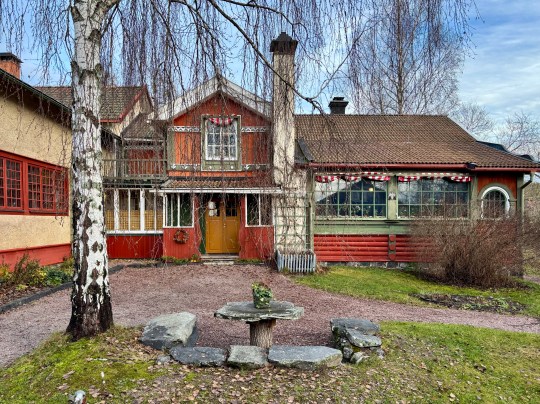
While the cottage predates the mid-century modern period that I usually focus on by over half a century, the Larssons pioneered a distinctly Scandinavian approach to domestic design (light, colour, craft and simplicity) that shaped the sensibilities later associated with Nordic modernism and the interiors (bold, bright and strikingly modern-looking for their time) became the blueprint for a whole national aesthetic. IKEA reportedly makes regular pilgrimages to the cottage: a busload of designers visits annually, mining ideas for future products and the Larssons’ influence on IKEA’s aesthetic and product line is unmistakable.
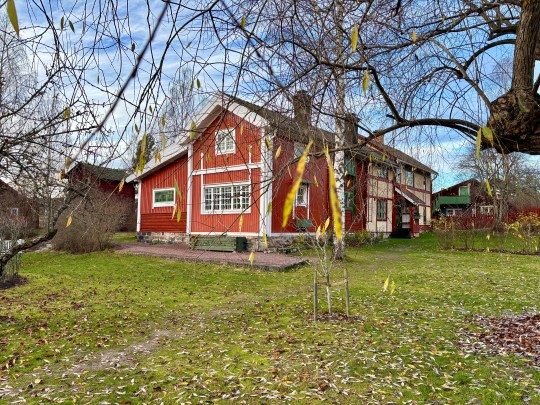
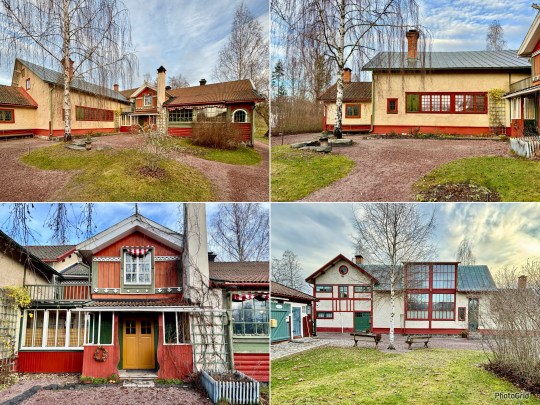
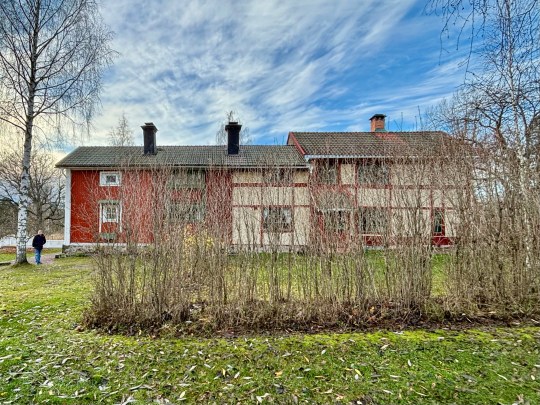
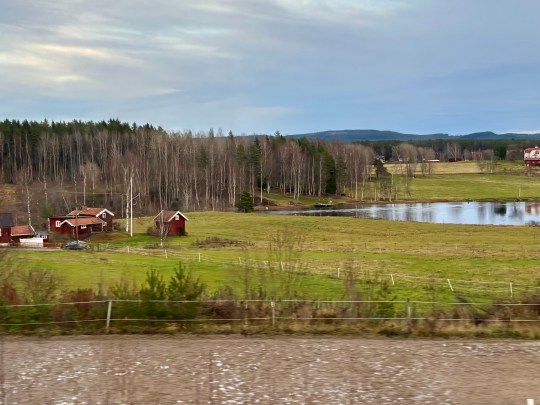
Our trip to the village and the cottage felt faintly folkloric: a three hour train journey to Falun, followed by an infrequent rural bus or a prohibitively expensive taxi to Sundborn (I chose the latter: £45 for a fifteen-minute drive) but all of this added to the sense of pilgrimage.
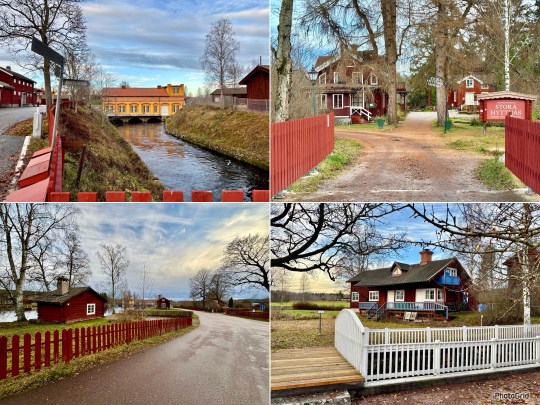
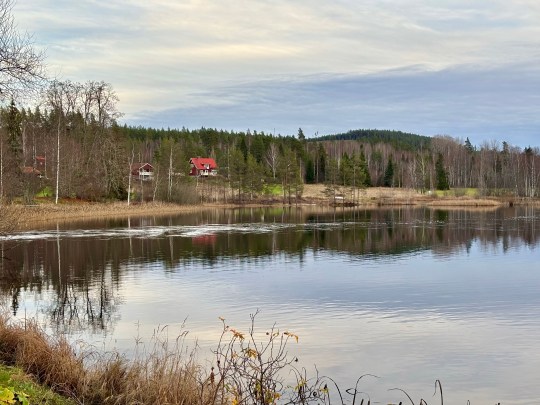
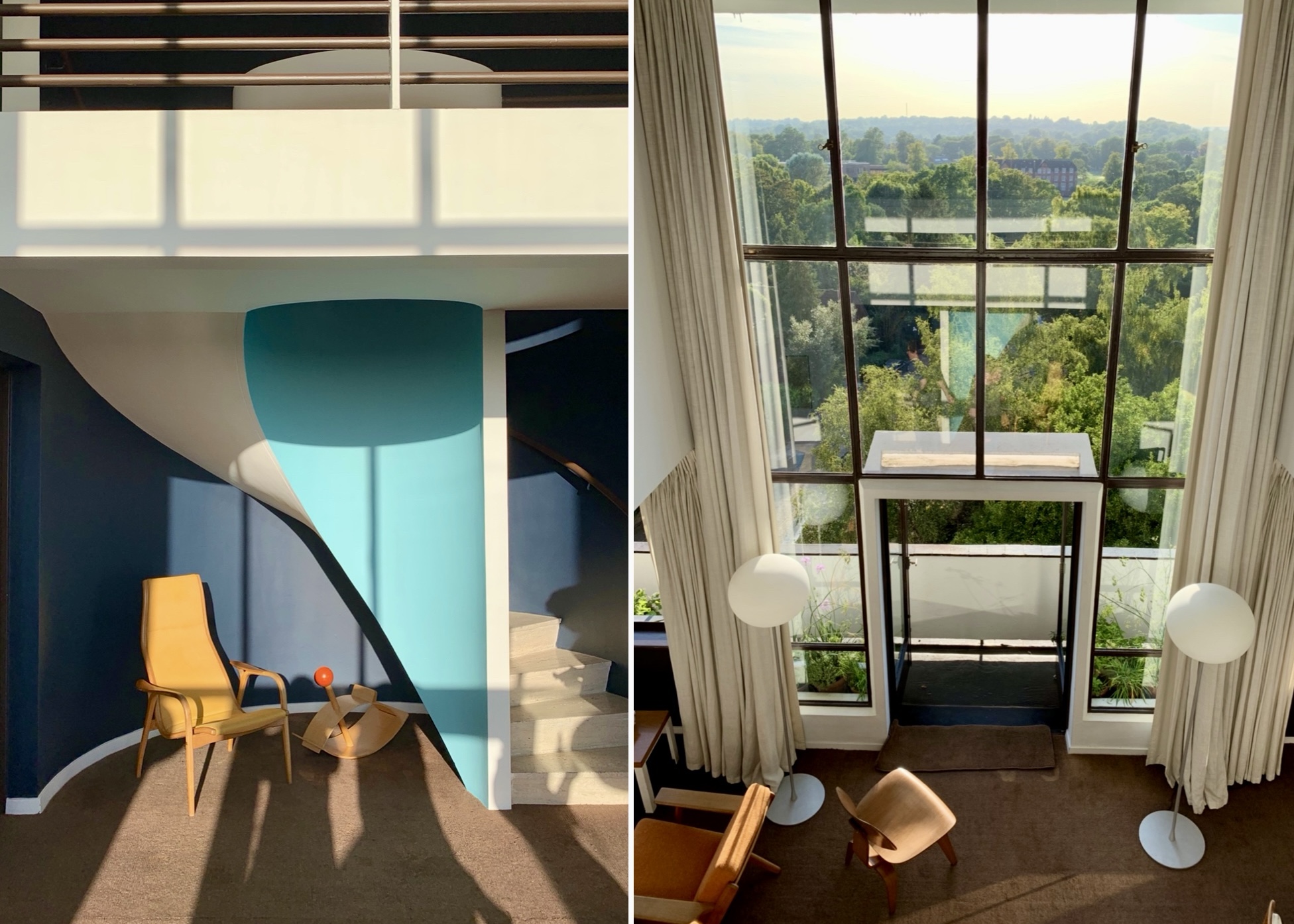
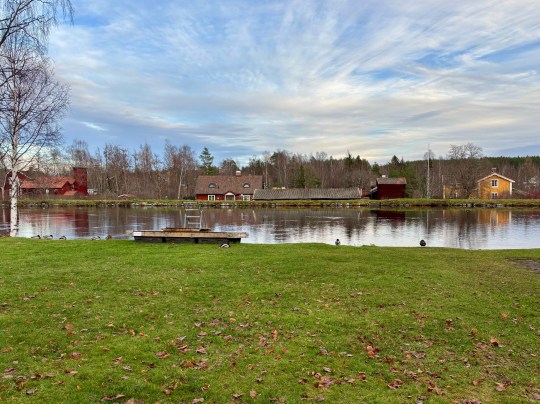
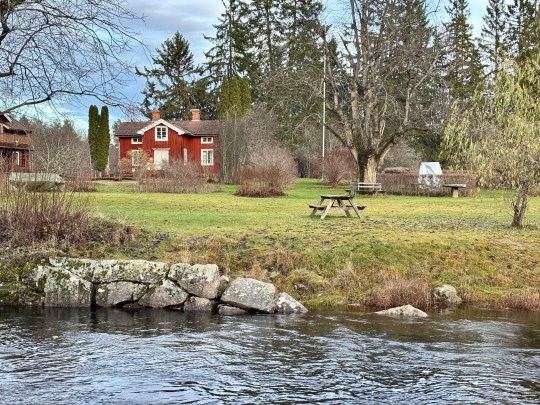
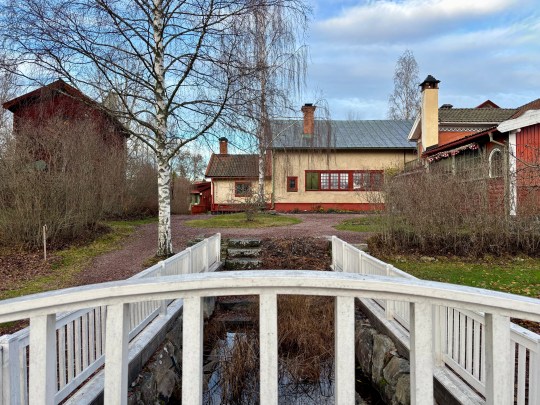
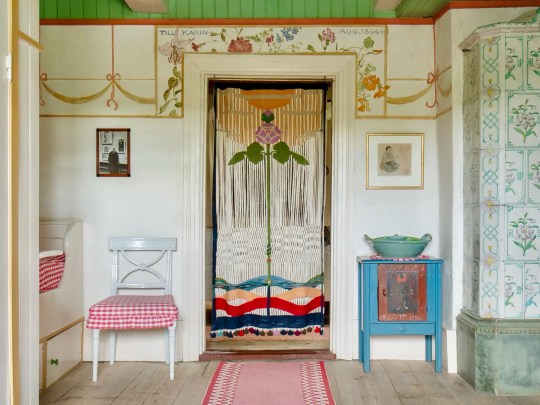
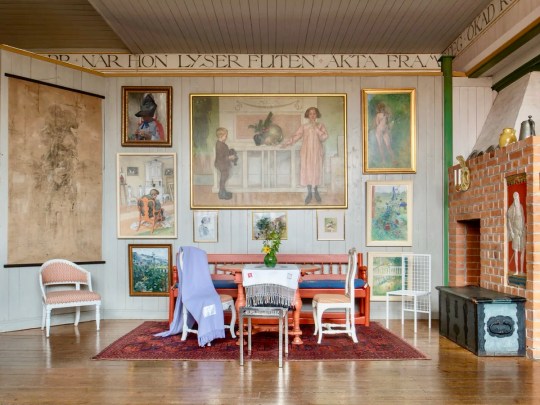
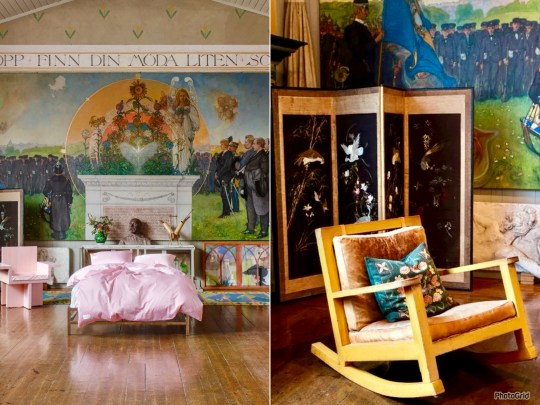
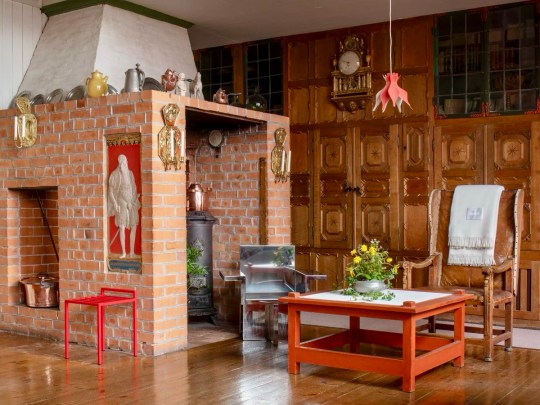
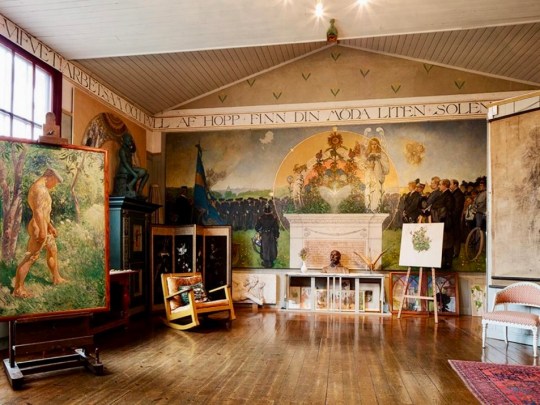
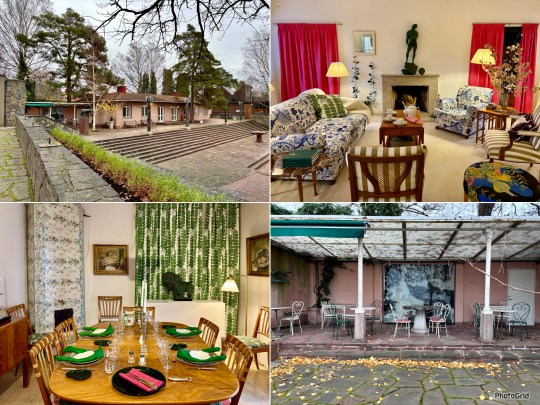
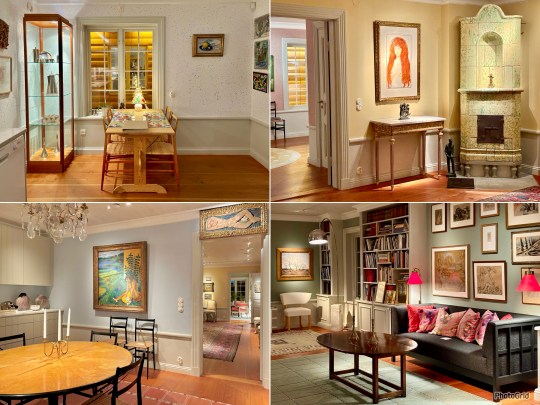
The village of Sundborn consisted of a scatter of deep Falu-red wooden houses along the Sundborn river with the Larssons’ home as its centrepiece. On the freezing November day that we visited, both the village and the grounds of the property were deserted and we were met by a single, very knowledgeable guide who took us on a private tour of the cottage (private because we seemed to be the only visitors to the village that day). Unfortunately, photography was not allowed inside as the cottage is still owned and very much used as a home by members of the Larsson family (small signs of life could be seen amidst the preserved, museum-like rooms) but I managed to find a lot of photos of the interiors online to accompany this entry.
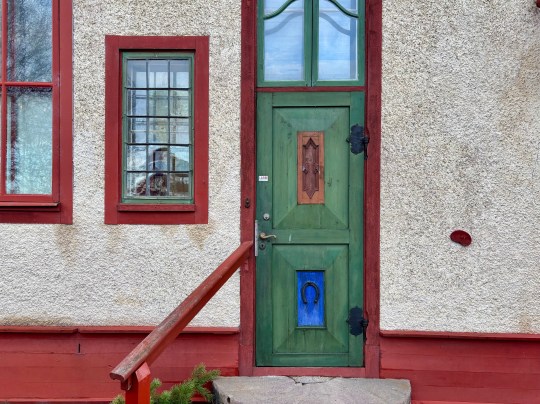
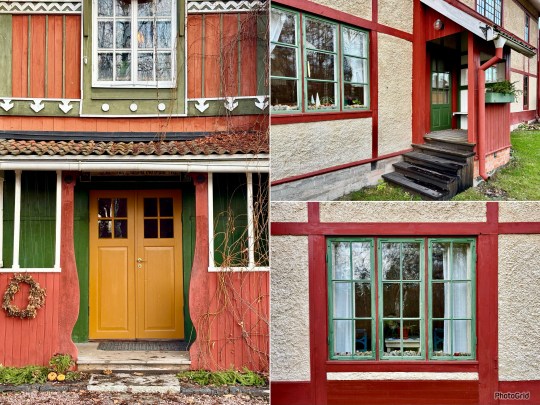
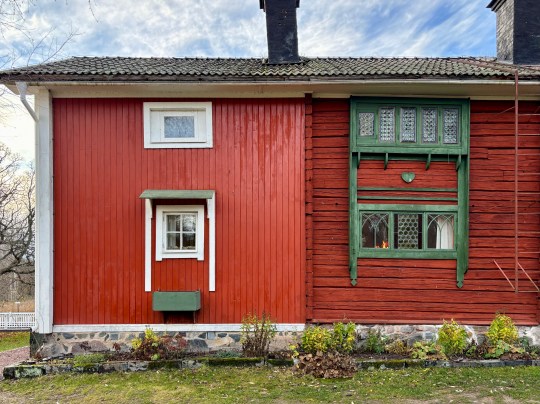
Carl Larsson, born in 1853 into poverty, was lifted out of hardship by teachers who recognised his talent and helped him into the Royal Swedish Academy of Art. He worked in Stockholm, struggled, moved to Paris, struggled even more, and eventually found his footing in a rural artists’ colony outside the city. The light, the water, and the community suited him.

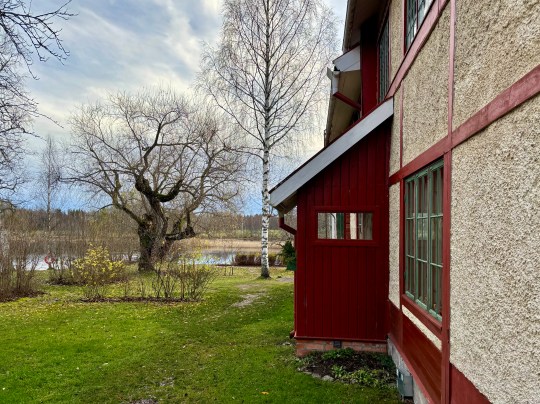
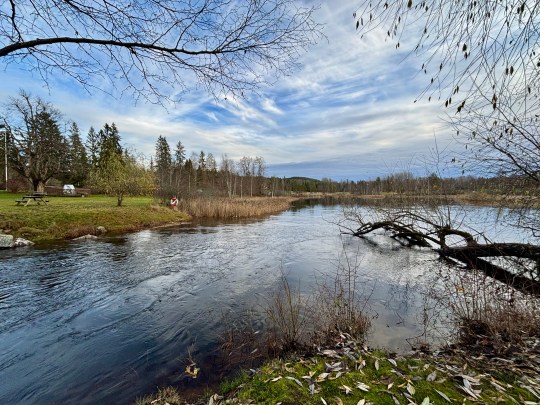
Meanwhile Karin Bergöö, born into a more prosperous family, trained at the Art Academy in Stockholm. She and Carl met in France, married, and eventually returned to Sweden. Karin’s father gifted them Lilla Hyttnäs in 1888: at that time a tiny cottage of four rooms and a kitchen.
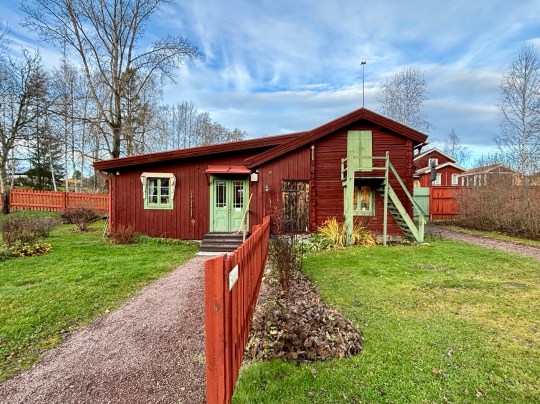
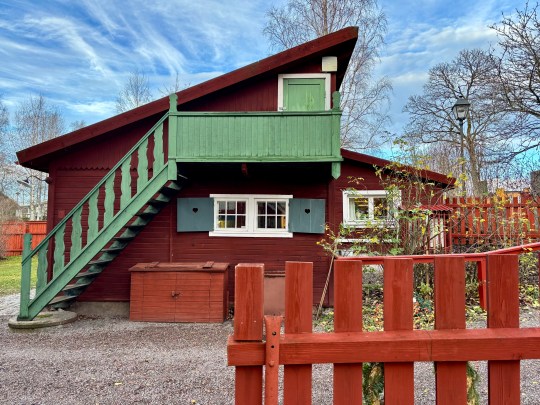
What followed was a slow transformation, with extensions added between 1888 and 1912. By the time that the Larssons had settled permanently in 1900, the house had grown to about thirteen rooms, each with its own character and shaped by the interplay of Carl’s painting and Karin’s revolutionary approach to textiles, colour, and furniture design.

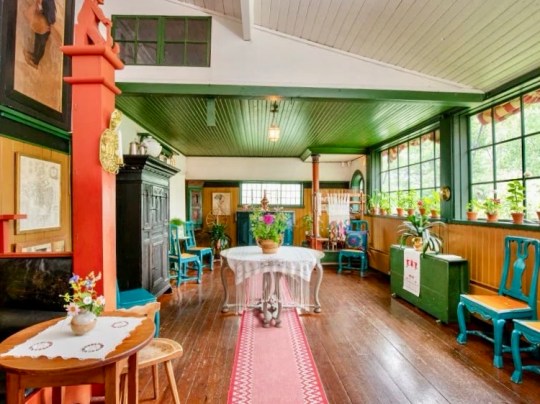
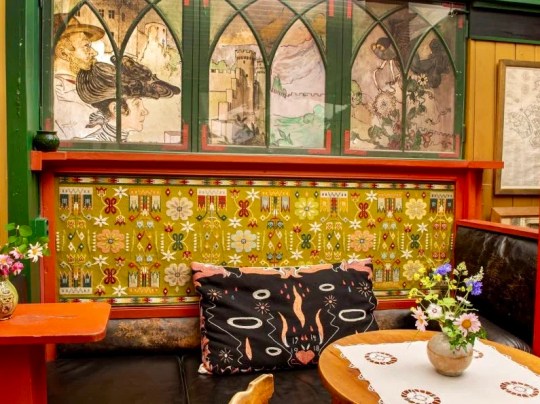
We began in what had effectively been the family studio-workroom. This was where Carl painted and where Karin wove textiles on her loom – the guide pointed out a folksy cushion decorated in a very contemporary looking hearts and tears motif (symbols of hope and devotion) that a designer like Donna Wilson might make nowadays.
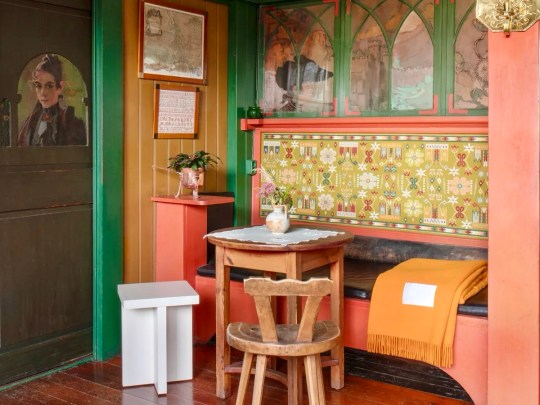
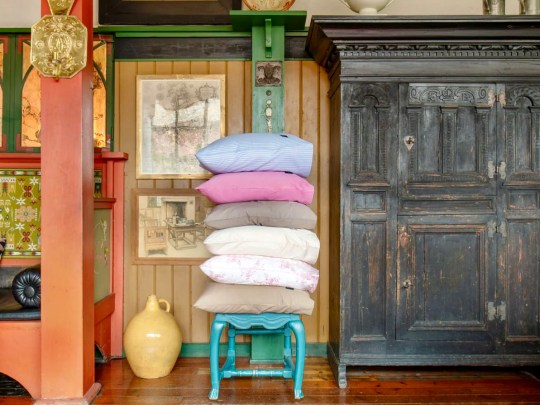
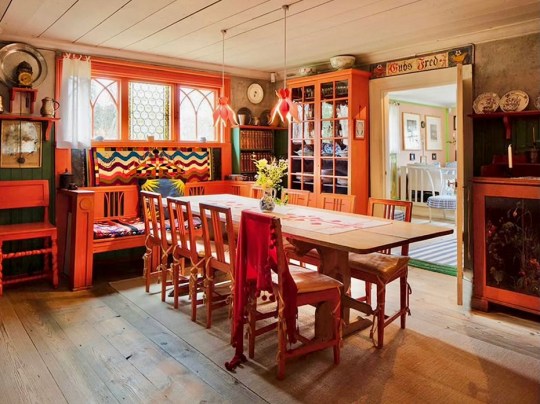
Next door was the dining room, which occupied one of the oldest parts of the house, the original cottage from the early 19th century. This space was dark and richly coloured in deep reds and greens. Meals were eaten in this room at a long table with a family-tree tablecloth designed by Karin under curling red lampshades designed by Carl. A heavily decorated cupboard known jokingly as the “cupboard of sins” (which concealed the kitchen door) stored liquid tobacco and various illicit “medicinal” alcohols.
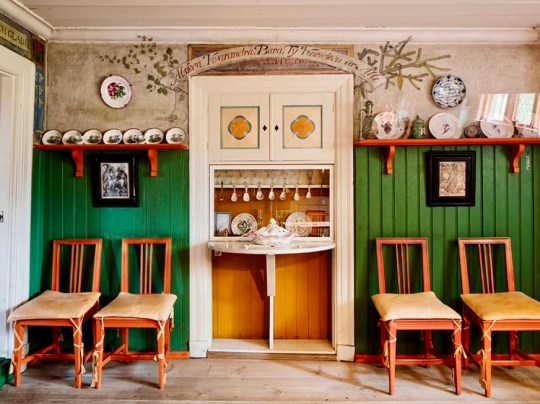
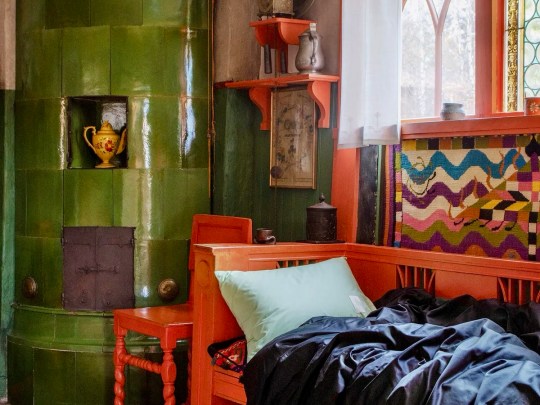

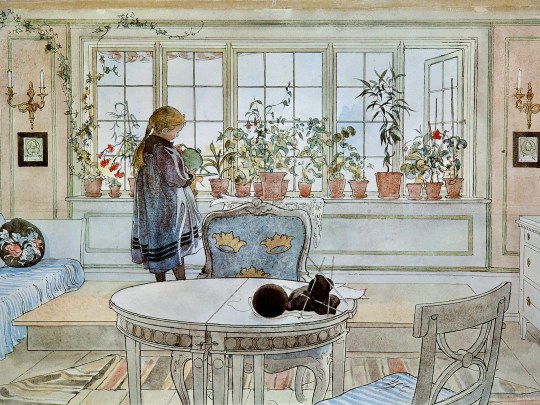
Adjoining the dining room was perhaps the most famous room in the house given that it was depicted in 24 of Carl’s paintings, including the iconic Flower Window from 1894. The living room was a warm, lived-in space with a tiled stove in the corner (above which, flowers climbing up to the ceiling had been painted) and windows overlooking the Sundborn river. The white wooden furniture and balustrades and pale blue and white textiles looked familiar, partly because IKEA’s design language is so saturated with echoes of it.
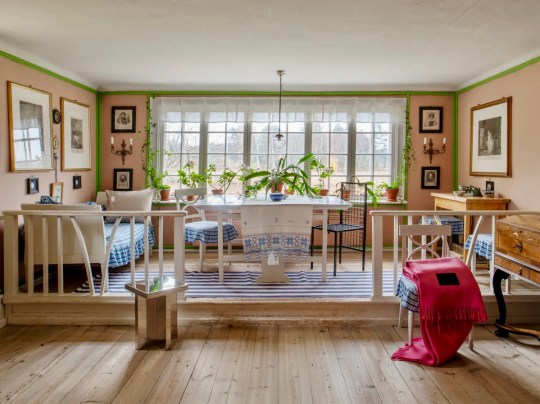

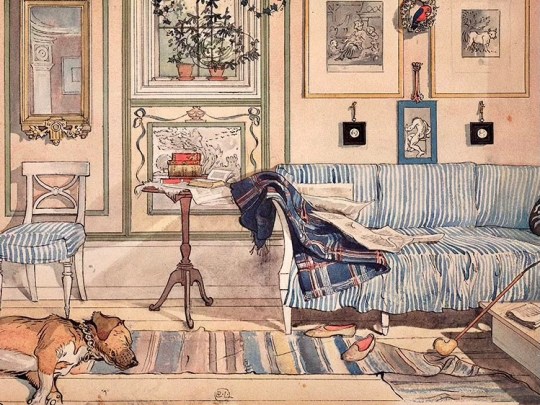
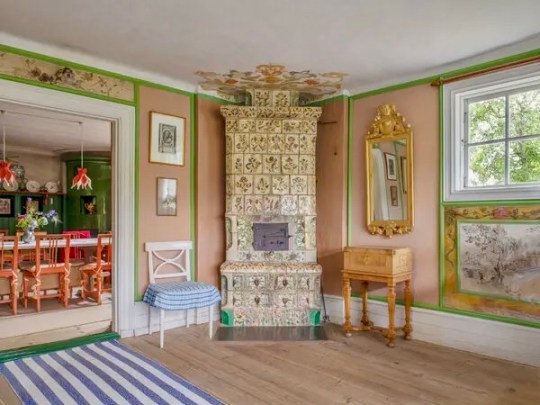
Upstairs were a number of guest rooms and bedrooms which seemed to run into and connect with one another in a warren-like manner.

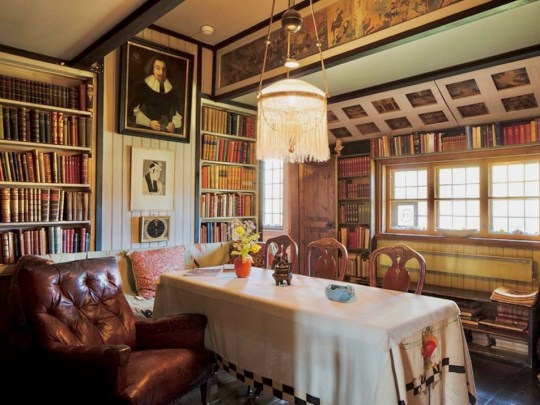
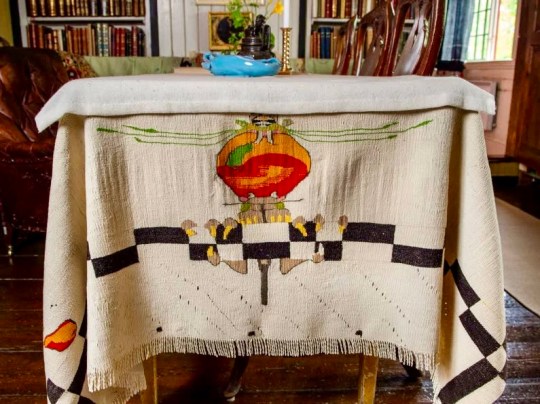
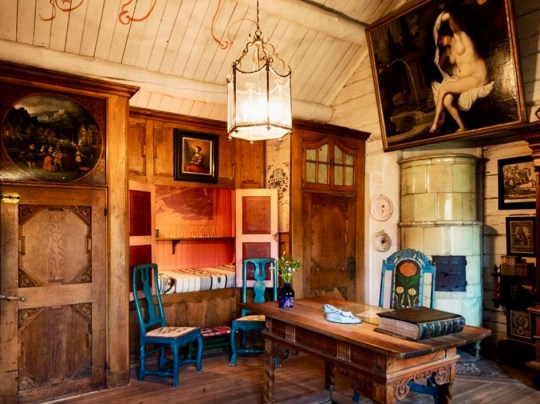
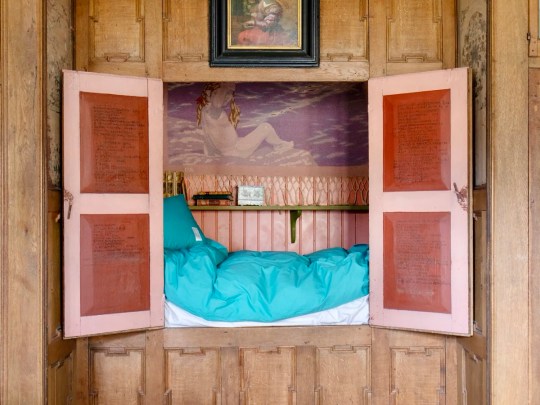
A wood paneled guest room, added in 1901, was furnished with a vast floor-to-ceiling carved cupboard from a German church. A traditional Swedish box-bed sat against the wall – short, enclosed, and designed for sleeping propped upright rather than lying flat. A commode hidden under a woven cushion in the corner reminded me that this was a 19th century house though the family have reportedly added a modern bathroom to the private quarters of the building.

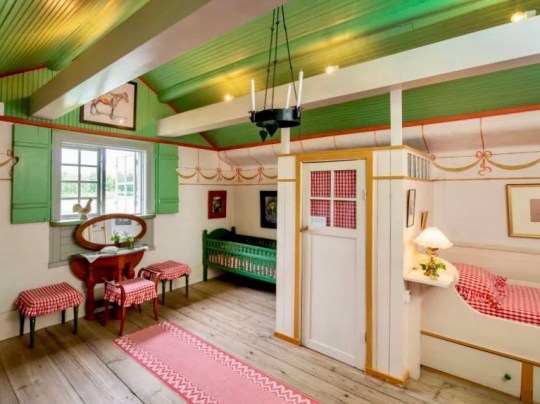
The family slept in two adjoining bedrooms. Karin and the younger children used a bright, white-walled nursery-like room with green painted ceilings which featured yet more familiar looking pieces (IKEA has replicated the sleigh-style bed and the iron chandelier from this room).
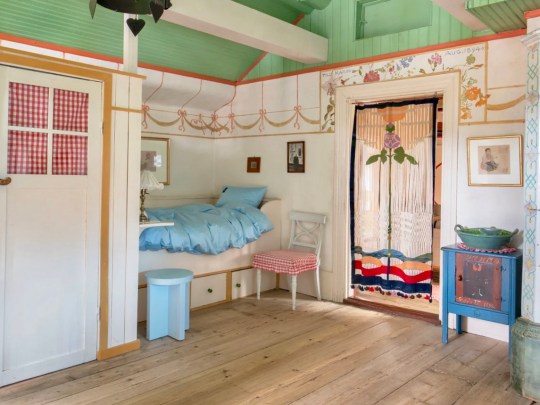
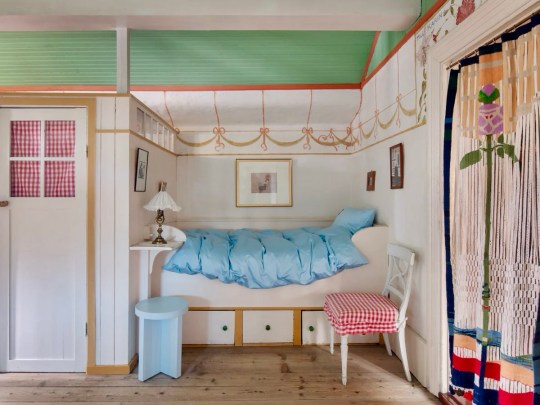
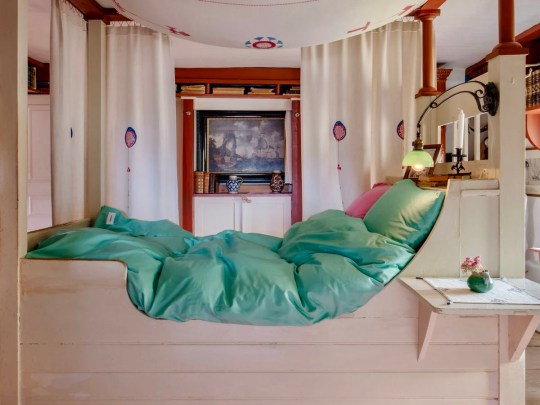
This room was separated by a curtain embroidered with a Rose of Love motif from Carl’s bedroom, which featured a single bed placed in the centre of the room, surrounded by textiles like a four-poster tent, with windows, cupboards, and doors lining the walls of the room. Unusually, there was a small interior window in that looked down to the studio-workshop so Carl could view his paintings from a distance.
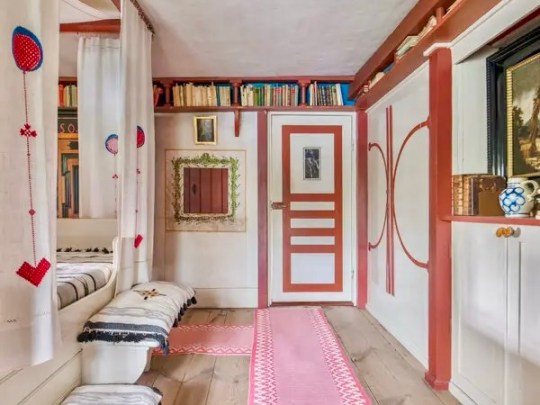
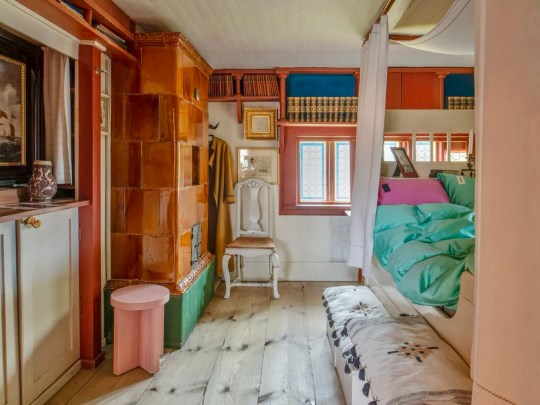
Back downstairs, a long corridor displaying works by artist friends, led to a large, dramatic studio space, built in 1889. Carl erected an internal wall to ensure the light entered only from the south, the way he preferred. A modern-looking rocking chair designed by Karin and since reproduced by IKEA (and I’m sure I’ve owned one from Habitat that looked like it) sat by the window. A tiny staircase (so narrow and steep that you’d never design one like it today) led from the studio up to additional bedrooms, another quirk that again reminded me that for all its modernity, Lilla Hyttnäs was still a 19th-century cottage at heart.
The last addition, completed in 1910, was a small cottage attached to the house used variously as a guest room and Carl’s writing room. The final sentence he ever wrote before he died of a stroke in 1919 was preserved on the desk.
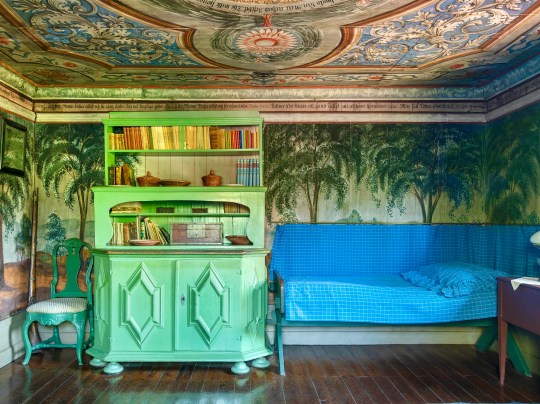
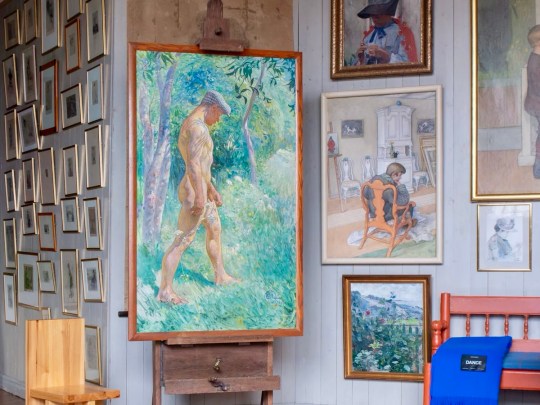
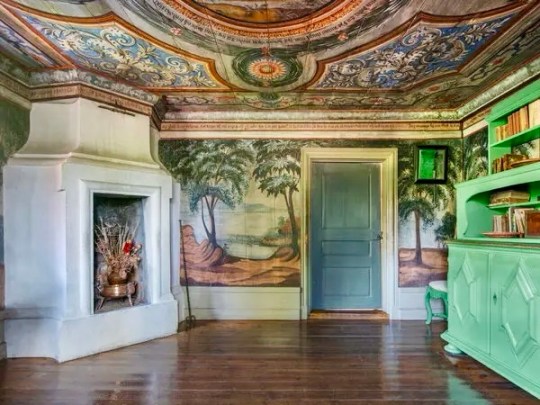
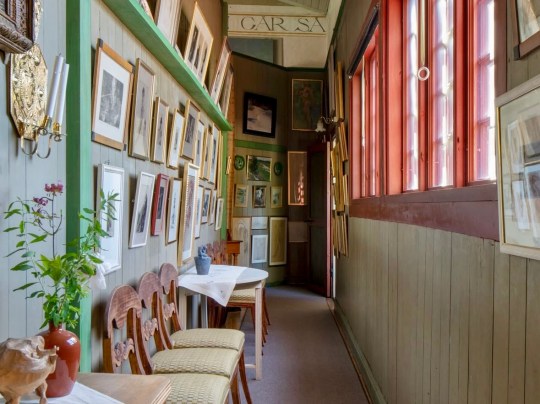
Karin lived until 1928, spending summers at Sundborn until she moved to be closer to her children. In the 1930s, the Larsson children decided to preserve the house as a museum, while still using it as a holiday home. It remains hugely popular in the summer months, a living monument to the style their parents helped to create.
Stockholm round-up
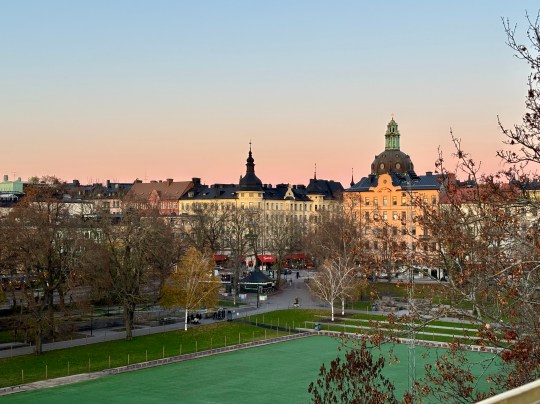
As well as visiting the Larsson house, I visited another few places of tangential interest to this blog (as I mentioned above, Stockholm is not really a mid century/modernist city).
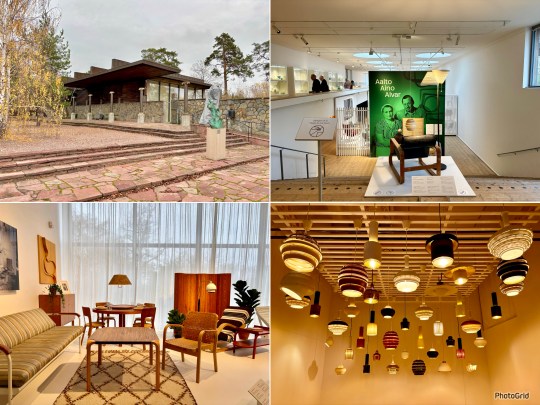
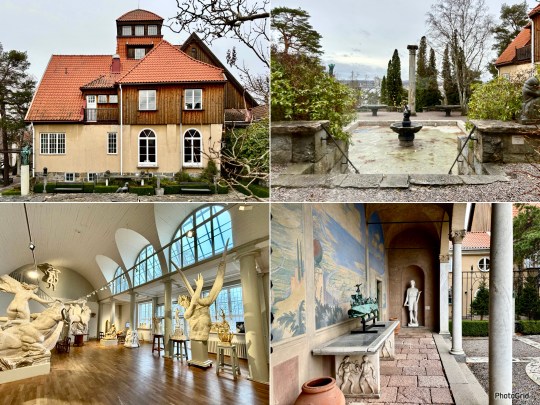
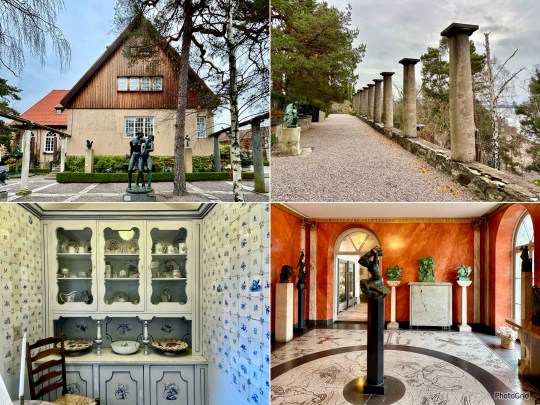
Millesgården, on the island of Lidingö, turned out to be far more expansive and stranger than I expected. The site was really three places in one: the modernist museum building, which during my visit hosted a beautifully curated Alvar and Aino Aalto exhibition; the original artist’s house, gingerbread-trimmed and storybook-like on the outside but surprisingly grand and palazzo-esque inside; and, tucked a little to the side, the 1950s cottage built for the artist’s secretary, perfectly preserved and quietly tasteful in that now-familiar Scandinavian style.
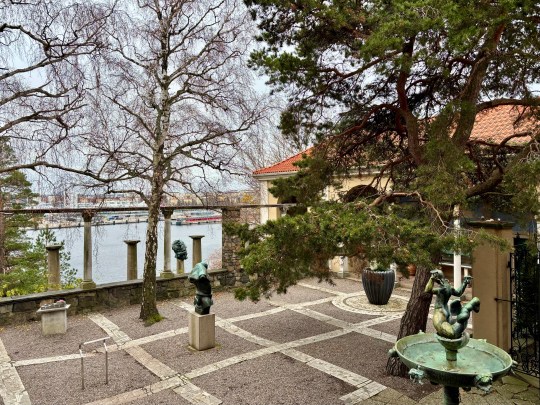
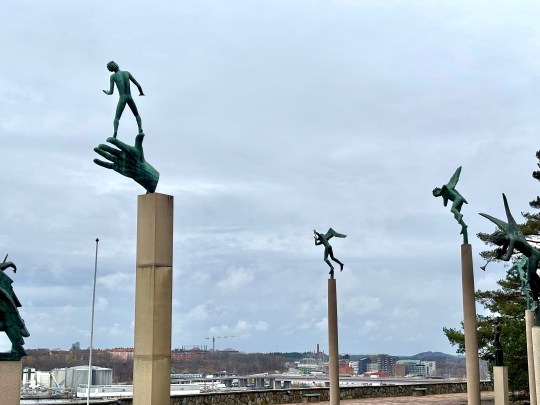
All of this was layered across terraced sculpture gardens overlooking the water, with Carl Milles’ dramatic bronzes scattered across the hillside, giving the whole place a slightly otherworldly but alluring atmosphere – somewhere between a Mediterranean villa, an artist’s fantasy garden, and a piece of mid-century time travel.
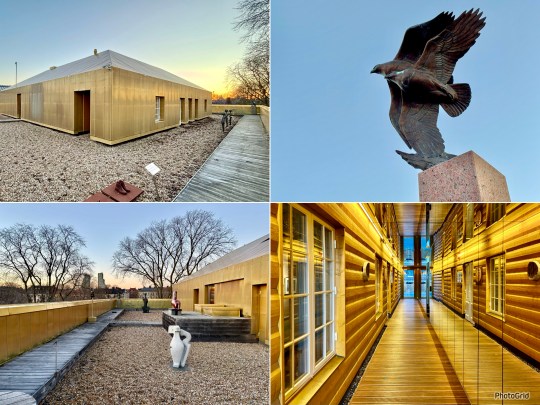
Even stranger, in a compelling, slightly uncanny way, was Sven-Harry’s Konstmuseum, a golden metal-clad building in Vasaparken that hid a full-scale replica of a floor of Sven-Harry’s own 1920s house on the roof. Walking through this simulated house complete with what looked like a working kitchen and a fake crackling fireplace, suspended above the city, felt more like stepping onto a film set or a dream reconstruction than visiting a museum. Everything was immaculate (and the domestic setting provided an unusual and unique way to display Sven-Harry’s impressive art collection) but off-kilter.

And finally, for shopping, I went across town to Ryttargatan Vintage, a sort of indoor flea market open only on weekends from 11 to 3. Compared to almost everything else in Stockholm, the prices felt improbably low. The place sold a large range of Swedish glassware, pottery, textiles, paintings, homewares and clothing.
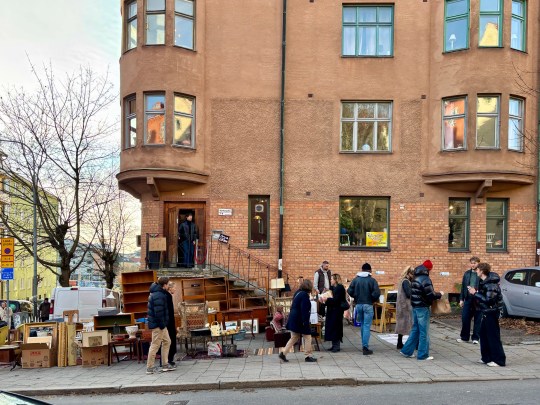
Photo sources for images of interior of Carl Larsson house:
https://www.nytimes.com/2025/03/20/t-magazine/carl-karin-larsson-sweden-home.html
Western Garden Cities, Amsterdam
Having visited the Rietveld Schröder and Van Ravestyn houses in Utrecht, we moved on to Amsterdam.

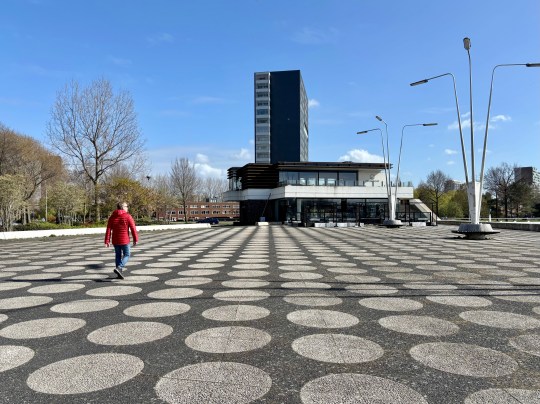
A short tram ride west from the centre of the city was Westelijke Tuinsteden (the Western Garden Cities), an ambitious post-war housing development that was as much an open-air museum as it was a living neighbourhood – I’d never seen anything quite like it.
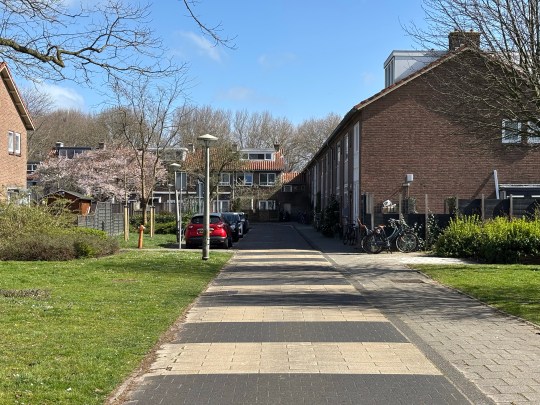
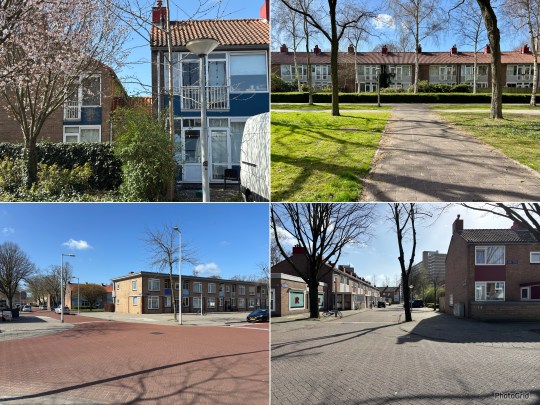
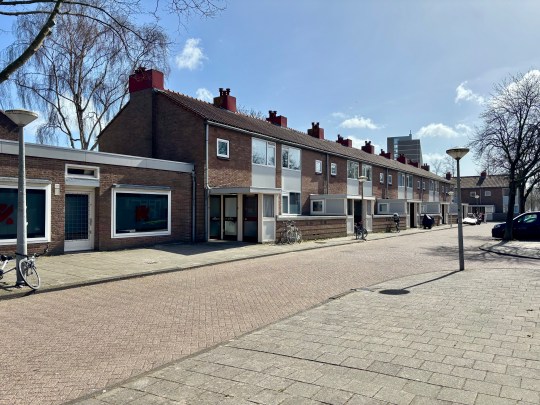
Planned in 1935 by urbanist Cornelis van Eesteren under the General Extension Plan, the Garden Cities were built to answer Amsterdam’s chronic housing shortage and shaped around the principles of light, air and space, conveying the optimism of a post-war generation that believed good housing could transform not only a city, but the people who lived within it.
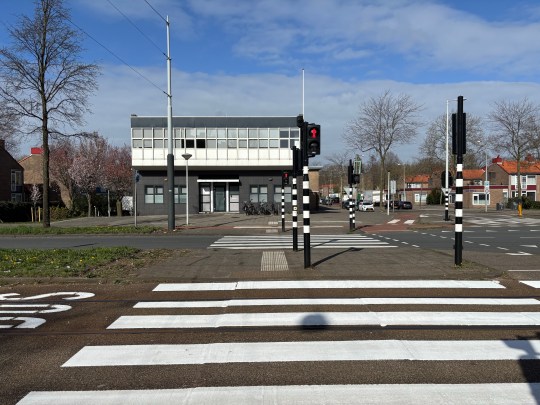
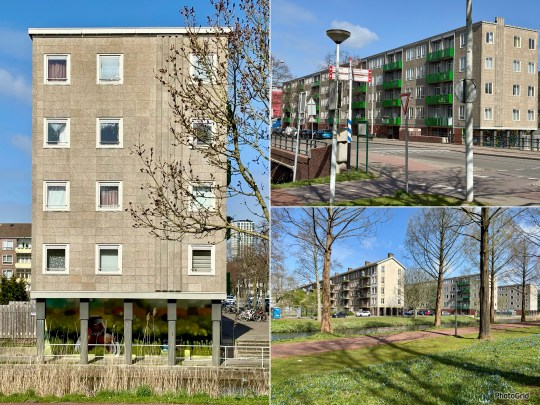

Laid out on a generous scale with broad avenues, landscaped courtyards and housing blocks carefully positioned to catch the sun, the district became home to around 100,000 residents in the 1950s and 60s. A river ran through the suburb, threading water and greenery through the urban space.

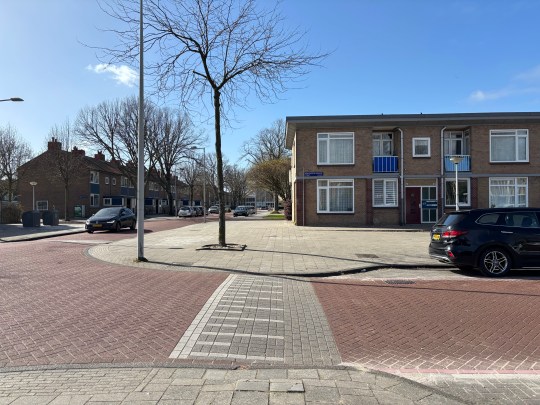

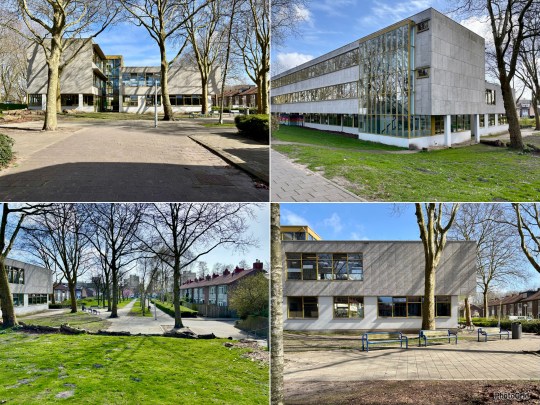
The architecture was varied and experimental while still maintaining a cohesive style overall. Slab blocks and duplex houses stood beside bold public buildings including a 1950s H-shaped school and a striking brutalist yellow-trimmed building.


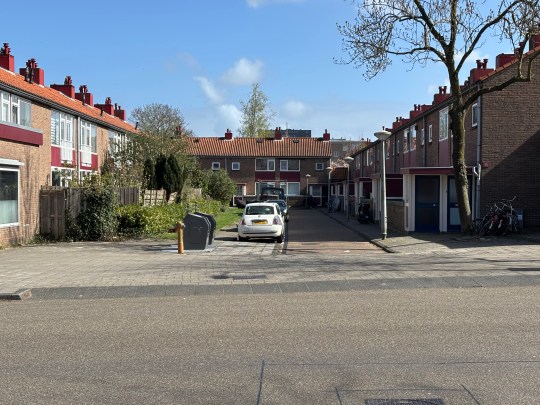
A tour conducted entirely in Dutch (I had no idea what was going on at the time) took us around the neighbourhood, which looked well cared for with well maintained gardens and all facades intact.


A restored flat maintained by the Van Eesteren Museum apartment on Freek Oxstraat showed how the principles of the Garden Cities extended to interior domestic spaces.

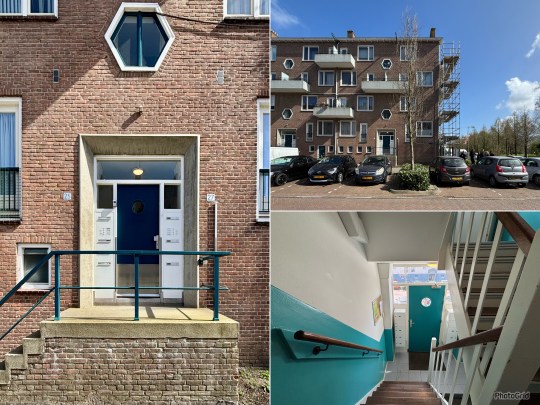

The apartment, a modest 40-square-metre duplex, was arranged on two levels, with the entrance on the upper floor.
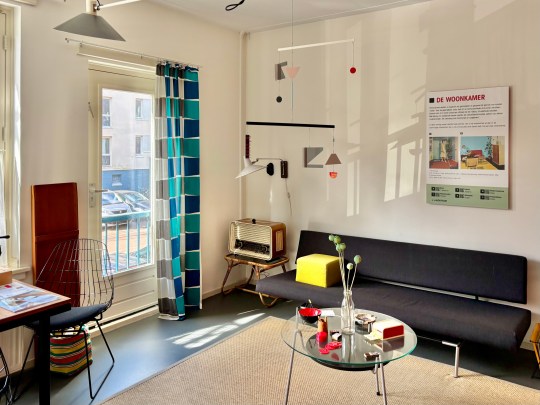


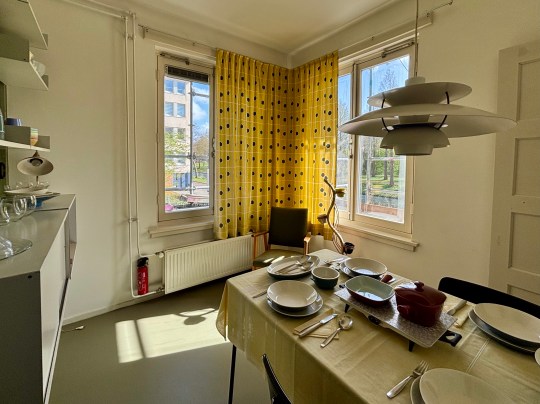
This opened onto a living room with wide window, a compact but modern kitchen (for the time) and a separate dining room – a distinction unusual in Dutch working-class housing at the time, where families had often eaten and lived in the same cramped space.


A staircase led down to the apartment’s more private quarters: a handful of bedrooms and a bathroom, modest in size but laid out with efficiency.


The design and decor of the apartment reflected the principles of Stichting Goed Wonen (the Association for Good Living), a foundation created after the Second World War by designers, architects and shopkeepers determined to teach people how to live well in their new homes.
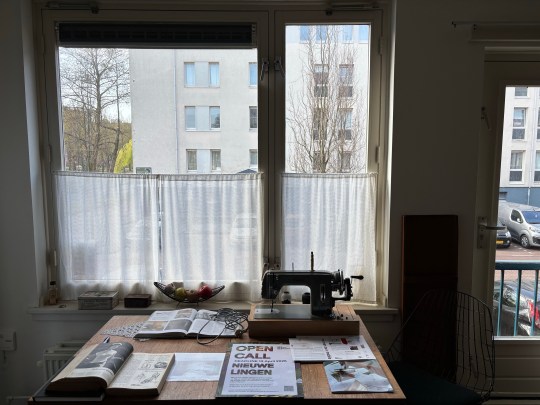
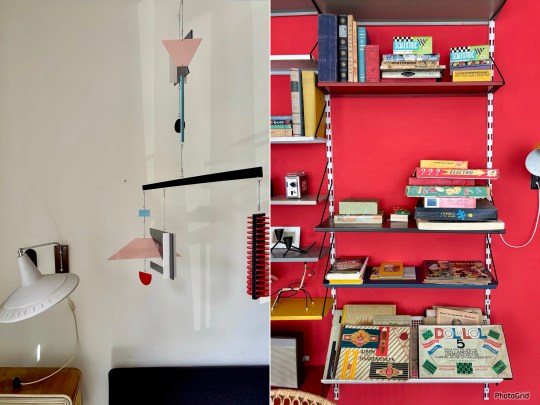
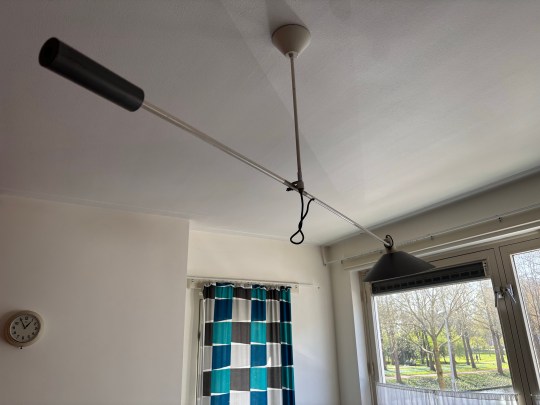
Replacing the dark, heavy interiors of pre-war slum housing consisting of rooms crammed with carved wardrobes, velvet curtains and knick-knacks, the Stichting Goed Wonen aesthetic involved easy to clean bare lino floors, simple furniture (many designed by Premsela) lightweight enough to fold and move, built-in cupboards to keep clutter hidden and large windows to let daylight in.

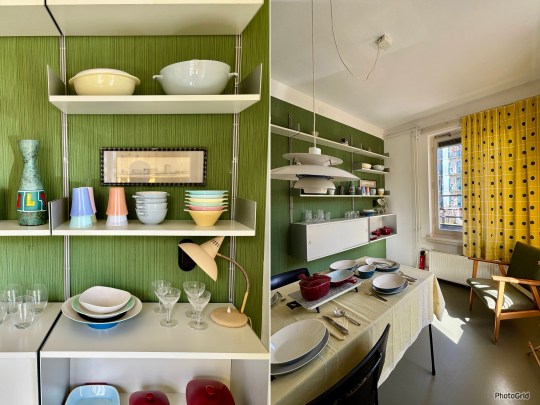
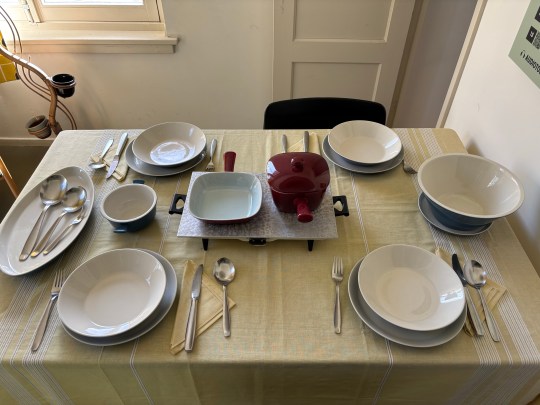
Every element was chosen to be functional, hygienic and modern and it was believed that this would nurture healthier, more forward-looking citizens. By the 1960s, these ideals had become fashionable, influencing not only housing but wider lifestyle and culture. The Goed Wonen philosophy even helped inspire the DNA of IKEA, with its emphasis on affordable, adaptable furnishings for the “common man.”


Sybold van Ravesteyn House, Utrecht
Tucked into a small triangular plot a few minutes down the down from the Rietveld Schröder House was the intriguing Sybold van Ravesteyn house. Built out of sand-coloured railway bricks between 1932 and 1934 by Sybold van Ravestyn (an eccentric architect best known for designing train stations for the Dutch Railways), the house challenged architectural conventions of the time.
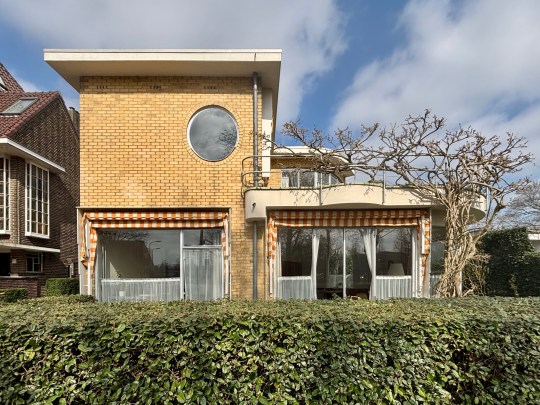
The plot – little more than a wedge-shaped leftover at the bend of a street – was just about big enough to fit the house, which consisted of a rectangular two-storey building with a semicircular volume and roof terrace on the first floor. A narrow garage – almost comically tight – was appended to the left side of the property, designed to form part of the overall silhouette of the house.

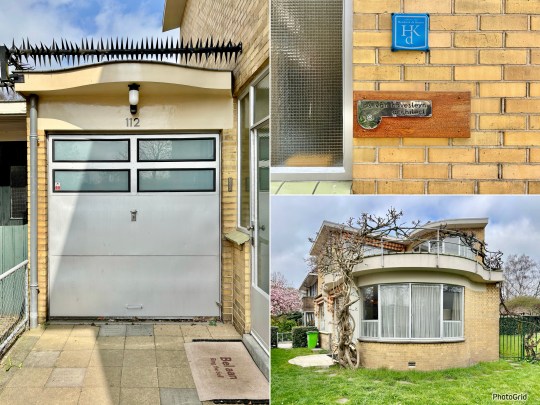
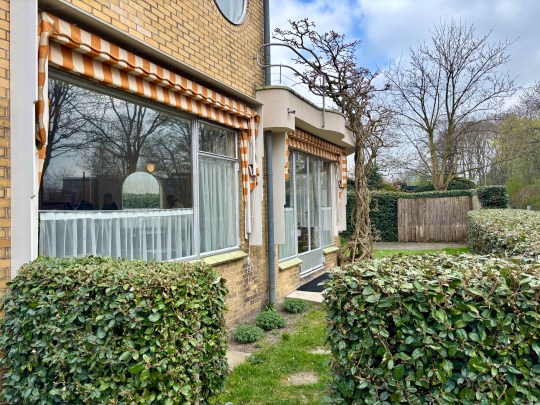
Inside, Van Ravesteyn maximised use of the small footprint by using narrow, steep stairs and installing curved walls to soften corners and guide movement around the house.


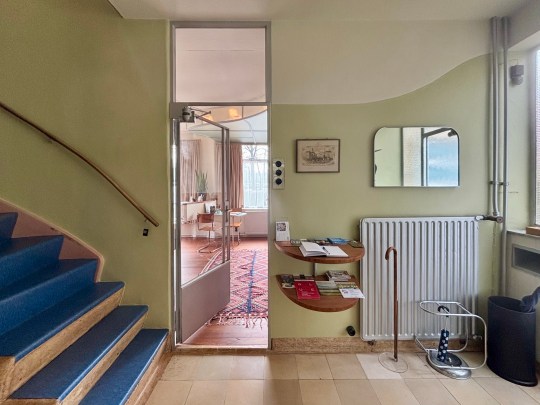
The central part of the house was a large open plan living space with no dividing walls between the study, sitting room and dining room – an unusual concept at the time and one of the first examples of modern open plan living in the Netherlands.
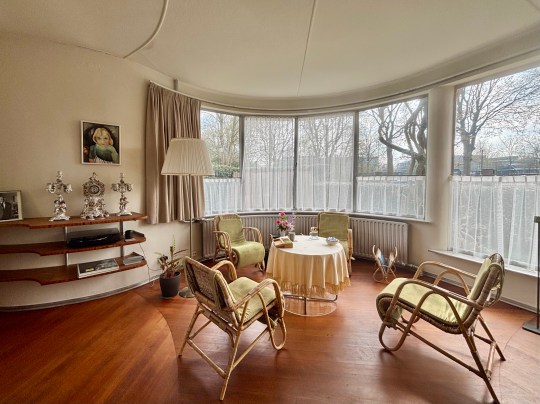


This large open-plan space featured curved lines in the floor, a suspended ceiling of frosted glass in a steel frame and built-in furniture, which served to subtly zone the space into sitting, dining and working areas.
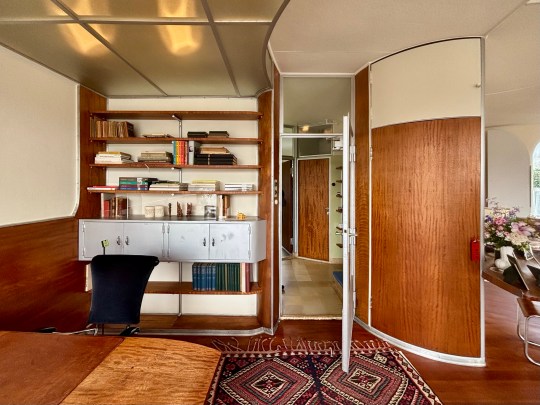
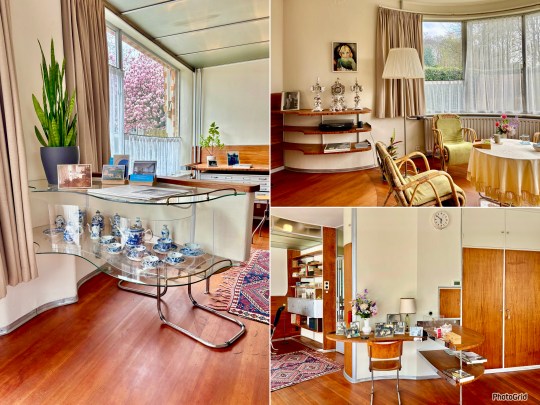

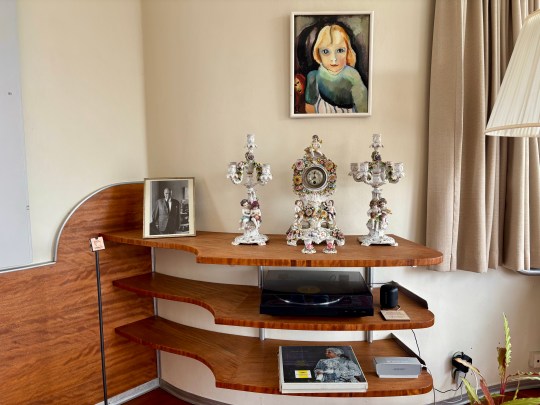
Though the house was practical in many ways (unusually for domestic buildings at the time, it had both central heating and plumbing throughout the house and a kitchen equipped with modern domestic appliances), Van Ravestyn resisted the cold minimalism often associated with early modernism, filling it with porcelain figurines, neo-Baroque decorative lines carved into the ceilings and built-in shelves that drew the eye across the room, their lines continuing into baseboards and shutter grooves.
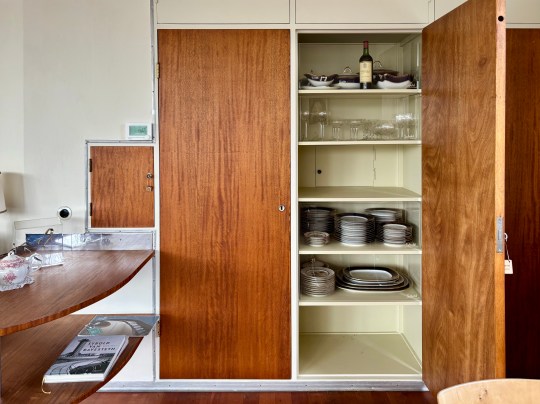
Upstairs were three bedrooms and a bathroom. Van Ravestyn decided against installing traditional box beds in the bedrooms (still common in Dutch homes of the era) in favour of more modern free-standing beds flanked by built-in closets. The master bedroom featured a circular window with a bespoke shutter and an enormous terrace – larger than the bedroom itself.


Each of the son’s bedroom and the guest room (where the family’s nanny stayed during her pregnancy, having been impregnated by Van Ravestyn himself – though this could have been a mistranslation!) each had their own basins and nightlights.


Van Ravesteyn lived in the house until his nineties after which it was acquired and renovated by the Hendrick de Keyser Association. It has since served as a house museum and can be booked for overnight stays – something which gave the house a distinctly “lived in” feel.

Rietveld Schröder House, Utrecht
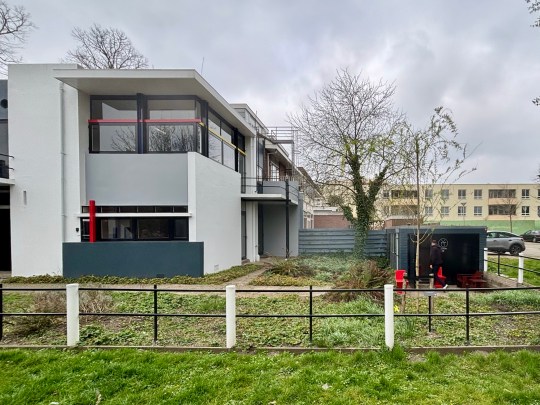
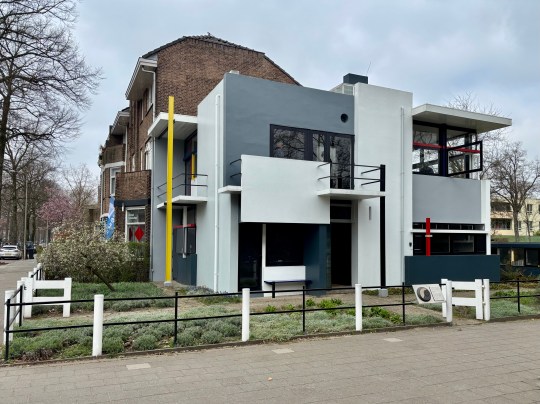
Visiting the Rietveld Schröder House in Utrecht was like stepping into a physical representation of a Mondrian painting.

Built in 1924 by the innovative architect Gerrit Rietveld (also famous for his Mondrian coded Red and Blue chair), the house was designed to be as much an artistic statement as a house in response to a brief from Truus Schröder-Schräder, a wealthy widowed mother of three with a penchant for avantgarde design.
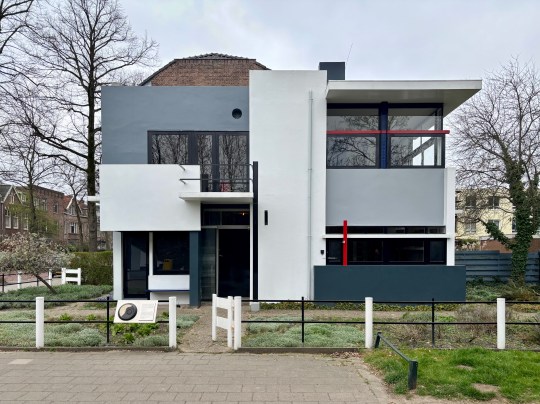
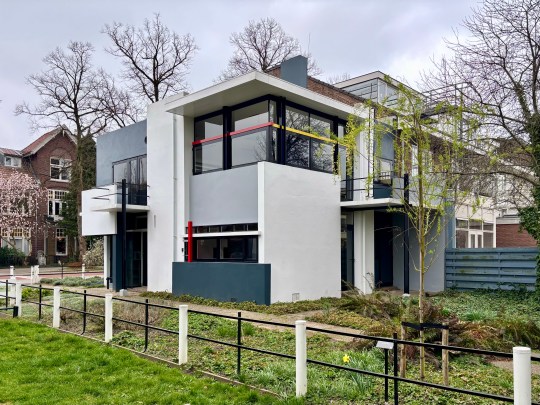
Rietveld, influenced by the De Stijl movement, aimed to create a space defined by flexibility, openness, and clarity. Though it was constructed during the same period as the traditional brick townhouses that surrounded it, it broke entirely from convention and is perhaps best known for its distinctive layout consisting of an adjustable open plan space that could be divided into separate rooms via a system of sliding panels.
Exterior
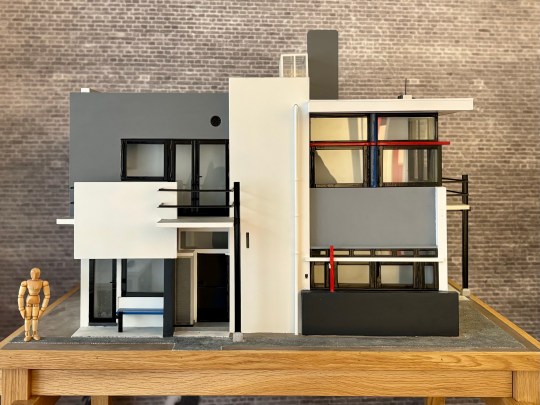
Despite being brick-built, the house looked as if it was made from concrete with its clean, white plaster surfaces and intersecting planes giving it a strikingly modern appearance even today. The building stood in sharp contrast to the neighbouring houses (and the terrace that it bookended) due to its abstract, cubic form and bold accents in red, black, and yellow.
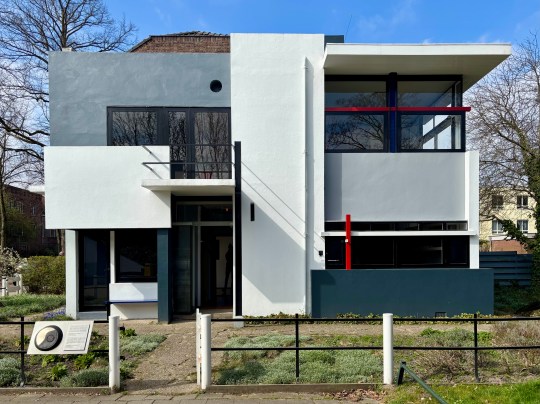
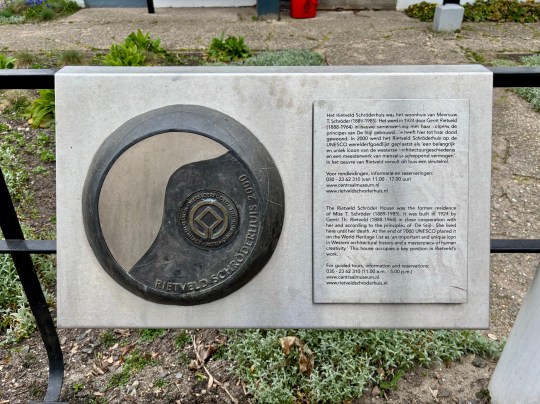
A thin red line across the façade of the house highlighted where to deliver parcels, blending functional design with visual clarity, a typical Rietveld detail. Also noticeable were structural beams and posts that ran from outside the house to inside, seamlessly connecting the interior to the exterior and a speaking tube that allowed Truus Schröder-Schräder to communicate with visitors at the front door from the first floor without having to go downstairs.


Ground Floor
The ground floor followed a traditional layout, divided into rooms for practical functions like cooking, working, and storage. The hallway was compact with a short flight of white steps leading upward beside a built-in bench. A wall unit accommodated storage for four occupants, and the coat rack was designed with both high and low sections, catering to both adults and children.


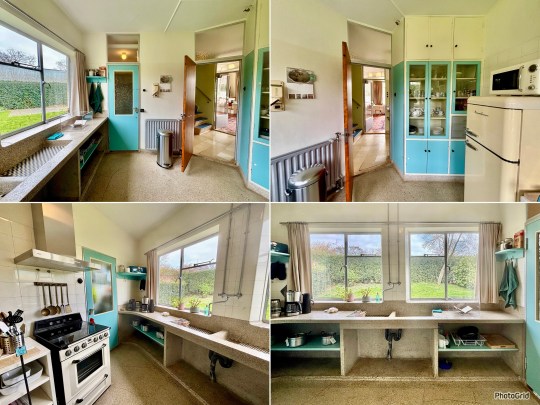
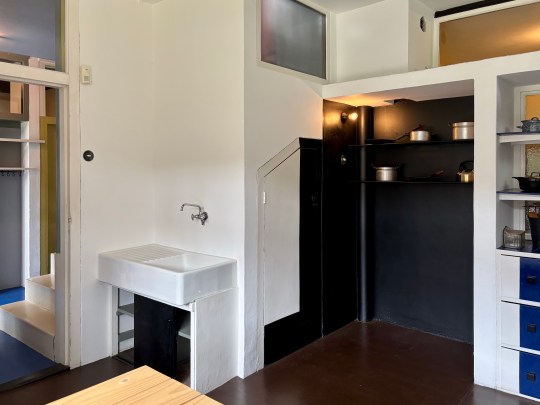
The kitchen was equipped with features far ahead of its time: one of the first dishwashers, wall cabinets with sliding glass doors, a drop-down shelf by the window for deliveries and detachable shutters on the windows. The thick exposed pipes on the wall gave the room a modern, slightly industrial feel.


The kitchen flowed through into the maid’s room, painted a cheerful sunny yellow to counteract the distinct lack of light. Unusually for the time, this room was wired for electricity and had its own sink and direct access to the garden, reflecting the importance placed by Rietveld and Truus Schröder-Schräder on maintaining independence and dignity for domestic workers. Later, this small space was rented to students.
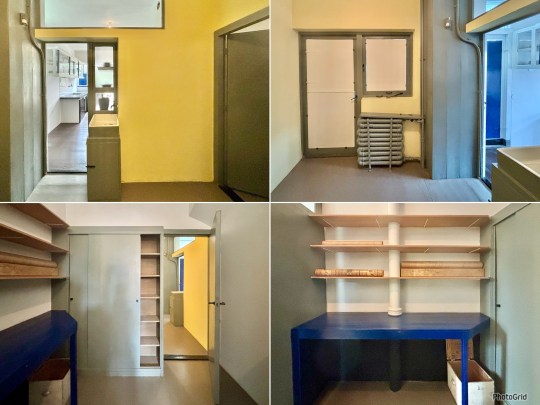
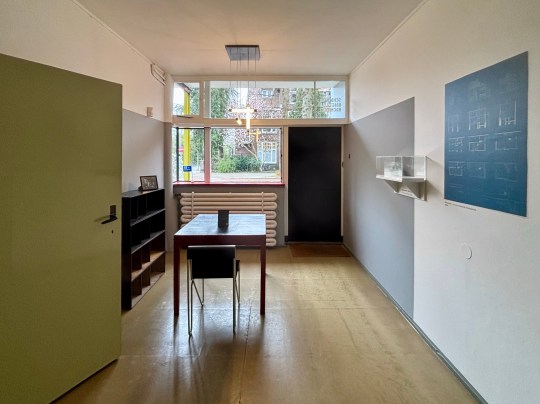
Also on the ground floor was a workspace and a front room featuring a distinctive ceiling lamp, the design of which drew the eye upward, helping visitors perceive the three-dimensional volume of the room.

First Floor
The first floor contained the most distinctive features of the house. Designed as a space for living during the day and sleeping at night, it was officially listed as an attic to sidestep local building regulations.
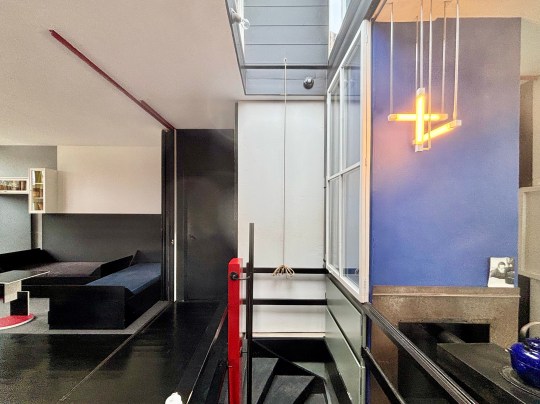

This was necessary because the whole of the upper floor was an open plan space with no fixed walls that could be divided into separate rooms using sliding and revolving panels, or left open as a single large area. A central living room, originally boasting panoramic views (now somewhat obscured), featured built-in storage (including a striking yellow cupboard in the corner resembling a modernist sculpture), a skylight and the same three dimensional ceiling lamp as the one on the ground floor.


The daughter’s bedroom was designed to be multi-functional: a sitting room by day, and a bedroom for two by night. The son’s room was more experimental with a floor made from a patchwork of different colours and materials and detachable wall panels in lieu of curtains for privacy. An early version of a spotlight illuminated the room, showing Rietveld’s interest in modern lighting techniques.

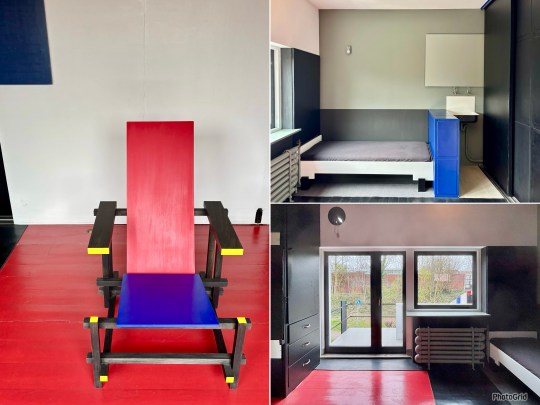
The main bedroom, used by Schröder herself, was surprisingly the smallest in the house. Rietveld, however, used the space very efficiently, incorporating a built-in washbasin, a fold-out cupboard and a narrow red shelf just wide enough to hold a watch or small personal items.


The bathroom was tucked between the mother’s and daughters’ rooms and featured a granite hip bath and a sliding vent hatch for fresh air—compact, yet luxurious for the time. The separate toilet was tucked away behind a black painted door.


Though the family was wealthy, the house was decidedly modest in size, built on a tight urban plot. The constraints caused by the small plot were part of the creative challenge for Rietveld, who embraced the opportunity to build something innovative without the luxury of unlimited space and scale.
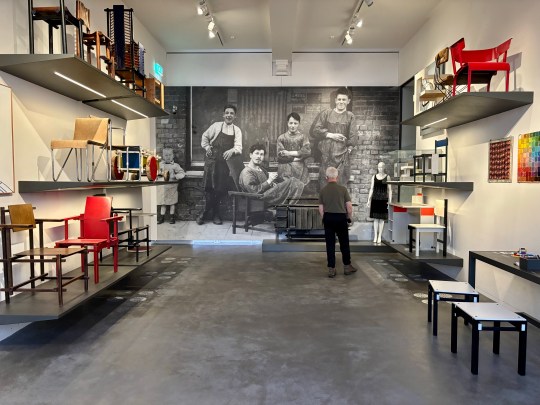
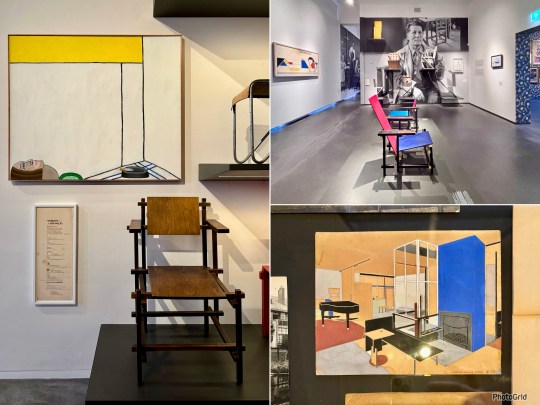
Truus Schröder-Schräder lived in the house until her death in 1985. The house was then restored by Bertus Mulder and now is a museum open for visits, run by the Centraal Museum. It has been a listed monument since 1976 and UNESCO World Heritage Site since 2000. An exhibition on the house and Rietveld’s other designs form part of the permanent collection at the Centraal Musuem in central Utrecht.
Basilica of the Madonna delle Lacrime, Syracuse
Although no one associates Sicily with modernist architecture, I visited the striking concrete Basilica of the Madonna delle Lacrime (Sanctuary of the Virgin of Tears) during a recent trip to Syracuse.
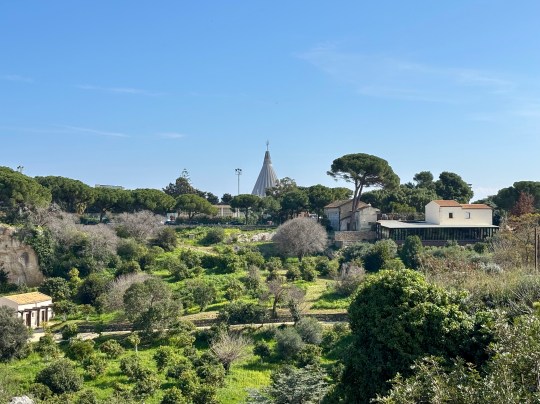
Designed by French architects Michel Andrault and Pierre Parat, the basilica was the winning entry in an international competition involving architects from 17 different countries. Construction began in 1966 but wasn’t completed until 1994 due to the building’s complex engineering, archaeological discoveries, funding issues, and controversy surrounding its bold modernist design.

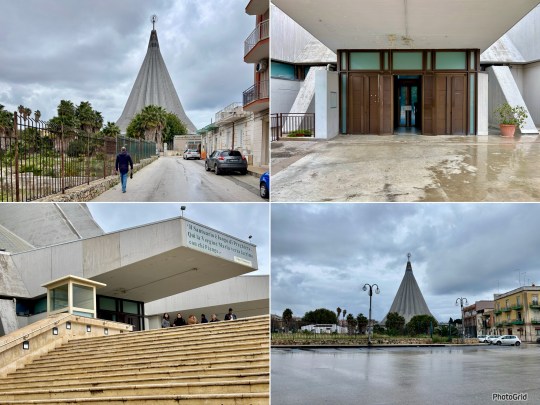

Though originally intended to be even taller, the structure still reached 103 metres, its reinforced concrete cone tapering sharply upward and crowned with a bronze statue of the Virgin by Francesco Caldarella. The result is compared to a teardrop falling from heaven or, less flatteringly, to an upside-down ice cream cone. Approaching the basilica, the first impression was one of scale. The exterior was monumental and unmistakably modern, its geometric form visible from almost anywhere in the city.
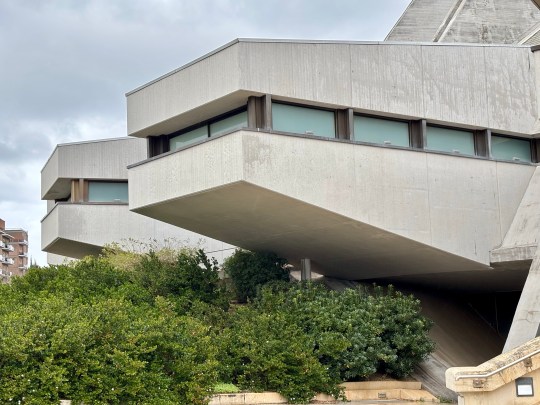


Inside, the space was vast yet calm. The interior was circular in plan, 71 metres in diameter and designed to hold up to 11,000 standing or 6,000 seated visitors. Sixteen chapels were positioned around the perimeter, while the central altar – crafted from white marble and local Modica stone by Giancarlo Marchese – held the image of the Madonna delle Lacrime alongside an 18th-century cross. The interior’s height and symmetry were softened by diffused natural light entering from above.
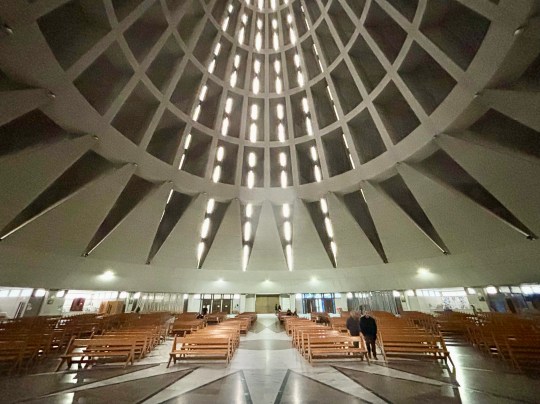

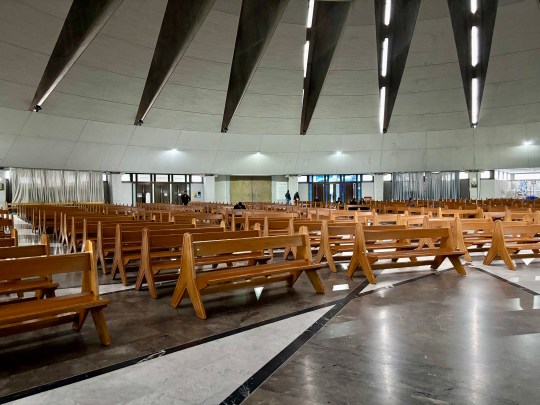
The basilica’s striking ceiling featured a dramatic radial pattern of concrete ribs that rose and tapered toward the centre, drawing the eye upwards.
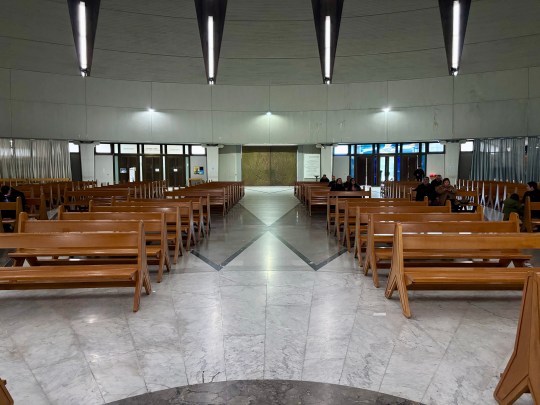
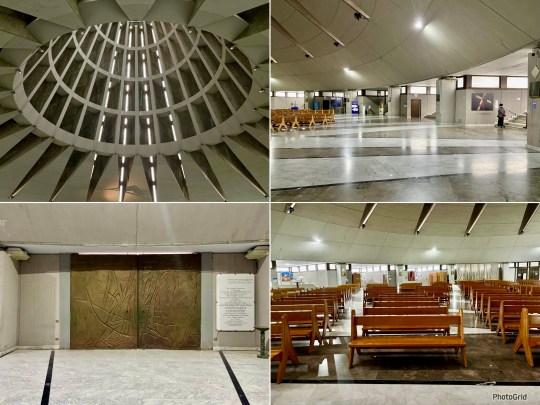

The design of the basilica was, and remains, controversial. Some see it as an eyesore, others as a daring and spiritually resonant work of modern architecture.

Modernist pilgrimage to Lisbon
Lisbon was not exactly brimming with modernist architecture but I did manage to seek out a church, a gallery and a public building that were of interest to me aesthetically.
Sagrado Coração Church
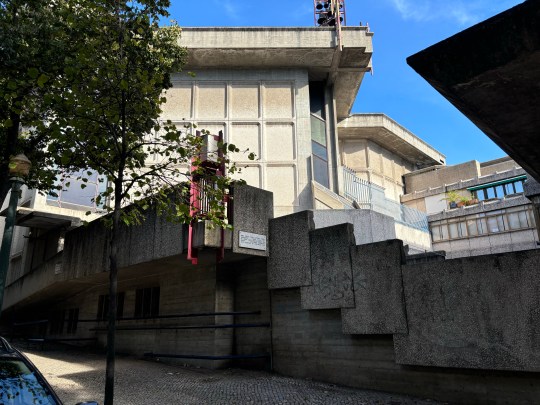
Fairly inconspicuous from the street, Sagrado Coração Church was tucked between residential buildings and offices with its entrance elevated above street level.
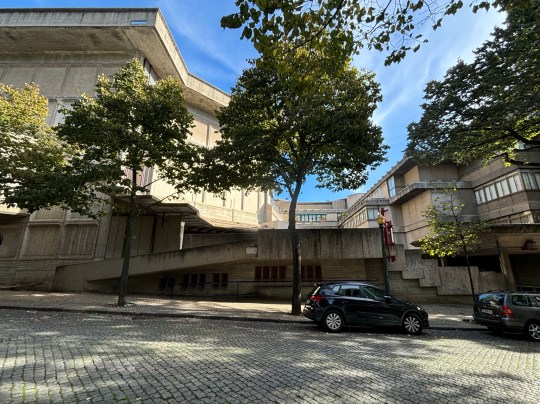
The church and its accompanying annexes were designed and built by Nuno Teotónio Pereira and Nuno Portas between 1962 and 1970 on a small plot of land in central Lisbon.


To optimise the small amount of space, the church and its annexes were distributed across a number of different levels united by a large uncovered public area connecting every entrance to the plot via different platforms.
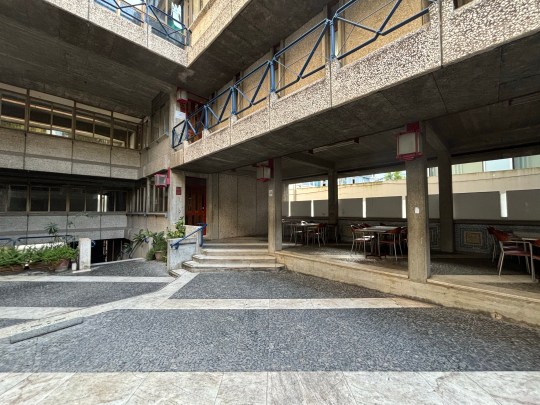
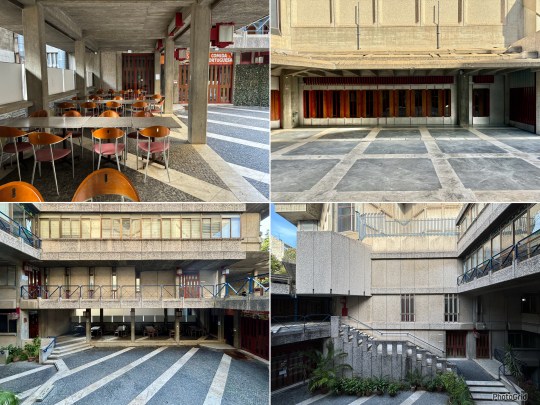
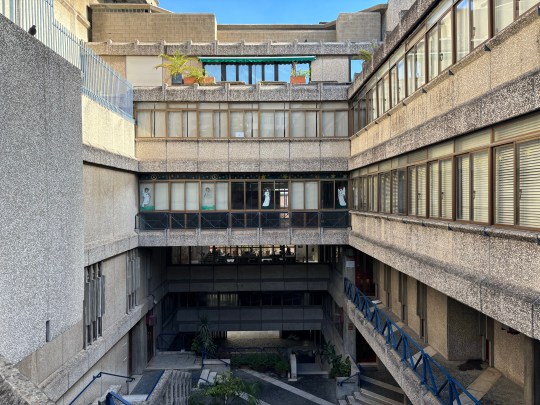
The interior of the church was similarly multi-levelled with the different sections spread across multiple levels linked by staircases and platforms. The layout encouraged movement compared to a standard single-storey church, almost as if it was designed for people to be part of the space rather than just sitting in it.


The design was dominated by concrete and glass with striking lines running across the ceiling in a geometric pattern. The interior space was designed in such a way to allow light to filter in at the right angles to cast soft shadows and play off the textures of the concrete, which contributed to a decidedly peaceful, reflective atmosphere.

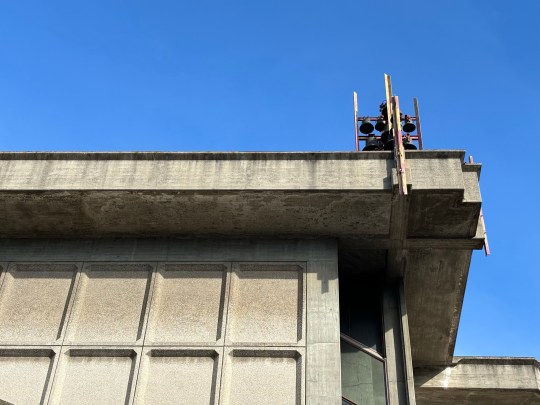
Artificial lighting by way of distinctive lantern-shaped lamps had been placed thoughtfully throughout the space to complement the natural light.

Gulbenkian Museum
The Gulbenkian Museum was part of a modernist complex in Lisbon, designed by Portuguese architects Ruy d’Athouguia, Alberto Pessoa, and Pedro Cid. Built in the late 1960s and opened in 1969, the museum was created specifically to display its collection, unlike many older museums that occupied repurposed buildings.
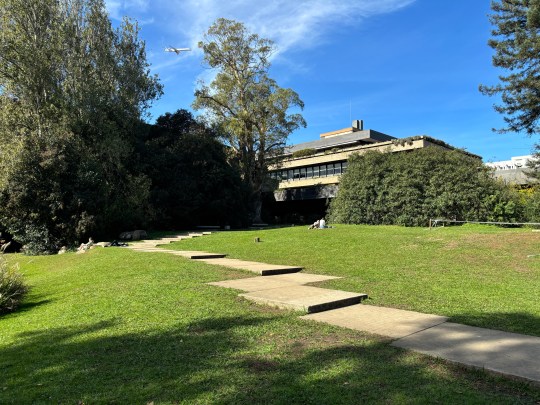
The design of the buildings reflected modernist principles, with low, horizontal structures made of concrete, stone and bronze-tinted glass. In 1975, the complex won the Valmor Prize for architecture, and in 2010, it was recognized as a National Monument—the first contemporary building in Portugal to receive this status.
The Main Museum Building
The main building museum was low and spread out, its concrete surfaces softened by the surrounding trees and water features.

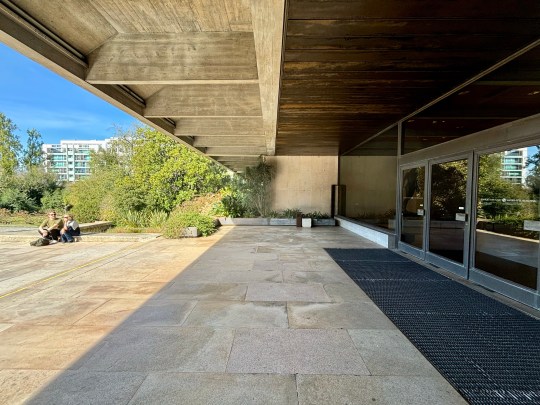

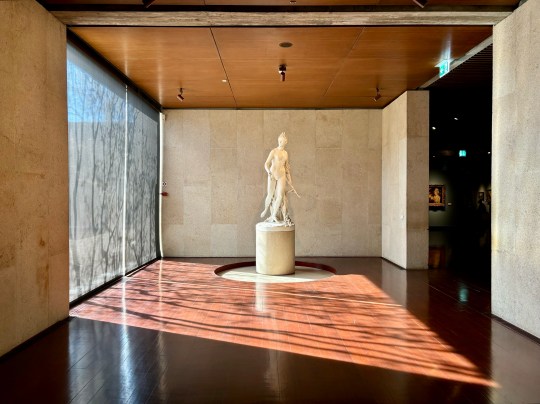
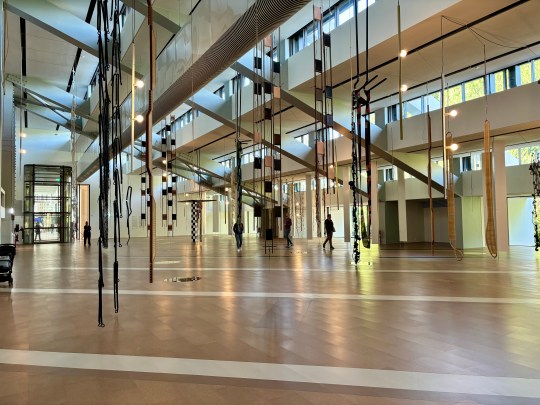
Inside, the use of wood, stone, and carpeting contrasted with the concrete exterior and large windows throughout the space framed views of the surrounding gardens and let natural light into the galleries.


The museum’s design used nature as the backdrop to both the artwork (mostly traditional in style) and architecture.
The Foundation’s Headquarters
Adjacent to the museum were the headquarters of the Calouste Gulbenkian Foundation.
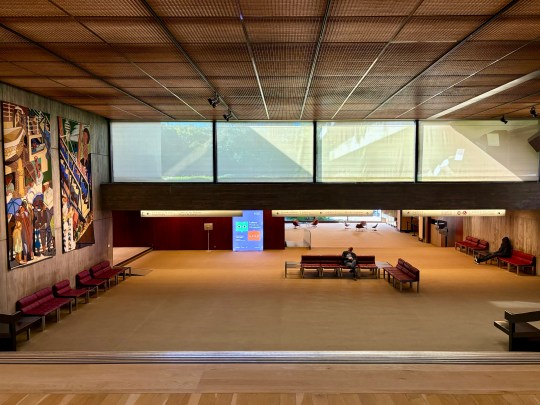
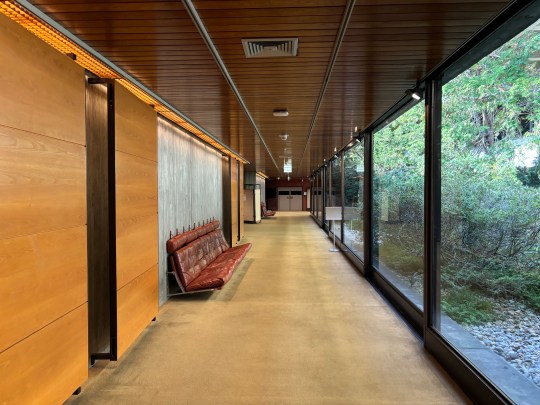

This building shared the same modernist design as the main museum with a modular structure that emphasised clean lines and simple materials.

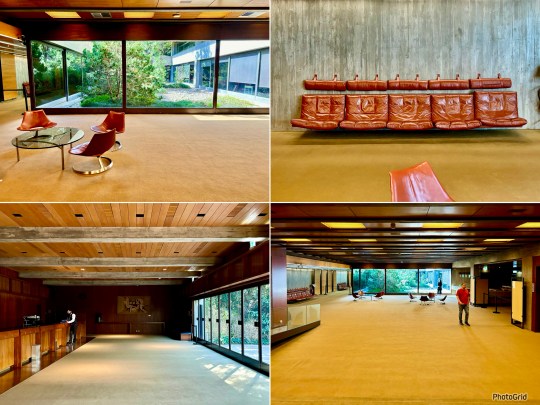

The layout consisted of large open plan areas connecting the concert halls, public spaces and administrative offices that made up the building. These vast carpeted areas were punctuated with attractive mid-century furniture, some of it built into the space.

The Gulbenkian Garden
The buildings were surrounded by the Gulbenkian Garden, a 7.5-hectare green space designed by landscape architects António Viana Barreto and Gonçalo Ribeiro Telles.


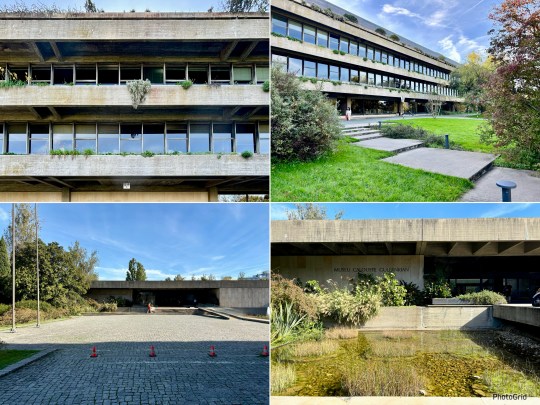
The garden was created in the late 1960s as part of the modernist movement in Portugal, using natural vegetation in a way that broke from traditional landscaping styles. It was designed to feel like a natural extension of the museum, with winding paths, open spaces, and water features that reflected the minimalist style of the buildings.

The CAM Building and Kengo Kuma’s Redesign
At the far end of the Gulbenkian garden was the CAM (Centro de Arte Moderna) building, originally designed by British architect Sir Leslie Martin and opened in 1983.
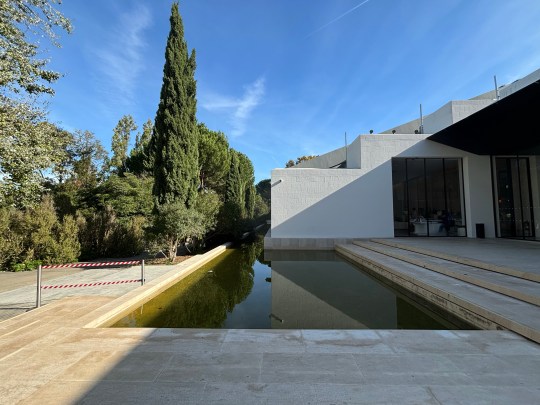


This building recently underwent an extensive redesign by Japanese architect Kengo Kuma, known for his work that merges architecture with nature. His new design featured a 100-metre-long canopy made of Portuguese ceramic tiles, inspired by the Japanese Engawa—a covered walkway that creates a transition between indoor and outdoor spaces. This space housed a collection of modern and contemporary Portuguese art.
Palace of Justice in Lisbon
The Palace of Justice was a striking brutalist building, designed by architects Januário Godinho and João Henrique de Breloes Andresen.

Standing at the head of Parque Eduardo VII, a large green space in the center of Lisbon,it was built between 1962 and 1970 and serves as the city’s main court.

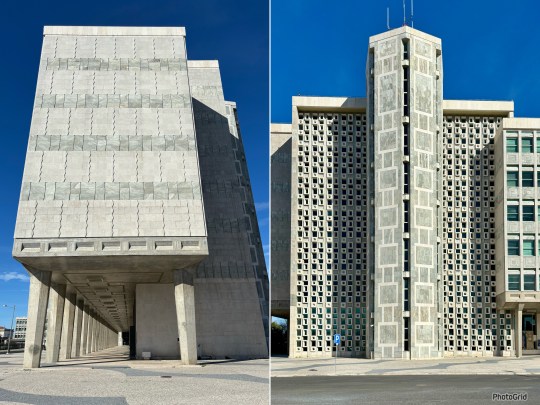

The building was long and rectangular, with large concrete columns supporting its cantilevered facade on all sides. This design made it look as if it was slightly lifted off the ground, giving it an unexpected sense of lightness despite its monolithic size. The materials and structure were typical of brutalism – strong, geometric, and functional – but with a unique Portuguese touch. Instead of the raw, heavy concrete often seen in brutalist buildings, the facade here was decorated with geometric patterns and rhythmic textures. This detail softened the building’s appearance, reflecting Portugal’s penchant for a patterned tile. The interplay of light and shadow on the textured concrete created a dynamic effect which must change throughout the day.
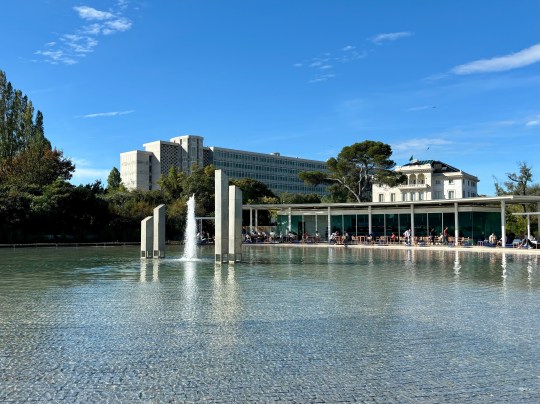


I wasn’t able to blag my way into the building, unfortunately, but was glad to visit its imposing facade in person.
Ten years of Modernist Pilgrimage
Although my posting frequency has dipped in recent times, I have somehow managed to keep this blog going for ten years.
Thank you to anyone who has subscribed to the blog or read any of my content about the properties I’ve lived in/renovated, things I’ve bought and places I’ve visited over this period.
There are still a lot of places in the UK and abroad that I plan to visit, photograph and write about so the blog will probably still be around in another ten years, most likely looking just as basic and dated as it does now…!
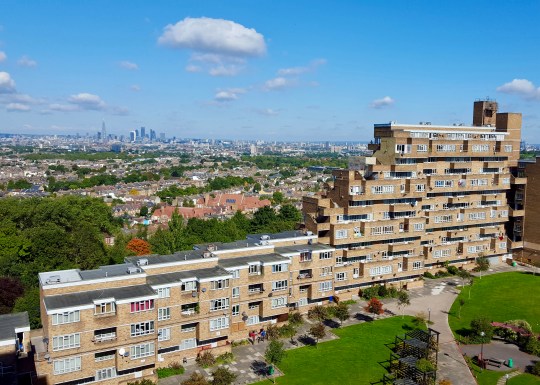
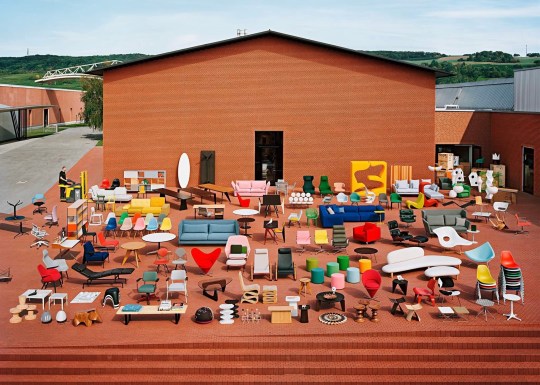
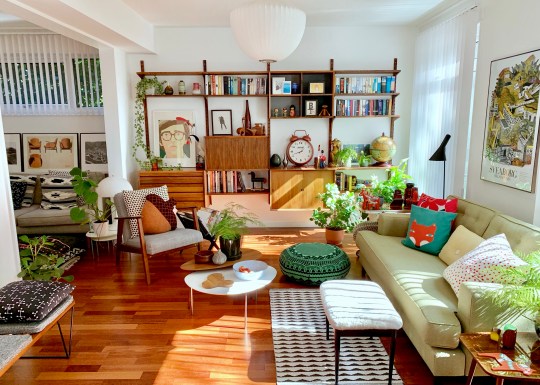
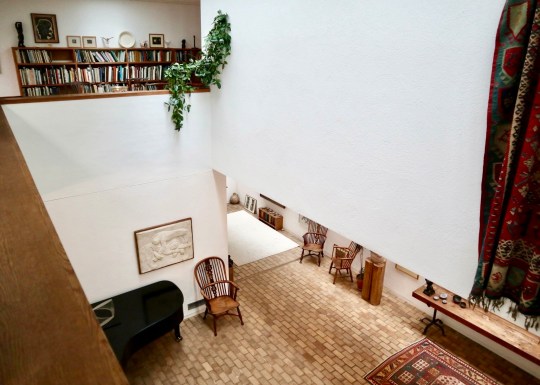
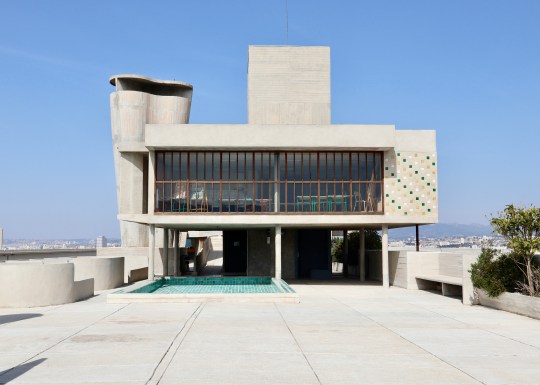
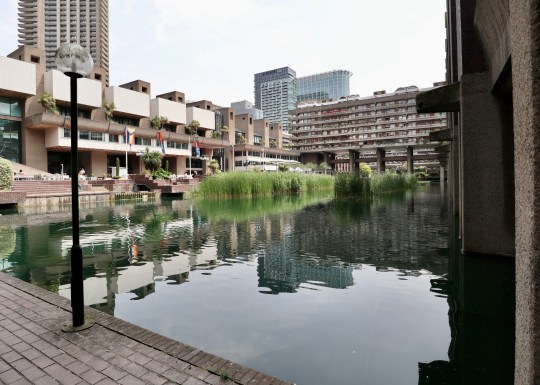
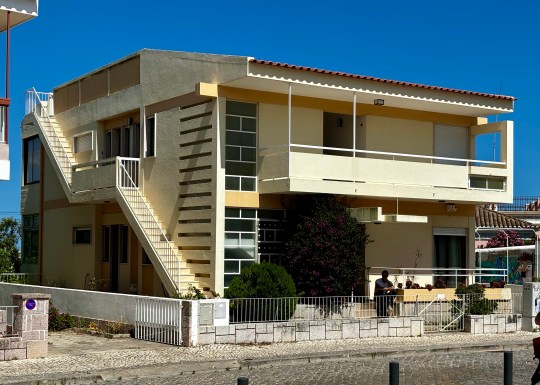
Highlights from ten years of Modernist Pilgrimage (click on the photos to be taken to the full posts):







Faro 20th Century Society Tour
I attended an excellent C20 Society tour of Faro earlier this year, which provided me with some much needed material for this neglected blog.
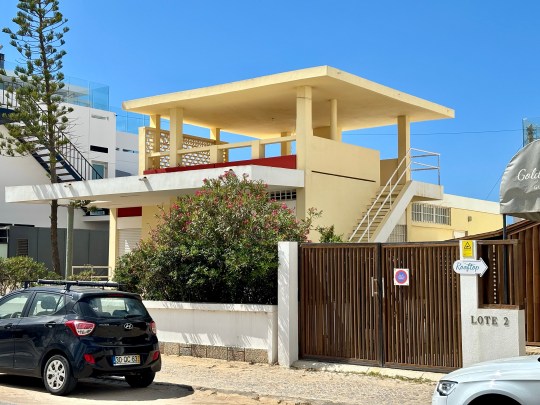
The tour, led by Richard Walker (whose similarly excellent tour of the less sunny Elephant and Castle I attended in 2018), focused on the often overlooked modernist architecture that characterises the capital of Portugal’s Algarve region.


During the mid-20th century, particularly in the 1950s and 1960s, many European countries experienced a wave of modernisation and urban development. Portugal was no exception and Modernist architecture, characterised by its functional design, use of new materials and minimalist aesthetic, became popular in Faro during this time.

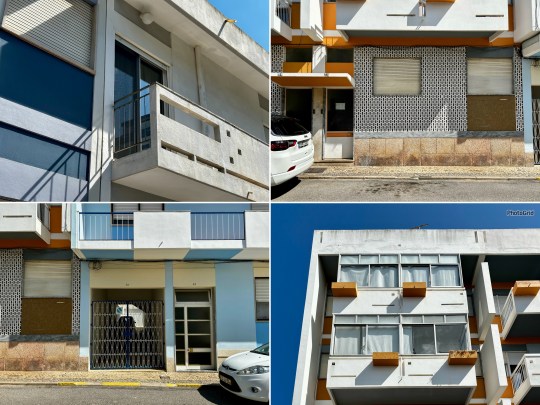
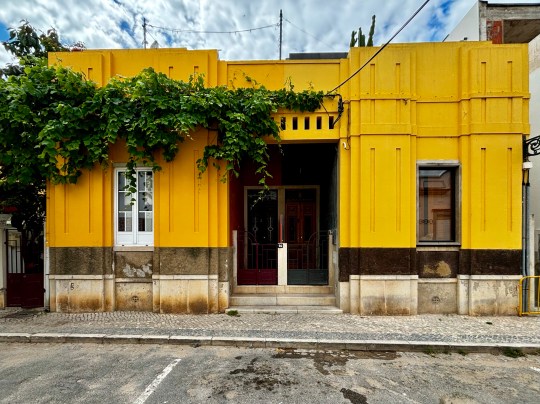
Largely shaped by the prolific architect Manuel Gomes da Costa, Faro’s architectural landscape came to consist of a blend of European Le Corbusier-inspired design, Brazilian tropical modernism and a bit of Palm Springs glamour, adapted for the Algarve’s sunny, coastal climate.
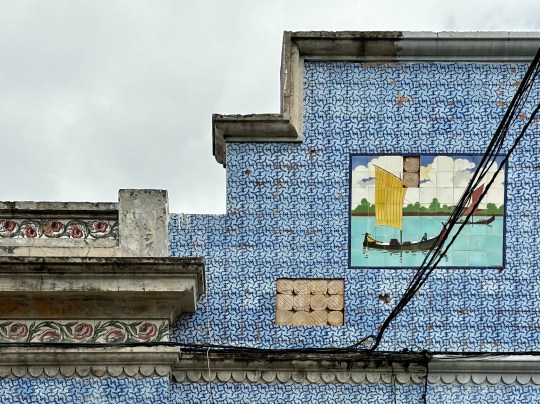


Although a little careworn in places, it made for a very photogenic and interesting city.
Hotel Aeromar
The tour began at the Hotel Aeromar, built by Da Costa in the 1970s. While Da Costa primarily focused on private residences, he took on this hotel project only to disown the design when it was deemed necessary to replace his intended flat roof with a pitched roof due to the coastal location (the wind and water would not have been kind to the original design).

The hotel bore signs of a number of his design trademarks, especially the brise soleil-style windows which cut out sunlight but allowed it to filter through.

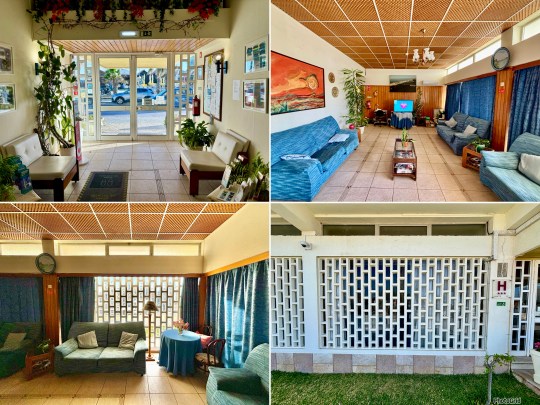
The facilities were basic and the decor on the dated side but it still managed to be quite charming. Apparently it once provided the backdrop for a Hermes fashion shoot – I can only imagine they were going for a kitschy vibe – but I haven’t been able to track down the photos.
Beginning the Tour
The first leg of the tour involved walking around the art deco district (consisting of 1930s low rise, box shaped buildings with a nod to classicism), and modernist districts (dominated by buildings designed by Da Costa and architects that he influenced) of Faro.


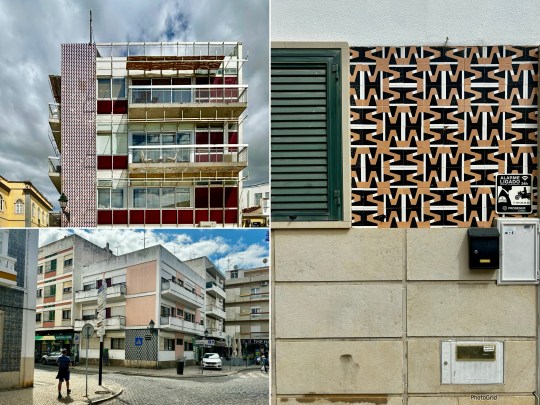
Despite Faro’s rather erratic listing system, most of the modernist buildings built in the city between the 1930s-1970s were still standing. Faro, we were told, is not a city obsessed with redevelopment and is slowly waking up to its modernist past and the potential to use it for tourism.


Faro’s buildings featured a lot of pattern and texture with an emphasis on graphic statement tiles and paving. The closely packed buildings, squeezed onto small plots, each had visual interest of some kind.
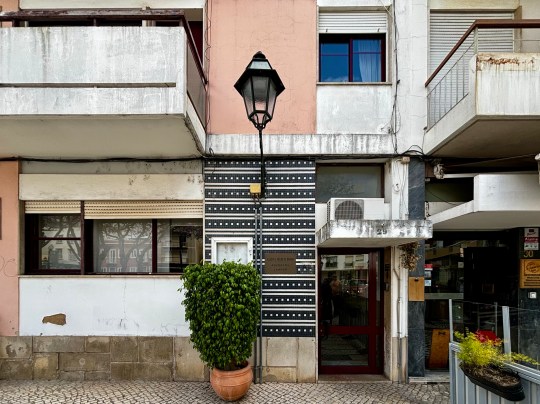


We were told that Portuguese architects like to build statement architecture but with a degree of restraint, pulling back from overt showiness. A few eye catching exceptions aside (including a rather gaudy pop art inspired yellow house), I found this to be true – this was modernism through a Portuguese lens.
The Modernist Aparthotel
The first of the interior stops on the tour was The Modernist, a once rundown brutalist building turned aparthotel following renovation works by the Portuguese architecture studio PAr.
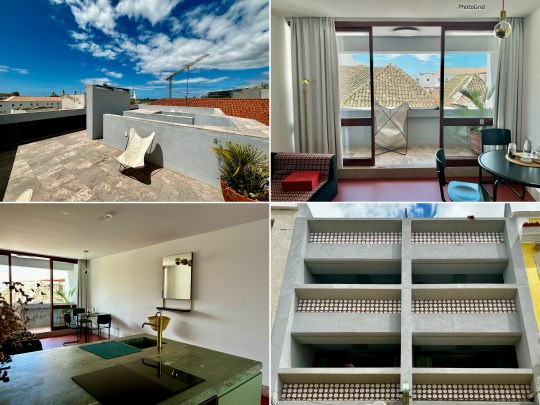
The building was originally built in 1977 by a family who lived on the top floors and rented the rest to commercial tenants until 1986. The building, which was for a long time regarded as the ugliest in Faro, then lay abandoned until 2016.
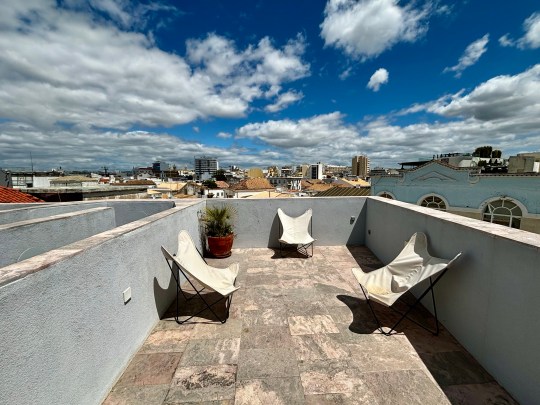
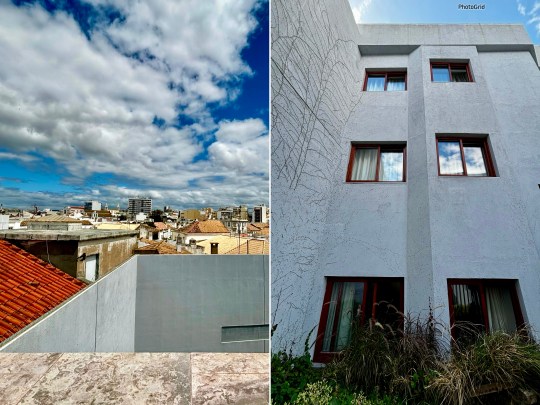
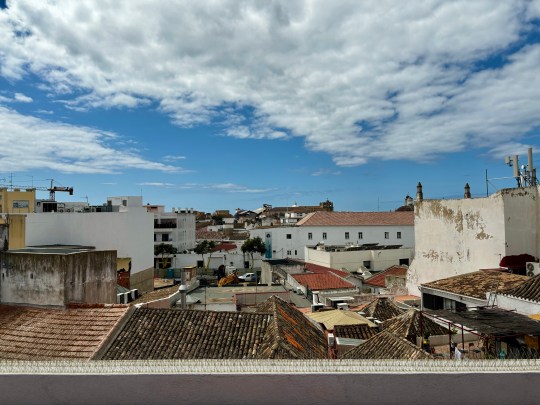
We were told that PAr adopted a very purist approach to the three year renovation project, breathing new life into the building whilst respecting its DNA. The most significant structural change involved adding a flat rooftop (previously a traditional pitched roof), which served as a terrace offering 360-degree views of the city, including multiple Da Costa designs and Faro’s oldest department store. The original plan was to install a pool on the newly flattened roof but this was scuppered by a construction issue.
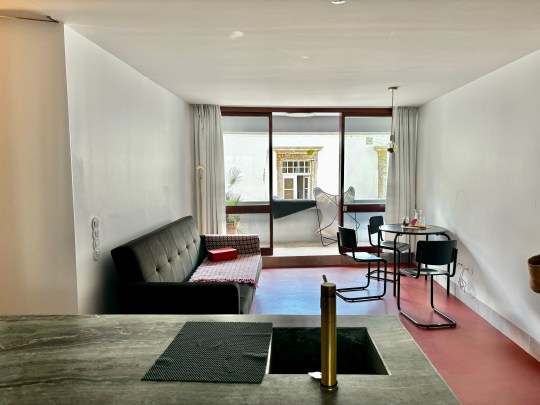


Inside, the hotel apartments were of varying size but were all largely identical – open plan studio spaces incorporating a living area (overlooking the street), kitchen island, sleeping area (overlooking the internal courtyard), small bathroom and balcony. The style was very much minimalist with simple, functional furniture built into the walls (including an Alvar Aalto-inspired curved window ledge) and a largely monochromatic colour scheme consisting of green, red and gold.
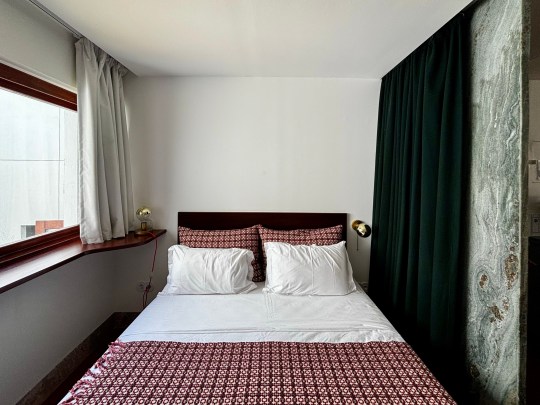
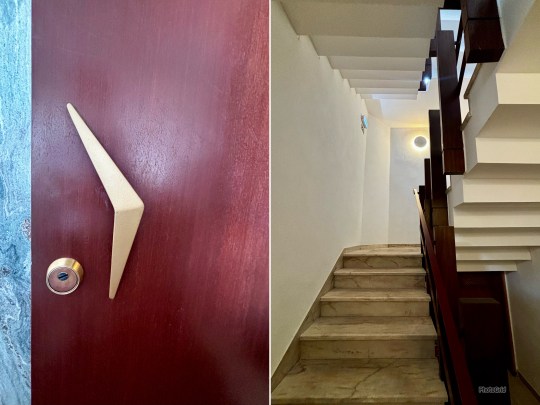

The materials used throughout (mostly locally sourced wood and stone) were natural and tactile. It was all very pleasant and tranquil but the lack of various modcons (including a tv – a conscious decision by the owners) meant that I’d probably struggle staying there…!
Casa Gago
The next building that we saw the inside of was the rather spectacular Casa Gogo.
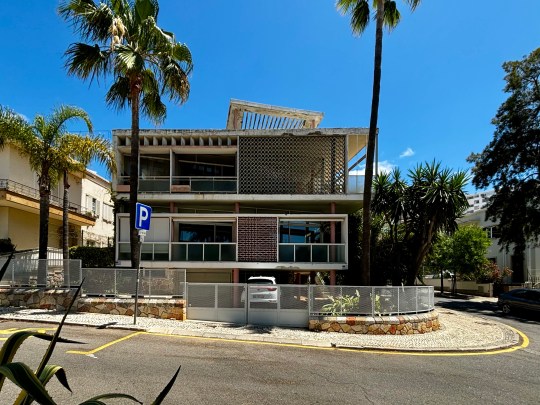
Casa Gago was commissioned by Alfredo Gago Rosa, a wealthy emigrant from Venezuela, who wanted a special house in the heart of Faro for his family. Despite being relatively inexperienced, a 34 year old Da Costa was chosen to lead this rather ambitious project, which resulted in one of the most iconic modernist buildings in Faro.


Da Costa’s goal was to create something new with the house, akin to something seen more commonly in the US. Using Frank Lloyd Wright and Mies Van der Rohe as inspiration, the resulting building was a mix of American and tropical featuring pop art tiles, organic shapes and Aztec and Mayan motifs.

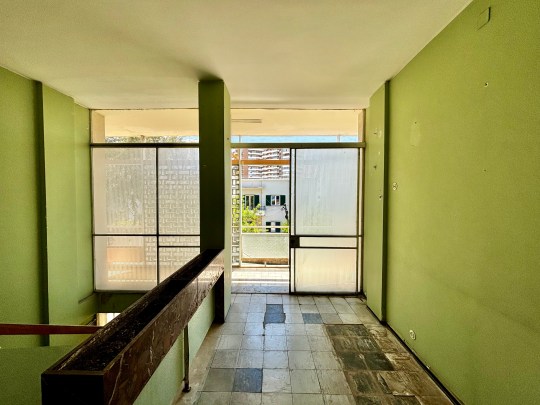
At some stage, the house was split into three levels and sold off. The second floor was used for many years as a hairdressers (there was still evidence of some of the fittings that had been left behind) before it was bought as a residential apartment by the current owner.
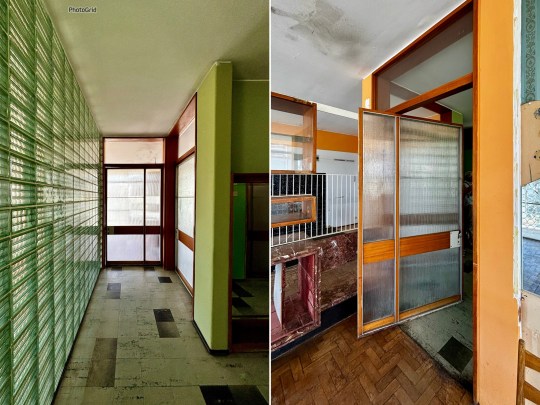
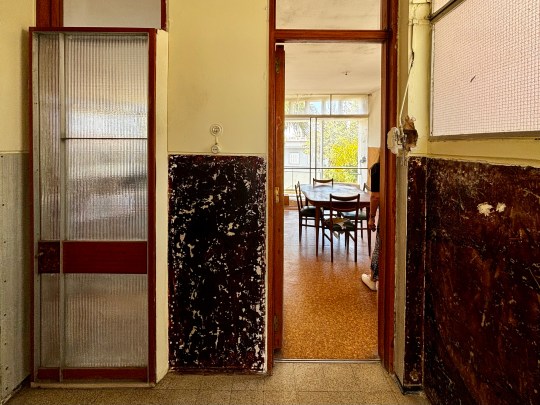

Thankfully, this appeared to be someone who wants to undertake a full scale renovation project to restore the apartment to its former glory – there would be nothing stopping someone from ripping out the entirety of the interior as only the exterior of Casa Gago is listed.
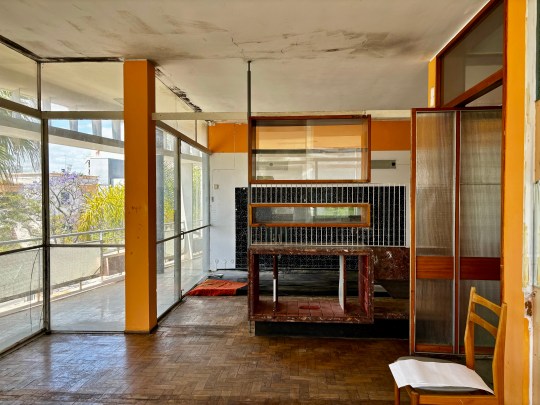


The owner certainly has a lot to work with, given that the apartment had pretty much all of its original 1950s features intact even if some of these features were in need of repair.


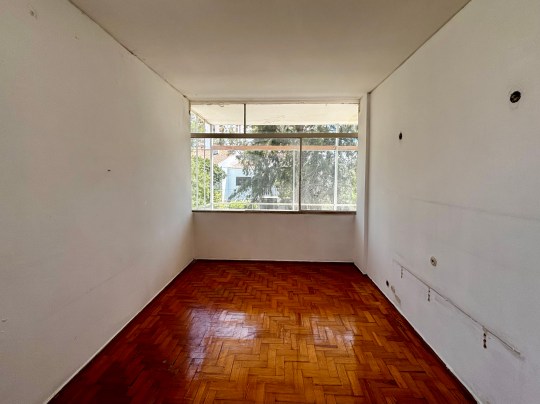
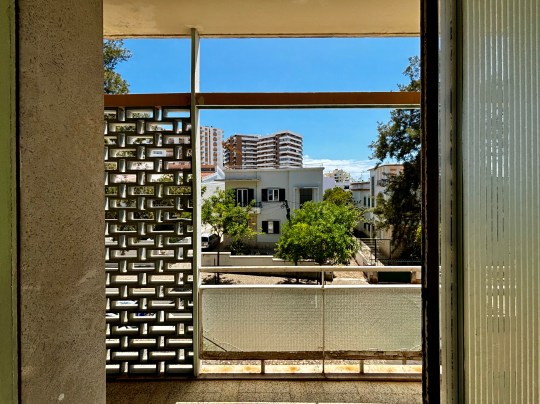
The apartment featured a number of Da Costa hallmarks – full-height doors, Z-shaped stairs a large porch, room dividing built-in furniture, glass walls and enormous interior pivot doors.


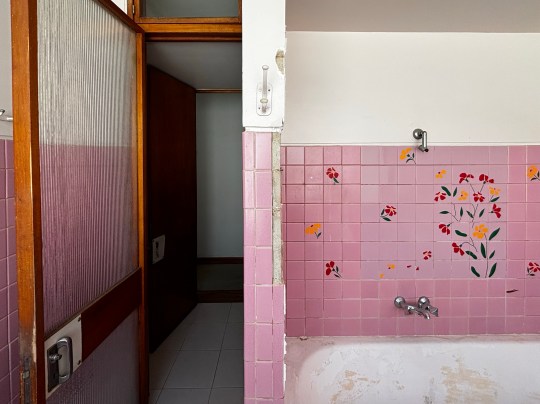
The layout was split into public (living, dining and reception rooms) and private (four bedrooms) sections with sunbreaking breeze block cobogó all down the west side.
Other buildings in Faro
The tour moved on to other buildings in the city including:
⁃ A 1966 design on a triangular plot built for a South American bank – this was considered to be a radical design at the time.


⁃ Da Costa’s own house from the mid 1960s – this was not what I expected. Inspired by Mies Van Der Rohe and a Japanese garden, it was low level and quite modest in comparison to the rest of his designs that dominated the city. The house was connected to a studio space in which Da Costa worked largely alone.

⁃ A lovely row of Da Costa villas, one of which was owned by the new owner of Casa Gago.
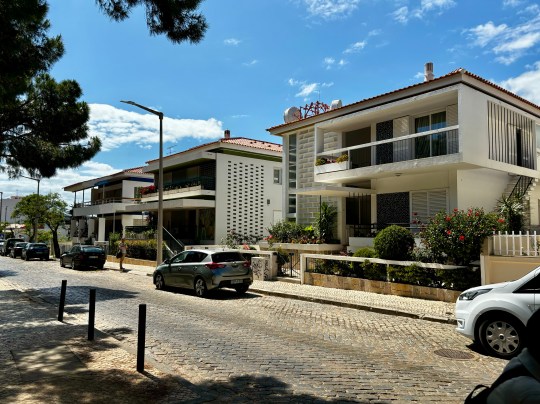
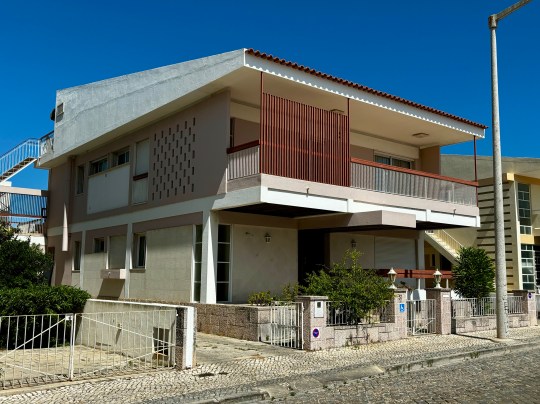
Another, currently used as a hotel, had been significantly remodelled to slightly underwhelming effect – the house had lost its carefully calibrated proportions and looked a bit “heavy” as a result.
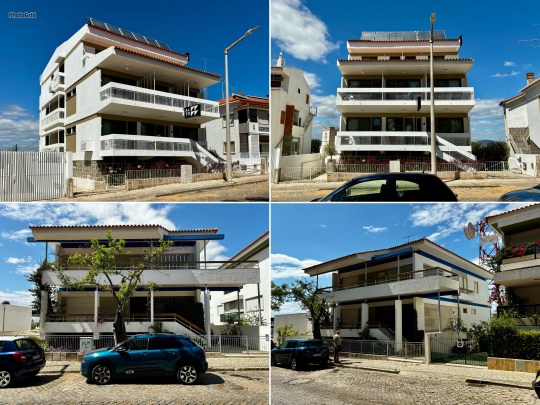

⁃ Various social housing schemes, which looked well designed and quite attractive.

⁃ An intersection of buildings from the late 1970s, including one of Da Costa’s last works from the late 1980s (he stopped working shortly after but lived until 2016).


As Da Costa was never one to follow trends, this building didn’t look very 1980s at all apart from some slightly fussy looking classical columns.
Olhão
The second day of the tour took us to nearby Olhão, a cubist-looking town a short train ride away from Faro.

The courthouse and cubist buildings in Olhão reflected a different architectural language to Faro with flat roofs and grid-patterned streets influenced by Moorish design.


The old part of town contained buildings from the 1920s to 1930s covered in now-familiar patterned tiles across six streets.
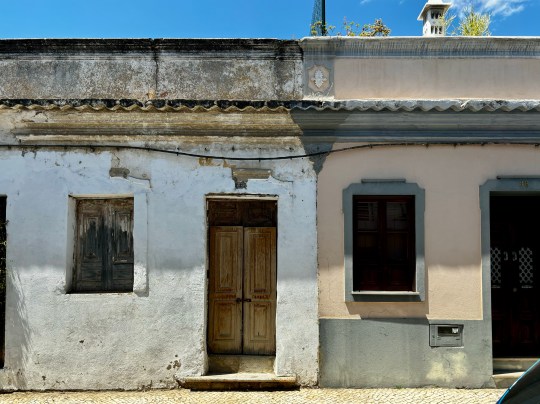
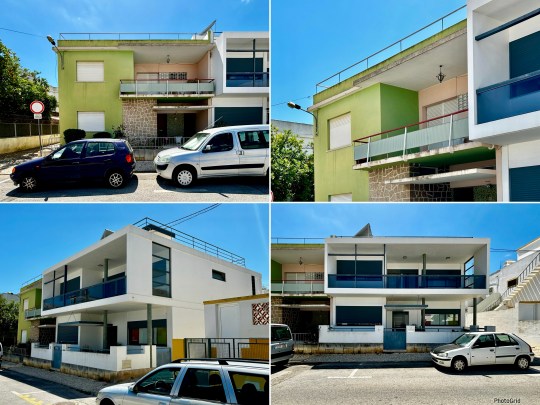

The modernist part of town looked a lot like Faro except without an abundance of Da Costa designs – there was only one Da Costa house in the whole of the town.
Praia de Faro
The tour concluded with a walk along the Faro’s coastal line to take in the seafront architecture, mostly post-1959 as this was when the bridge providing vehicular access to this stretch of land was built.
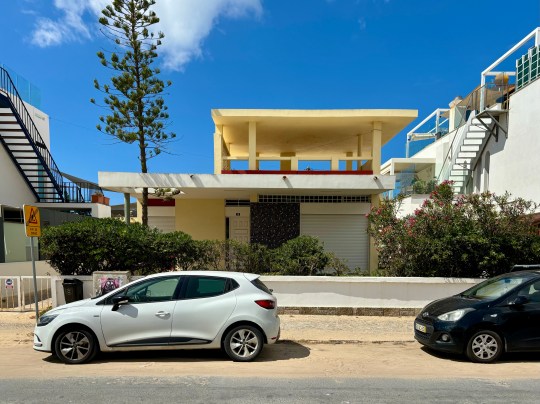
The buildings ranged from basic beach huts to a sophisticated Da Costa design, heavily influenced by Le Corbusier (note the hole in the roof to accommodate the tree).
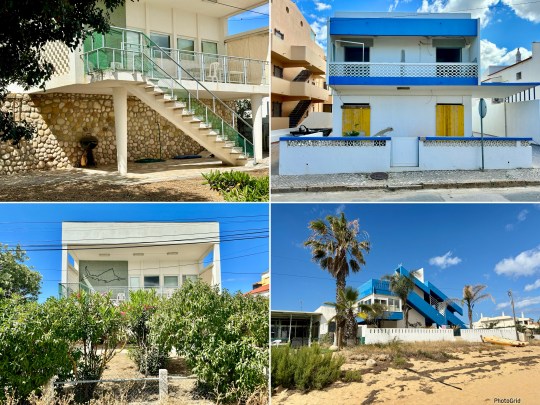
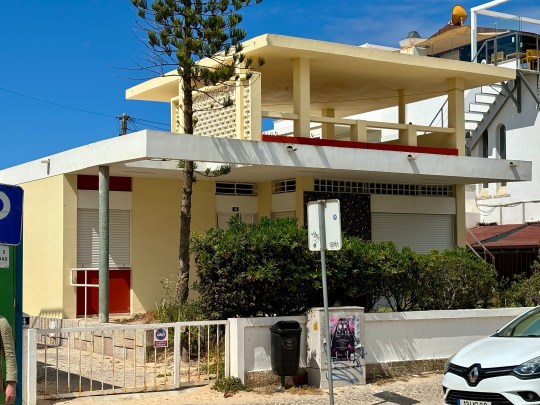
Other notable designs included:
⁃ A very charming single storey orange coloured house (architect unknown).
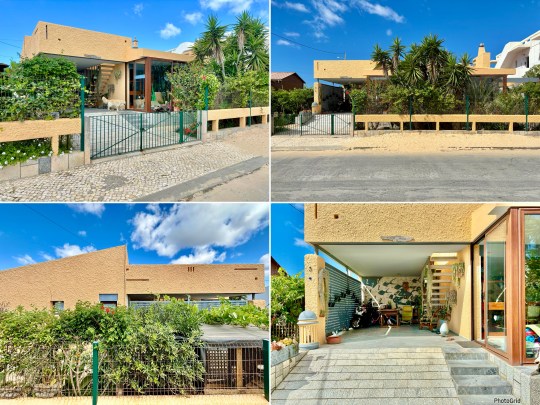
⁃ A heavily cantilevered blue beach house from the late 1970s built by a partner of Da Costa.

⁃ A very photogenic Air Bnb house which has featured in every news story about modernist architecture in Faro.


Mies van der Rohe Barcelona Pavilion
Built for the 1929 International Exhibition in Barcelona, the Barcelona pavilion was designed by Ludwig Mies van der Rohe, a leading figure in the German architectural avant-garde, as a temporary structure to showcase Germany’s “openness, liberality, modernity and internationalism”.
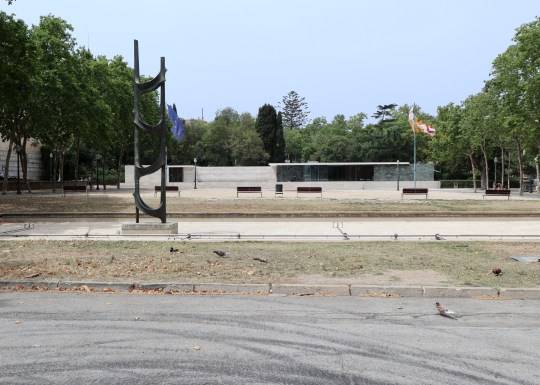
While it was disassembled in 1930 at the end of the International Exhibition, it was meticulously reconstructed on the original site by a team of three architects in 1986 and has been open to the public ever since.
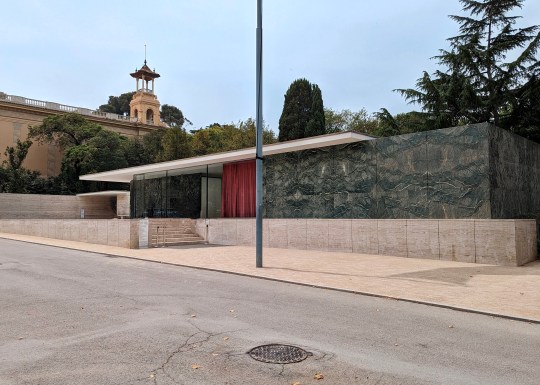

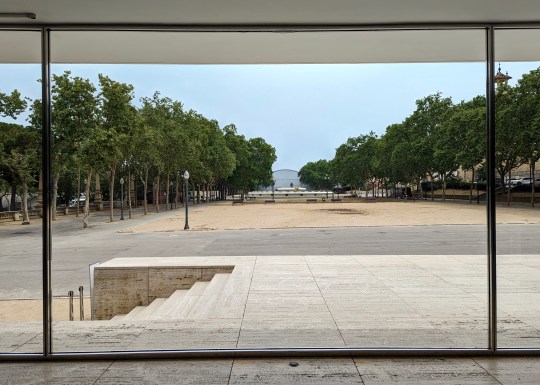
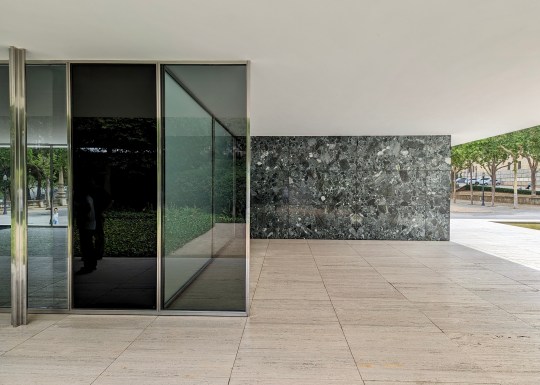
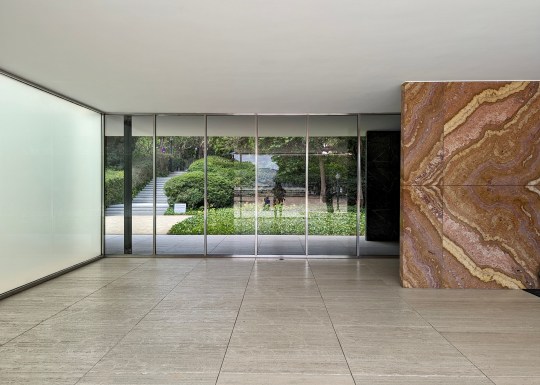
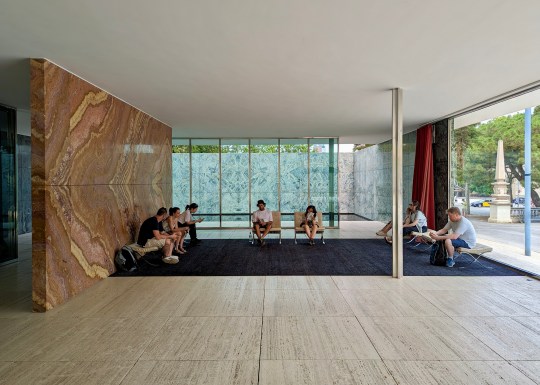
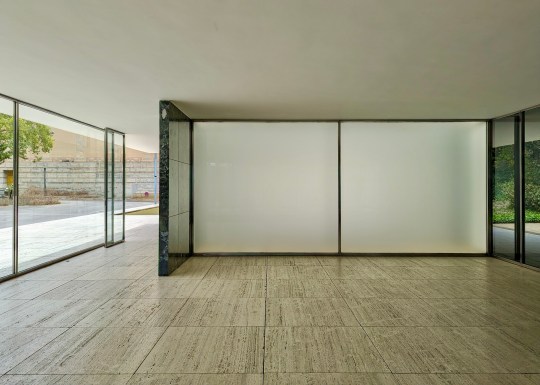
We had a wander around the pavilion during a recent visit to Barcelona. The design consisted of a series of interlocking rectangular spaces constructed of pale travertine marble with occasional walls of luxurious dark green Tinian and warm rust-coloured onyx marble for contrast.
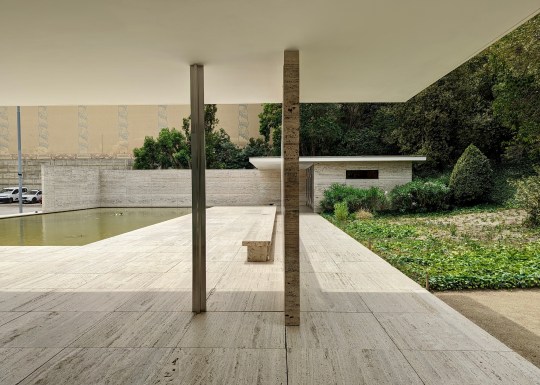
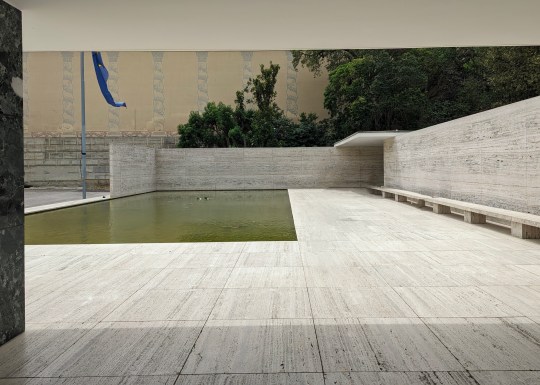
Chrome-plated steel columns and smoked glass panes divided the space into loosely defined rooms, giving the pavilion the feeling of an empty art gallery.
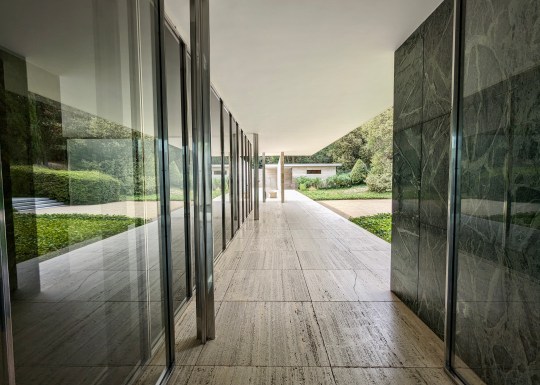
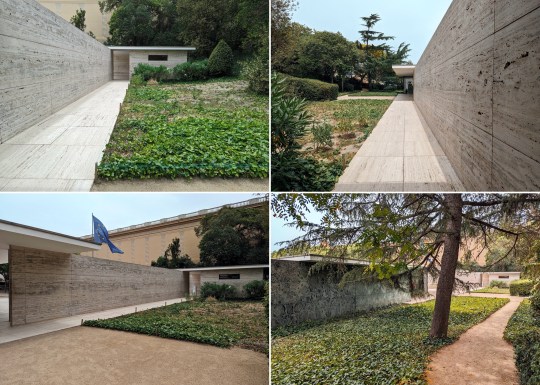
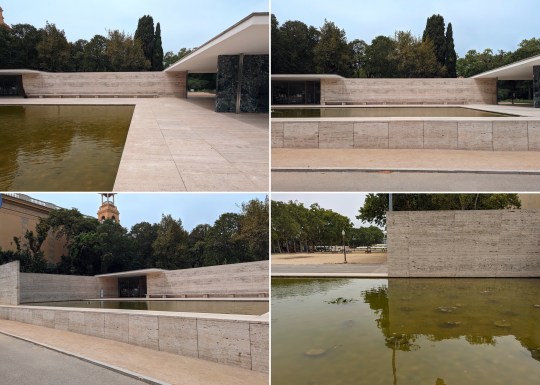
In the front of the pavilion was a large pool lined with pebbles, which looked rather brown compared to images I’d seen online. A second pool was located in in an internal courtyard garden at the rear of the pavilion – this had a glass floor which reflected light up from the bottom and a stylised, classical sculpture of a nude (‘morning’ by Georg Kolbe) standing in the corner, positioned in such a way that meant it could be seen from most angles when standing in the pavilion.


The pavilion was almost completely unfurnished except for the iconic Mies van der Rohe Barcelona chairs and stools, which I now mostly associate with corporate waiting areas. These chairs were reportedly designed to be used as thrones for the Spanish King and Queen when the German Ambassador received them.
Gropius House, Lincoln MA
One of the last stops on our 2022 trip to Boston was the Gropius House in the town of Lincoln, Massachusetts, named after the celebrated architect and the founder of the Bauhaus school of design in Germany.

The Gropius House was built as a family home in 1938 and was a collaborative effort between Walter Gropius, his wife Ise and their friends who contributed Bauhaus art to the house. Having faced the closure of the Bauhaus school by the Nazis, Walter Gropius sought refuge in London before eventually settling in the US. Although he was unable to bring his monetary assets with him, he managed to secure permission to transport his furniture collection which means that the house now contains the largest Bauhaus furniture collection outside of Germany.
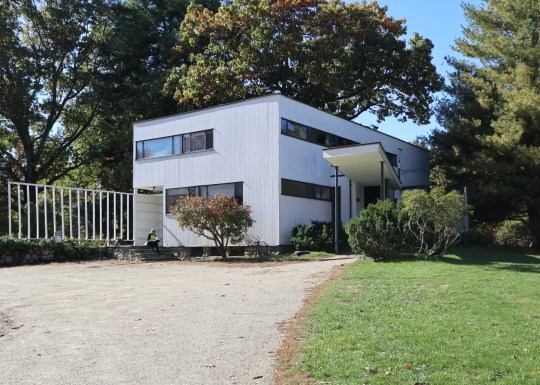
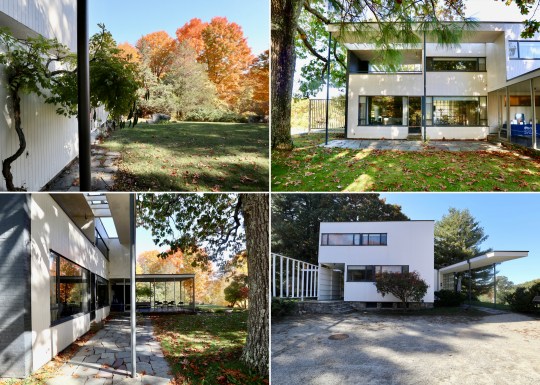
Originally advised to reside in Boston’s Beacon Hill, the Gropius family desired a more open and spacious environment which led to them choosing the leafy town of Lincoln. With a vision to create a Bauhaus-inspired home, the family received $20,000 from Helen Storrow, the prominent American philanthropist, which allowed them to transform a hilly apple orchard into what is now considered an architectural marvel.
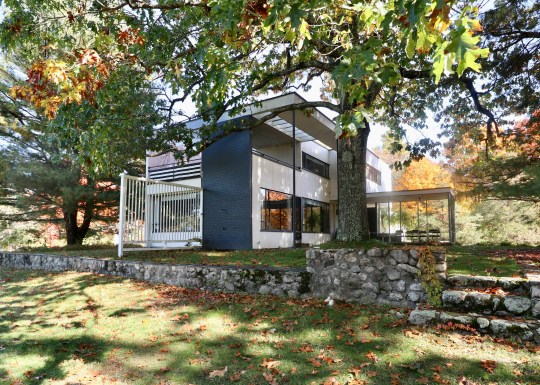

Inspired by the New England landscape, Walter Gropius envisioned a house that blended the principles of the Bauhaus movement with the local materials and construction methods of the region. The wooden frame construction typical of the area was enhanced with shiplap, a colonial-style cladding and field stones at the bottom. The compact 2,300-square-foot Gropius House represented a New England interpretation of the Bauhaus aesthetic, defying convention with its shoebox-like design without a pitched roof—a radical departure from the norm at the time and which wasn’t always up to dealing with the challenges posed by the New England climate. The floorplan was carefully designed without corridors and modern materials (such as glass bricks, cork floors and porous plaster materials to enhance acoustics) were used throughout to maximise functionality.
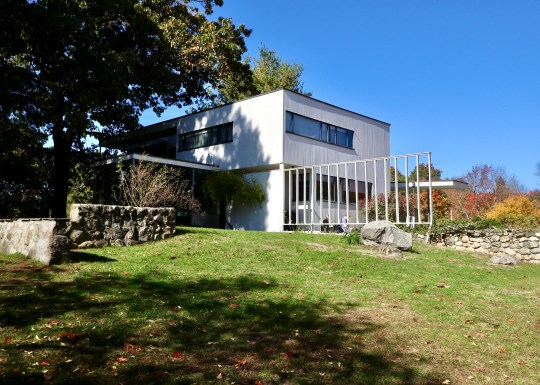
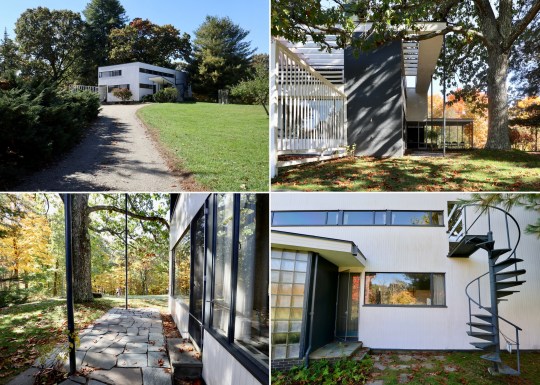
We entered the house on the ground floor into an entrance hall containing an open coat rack, (displaying clothing that enhanced the room’s aesthetic), wide balustrades, a powder room, a door leading to the basement and a winding staircase with a bent steel balustrade leading up to the first floor.

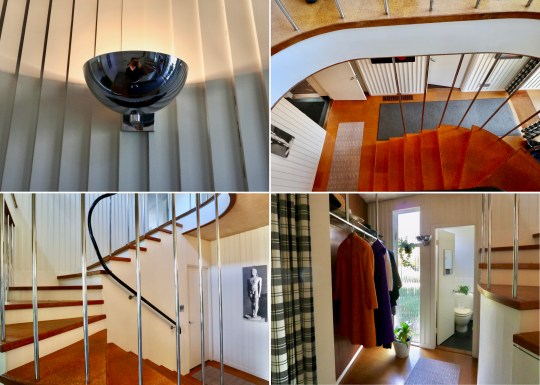
To the right of the entrance hall was the study space, which was intentionally positioned on the northern side to avoid excessive sunlight and contained a double desk imported from Germany. This room also included a separate entrance door for clients, reflecting Gropius’ intention to use the house as a teaching tool to showcase his approach to design and construction.


The study space flowed into the living room, which looked out onto the surrounding environment through two large plate glass windows – an unusual feature for a house in New England. Most of the furniture in this room including the iconic Butterfly stools, daybed, standing lamps and the Womb chair, were designed by Marcel Breuer, a protege of Gropius at the Bauhaus.


Around the corner in the L-shaped living room was the dining area, zoned by a curtain, which allowed for dinner to be dramatically unveiled (I really think this should be brought back as a trend). The dining chairs were Marcel Breuer prototypes – the Gropius family often tried out out new furniture prototypes while living in the house, providing a unique opportunity to witness the evolution of design firsthand.

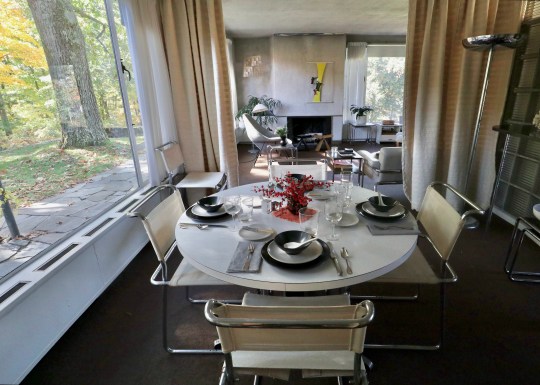
Dinner would have been prepared in the narrow but carefully designed galley kitchen, which was laid out to ensure everything as within easy reach and contained appliances (garbage disposal, dishwasher, cooker, and refrigerator) that would have been modern for the time. The kitchen had a “cold” section (the section nearest the door) and “warm” section (at the rear of the room towards the window) with the cold section acting as a buffer to keep kitchen smells contained (again – a great idea that is due a comeback). The metal cabinets were reportedly sourced from a medical catalog.


Upstairs, were three bedrooms and two bathrooms accessed via an expansive upstairs landing.
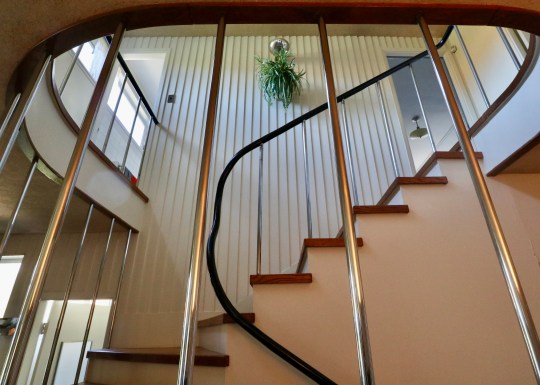
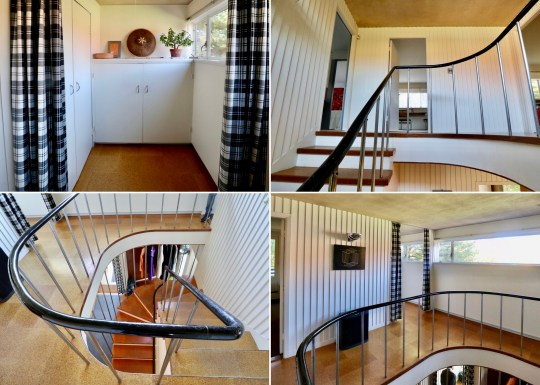
The master bedroom contained a heated dressing area with built-in table and an ensuite bathroom featuring his and hers sinks. The Gropius family believed that sleeping in natural air was optimal and so left the windows in the sleeping area open to allow fresh circulation throughout the night, which meant that it would get quite cold during winter months. I wasn’t sure about the grey, black and red colour scheme in this room – there was something of the 1980s about it.


The guest bedroom was next door with two single beds lined up against one wall, for guests to sleep toe-to-toe or head-to-head.


Gropius went above and beyond for his daughter’s bedroom, giving her a glass roof, separate entrance to the house and a personal roof deck.


The architectural overhang and sunshade allowed for cross ventilation, while the arts and crafts desk provides a nod to traditional craftsmanship. The room could also be divided into different spaces with curtains.


Outside the house was a small covered terrace where the Gropius family had meals and played table tennis. The surrounding perennial garden, inspired by both New England and Japanese aesthetics, reflected Walter Gropius’s love for blending cultures and nature.


The Gropius family lived in the house until 1969 and after Walter Gropius’s death, his wife Ise continued to live there until she died in 1983. Today, the Gropius House is managed by Historic New England and is open to the public for tours.
 Modernist Pilgrimage